
Kolonia – Chuuk – Port Moresby
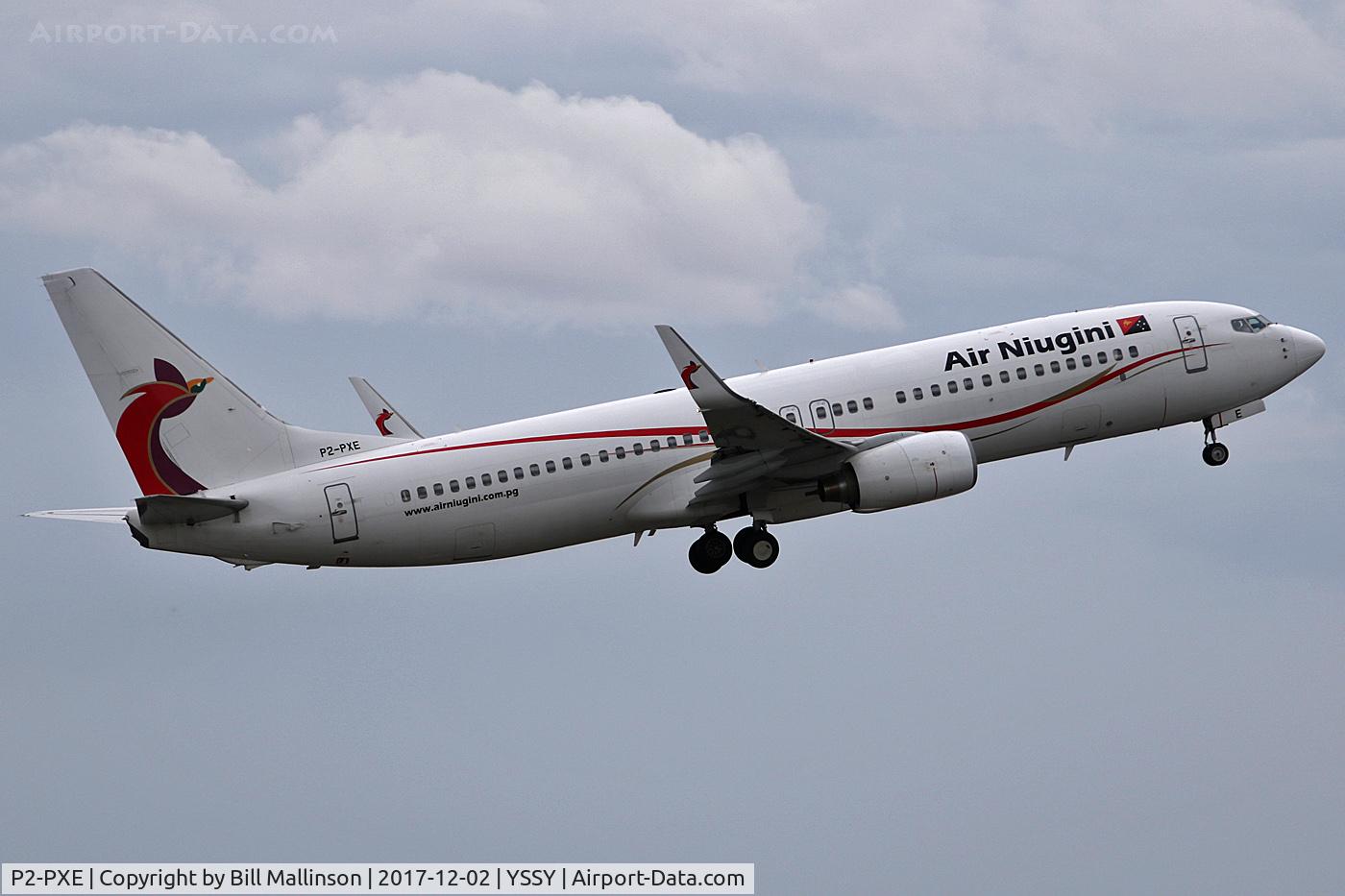
Flight / Schedule
Kolonia – Chuuk – Port Moresby
Aircraft
Boeing 737-800Registration
P2-PXE
MSN
33024/1688
Year of Manufacture
2005
Operator
Air NiuginiDate
September 28, 2018 at 09:24 AM
Type
CRASHFlight Type
Scheduled Revenue Flight
Flight Phase
Landing (descent or approach)
Crash Site
Lake, Sea, Ocean, River
Crash Location
Weno Island Chuuk Island
Region
Oceania • Federated States of Micronesia
Crash Cause
Human factor
Narrative Report
On September 28, 2018 at 09:24 AM, Kolonia – Chuuk – Port Moresby experienced a crash involving Boeing 737-800, operated by Air Niugini, with the event recorded near Weno Island Chuuk Island.
The flight was categorized as scheduled revenue flight and the reported phase was landing (descent or approach) at a lake, sea, ocean, river crash site.
47 people were known to be on board, 1 fatalities were recorded, 46 survivors were identified or estimated. This corresponds to an estimated fatality rate of 2.1%.
Crew on board: 12, crew fatalities: 0, passengers on board: 35, passenger fatalities: 1, other fatalities: 0.
The listed crash cause is human factor. On 28 September 2018, at 23:24:19 UTC2 (09:24 local time), a Boeing 737-8BK aircraft, registered P2-PXE (PXE), operated by Air Niugini Limited, was on a scheduled passenger flight number PX073, from Pohnpei to Chuuk, in the Federated States of Micronesia (FSM) when, during its final approach, the aircraft impacted the water of the Chuuk Lagoon, about 1,500 ft (460 m) short of the runway 04 threshold. The aircraft deflected across the water several times before it settled in the water and turned clockwise through 210 deg and drifted 460 ft (140 m) south east of the runway 04 extended centreline, with the nose of the aircraft pointing about 265°. The pilot in command (PIC) was the pilot flying, and the copilot was the support/monitoring pilot. An Aircraft Maintenance Engineer occupied the cockpit jump seat. The engineer videoed the final approach on his iPhone, which predominantly showed the cockpit instruments. Local boaters rescued 28 passengers and two cabin crew from the left over-wing exits. Two cabin crew, the two pilots and the engineer were rescued by local boaters from the forward door 1L. One life raft was launched from the left aft over-wing exit by cabin crew CC5 with the assistance of a passenger. The US Navy divers rescued six passengers and four cabin crew and the Load Master from the right aft over-wing exit. All injured passengers were evacuated from the left over-wing exits. One passenger was fatally injured, and local divers located his body in the aircraft three days after the accident. The Government of the Federated States of Micronesia commenced the investigation and on 14th February 2019 delegated the whole of the investigation to the PNG Accident Investigation Commission. The investigation determined that the flight crew’s level of compliance with Air Niugini Standard Operating Procedures Manual (SOPM) was not at a standard that would promote safe aircraft operations. The PIC intended to conduct an RNAV GPS approach to runway 04 at Chuuk International Airport and briefed the copilot accordingly. The descent and approach were initially conducted in Visual Meteorological Conditions (VMC), but from 546 ft (600 ft)4 the aircraft was flown in Instrument Meteorological Conditions (IMC). The flight crew did not adhere to Air Niugini SOPM and the approach and pre-landing checklists. The RNAV (GPS) Rwy 04 Approach chart procedure was not adequately briefed. The RNAV approach specified a flight path descent angle guide of 3º. The aircraft was flown at a high rate of descent and a steep variable flight path angle averaging 4.5º during the approach, with lateral over-controlling; the approach was unstabilised. The Flight Data Recorder (FDR) recorded a total of 17 Enhanced Ground Proximity Warning System (EGPWS) alerts, specifically eight “Sink Rate” and nine “Glideslope”. The recorded information from the Cockpit Voice Recorder (CVR) showed that a total of 14 EGPWS aural alerts sounded after passing the Minimum Descent Altitude (MDA), between 307 ft (364 ft) and the impact point. A “100 ft” advisory was annunciated, in accordance with design standards, overriding one of the “Glideslope” aural alert. The other aural alerts were seven “Glideslope” and six “Sink Rate”. The investigation observed that the flight crew disregarded the alerts, and did not acknowledge the “minimums” and 100 ft alerts; a symptom of fixation and channelised attention. The crew were fixated on cues associated with the landing and control inputs due to the extension of 40° flap. Both pilots were not situationally aware and did not recognise the developing significant unsafe condition during the approach after passing the Missed Approach Point (MAP) when the aircraft entered a storm cell and heavy rain. The weather radar on the PIC’s Navigation Display showed a large red area indicating a storm cell immediately after the MAP, between the MAP and the runway. The copilot as the support/monitoring pilot was ineffective and was oblivious to the rapidly unfolding unsafe situation. He did not recognise the significant unsafe condition and therefore did not realise the need to challenge the PIC and take control of the aircraft, as required by the Air Niugini SOPM. The Air Niugini SOPM instructs a non-flying pilot to take control of the aircraft from the flying pilot, and restore a safe flight condition, when an unsafe condition continues to be uncorrected. The records showed that the copilot had been checked in the Simulator for EGPWS Alert (Terrain) however there was no evidence of simulator check sessions covering the vital actions and responses required to retrieve a perceived or real situation that might compromise the safe operation of the aircraft. Specifically sustained unstabilised approach below 1,000 ft amsl in IMC. The PIC did not conduct the missed approach at the MAP despite the criteria required for visually continuing the approach not being met, including visually acquiring the runway or the PAPI. The PIC did not conduct a go around after passing the MAP and subsequently the MDA although: • The aircraft had entered IMC; • the approach was unstable; • the glideslope indicator on the Primary Flight Display (PFD) was showing a rapid glideslope deviation from a half-dot low to 2-dots high within 9 seconds after passing the MDA; • the rate of descent high (more than 1,000 ft/min) and increasing; • there were EGPWS Sink Rate and Glideslope aural alerts; and • the EGPWS visual PULL UP warning message was displayed on the PFD. The report highlights that deviations from recommended practice and SOPs are a potential hazard, particularly during the approach and landing phase of flight, and increase the risk of approach and landing accidents. It also highlights that crew coordination is less than effective if crew members do not work together as an integrated team. Support crew members have a duty and responsibility to ensure that the safety of a flight is not compromised by non-compliance with SOPs, standard phraseology and recommended practices. The investigation found that the Civil Aviation Safety Authority of PNG (CASA PNG) policy and procedures of accepting manuals rather than approving manuals, while in accordance with the Civil Aviation Rules requirements, placed a burden of responsibility on CASA PNG as the State Regulator to ensure accuracy and that safety standards are met. In accepting the Air Niugini manuals, CASA PNG did not meet the high standard of evidence-based assessment required for safety assurance, resulting in numerous deficiencies and errors in the Air Niugini Operational, Technical, and Safety manuals as noted in this report and the associated Safety Recommendations. The report includes a number of recommendations made by the AIC, with the intention of enhancing the safety of flight (See Part 4 of this report). It is important to note that none of the safety deficiencies brought to the attention of Air Niugini caused the accident. However, in accordance with Annex 13 Standards, identified safety deficiencies and concerns must be raised with the persons or organisations best placed to take safety action. Unless safety action is taken to address the identified safety deficiencies, death or injury might result in a future accident. The AIC notes that Air Niugini Limited took prompt action to address all safety deficiencies identified by the AIC in the 12 Safety Recommendations issued to Air Niugini, in an average time of 23 days. The quickest safety action being taken by Air Niugini was in 6 days. The AIC has closed all 12 Safety Recommendations issued to Air Niugini Limited. One safety concern prompting an AIC Safety Recommendation was issued to Honeywell Aerospace and the US FAA. The safety deficiency/concern that prompted this Safety Recommendation may have been a contributing factor in this accident. The PNG AIC is in continued discussion with the US NTSB, Honeywell, Boeing and US FAA. This recommendation is the subject of ongoing research and the AIC Recommendation will remain ACTIVE pending the results of that research.
Aircraft reference details include registration P2-PXE, MSN 33024/1688, year of manufacture 2005.
Fatalities
Total
1
Crew
0
Passengers
1
Other
0
Crash Summary
On 28 September 2018, at 23:24:19 UTC2 (09:24 local time), a Boeing 737-8BK aircraft, registered P2-PXE (PXE), operated by Air Niugini Limited, was on a scheduled passenger flight number PX073, from Pohnpei to Chuuk, in the Federated States of Micronesia (FSM) when, during its final approach, the aircraft impacted the water of the Chuuk Lagoon, about 1,500 ft (460 m) short of the runway 04 threshold. The aircraft deflected across the water several times before it settled in the water and turned clockwise through 210 deg and drifted 460 ft (140 m) south east of the runway 04 extended centreline, with the nose of the aircraft pointing about 265°. The pilot in command (PIC) was the pilot flying, and the copilot was the support/monitoring pilot. An Aircraft Maintenance Engineer occupied the cockpit jump seat. The engineer videoed the final approach on his iPhone, which predominantly showed the cockpit instruments. Local boaters rescued 28 passengers and two cabin crew from the left over-wing exits. Two cabin crew, the two pilots and the engineer were rescued by local boaters from the forward door 1L. One life raft was launched from the left aft over-wing exit by cabin crew CC5 with the assistance of a passenger. The US Navy divers rescued six passengers and four cabin crew and the Load Master from the right aft over-wing exit. All injured passengers were evacuated from the left over-wing exits. One passenger was fatally injured, and local divers located his body in the aircraft three days after the accident. The Government of the Federated States of Micronesia commenced the investigation and on 14th February 2019 delegated the whole of the investigation to the PNG Accident Investigation Commission. The investigation determined that the flight crew’s level of compliance with Air Niugini Standard Operating Procedures Manual (SOPM) was not at a standard that would promote safe aircraft operations. The PIC intended to conduct an RNAV GPS approach to runway 04 at Chuuk International Airport and briefed the copilot accordingly. The descent and approach were initially conducted in Visual Meteorological Conditions (VMC), but from 546 ft (600 ft)4 the aircraft was flown in Instrument Meteorological Conditions (IMC). The flight crew did not adhere to Air Niugini SOPM and the approach and pre-landing checklists. The RNAV (GPS) Rwy 04 Approach chart procedure was not adequately briefed. The RNAV approach specified a flight path descent angle guide of 3º. The aircraft was flown at a high rate of descent and a steep variable flight path angle averaging 4.5º during the approach, with lateral over-controlling; the approach was unstabilised. The Flight Data Recorder (FDR) recorded a total of 17 Enhanced Ground Proximity Warning System (EGPWS) alerts, specifically eight “Sink Rate” and nine “Glideslope”. The recorded information from the Cockpit Voice Recorder (CVR) showed that a total of 14 EGPWS aural alerts sounded after passing the Minimum Descent Altitude (MDA), between 307 ft (364 ft) and the impact point. A “100 ft” advisory was annunciated, in accordance with design standards, overriding one of the “Glideslope” aural alert. The other aural alerts were seven “Glideslope” and six “Sink Rate”. The investigation observed that the flight crew disregarded the alerts, and did not acknowledge the “minimums” and 100 ft alerts; a symptom of fixation and channelised attention. The crew were fixated on cues associated with the landing and control inputs due to the extension of 40° flap. Both pilots were not situationally aware and did not recognise the developing significant unsafe condition during the approach after passing the Missed Approach Point (MAP) when the aircraft entered a storm cell and heavy rain. The weather radar on the PIC’s Navigation Display showed a large red area indicating a storm cell immediately after the MAP, between the MAP and the runway. The copilot as the support/monitoring pilot was ineffective and was oblivious to the rapidly unfolding unsafe situation. He did not recognise the significant unsafe condition and therefore did not realise the need to challenge the PIC and take control of the aircraft, as required by the Air Niugini SOPM. The Air Niugini SOPM instructs a non-flying pilot to take control of the aircraft from the flying pilot, and restore a safe flight condition, when an unsafe condition continues to be uncorrected. The records showed that the copilot had been checked in the Simulator for EGPWS Alert (Terrain) however there was no evidence of simulator check sessions covering the vital actions and responses required to retrieve a perceived or real situation that might compromise the safe operation of the aircraft. Specifically sustained unstabilised approach below 1,000 ft amsl in IMC. The PIC did not conduct the missed approach at the MAP despite the criteria required for visually continuing the approach not being met, including visually acquiring the runway or the PAPI. The PIC did not conduct a go around after passing the MAP and subsequently the MDA although: • The aircraft had entered IMC; • the approach was unstable; • the glideslope indicator on the Primary Flight Display (PFD) was showing a rapid glideslope deviation from a half-dot low to 2-dots high within 9 seconds after passing the MDA; • the rate of descent high (more than 1,000 ft/min) and increasing; • there were EGPWS Sink Rate and Glideslope aural alerts; and • the EGPWS visual PULL UP warning message was displayed on the PFD. The report highlights that deviations from recommended practice and SOPs are a potential hazard, particularly during the approach and landing phase of flight, and increase the risk of approach and landing accidents. It also highlights that crew coordination is less than effective if crew members do not work together as an integrated team. Support crew members have a duty and responsibility to ensure that the safety of a flight is not compromised by non-compliance with SOPs, standard phraseology and recommended practices. The investigation found that the Civil Aviation Safety Authority of PNG (CASA PNG) policy and procedures of accepting manuals rather than approving manuals, while in accordance with the Civil Aviation Rules requirements, placed a burden of responsibility on CASA PNG as the State Regulator to ensure accuracy and that safety standards are met. In accepting the Air Niugini manuals, CASA PNG did not meet the high standard of evidence-based assessment required for safety assurance, resulting in numerous deficiencies and errors in the Air Niugini Operational, Technical, and Safety manuals as noted in this report and the associated Safety Recommendations. The report includes a number of recommendations made by the AIC, with the intention of enhancing the safety of flight (See Part 4 of this report). It is important to note that none of the safety deficiencies brought to the attention of Air Niugini caused the accident. However, in accordance with Annex 13 Standards, identified safety deficiencies and concerns must be raised with the persons or organisations best placed to take safety action. Unless safety action is taken to address the identified safety deficiencies, death or injury might result in a future accident. The AIC notes that Air Niugini Limited took prompt action to address all safety deficiencies identified by the AIC in the 12 Safety Recommendations issued to Air Niugini, in an average time of 23 days. The quickest safety action being taken by Air Niugini was in 6 days. The AIC has closed all 12 Safety Recommendations issued to Air Niugini Limited. One safety concern prompting an AIC Safety Recommendation was issued to Honeywell Aerospace and the US FAA. The safety deficiency/concern that prompted this Safety Recommendation may have been a contributing factor in this accident. The PNG AIC is in continued discussion with the US NTSB, Honeywell, Boeing and US FAA. This recommendation is the subject of ongoing research and the AIC Recommendation will remain ACTIVE pending the results of that research.
Cause: Human factor
Occupants & Outcome
Crew On Board
12
Passengers On Board
35
Estimated Survivors
46
Fatality Rate
2.1%
Known people on board: 47
Operational Details
Schedule / Flight
Kolonia – Chuuk – Port Moresby
Operator
Air NiuginiFlight Type
Scheduled Revenue Flight
Flight Phase
Landing (descent or approach)
Crash Site
Lake, Sea, Ocean, River
Region / Country
Oceania • Federated States of Micronesia
Aircraft Details
Similar Plane Crashes
United States Air Force - USAF
Boeing B-29 Superfortress
While conducting a reconnaissance mission for a missing B-29 & its crew from the 23rd Reconnaissance Squadron since November 7, 1948, the aircraft suffered multiple failures of its navigation & radio systems and eventually run out of fuel. The captain ditched the aircraft in shallow water off Fais Island, about 250 km northeast of Yap Island. The aircraft sank and was lost while all ten crew members were later rescued by the crew of a Navy Catalina.
Pacific Missionary Aviation
Dornier DO.28A/B
On final approach to Gabert Island Airport, the twin engine airplane encountered severe turbulences, lost height and crashed in a wooded area. Both wings were partially torn off and the aircraft was destroyed. All four occupants were injured.
Pacific Missionary Aviation
Beechcraft D18
En route from Woleai Atoll to Yap Island, the pilot encountered marginal weather conditions and became lost. In adverse winds aloft (winds gusting up to 30 knots), both engines failed due to fuel exhaustion. The pilot attempted an emergency landing about 80 km east of Yap Island. All seven occupants were quickly rescued while the aircraft sank and was lost.
Air Micronesia
Boeing 727-100
Air Micronesia Flight 614 departed Saipan at 07:30 for a flight to Palau with intermediate stops in Guam and Yap, Western Caroline Islands. The aircraft departed Guam at 08:30 and climbed to FL350. An en route descent to Yap was made from the north through broken to scattered clouds and the captain, who was flying the aircraft, turned onto a downwind leg at the northeast portion of the airport. The downwind leg was flown at an altitude of 600 feet above the runway 07 elevation while the crew checked to see if the runway was clear, to see if the fire truck was in place, and to see the direction of the windsock. The flaps were set at 30° on the base leg. Abeam the approach end of runway 07, the captain began a right 90° and a left turn manoeuvre to align the aircraft with the final approach to runway 07. During a portion of the downwind leg, the captain relinquished control of the aircraft to the first officer while the captain took pictures of the airport. He then resumed control and passed the camera to the second officer and asked him to take pictures of the runway. As the aircraft passed through 90deg from the runway heading, it had descended to about 300 feet above the runway elevation of 52 feet msl. When the aircraft was aligned with the runway heading, it was about 480 feet above runway elevation at a point 1.5 miles from the approach end of the runway. At 09:52 the aircraft touched down 13 feet short of runway 07. The right main landing gear immediately separated from the aircraft. The aircraft gradually veered off the runway and came to rest in the jungle about 1,700 feet beyond the initial touchdown. A severe ground fire erupted immediately along the right side of the aircraft as it came to rest. All occupants had evacuated within about 1 minute after the aircraft came to rest.
Air Niugini
Fokker F28 Fellowship
Following an uneventful flight from Lae, the crew started the approach to Madang Airport runway 25. The visibility was limited by night and poor weather conditions. In heavy rain falls, the captain realized that all conditions were not met to land and decided to initiate a go-around. Following a short holding pattern, he started the approach to runway 07. The aircraft landed 300 metres past the runway threshold. On a wet runway surface, the aircraft was unable to stop within the remaining distance, overran and came to rest in a ravine. Due to torrential rain, all 39 occupants preferred to stay in the aircraft and were evacuated few dozen minutes later only. The aircraft was damaged beyond repair.
Air Niugini
Fokker F28 Fellowship
The flight departed Wewak Airport at 1000LT on a flight to Madang. En route, a warning light came on in the cockpit panel, informing the crew about technical problems. The crew experienced difficulties with testing the lift dumper and wheel brake antiskid systems. The pilot decided to divert to Lae-Nadzab which offered a longer runway and fire fighting facilities. After touchdown, the left main gear collapsed. The crew lost control of the airplane that veered off runway to the left and came to rest in a ditch. All 49 occupants evacuated safely and the aircraft was damaged beyond repair.