
Latest Aviation Crashes
Our crash database is compiled from official sources including the NTSB and aviation safety authorities worldwide. Click any entry for a full incident report.
Total Crashes
27585
Aircraft Types
1180
Operators
8994
Search Crashes
Look up a specific flight number, aircraft, or keyword from the crash reports.
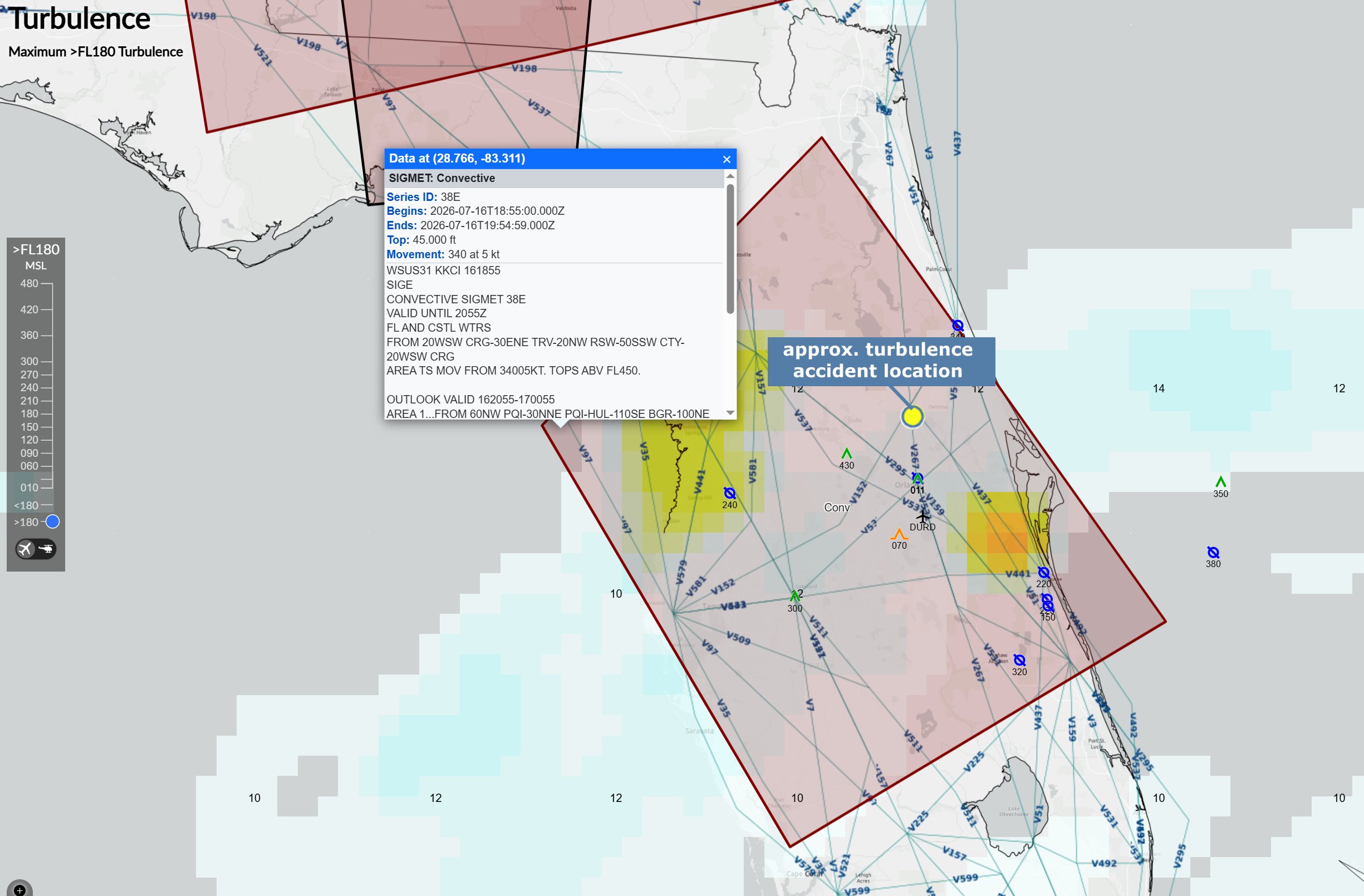
Delta flight DL3723, an Embraer ERJ-175, was en route over Florida at FL370 when it experienced turbulence. One of the two cabin crew members sustained a serious injury. The flight subsequently diverted to Jacksonville, FL (JAX).
Jul 16, 2026

Delta flight DAL1181, an Airbus A321-211, suffered a tail strike on landing runway 22, causing scrapes and dents.
Jul 14, 2026
Aerus Flight ZV165 from Piedras Negras to Monterrey, operated by a Cessna 208B, XA-RFD, force landed approximately 2.5 NM North of the intended destination after encountering technical difficulties. The 3 occupants, 2 crew and 1 passenger, were injured. The aircraft was severely damaged.
Jul 13, 2026
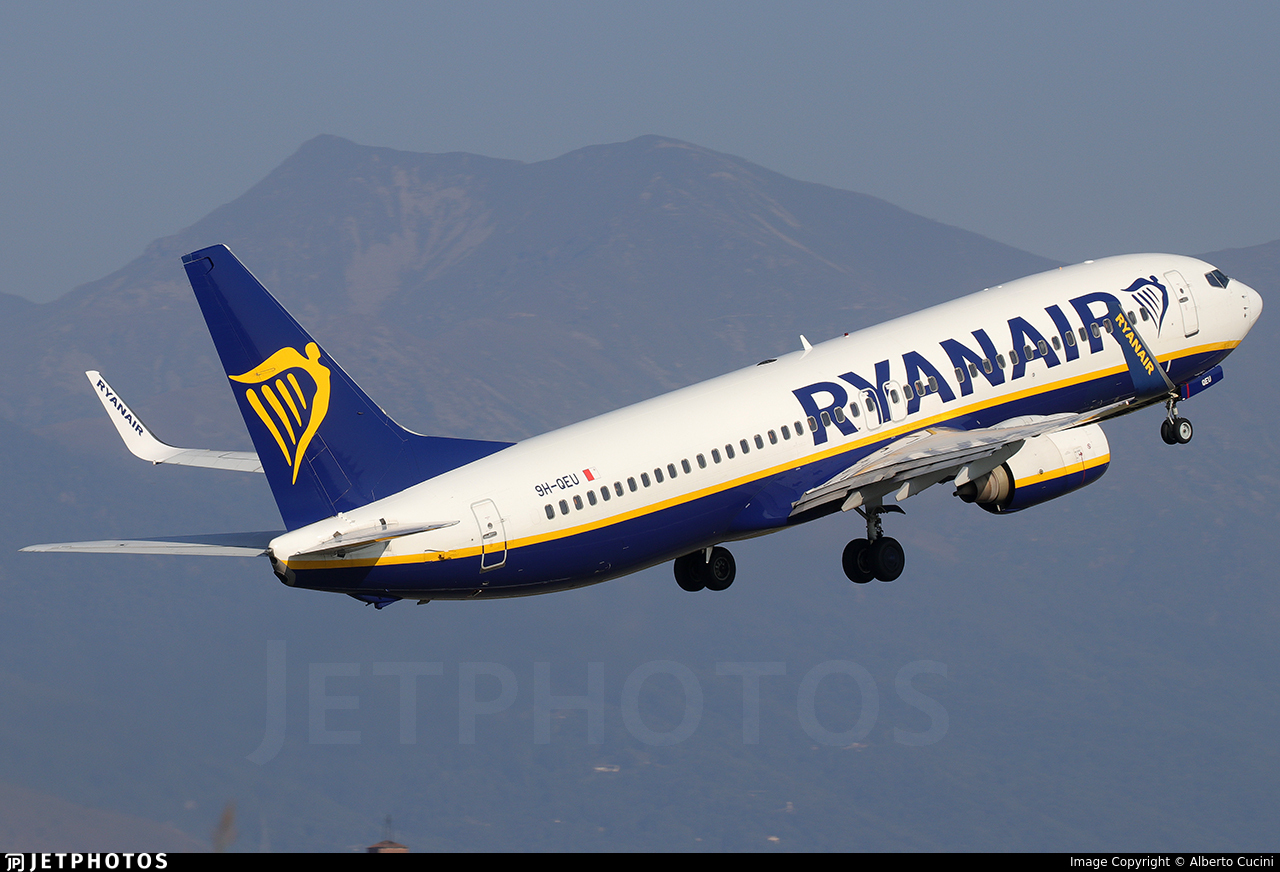
Ryanair flight FR1879, a Boeing 737-800, was climbing through FL160 about ten minutes after takeoff from Thessaloniki (SKG) when a no.2 engine failure occurred. One of the cabin windows broke, causing a decompression. Reports indicate the passenger seated next to the window became partially pulled into the opening due to the pressure differential and was subsequently pulled back inside by others. The flight made an emergency return to SKG.
Jul 10, 2026
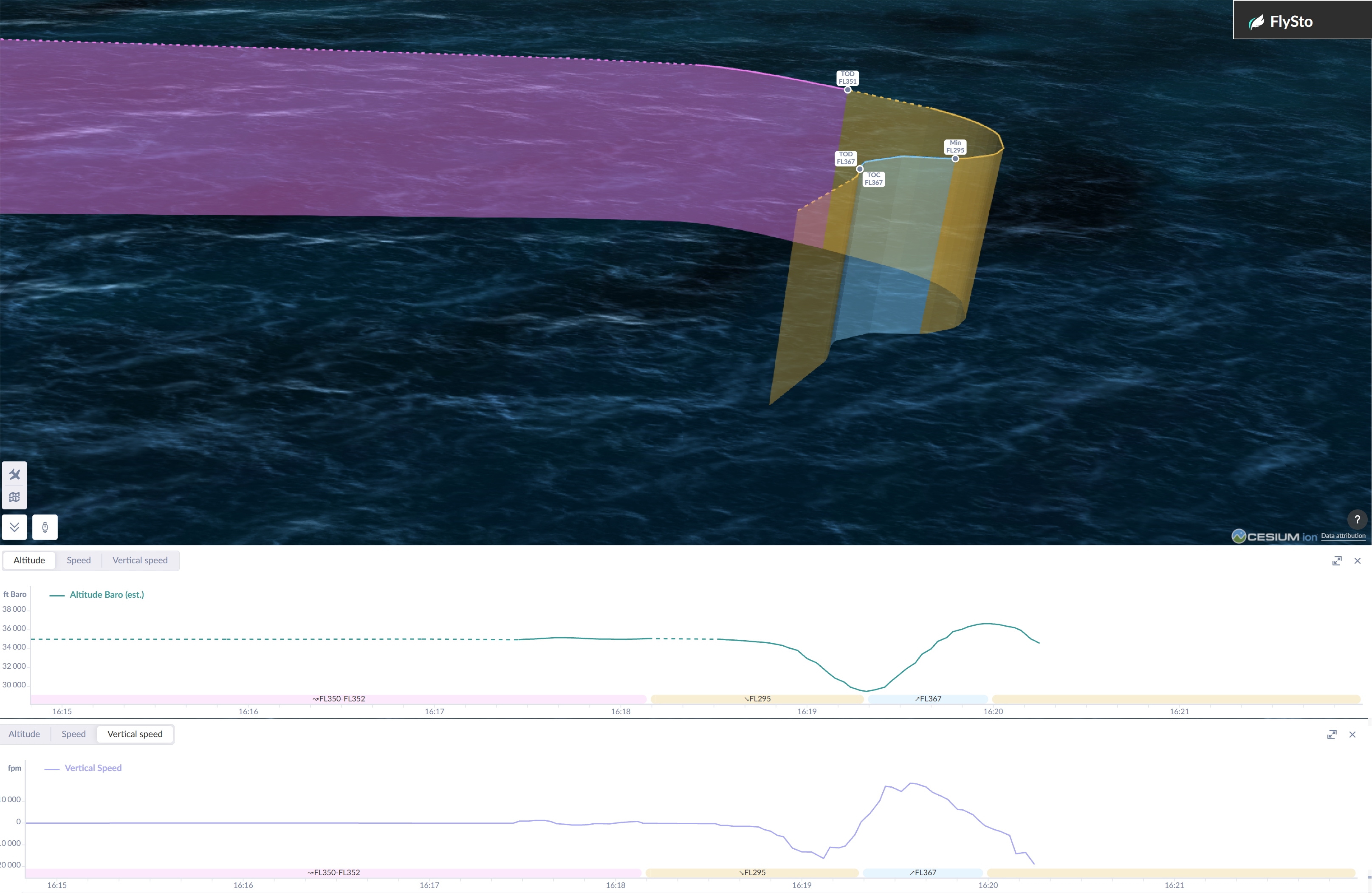
K2 Airways flight KTA1732, a Boeing 737-400 cargo plane crashed into the Arabian Sea approximately 155 nautical miles WSW off Karachi, Pakistan. ADS-B data indicate that the flight departed Sharjah Airport (SHJ) at 15:02 UTC on a flight to Karachi (KHI). It climbed to FL350. At 16:17 UTC, while on Airway G216, the flight began a right-hand turn climbing, which transitioned into a descent of about 5600 feet, followed by a 7200 feet climb and a steep descent. Sources said the crew reported a navigation-related problem during the flight and requested heading assistance from Air Traffic Control (ATC). According to a statement by the Pakistan Airports Authority, the flight reported a navigational system issue at 16:18 UTC (21:18 PST) and was promptly guided by Karachi Area Control Center (ACC). At 16:21 UTC the aircraft was observed on radar rapidly descending with a rapid heading change. Subsequently, radar contact and communication were lost. On July 8 the aircraft wreckage was located. The airplane was totally destroyed.
Jul 7, 2026

Tez Jet flight K9117, an MD-83, suffered a left-hand main gear collapse as it commenced the takeoff roll on runway 26 at Bishkek Airport (BSZ). An emergency evacuation was carried out using the emergency slides. All passengers and crew members safely exited the aircraft.
Jul 7, 2026
JetBlue flight B61873, an Airbus A321-231, experienced turbulence over western Colorado. One flight attendant sustained serious injuries.
Jul 6, 2026

A de Havilland DHC-3T Vazar Turbine Otter, N424KT, experienced a tail wheel failure on take off from the Ruth Glacier. The pilot was not injured. ADS-B data indicate that the aircraft was engaged in flights from Talkeetna to the glacier area south of Denali and back, on the day of the accident.
Jul 2, 2026
Nicholas Air flight JTZ356, an Embraer EMB-500 Phenom 100, N356N, sustained substantial damage when it collided with a box truck while taxing to the ramp on taxiway C after landing on runway 23R at Raleigh-Durham International Airport (RDU/KRDU), Raleigh, North Carolina. There were no reported injuries.
Jul 1, 2026

Jet2 flight LS1719, a Boeing 737-86N, experienced turbulence during the en descent to the destination Catania (CTA). One of the occupants suffered serious injuries/
Jun 30, 2026
HondaJet overran Runway 27 during landing at Yao Airport. The aircraft sustained substantial damage, but there was no fire or fuel leak, and all three occupants on board were uninjured. JTSB launched an investigation as a serious incident. Weather reports at the time indicate it was raining at the time with a variable wind (100-190 degrees) of 5-6 knots. RJOY 260800Z 14005KT 100V180 9999 -SHRA FEW003 SCT010 BKN060 22/21 Q1007 RMK 1ST003 3CU010 7SC060 A2974= RJOY 260900Z 14006KT 100V190 9999 -SHRA FEW003 SCT010 BKN060 21/20 Q1006 RMK 1ST003 3CU010 7SC060 A2973=
Jun 26, 2026
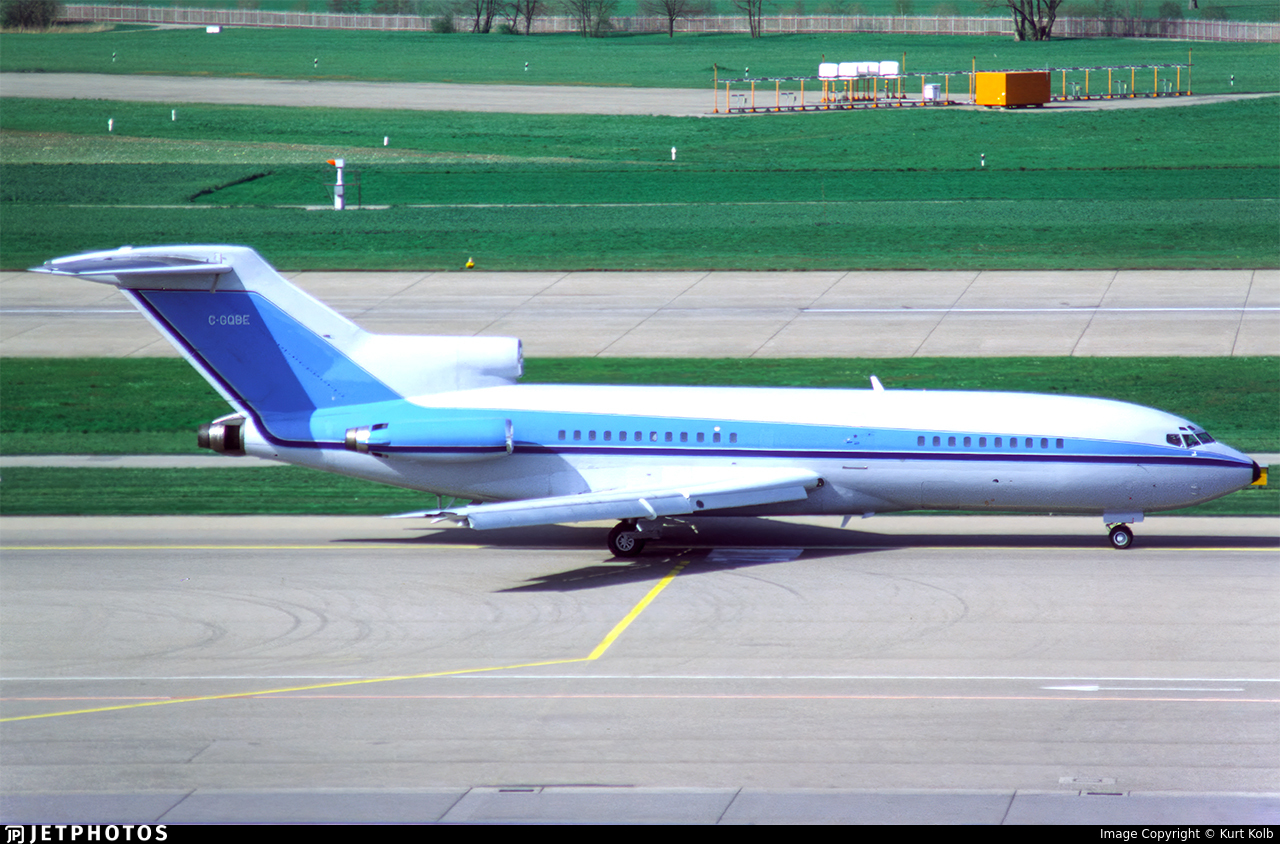
A CL-415 water bomber, using the callsign QUE243, with two flight crew members on board, was conducting a visual flight rules (VFR) wildfire suppression mission from and to La Grande Rivière Airport, Quebec (CYGL). Upon arriving at the lake used for water scooping, QUE243 and another CL-415 (QUE245) each completed two reconnaissance circuits to check for obstacles. Finding none, both aircraft commenced scooping operations. During the eighth water scoop, just as the aircraft was about to leave the water, it struck a submerged rock. After becoming airborne, the crew noticed that the water tanks were draining, but observed no other abnormalities. Once the tanks had emptied, the crew flew two additional circuits over the lake and identified a rock that was very difficult to see because sunlight reflecting on the water gave it a reddish appearance, causing the rock to blend into the surroundings. QUE243 returned to CYGL without declaring an emergency. The aircraft was to be ferried to Québec City Airport (CYQB) under a flight permit for repairs.
Jun 24, 2026

An Antonov An-2, SP-AOO, was involved in a mishap during landing at Luxembourg-Findel Airport (LUX). The left-hand main gear collapsed, left lower wing and fuselage damaged
Jun 21, 2026
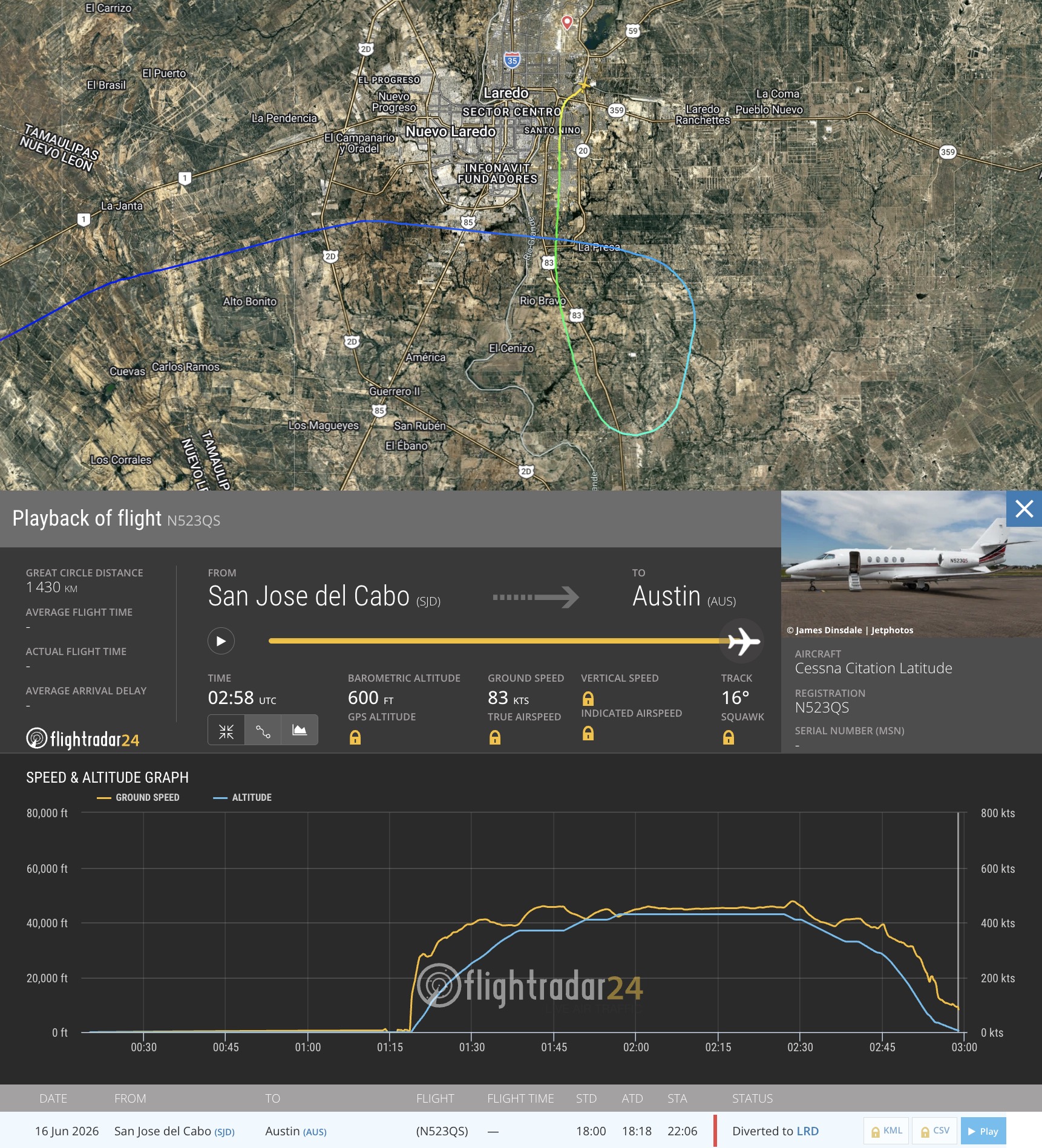
A Cessna 680A Citation Latitude, N523QS, was destroyed when it crashed during an emergency landing on a highway near Laredo Airport (LRD), Texas, USA. One of the six occupants, a passenger, was killed. The flight departed from San José del Cabo (SJD) at 01:18 UTC (18:18 local time) on a flight to Austin (AUS), Texas. It climbed to the cruising altitude FL430. At 02:27 UTC the flight commenced a descent towards LRD. It made a 270 degree descending turn and lined up for an approach to runway 36L. On final approach the aircraft veered right and lined up for a emergency landing on Texas State Highway Loop 20. The aircraft came down on the concrete barrier at the side of an elevated section of road and broke in two. A fire broke out in the forward fuselage section. According to the Laredo Airport Director, the crew reported low fuel and a power outage. Dashcam footage of a car travelling on the lane opposite of the aircraft performing its emergency landing showed the plane knocking down 3 lamp posts, 2 of them got wrapped around the forward half of the fuselage.
Jun 16, 2026
An IAF Antonov An-32RE, operated by 43 Squadron, veered off runway 04 during landing at Jorhat-Rowriah Airport (JRH/VEJT), Jorhat, Assam, and crashed. Five occupants perished, the co-pilot survived with serious injuries and the aircraft was destroyed. A video of the accident show the aircraft rolling in the grass along the left side of runway 04 until it crossed the taxiway and nosed down into a ditch, bursting into flames.
Jun 13, 2026
The aircraft was parked at the ramp after landing on runway 30 when an employee of SkyDive Marana exited and sustained fatal injuries after he walked into the propeller which was still running.
Jun 13, 2026

Turkish Airlines flight TK2430, a Boeing 777-300ER, struck a radar antenna tower with the right-hand wing as it taxied to the stand after landing at Antalya Airport (AYT). The mast collapsed and impacted the fuselage. The outer section of the right-hand wing was severely damaged and the fuselage also suffered (localized) substantial damage. The aircraft followed a taxiway with a distance between the centreline and the base of the lighting tower of about 29 meters. The wing span of the aircraft is 64,80 meters (32,80 meters from the centreline of the taxiway).
Jun 11, 2026
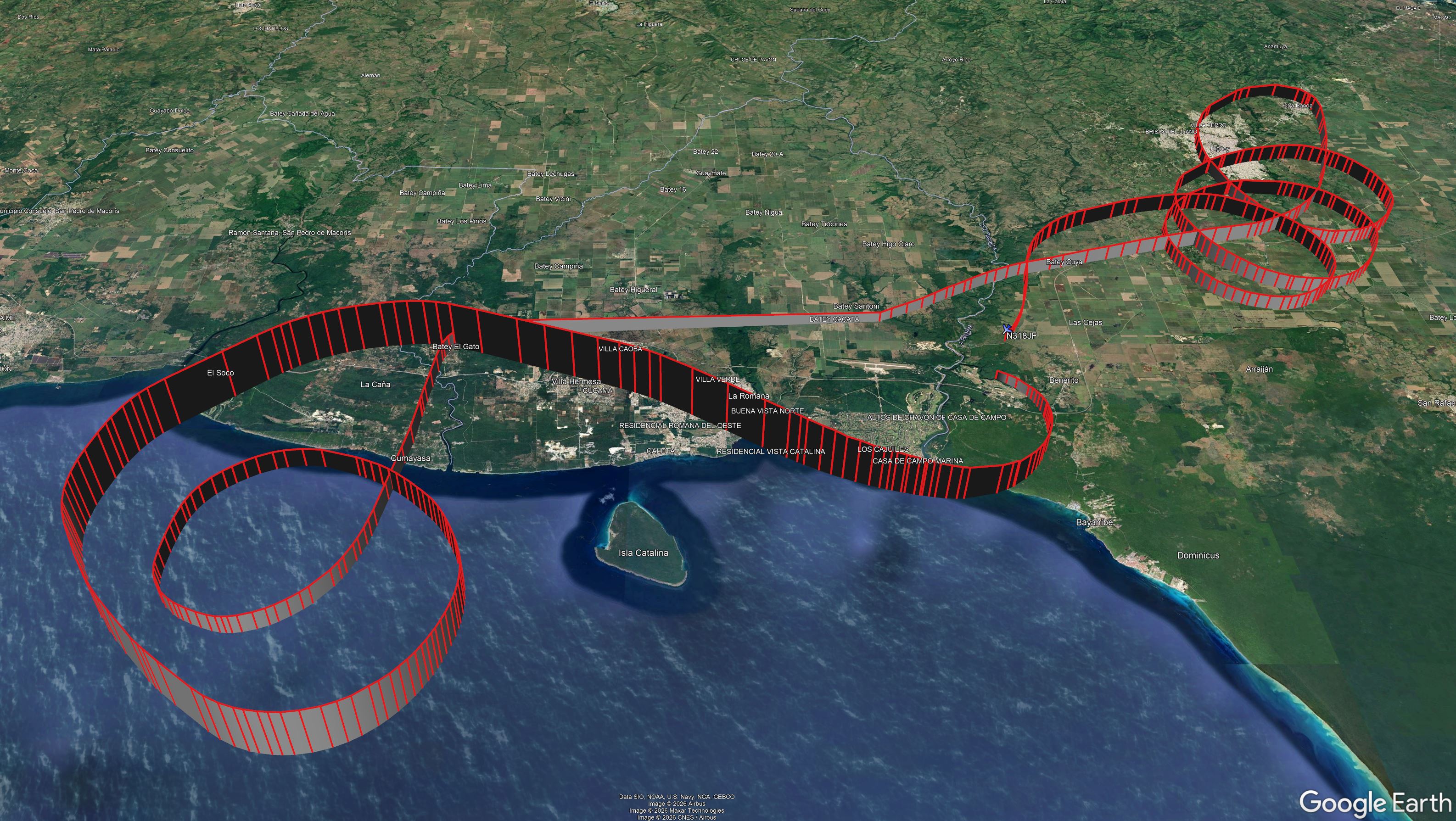
A Gulfstream G200, N318JF, was destroyed when it crashed during an attempted emergency landing on runway 29 at La Romana International Airport (LRM/MDLR), Dominican Republic. Both pilots were killed. The flight crew reported an inflight emergency (appears to be a failure of one of the engines) and their intent to return back to the airport. ADS-B data indicate that the aircraft took off from runway 11 at LRM about 19:30 UTC, making a right hand turn until it flew a 300° track. At 19:35 it began two left-hand turns and appeared to be lining up for runway 11 for an emergency landing. AD-B data is missing for about four minutes and the aircraft was then tracked circling to the north-west of the airport. After completing four left-hand turns, the aircraft lined up for an emergency landing on runway 29. Weather data at the time of landing, 20:10 UTC, indicate am 8.7 kts tailwind component. Videos of the accident sequence appear to show the aircraft veering to the left after landing. The main undercarriage collapsed as the aircraft slid across the grass next to the runway. The no.1 engine can be seen separating from the fuselage. The aircraft then burst into flames when the wing fuel tanks ruptured.
Jun 7, 2026
The aircraft suffered a runway excursion, resulting in severe damage.
Jun 5, 2026
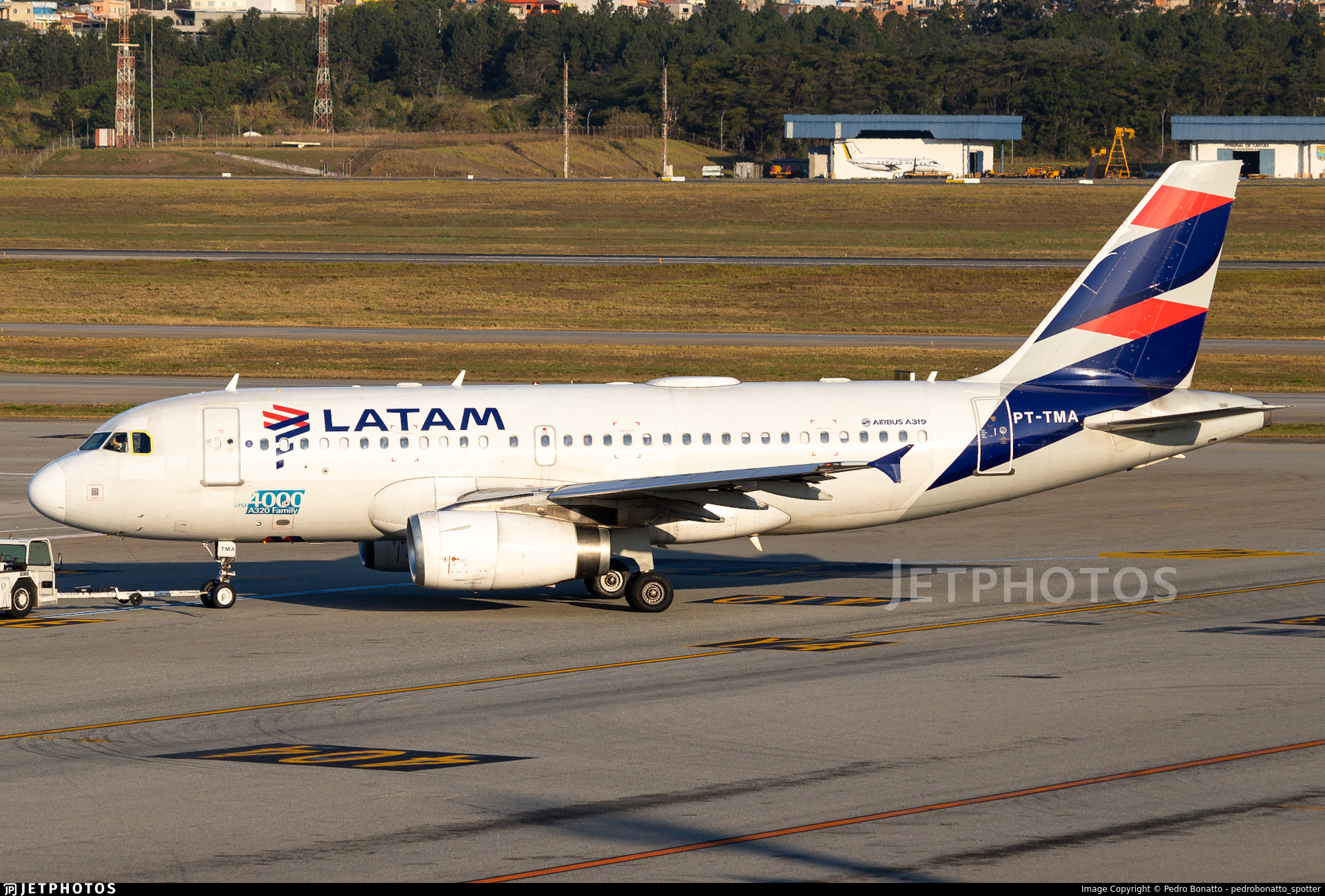
LATAM flight LA3785 from Ribeirão Preto to São Paulo, operated by a Airbus A319-100, PT-TMA, was parked on the stand when the passengers began to disembark. A passenger fell during the disembarkation process and was critically injured. The passenger died 2 days later in hospital from their injuries.
May 29, 2026
Page 1 of 1380
Explore More Safety Data
Safest Planes
See which aircraft models have the best safety track records based on real incident data.
Airline Rankings
Compare airlines by their safety records, incident history, and operational standards.
Check My Flight
Flying soon? Enter your flight number to get safety info on the flight, plane, and airline.