
Thiruvananthapuram - Dubai
Flight / Schedule
Thiruvananthapuram - Dubai
Aircraft
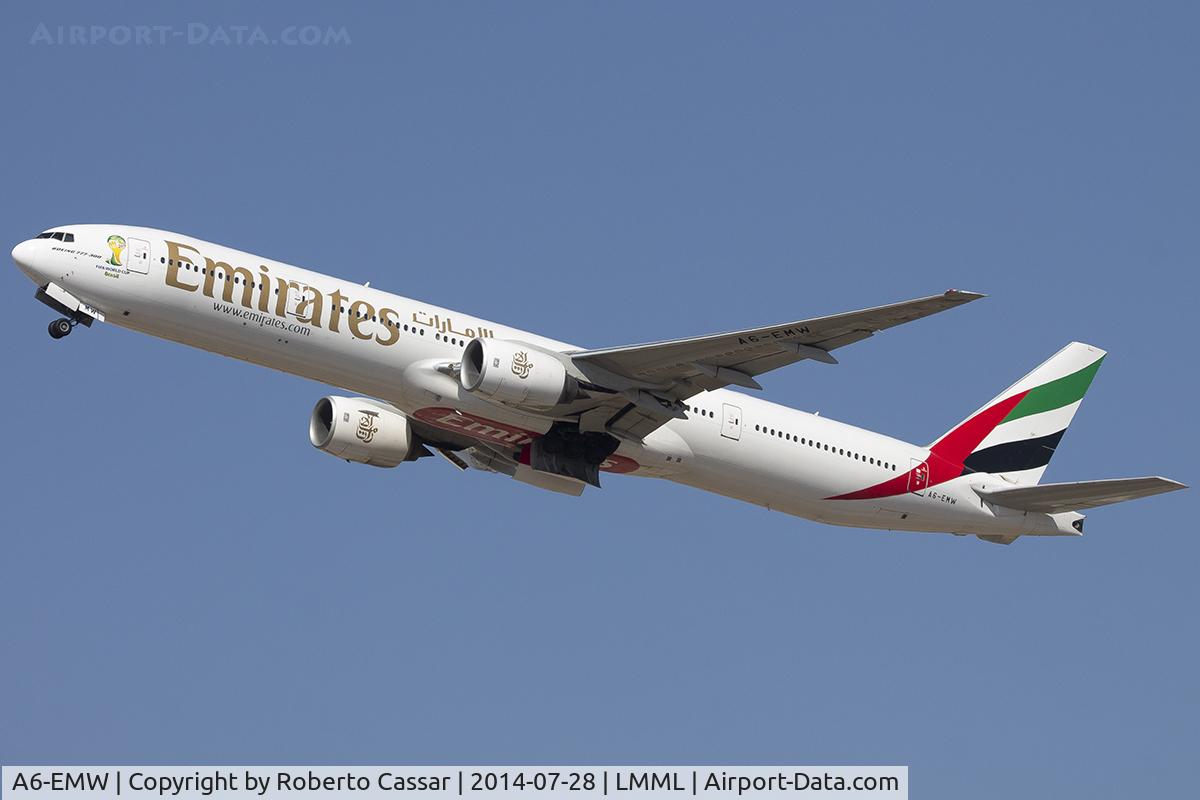
Boeing 777-300Registration
A6-EMW
MSN
32700/434
Year of Manufacture
2003
Operator
EmiratesDate
August 3, 2016 at 12:38 PM
Type
CRASHFlight Type
Scheduled Revenue Flight
Flight Phase
Landing (descent or approach)
Crash Site
Airport (less than 10 km from airport)
Crash Location
Dubai Dubai
Region
Asia • United Arab Emirates
Coordinates
25.2277°, 55.1750°
Crash Cause
Human factor
Narrative Report
On August 3, 2016 at 12:38 PM, Thiruvananthapuram - Dubai experienced a crash involving Boeing 777-300, operated by Emirates, with the event recorded near Dubai Dubai.
The flight was categorized as scheduled revenue flight and the reported phase was landing (descent or approach) at a airport (less than 10 km from airport) crash site.
300 people were known to be on board, 0 fatalities were recorded, 300 survivors were identified or estimated. This corresponds to an estimated fatality rate of 0.0%.
Crew on board: 18, crew fatalities: 0, passengers on board: 282, passenger fatalities: 0, other fatalities: 0.
The listed crash cause is human factor. On 3 August 2016, an Emirates Boeing 777-31H Aircraft, registration A6-EMW, operating a scheduled passenger flight UAE521, departed Trivandrum International Airport (VOTV), India, at 0506 UTC for a 3 hour 30 minute flight to Dubai International Airport (OMDB), the United Arab Emirates, with 282 passengers, 2 flight crew and 16 cabin crew members on board. The Commander attempted to perform a tailwind manual landing during an automatic terminal information service (ATIS) forecasted moderate windshear warning affecting all runways at OMDB. The tailwind was within the operational limitations of the Aircraft. During the landing on runway 12L at OMDB the Commander, who was the pilot flying, decided to fly a go-around, as he was unable to land the Aircraft within the runway touchdown zone. The go-around decision was based on the perception that the Aircraft would not land due to thermals and not due to a windshear encounter. For this reason, the Commander elected to fly a normal go-around and not the windshear escape maneuver. The flight crew initiated the flight crew operations manual (FCOM) Go-around and Missed Approach Procedure and the Commander pushed the TO/GA switch. As designed, because the Aircraft had touched down, the TO/GA switches became inhibited and had no effect on the autothrottle (A/T). The flight crew stated that they were not aware of the touchdown that lasted for six seconds. After becoming airborne during the go-around attempt, the Aircraft climbed to a height of 85 ft radio altitude above the runway surface. The flight crew did not observe that both thrust levers had remained at the idle position and that the engine thrust remained at idle. The Aircraft quickly sank towards the runway as the airspeed was insufficient to support the climb. As the Aircraft lost height and speed, the Commander initiated the windshear escape maneuver procedure and rapidly advanced both thrust levers. This action was too late to avoid the impact with runway 12L. Eighteen seconds after the initiation of the go-around the Aircraft impacted the runway at 0837:38 UTC and slid on its lower fuselage along the runway surface for approximately 32 seconds covering a distance of approximately 800 meters before coming to rest adjacent to taxiway Mike 13. The Aircraft remained intact during its movement along the runway protecting the occupants however, several fuselage mounted components and the No.2 engine/pylon assembly separated from the Aircraft. During the evacuation, several passenger door escape slides became unusable. Many passengers evacuated the Aircraft taking their carry-on baggage with them. Except for the Commander and the senior cabin crew member who evacuated after the center wing tank explosion, all of the other occupants evacuated via the operational escape slides in approximately 6 minutes and 40 seconds. Twenty-one passengers, one flight crewmember, and six cabin crew members sustained minor injuries. Four cabin crew members sustained serious injuries. Approximately 9 minutes and 40 seconds after the Aircraft came to rest, the center wing tank exploded which caused a large section of the right wing upper skin to be liberated. As the panel fell to the ground, it struck and fatally injured a firefighter. The Aircraft was eventually destroyed due to the subsequent fire. Following the Accident, the Operator (Emirates), the General Civil Aviation Authority (GCAA), Dubai Airports and Dubai Air Navigation Services (‘dans’) implemented several safety actions. In this Final Report, the AAIS issues safety recommendations addressed to the Operator, the GCAA, The Boeing Company, the Federal Aviation Administration (FAA), Dubai Airports, ‘dans’, and the International Civil Aviation Organization (ICAO).
Aircraft reference details include registration A6-EMW, MSN 32700/434, year of manufacture 2003.
Geospatial coordinates for this crash are approximately 25.2277°, 55.1750°.
Fatalities
Total
0
Crew
0
Passengers
0
Other
0
Crash Summary
On 3 August 2016, an Emirates Boeing 777-31H Aircraft, registration A6-EMW, operating a scheduled passenger flight UAE521, departed Trivandrum International Airport (VOTV), India, at 0506 UTC for a 3 hour 30 minute flight to Dubai International Airport (OMDB), the United Arab Emirates, with 282 passengers, 2 flight crew and 16 cabin crew members on board. The Commander attempted to perform a tailwind manual landing during an automatic terminal information service (ATIS) forecasted moderate windshear warning affecting all runways at OMDB. The tailwind was within the operational limitations of the Aircraft. During the landing on runway 12L at OMDB the Commander, who was the pilot flying, decided to fly a go-around, as he was unable to land the Aircraft within the runway touchdown zone. The go-around decision was based on the perception that the Aircraft would not land due to thermals and not due to a windshear encounter. For this reason, the Commander elected to fly a normal go-around and not the windshear escape maneuver. The flight crew initiated the flight crew operations manual (FCOM) Go-around and Missed Approach Procedure and the Commander pushed the TO/GA switch. As designed, because the Aircraft had touched down, the TO/GA switches became inhibited and had no effect on the autothrottle (A/T). The flight crew stated that they were not aware of the touchdown that lasted for six seconds. After becoming airborne during the go-around attempt, the Aircraft climbed to a height of 85 ft radio altitude above the runway surface. The flight crew did not observe that both thrust levers had remained at the idle position and that the engine thrust remained at idle. The Aircraft quickly sank towards the runway as the airspeed was insufficient to support the climb. As the Aircraft lost height and speed, the Commander initiated the windshear escape maneuver procedure and rapidly advanced both thrust levers. This action was too late to avoid the impact with runway 12L. Eighteen seconds after the initiation of the go-around the Aircraft impacted the runway at 0837:38 UTC and slid on its lower fuselage along the runway surface for approximately 32 seconds covering a distance of approximately 800 meters before coming to rest adjacent to taxiway Mike 13. The Aircraft remained intact during its movement along the runway protecting the occupants however, several fuselage mounted components and the No.2 engine/pylon assembly separated from the Aircraft. During the evacuation, several passenger door escape slides became unusable. Many passengers evacuated the Aircraft taking their carry-on baggage with them. Except for the Commander and the senior cabin crew member who evacuated after the center wing tank explosion, all of the other occupants evacuated via the operational escape slides in approximately 6 minutes and 40 seconds. Twenty-one passengers, one flight crewmember, and six cabin crew members sustained minor injuries. Four cabin crew members sustained serious injuries. Approximately 9 minutes and 40 seconds after the Aircraft came to rest, the center wing tank exploded which caused a large section of the right wing upper skin to be liberated. As the panel fell to the ground, it struck and fatally injured a firefighter. The Aircraft was eventually destroyed due to the subsequent fire. Following the Accident, the Operator (Emirates), the General Civil Aviation Authority (GCAA), Dubai Airports and Dubai Air Navigation Services (‘dans’) implemented several safety actions. In this Final Report, the AAIS issues safety recommendations addressed to the Operator, the GCAA, The Boeing Company, the Federal Aviation Administration (FAA), Dubai Airports, ‘dans’, and the International Civil Aviation Organization (ICAO).
Cause: Human factor
Occupants & Outcome
Crew On Board
18
Passengers On Board
282
Estimated Survivors
300
Fatality Rate
0.0%
Known people on board: 300
Operational Details
Schedule / Flight
Thiruvananthapuram - Dubai
Operator
EmiratesFlight Type
Scheduled Revenue Flight
Flight Phase
Landing (descent or approach)
Crash Site
Airport (less than 10 km from airport)
Region / Country
Asia • United Arab Emirates
Aircraft Details
Similar Plane Crashes
United States Army Air Forces - USAAF
Curtiss C-46 Commando
Enroute from Karachi to Abadan, the aircraft hit the slope of a mountain located about 50 km east of Sharjah, in the UAE All three crew members were killed. Crew: F/O William G. Harding 2.
Orient Airways
Douglas C-47 Skytrain (DC-3)
Shortly after a night takeoff from Sharjah Airport, while climbing, the pilot lost control of the aircraft that stalled and crashed in a desert area located near the runway end. A passenger was killed while all other occupants were rescued. All passengers were Pakistan pilgrims flying from Karachi to Jeddah. At the time of the accident, the copilot was seating in the left hand seat and the captain in the right hand seat.
Gulf Aviation - Oman
Douglas C-47 Skytrain (DC-3)
The Gulf Aviation DC-3 operated on a return flight from Bahrain to Sharjah via Doha. The DC-3 took off from Doha at 05:16 GMT following a 30-minute stopover. The DC-3 was cleared for FL70 and reported to Bahrain ATC at 06:04 that it was in contact with Sharjah, ETA being 06:45. Last radio contact was one minute later when the flight reported to Sharjah. The pilot of a de Havilland Heron plane, approaching Sharjah at FL50 reported hearing the DC-3 crew trying to contact Sharjah three times. These calls were not heard by Sharjah control and the airplane crashed into the sea off Sharjah in unknown circumstances. SAR operations were conducted but eventually suspended a week later as no trace of the aircraft nor the 20 occupants was ever found.
Royal Air Force - RAF
Scottish Aviation Twin Pioneer
The crew was performing a local training flight when control was lost. The airplane crashed in a desert area located west of Bu Hafafa. A passenger was seriously injured while eight other occupants were killed, among them four cadets from the Sultanat of Oman's Military School.
United Arab Emirates - Abu Dhabi Amiri Flight
De Havilland DHC-4 Caribou
Crashed in unknown circumstances. No casualties.
British Army Air Corps
De Havilland DHC-2 Beaver
Crashed during take-off from Sharjah, Oman after the tail hit bushes and suffered Category 4 or 5 damage when starboard elevator was torn off. It was returned to the UK by HS Andover XS642 and it languished at 70 Aircraft Workshops, REME, Middle Wallop, during 1970 & 1971 and then Hawker Siddeley Aircraft (HAS) at Hawarden, Chester for rebuild. This was abandoned and the aircraft was struck off charge on 04-Mar-1971. Parts were used with XP815 (crashed 09-Sep-1962) in making a virtually complete composite airframe, and later marked as XP822 with that aircrafts c/n plate. Source: www.dhc-2.com