
Istanbul - Amsterdam
Flight / Schedule
Istanbul - Amsterdam
Aircraft
Boeing 737-800Registration
TC-JGE
MSN
29789/1065
Year of Manufacture
2002
Date
February 25, 2009 at 10:26 AM
Type
CRASHFlight Type
Scheduled Revenue Flight
Flight Phase
Landing (descent or approach)
Crash Site
Airport (less than 10 km from airport)
Crash Location
Amsterdam-Schiphol North Holland
Region
Europe • Netherlands
Coordinates
52.3270°, 4.7415°
Crash Cause
Technical failure
Narrative Report
On February 25, 2009 at 10:26 AM, Istanbul - Amsterdam experienced a crash involving Boeing 737-800, operated by Turkish Airlines - THY Türk Hava Yollari, with the event recorded near Amsterdam-Schiphol North Holland.
The flight was categorized as scheduled revenue flight and the reported phase was landing (descent or approach) at a airport (less than 10 km from airport) crash site.
135 people were known to be on board, 9 fatalities were recorded, 126 survivors were identified or estimated. This corresponds to an estimated fatality rate of 6.7%.
Crew on board: 7, crew fatalities: 4, passengers on board: 128, passenger fatalities: 5, other fatalities: 0.
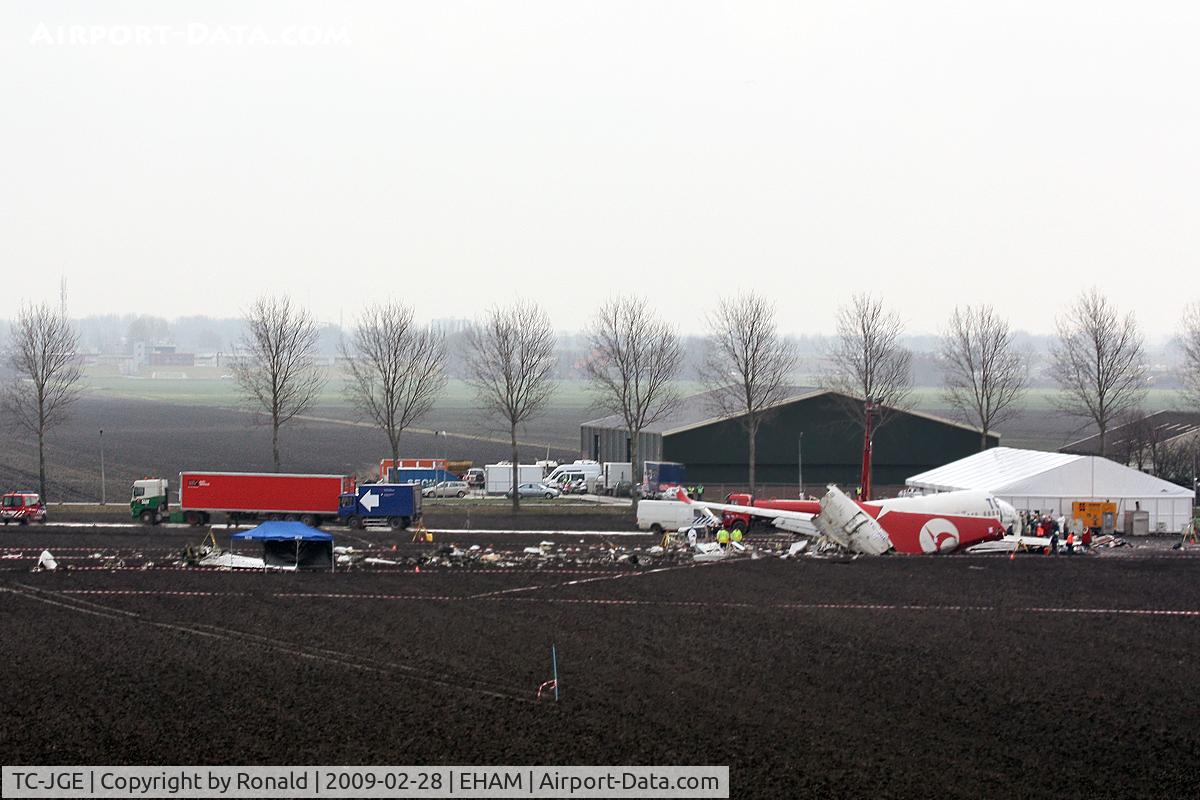
The listed crash cause is technical failure. Turkish Airlines Flight 1951, a Boeing 737-800, departed Istanbul-Atatürk International Airport (IST) for a flight to Amsterdam-Schiphol International Airport (AMS), The Netherlands. The flight crew consisted of three pilots: a line training captain who occupied the left seat, a first officer under line training in the right seat and an additional first officer who occupied the flight deck jump seat. The first officer under line training was the pilot flying. The en route part of the flight was uneventful. The flight was descending for Schiphol and passed overhead Flevoland at about 8500 ft. At that time the aural landing gear warning sounded. The aircraft continued and was then directed by Air Traffic Control towards runway 18R for an ILS approach and landing. The standard procedure for runway 18R prescribes that the aircraft is lined up at least 8 NM from the runway threshold at an altitude of 2000 feet. The glidepath is then approached and intercepted from below. Lining up at a distance between 5 and 8 NM is allowed when permitted by ATC. Flight 1951 was vectored for a line up at approximately 6 NM at an altitude of 2000 feet. The glide slope was now approached from above. The crew performed the approach with one of the two autopilot and autothrottle engaged. The landing gear was selected down and flaps 15 were set. While descending through 1950 feet, the radio altimeter value suddenly changed to -8 feet. And again the aural landing gear warning sounded. This could be seen on the captain’s (left-hand) primary flight display. The first officer’s (right-hand) primary flight display, by contrast, indicated the correct height, as provided by the right-hand system. The left hand radio altimeter system, however, categorised the erroneous altitude reading as a correct one, and did not record any error. In turn, this meant that it was the erroneous altitude reading that was used by various aircraft systems, including the autothrottle. The crew were unaware of this, and could not have known about it. The manuals for use during the flight did not contain any procedures for errors in the radio altimeter system. In addition, the training that the pilots had undergone did not include any detailed system information that would have allowed them to understand the significance of the problem. When the aircraft started to follow the glidepath because of the incorrect altitude reading, the autothrottle moved into the ‘retard flare’ mode. This mode is normally only activated in the final phase of the landing, below 27 feet. This was possible because the other preconditions had also been met, including flaps at (minimum) position 15. The thrust from both engines was accordingly reduced to a minimum value (approach idle). This mode was shown on the primary flight displays as ‘RETARD’. However, the right-hand autopilot, which was activated, was receiving the correct altitude from the right-hand radio altimeter system. Thus the autopilot attempted to keep the aircraft flying on the glide path for as long as possible. This meant that the aircraft’s nose continued to rise, creating an increasing angle of attack of the wings. This was necessary in order to maintain the same lift as the airspeed reduced. In the first instance, the pilots’ only indication that the autothrottle would no longer maintain the pre-selected speed of 144 knots was the RETARD display. When the speed fell below this value at a height of 750 feet, they would have been able to see this on the airspeed indicator on the primary flight displays. When subsequently, the airspeed reached 126 knots, the frame of the airspeed indicator also changed colour and started to flash. The artificial horizon also showed that the nose attitude of the aircraft was becoming far too high. The cockpit crew did not respond to these indications and warnings. The reduction in speed and excessively high pitch attitude of the aircraft were not recognised until the approach to stall warning (stick shaker) went off at an altitude of 460 feet. The first officer responded immediately to the stick shaker by pushing the control column forward and also pushing the throttle levers forward. The captain however, also responded to the stick shaker commencing by taking over control. Assumingly the result of this was that the first officer’s selection of thrust was interrupted. The result of this was that the autothrottle, which was not yet switched off, immediately pulled the throttle levers back again to the position where the engines were not providing any significant thrust. Once the captain had taken over control, the autothrottle was disconnected, but no thrust was selected at that point. Nine seconds after the commencement of the first approach to stall warning, the throttle levers were pushed fully forward, but at that point the aircraft had already stalled and the height remaining, of about 350 feet, was insufficient for a recovery. According to the last recorded data of the digital flight data recorder the aircraft was in a 22° ANU and 10° Left Wing Down (LWD) position at the moment of impact. The airplane impacted farmland. The horizontal stabilizer and both main landing gear legs were separated from the aircraft and located near the initial impact point. The left and right engines had detached from the aircraft. The aft fuselage, with vertical stabilizer, was broken circumferentially forward of the aft passenger doors and had sustained significant damage. The fuselage had ruptured at the right side forward of the wings. The forward fuselage section, which contained the cockpit and seat rows 1 to 7, had been significantly disrupted. The rear fuselage section was broken circumferentially around row 28.
Aircraft reference details include registration TC-JGE, MSN 29789/1065, year of manufacture 2002.
Geospatial coordinates for this crash are approximately 52.3270°, 4.7415°.
Fatalities
Total
9
Crew
4
Passengers
5
Other
0
Crash Summary
Turkish Airlines Flight 1951, a Boeing 737-800, departed Istanbul-Atatürk International Airport (IST) for a flight to Amsterdam-Schiphol International Airport (AMS), The Netherlands. The flight crew consisted of three pilots: a line training captain who occupied the left seat, a first officer under line training in the right seat and an additional first officer who occupied the flight deck jump seat. The first officer under line training was the pilot flying. The en route part of the flight was uneventful. The flight was descending for Schiphol and passed overhead Flevoland at about 8500 ft. At that time the aural landing gear warning sounded. The aircraft continued and was then directed by Air Traffic Control towards runway 18R for an ILS approach and landing. The standard procedure for runway 18R prescribes that the aircraft is lined up at least 8 NM from the runway threshold at an altitude of 2000 feet. The glidepath is then approached and intercepted from below. Lining up at a distance between 5 and 8 NM is allowed when permitted by ATC. Flight 1951 was vectored for a line up at approximately 6 NM at an altitude of 2000 feet. The glide slope was now approached from above. The crew performed the approach with one of the two autopilot and autothrottle engaged. The landing gear was selected down and flaps 15 were set. While descending through 1950 feet, the radio altimeter value suddenly changed to -8 feet. And again the aural landing gear warning sounded. This could be seen on the captain’s (left-hand) primary flight display. The first officer’s (right-hand) primary flight display, by contrast, indicated the correct height, as provided by the right-hand system. The left hand radio altimeter system, however, categorised the erroneous altitude reading as a correct one, and did not record any error. In turn, this meant that it was the erroneous altitude reading that was used by various aircraft systems, including the autothrottle. The crew were unaware of this, and could not have known about it. The manuals for use during the flight did not contain any procedures for errors in the radio altimeter system. In addition, the training that the pilots had undergone did not include any detailed system information that would have allowed them to understand the significance of the problem. When the aircraft started to follow the glidepath because of the incorrect altitude reading, the autothrottle moved into the ‘retard flare’ mode. This mode is normally only activated in the final phase of the landing, below 27 feet. This was possible because the other preconditions had also been met, including flaps at (minimum) position 15. The thrust from both engines was accordingly reduced to a minimum value (approach idle). This mode was shown on the primary flight displays as ‘RETARD’. However, the right-hand autopilot, which was activated, was receiving the correct altitude from the right-hand radio altimeter system. Thus the autopilot attempted to keep the aircraft flying on the glide path for as long as possible. This meant that the aircraft’s nose continued to rise, creating an increasing angle of attack of the wings. This was necessary in order to maintain the same lift as the airspeed reduced. In the first instance, the pilots’ only indication that the autothrottle would no longer maintain the pre-selected speed of 144 knots was the RETARD display. When the speed fell below this value at a height of 750 feet, they would have been able to see this on the airspeed indicator on the primary flight displays. When subsequently, the airspeed reached 126 knots, the frame of the airspeed indicator also changed colour and started to flash. The artificial horizon also showed that the nose attitude of the aircraft was becoming far too high. The cockpit crew did not respond to these indications and warnings. The reduction in speed and excessively high pitch attitude of the aircraft were not recognised until the approach to stall warning (stick shaker) went off at an altitude of 460 feet. The first officer responded immediately to the stick shaker by pushing the control column forward and also pushing the throttle levers forward. The captain however, also responded to the stick shaker commencing by taking over control. Assumingly the result of this was that the first officer’s selection of thrust was interrupted. The result of this was that the autothrottle, which was not yet switched off, immediately pulled the throttle levers back again to the position where the engines were not providing any significant thrust. Once the captain had taken over control, the autothrottle was disconnected, but no thrust was selected at that point. Nine seconds after the commencement of the first approach to stall warning, the throttle levers were pushed fully forward, but at that point the aircraft had already stalled and the height remaining, of about 350 feet, was insufficient for a recovery. According to the last recorded data of the digital flight data recorder the aircraft was in a 22° ANU and 10° Left Wing Down (LWD) position at the moment of impact. The airplane impacted farmland. The horizontal stabilizer and both main landing gear legs were separated from the aircraft and located near the initial impact point. The left and right engines had detached from the aircraft. The aft fuselage, with vertical stabilizer, was broken circumferentially forward of the aft passenger doors and had sustained significant damage. The fuselage had ruptured at the right side forward of the wings. The forward fuselage section, which contained the cockpit and seat rows 1 to 7, had been significantly disrupted. The rear fuselage section was broken circumferentially around row 28.
Cause: Technical failure
Occupants & Outcome
Crew On Board
7
Passengers On Board
128
Estimated Survivors
126
Fatality Rate
6.7%
Known people on board: 135
Operational Details
Schedule / Flight
Istanbul - Amsterdam
Flight Type
Scheduled Revenue Flight
Flight Phase
Landing (descent or approach)
Crash Site
Airport (less than 10 km from airport)
Region / Country
Europe • Netherlands
Aircraft Details
Similar Plane Crashes
KLM Royal Dutch Airlines - Koninklijke Luchtvaart Maatschappij
Fokker F3
While approaching Rotterdam Airport, the pilot was forced to attempt an emergency landing for unknown reasons. Upon landing in a field, the aircraft impacted a drainage ditch and came to rest upside down. All three occupants evacuated safely and the aircraft was damaged beyond repair. It was rebuilt with another MSN 1533 and same registration H-NABL.
KLM Royal Dutch Airlines - Koninklijke Luchtvaart Maatschappij
De Havilland DH.9
En route, the engine caught fire and the pilot elected to make an emergency landing in Waalhaven, south of Rotterdam. The aircraft crashed and was damaged beyond repair and the pilot escaped unhurt. This was the first official accident involving an aircraft of the Dutch National carrier KLM since its creation in 1919. Crew: H. Wende, pilot.
KLM Royal Dutch Airlines - Koninklijke Luchtvaart Maatschappij
De Havilland DH.9
Following a night takeoff, the aircraft crash landed in a field near Rotterdam-Waalhaven Airport. There were no casualties.
Flygkompaniet
FVM S.18
The aircraft, a FVM S.18 operated by the Flygkompaniets Tygverkstäder på Malmen, was to participate in the arrival contest in connection to the International Aviation Fair in Gothenburg, ILUG 23. The heavily loaded aircraft crashed upon arrival in Rotterdam, which was the starting point of the contest. All three crew members were killed. Crew: Hugo Montgomery, pilot, Cpt Liljewalch, observer, Oscar Axelsson, mechanic.
Farman Line
Farman F.60 Goliath
Shortly after takeoff from Amsterdam-Schiphol Airport, one of the engine failed. Unable to return to the airport, the pilot attempted an emergency landing in an open field. After touchdown, the aircraft impact a drainage ditch, lost an undercarriage and came to rest. While all occupants evacuated safely, the aircraft was damaged beyond repair.
KLM Royal Dutch Airlines - Koninklijke Luchtvaart Maatschappij
Fokker F3
During the takeoff roll, the aircraft struck an irregularity in the ground and rotated prematurely. Unable to get sufficient height due to low speed, the aircraft stalled and crashed. All three occupants evacuated safely and the aircraft was considered as damaged beyond repair.