
San Salvador – Tegucigalpa – Miami
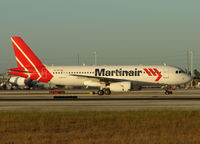
Flight / Schedule
San Salvador – Tegucigalpa – Miami
Aircraft
Airbus A320Registration
EI-TAF
MSN
1374
Year of Manufacture
2000
Date
May 30, 2008 at 09:40 AM
Type
CRASHFlight Type
Scheduled Revenue Flight
Flight Phase
Landing (descent or approach)
Crash Site
Airport (less than 10 km from airport)
Crash Location
Tegucigalpa-Toncontin Francisco Morazán
Region
Central America • Honduras
Coordinates
14.0522°, -87.2381°
Crash Cause
Human factor
Narrative Report
On May 30, 2008 at 09:40 AM, San Salvador – Tegucigalpa – Miami experienced a crash involving Airbus A320, operated by TACA International Airlines - Transportes Aéreos Centro Americanos, with the event recorded near Tegucigalpa-Toncontin Francisco Morazán.
The flight was categorized as scheduled revenue flight and the reported phase was landing (descent or approach) at a airport (less than 10 km from airport) crash site.
124 people were known to be on board, 5 fatalities were recorded, 119 survivors were identified or estimated. This corresponds to an estimated fatality rate of 4.0%.
Crew on board: 6, crew fatalities: 1, passengers on board: 118, passenger fatalities: 2, other fatalities: 2.
The listed crash cause is human factor. A TACA Airlines Airbus A320, flight TA390, with Irish Registry EI-TAF, with 135 passengers and crew on board, overran at the end of the runway during landing at Tegucigalpa caused the deaths of three people on board and two on the ground. The government of Honduras delegated the conduct of investigation to the Salvadoran Civil Aviation Authorities, as provided for in Annex 13 to the Chicago Convention. In accordance with international agreements, France sent two investigators from the BEA (Bureau d'Enquêtes et d'Analyses), accompanied by five technical advisors from Airbus; United States sent two investigators from the NTSB (National Transportation Safety Board), accompanied by one advisor from FAA (Federal Aviation Administration) and one technical Advisor from IAE (International Aero Engine); and Ireland sent one investigator. Both flight recorders (CVR and DFDR) were recovered and taken to the NTSB in order to perform the read out. The following data result from the analysis done by the BEA and Airbus of the accident recorders, which have been processed within the NTSB facilities under the leadership of the in-charge Authorities. It is confirmed that the aircraft was dispatched without any deferred MEL item. Prior to landing, the wind information given by the ATC to the crew was 190°/10kt and ATC also confirmed that the runway was wet. The Captain was the Pilot Flying (PF). Landing configuration was established with Slats/Flaps fully extended, gear down, ground spoilers armed, autobrake selected to MED. The aircraft landing weight was 63.5t (max landing weight 64.5t), Vapp 137kt. The aircraft was cleared to land on runway 02 and landed with Autopilot and Flight Directors OFF, and autothrust engaged in managed speed mode. At time of touch down, IAS was 139kt and Ground Speed (GS) was 159kt (estimated tailwind was 12kt from DFDR data analysis). The aircraft landed on runway 02 (Runway 02 is 3297 feet high and has a displaced threshold of 213m). The Landing Distance Available (LDA) for runway 02 is of 1649m. The touch down occurred at approximately 400m from the runway 02 displaced threshold. Immediately after touchdown, the crew selected MAX REV, and both engine reversers and the Ground Spoilers (G/S) deployed normally. The nosewheel touch down occurred 7s after the Main Landing Gear (MLG) following PF inputs. The crew applied manual braking 4s after MLG touch down and commanded maximum pedal braking in 10s (14s after MLG touch down). At 70 knots Indicated Airspeed Speed (IAS), upon Pilot Non Flying (PNF) call-out, the PF selected IDLE REV. The remaining distance to the runway end was approximately 190m. The aircraft overran the runway at 54kt and dropped down the 20 m embankment sustaining severe damage on impact with the ground. The landing performance analysis confirms that the landing performances are consistent with runway condition and crew actions.
Aircraft reference details include registration EI-TAF, MSN 1374, year of manufacture 2000.
Geospatial coordinates for this crash are approximately 14.0522°, -87.2381°.
Fatalities
Total
5
Crew
1
Passengers
2
Other
2
Crash Summary
A TACA Airlines Airbus A320, flight TA390, with Irish Registry EI-TAF, with 135 passengers and crew on board, overran at the end of the runway during landing at Tegucigalpa caused the deaths of three people on board and two on the ground. The government of Honduras delegated the conduct of investigation to the Salvadoran Civil Aviation Authorities, as provided for in Annex 13 to the Chicago Convention. In accordance with international agreements, France sent two investigators from the BEA (Bureau d'Enquêtes et d'Analyses), accompanied by five technical advisors from Airbus; United States sent two investigators from the NTSB (National Transportation Safety Board), accompanied by one advisor from FAA (Federal Aviation Administration) and one technical Advisor from IAE (International Aero Engine); and Ireland sent one investigator. Both flight recorders (CVR and DFDR) were recovered and taken to the NTSB in order to perform the read out. The following data result from the analysis done by the BEA and Airbus of the accident recorders, which have been processed within the NTSB facilities under the leadership of the in-charge Authorities. It is confirmed that the aircraft was dispatched without any deferred MEL item. Prior to landing, the wind information given by the ATC to the crew was 190°/10kt and ATC also confirmed that the runway was wet. The Captain was the Pilot Flying (PF). Landing configuration was established with Slats/Flaps fully extended, gear down, ground spoilers armed, autobrake selected to MED. The aircraft landing weight was 63.5t (max landing weight 64.5t), Vapp 137kt. The aircraft was cleared to land on runway 02 and landed with Autopilot and Flight Directors OFF, and autothrust engaged in managed speed mode. At time of touch down, IAS was 139kt and Ground Speed (GS) was 159kt (estimated tailwind was 12kt from DFDR data analysis). The aircraft landed on runway 02 (Runway 02 is 3297 feet high and has a displaced threshold of 213m). The Landing Distance Available (LDA) for runway 02 is of 1649m. The touch down occurred at approximately 400m from the runway 02 displaced threshold. Immediately after touchdown, the crew selected MAX REV, and both engine reversers and the Ground Spoilers (G/S) deployed normally. The nosewheel touch down occurred 7s after the Main Landing Gear (MLG) following PF inputs. The crew applied manual braking 4s after MLG touch down and commanded maximum pedal braking in 10s (14s after MLG touch down). At 70 knots Indicated Airspeed Speed (IAS), upon Pilot Non Flying (PNF) call-out, the PF selected IDLE REV. The remaining distance to the runway end was approximately 190m. The aircraft overran the runway at 54kt and dropped down the 20 m embankment sustaining severe damage on impact with the ground. The landing performance analysis confirms that the landing performances are consistent with runway condition and crew actions.
Cause: Human factor
Occupants & Outcome
Crew On Board
6
Passengers On Board
118
Estimated Survivors
119
Fatality Rate
4.0%
Known people on board: 124
Operational Details
Schedule / Flight
San Salvador – Tegucigalpa – Miami
Flight Type
Scheduled Revenue Flight
Flight Phase
Landing (descent or approach)
Crash Site
Airport (less than 10 km from airport)
Region / Country
Central America • Honduras
Aircraft Details
Similar Plane Crashes
Pan American World Airways - PAA
Ford 5
While on an international scheduled flight, the aircraft crashed in bad weather conditions near El Aceituno, Honduras. The airplane was destroyed and there were no casualties.
Morgan Air Lines
Ford 4
Shortly after takeoff from Tegucigalpa-Toncontin Airport, while in initial climb, the three engine airplane collided with power lines, stalled and crashed in a ravine located about 300 metres past the runway end. An Italian passenger tried to escape and jumped out the cabin but fall in the ravine with his kid in his arms. The father was killed and his kid was injured. All 10 other occupants escaped uninjured and the aircraft was damaged beyond repair. It is believed that the takeoff was initiated with a tailwind component and the left main wheel or the left wing impacted an electric power line during initial climb. Some debris such as an engine (third image) were found 83 years later by a depth of 65 feet. Crew: Eugene 'Smokey' Rhoads, pilot, Mr. Holmberg, mechanic. Source and photos via Amado Aguiluz Ferrari, Coronel José Alfredo San Martín and Carlos Rosa Mejía.
TACA International Airlines - Transportes Aéreos Centro Americanos
Ford 5
The three engine aircraft crashed in unknown circumstances in a jungle in the region of Puerto Cabezas. The wreckage was reached by rescuers five days later, on October 3rd. All eight occupants were rescued and evacuated while the aircraft was damaged beyond repair.
TACA International Airlines - Transportes Aéreos Centro Americanos
Ford 5
During a training exercise in the region of Prinzapolka, crew lost control of the aircraft that crashed in unknown circumstances. Both pilots were injured while the aircraft was damaged beyond repair.
TACA International Airlines - Transportes Aéreos Centro Americanos
Ford 5
Crashed in unknown circumstances.
TACA International Airlines - Transportes Aéreos Centro Americanos
Ford 5
Crashed in unknown circumstances. Occupant fate unknown.