
Rotterdam – Birmingham
Flight / Schedule
Rotterdam – Birmingham
Aircraft
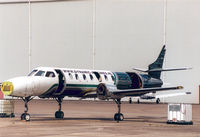
Swearingen SA227 Metro IIIRegistration
PH-DYM
MSN
AC-523
Year of Manufacture
1982
Operator
Dynamic AirlinesDate
September 19, 2005 at 07:30 AM
Type
CRASHFlight Type
Charter/Taxi (Non Scheduled Revenue Flight)
Flight Phase
Takeoff (climb)
Crash Site
Airport (less than 10 km from airport)
Crash Location
Rotterdam South Holland
Region
Europe • Netherlands
Coordinates
51.9725°, 4.0087°
Crash Cause
Technical failure
Narrative Report
On September 19, 2005 at 07:30 AM, Rotterdam – Birmingham experienced a crash involving Swearingen SA227 Metro III, operated by Dynamic Airlines, with the event recorded near Rotterdam South Holland.
The flight was categorized as charter/taxi (non scheduled revenue flight) and the reported phase was takeoff (climb) at a airport (less than 10 km from airport) crash site.
19 people were known to be on board, 0 fatalities were recorded, 19 survivors were identified or estimated. This corresponds to an estimated fatality rate of 0.0%.
Crew on board: 2, crew fatalities: 0, passengers on board: 17, passenger fatalities: 0, other fatalities: 0.
The listed crash cause is technical failure. On 19 September 2005, the type F-Swearingen SA227-AC aircraft with registration PH-DYM was scheduled to make a charter flight from Rotterdam Airport to Birmingham Airport. Seventeen passengers and two cockpit crew members were on board. The planned departure time was 07.30 hours. The aircraft taxied to the beginning of runway 24 and lined up for take-off. During line-up, the speed levers for the engines were moved from taxi position to flight position. The nose wheel steering fault indicator lit up and the first officer, who was steering the aircraft, responded by saying that he had no nose wheel steering. The captain informed the first officer that he had forgotten to press the switch on the throttles, which activates the nose wheel steering system. The first officer then confirmed that he had nose wheel steering. With the engines in the low RPM range (taxi position, up to 70% of maximum RPM), the pilot can steer the aircraft using the rudder pedals while taxing. When the engines are operated in the high RPM selection (flight position, between 70% and 100% of the maximum RPM), the switch on the throttles, which activates the nose wheel steering system, must be pressed in during the first part of the take-off roll in order to be able to operate the nose wheel with the rudder pedal. At a speed around 50 knots, the switch which activates the nose wheel steering system is released. The aerodynamic forces of on the rudder are then sufficient to take over the steering from the nose wheel. Once take-off clearance was given by air traffic control, the first officer engaged power and started the take-off roll. He stated that once the nose wheel operating switch had been released, the aircraft almost immediately began moving towards the left hand side of the runway. He tried to use the brakes and the directional rudder, to return the aircraft to the centre of the runway. The aircraft had a speed of between 50 and 60 knots at that point. The crew rejected the take-off but could not prevent the aircraft ending up alongside the runway, on the left hand side. The captain stated that various forces influence the directional control of an aircraft during the take-off, such as wind, propeller wash, increasing air speed, etc. These forces necessitate steering corrections during the take-off. Only when the nose wheel steering system was disengaged the captain realized something was wrong. The grass area alongside the runway is lower than the runway and the ground was soft. The left landing gear sank in the soft ground first and, as a result, the aircraft decelerated heavily and the left landing gear broke off almost immediately. The tip of the left wing struck the ground. This caused a ground loop effect and turned the aircraft further left. As a consequence the right landing gear and the nose gear also broke off. Once the aircraft had come to a standstill, the captain switched off all onboard systems and cut off the fuel supply to the engines. Simultaneously, the first officer was given the task of evacuating the passengers. The passengers were calm and left the aircraft without problems via the left hand door at the front of the aircraft. A moment later, the airport fire service arrived at the location of the accident. One of the passengers was taken to hospital for a check-up; he was able to leave hospital the same morning. There was severe damage despite the relatively slow speed at which the aircraft left the runway.
Aircraft reference details include registration PH-DYM, MSN AC-523, year of manufacture 1982.
Geospatial coordinates for this crash are approximately 51.9725°, 4.0087°.
Fatalities
Total
0
Crew
0
Passengers
0
Other
0
Crash Summary
On 19 September 2005, the type F-Swearingen SA227-AC aircraft with registration PH-DYM was scheduled to make a charter flight from Rotterdam Airport to Birmingham Airport. Seventeen passengers and two cockpit crew members were on board. The planned departure time was 07.30 hours. The aircraft taxied to the beginning of runway 24 and lined up for take-off. During line-up, the speed levers for the engines were moved from taxi position to flight position. The nose wheel steering fault indicator lit up and the first officer, who was steering the aircraft, responded by saying that he had no nose wheel steering. The captain informed the first officer that he had forgotten to press the switch on the throttles, which activates the nose wheel steering system. The first officer then confirmed that he had nose wheel steering. With the engines in the low RPM range (taxi position, up to 70% of maximum RPM), the pilot can steer the aircraft using the rudder pedals while taxing. When the engines are operated in the high RPM selection (flight position, between 70% and 100% of the maximum RPM), the switch on the throttles, which activates the nose wheel steering system, must be pressed in during the first part of the take-off roll in order to be able to operate the nose wheel with the rudder pedal. At a speed around 50 knots, the switch which activates the nose wheel steering system is released. The aerodynamic forces of on the rudder are then sufficient to take over the steering from the nose wheel. Once take-off clearance was given by air traffic control, the first officer engaged power and started the take-off roll. He stated that once the nose wheel operating switch had been released, the aircraft almost immediately began moving towards the left hand side of the runway. He tried to use the brakes and the directional rudder, to return the aircraft to the centre of the runway. The aircraft had a speed of between 50 and 60 knots at that point. The crew rejected the take-off but could not prevent the aircraft ending up alongside the runway, on the left hand side. The captain stated that various forces influence the directional control of an aircraft during the take-off, such as wind, propeller wash, increasing air speed, etc. These forces necessitate steering corrections during the take-off. Only when the nose wheel steering system was disengaged the captain realized something was wrong. The grass area alongside the runway is lower than the runway and the ground was soft. The left landing gear sank in the soft ground first and, as a result, the aircraft decelerated heavily and the left landing gear broke off almost immediately. The tip of the left wing struck the ground. This caused a ground loop effect and turned the aircraft further left. As a consequence the right landing gear and the nose gear also broke off. Once the aircraft had come to a standstill, the captain switched off all onboard systems and cut off the fuel supply to the engines. Simultaneously, the first officer was given the task of evacuating the passengers. The passengers were calm and left the aircraft without problems via the left hand door at the front of the aircraft. A moment later, the airport fire service arrived at the location of the accident. One of the passengers was taken to hospital for a check-up; he was able to leave hospital the same morning. There was severe damage despite the relatively slow speed at which the aircraft left the runway.
Cause: Technical failure
Occupants & Outcome
Crew On Board
2
Passengers On Board
17
Estimated Survivors
19
Fatality Rate
0.0%
Known people on board: 19
Operational Details
Schedule / Flight
Rotterdam – Birmingham
Operator
Dynamic AirlinesFlight Type
Charter/Taxi (Non Scheduled Revenue Flight)
Flight Phase
Takeoff (climb)
Crash Site
Airport (less than 10 km from airport)
Region / Country
Europe • Netherlands
Aircraft Details
Similar Plane Crashes
KLM Royal Dutch Airlines - Koninklijke Luchtvaart Maatschappij
Fokker F3
While approaching Rotterdam Airport, the pilot was forced to attempt an emergency landing for unknown reasons. Upon landing in a field, the aircraft impacted a drainage ditch and came to rest upside down. All three occupants evacuated safely and the aircraft was damaged beyond repair. It was rebuilt with another MSN 1533 and same registration H-NABL.
KLM Royal Dutch Airlines - Koninklijke Luchtvaart Maatschappij
De Havilland DH.9
En route, the engine caught fire and the pilot elected to make an emergency landing in Waalhaven, south of Rotterdam. The aircraft crashed and was damaged beyond repair and the pilot escaped unhurt. This was the first official accident involving an aircraft of the Dutch National carrier KLM since its creation in 1919. Crew: H. Wende, pilot.
KLM Royal Dutch Airlines - Koninklijke Luchtvaart Maatschappij
De Havilland DH.9
Following a night takeoff, the aircraft crash landed in a field near Rotterdam-Waalhaven Airport. There were no casualties.
Flygkompaniet
FVM S.18
The aircraft, a FVM S.18 operated by the Flygkompaniets Tygverkstäder på Malmen, was to participate in the arrival contest in connection to the International Aviation Fair in Gothenburg, ILUG 23. The heavily loaded aircraft crashed upon arrival in Rotterdam, which was the starting point of the contest. All three crew members were killed. Crew: Hugo Montgomery, pilot, Cpt Liljewalch, observer, Oscar Axelsson, mechanic.
Farman Line
Farman F.60 Goliath
Shortly after takeoff from Amsterdam-Schiphol Airport, one of the engine failed. Unable to return to the airport, the pilot attempted an emergency landing in an open field. After touchdown, the aircraft impact a drainage ditch, lost an undercarriage and came to rest. While all occupants evacuated safely, the aircraft was damaged beyond repair.
KLM Royal Dutch Airlines - Koninklijke Luchtvaart Maatschappij
Fokker F3
During the takeoff roll, the aircraft struck an irregularity in the ground and rotated prematurely. Unable to get sufficient height due to low speed, the aircraft stalled and crashed. All three occupants evacuated safely and the aircraft was considered as damaged beyond repair.