
Tokyo - Agana
Flight / Schedule
Tokyo - Agana
Aircraft
Boeing 747-200Registration
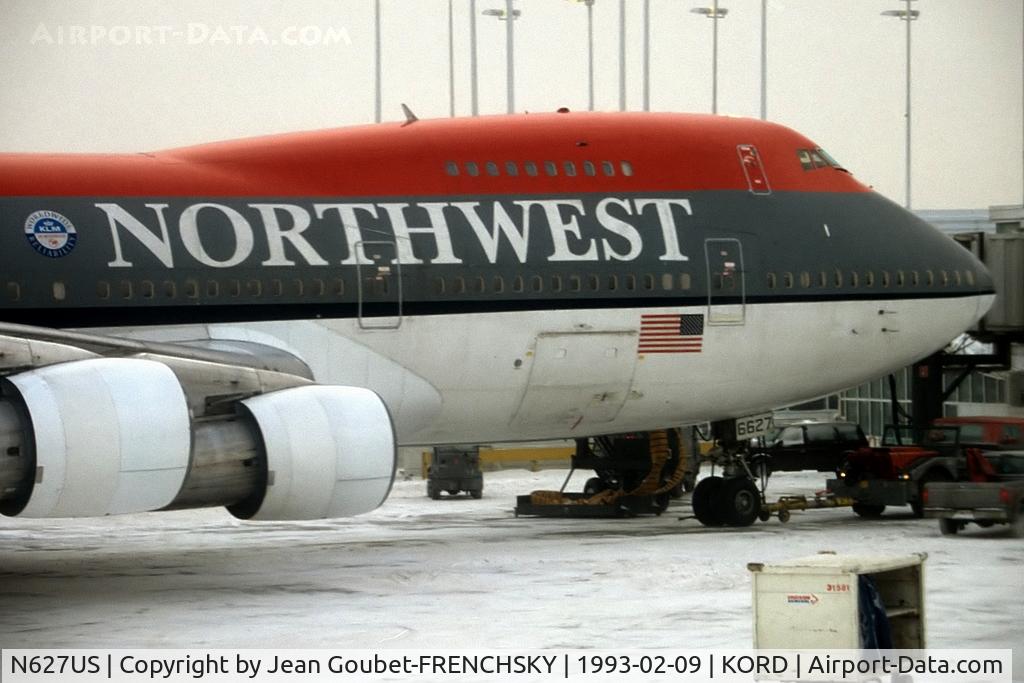
N627US
MSN
21709
Year of Manufacture
1979
Operator
Northwest AirlinesDate
August 19, 2005 at 02:18 PM
Type
CRASHFlight Type
Scheduled Revenue Flight
Flight Phase
Landing (descent or approach)
Crash Site
Airport (less than 10 km from airport)
Crash Location
Agana-Antonio Borja Won Pat All Guam Island
Region
Asia • Guam Island
Crash Cause
Human factor
Narrative Report
On August 19, 2005 at 02:18 PM, Tokyo - Agana experienced a crash involving Boeing 747-200, operated by Northwest Airlines, with the event recorded near Agana-Antonio Borja Won Pat All Guam Island.
The flight was categorized as scheduled revenue flight and the reported phase was landing (descent or approach) at a airport (less than 10 km from airport) crash site.
340 people were known to be on board, 0 fatalities were recorded, 340 survivors were identified or estimated. This corresponds to an estimated fatality rate of 0.0%.
Crew on board: 16, crew fatalities: 0, passengers on board: 324, passenger fatalities: 0, other fatalities: 0.
The listed crash cause is human factor. During the initial approach, the red GEAR annunciator light above the gear lever illuminated, and the landing gear warning horn sounded after the gear handle was selected down and the flaps were selected to 25 degrees. During the go-around, the captain asked the second officer (SO), "what do you have for the gear lights?" The SO responded, "four here." When all gear are down and locked on the Boeing 747-200, the landing gear indication module located on the SO’s instrument panel has five green lights: one nose gear light above four main landing gear lights. The crew then read through the "Red Gear Light Remains On (After Gear Extension)" emergency/abnormal procedure from the cockpit operations manual to troubleshoot the problem. Although the checklist twice presented in boldface type that five lights must be present for the gear to be considered down and locked, the crew did not verbalize the phrase either time. The captain did not directly request a count, and the SO did not verbally confirm, the number of gear down annunciator lights that were illuminated; instead, the flight crew made only general comments regarding the gear, such as "all gear," "all green," or "got 'em all." Because the crew believed that all of the gear annunciator lights were illuminated, they considered all gear down and locked and decided not to recycle the landing gear or attempt to extend any of the gear via the alternate systems before attempting a second approach. During all communications with air traffic control, the flight crew did not specify the nature of the problem that they were troubleshooting. Although the checklist did not authorize a low flyby, if the flight crewmembers had verbalized that they had a gear warning, the controller most likely would have been able to notify the crew of the nose gear position before the point at which a go-around was no longer safe. Multiple gear cycles were conducted after the accident, and the nose gear extended each time with all nose gear door and downlock indications correctly displayed on the landing gear indication module. Post accident examination of the nose gear door actuator found that one of the two lock keys was installed 180 degrees backward. Although this improper configuration could prevent proper extension of the nose gear, the actuator had been installed on the accident airplane since 2001 after the actuator was overhauled by the operator. No anomalies were found with the landing gear indication module, the nose gear-operated door sequence valve, and the nose/body landing gear selector valve.
Aircraft reference details include registration N627US, MSN 21709, year of manufacture 1979.
Fatalities
Total
0
Crew
0
Passengers
0
Other
0
Crash Summary
During the initial approach, the red GEAR annunciator light above the gear lever illuminated, and the landing gear warning horn sounded after the gear handle was selected down and the flaps were selected to 25 degrees. During the go-around, the captain asked the second officer (SO), "what do you have for the gear lights?" The SO responded, "four here." When all gear are down and locked on the Boeing 747-200, the landing gear indication module located on the SO’s instrument panel has five green lights: one nose gear light above four main landing gear lights. The crew then read through the "Red Gear Light Remains On (After Gear Extension)" emergency/abnormal procedure from the cockpit operations manual to troubleshoot the problem. Although the checklist twice presented in boldface type that five lights must be present for the gear to be considered down and locked, the crew did not verbalize the phrase either time. The captain did not directly request a count, and the SO did not verbally confirm, the number of gear down annunciator lights that were illuminated; instead, the flight crew made only general comments regarding the gear, such as "all gear," "all green," or "got 'em all." Because the crew believed that all of the gear annunciator lights were illuminated, they considered all gear down and locked and decided not to recycle the landing gear or attempt to extend any of the gear via the alternate systems before attempting a second approach. During all communications with air traffic control, the flight crew did not specify the nature of the problem that they were troubleshooting. Although the checklist did not authorize a low flyby, if the flight crewmembers had verbalized that they had a gear warning, the controller most likely would have been able to notify the crew of the nose gear position before the point at which a go-around was no longer safe. Multiple gear cycles were conducted after the accident, and the nose gear extended each time with all nose gear door and downlock indications correctly displayed on the landing gear indication module. Post accident examination of the nose gear door actuator found that one of the two lock keys was installed 180 degrees backward. Although this improper configuration could prevent proper extension of the nose gear, the actuator had been installed on the accident airplane since 2001 after the actuator was overhauled by the operator. No anomalies were found with the landing gear indication module, the nose gear-operated door sequence valve, and the nose/body landing gear selector valve.
Cause: Human factor
Occupants & Outcome
Crew On Board
16
Passengers On Board
324
Estimated Survivors
340
Fatality Rate
0.0%
Known people on board: 340
Operational Details
Schedule / Flight
Tokyo - Agana
Operator
Northwest AirlinesFlight Type
Scheduled Revenue Flight
Flight Phase
Landing (descent or approach)
Crash Site
Airport (less than 10 km from airport)
Region / Country
Asia • Guam Island
Aircraft Details
Similar Plane Crashes
Northwest Airlines
Lockheed 10 Electra
Shortly after liftoff, while climbing to a height of some 20 feet, the left engine failed. The aircraft stalled and impacted the runway surface. Simultaneously, the left engine restarted and the aircraft climbed to a height of 75 feet. At this moment, the right engine failed and the aircraft stalled and crashed past the runway end. Quickly on the scene, rescuers were able to evacuate all eight occupants injured while the aircraft was destroyed. Brand new, it was delivered to Northwest Airlines few weeks ago.
Northwest Airlines
Lockheed 10 Electra
While overflying west Idaho in poor weather conditions, the twin engine aircraft hit a mountain and was destroyed. Both crew members were killed. Crew: Joe Livermore, pilot, Arthur A. Haid, copilot.
Northwest Airlines
Lockheed 14 Super Electra
While cruising at an altitude of 9,000 feet in good weather conditions, the twin engine aircraft went out of control and dove into the ground before crashing on a wooded hill located some 22 km northeast of Bozeman. All ten occupants were killed. Crew: Nick B. Mamer, pilot, Frederick W. West, Jr., copilot. Passengers: T. Anderson, I. E. Stevenson, G. A. Anderson, L. Levin, Walter Ton, A. Croonquist, Douglas McKay, W. E. Borgenheimer.
Northwest Airlines
Lockheed 14 Super Electra
24 minutes after its departure from Hollywood-Burbank Airport, while cruising northeast of Santa Clarita, the crew encountered foggy conditions. While cruising at a height of some 3,300 feet, the twin engine aircraft hist the Stroh Peak located in the Mint Canyon. Rescuers arrived on scene 36 hours later. The aircraft was totally wrecked and all 9 occupants were killed. Brand new, the aircraft was on its way to Las Vegas to be shown to the President of the company. All occupants were employees of Northwest Airlines or Lockheed Company. Crew: Sidney Willey, Lockheed test pilot in charge of the flight, Fred Whittemore, Northwest Airlines Vice-President and copilot. Passengers: Henry Salisbury, Northwest Airlines official, accompanied with his wife and two children, Richard and Judith, Mrs Carl B. Squier, wife of Lockheed's Sales Manager, Liola Totty, Lockheed stenographer, Evelyn Dingle, Northwest Airlines employee.
Northwest Airlines
Lockheed 14 Super Electra
Shortly after takeoff from Billings Airport by night, while in initial climb, the twin engine aircraft stalled and crashed past the runway end. A passenger was killed while all nine other occupants were injured. Crew: Walter R. Bullock, pilot, Lester H. Doan, copilot.
Northwest Airlines
Lockheed 14 Super Electra
The aircraft started the take-off to the northwest at 2114LT, leaving the ground at a point approximating the intersection of the two field run rays, and crossed the field boundary in a normal climb. After reaching an estimated altitude of 500 feet, the aircraft began a slow turn to the left, thick is the usual procedure in contacting the west leg of the Miles City radio range for the purpose of continuing flight to Billings, Montana. Shortly after starting the turn, the aircraft was seen to lose altitude rapidly and descend almost to the ground before the descent was checked, and the aircraft pulled up in a sharp climb to an altitude approximating that previously attained. Immediately thereafter, the aircraft turned sharply to the loft and descended rapidly, striking the ground in a ravine and headed in a southeasterly direction with its left tang and nose slightly down. The aircraft traveled for a distance of approximately 280 feet from the point of first contact with the ground, scattering fragments along its path, and came to rest on rising terrain, where it was entirely destroyed by fire at a point 2650 feet distant from the west boundary of the Miles City airport, and 1200 feet south of a projection of north boundary of the airport. The crash resulted in the death of all person aboard the aircraft. Crew: C. B. Chamberlain, pilot, R. B. Norby, copilot.