
Del Rio – Saint Louis
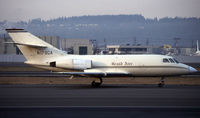
Flight / Schedule
Del Rio – Saint Louis
Aircraft
Dassault Falcon 20Registration
N179GA
MSN
100
Year of Manufacture
1967
Date
April 8, 2003 at 06:50 PM
Type
CRASHFlight Type
Cargo
Flight Phase
Landing (descent or approach)
Crash Site
Airport (less than 10 km from airport)
Crash Location
Saint Louis-Lambert Missouri
Region
North America • United States of America
Crash Cause
Human factor
Narrative Report
On April 8, 2003 at 06:50 PM, Del Rio – Saint Louis experienced a crash involving Dassault Falcon 20, operated by Grand Aire Express - Executive Aire Express, with the event recorded near Saint Louis-Lambert Missouri.
The flight was categorized as cargo and the reported phase was landing (descent or approach) at a airport (less than 10 km from airport) crash site.
2 people were known to be on board, 0 fatalities were recorded, 2 survivors were identified or estimated. This corresponds to an estimated fatality rate of 0.0%.
Crew on board: 2, crew fatalities: 0, passengers on board: 0, passenger fatalities: 0, other fatalities: 0.
The listed crash cause is human factor. The twin engine turbofan powered airplane was ditched into a river after a complete loss of power from both engines. The airplane was on a second approach to land on runway 30R after having been instructed by air traffic control (ATC) to climb during the final approach segment of the first approach due to inadequate separation from another airplane. Subsequent to the first approach, the airplane was issued vectors for the second approach by ATC. Communications transcripts show that the flight crew asked ATC how far they would be vectored during the second approach, but the flight crew did not inform ATC of their low fuel state until the airplane was already on a "base turn...to join final." The airplane subsequently lost power from both engines. During interviews, both pilots stated that there were no problems with the airplane. The second-in-command (SIC) stated that the airplane "ran out of fuel" and that the fuel quantity indicators read 0 and 100 pounds when each respective engine stopped producing power. The SIC also stated that after being instructed to climb to 5,000 feet after their first approach, he questioned the pilot-in-command about landing at another airport located about 14 nautical miles west-southwest of the destination airport. The SIC said that the PIC elected to continue with the second approach to the original destination. Research indicated that the flight crew did not obtain a weather briefing prior to the accident flight. Additionally, the Terminal Aerodrome Forecast that was valid at the time the aircraft's flight plan was filed showed a forecast ceiling consisting of overcast clouds at 1,500 feet above ground level at the aircraft's arrival time at the destination. 14 CFR Part 91.169 requires that an alternate airport be listed in the flight plan when forecast ceilings are less than 2,000 feet. No alternate was listed in the flight plan for the accident flight. Additionally, 14 CFR Part 91.167 requires that aircraft operated in instrument meteorological conditions maintain fuel reserves that allow flight to the intended destination and then continued flight to the listed alternate, and an additional 45 minutes at normal cruise speed. In 1993, the FAA/industry advisory committee developed advisory material for fuel planning and management for 14 CFR Part 121 and 135 air carrier flight operations, but the material was never published.
Aircraft reference details include registration N179GA, MSN 100, year of manufacture 1967.
Fatalities
Total
0
Crew
0
Passengers
0
Other
0
Crash Summary
The twin engine turbofan powered airplane was ditched into a river after a complete loss of power from both engines. The airplane was on a second approach to land on runway 30R after having been instructed by air traffic control (ATC) to climb during the final approach segment of the first approach due to inadequate separation from another airplane. Subsequent to the first approach, the airplane was issued vectors for the second approach by ATC. Communications transcripts show that the flight crew asked ATC how far they would be vectored during the second approach, but the flight crew did not inform ATC of their low fuel state until the airplane was already on a "base turn...to join final." The airplane subsequently lost power from both engines. During interviews, both pilots stated that there were no problems with the airplane. The second-in-command (SIC) stated that the airplane "ran out of fuel" and that the fuel quantity indicators read 0 and 100 pounds when each respective engine stopped producing power. The SIC also stated that after being instructed to climb to 5,000 feet after their first approach, he questioned the pilot-in-command about landing at another airport located about 14 nautical miles west-southwest of the destination airport. The SIC said that the PIC elected to continue with the second approach to the original destination. Research indicated that the flight crew did not obtain a weather briefing prior to the accident flight. Additionally, the Terminal Aerodrome Forecast that was valid at the time the aircraft's flight plan was filed showed a forecast ceiling consisting of overcast clouds at 1,500 feet above ground level at the aircraft's arrival time at the destination. 14 CFR Part 91.169 requires that an alternate airport be listed in the flight plan when forecast ceilings are less than 2,000 feet. No alternate was listed in the flight plan for the accident flight. Additionally, 14 CFR Part 91.167 requires that aircraft operated in instrument meteorological conditions maintain fuel reserves that allow flight to the intended destination and then continued flight to the listed alternate, and an additional 45 minutes at normal cruise speed. In 1993, the FAA/industry advisory committee developed advisory material for fuel planning and management for 14 CFR Part 121 and 135 air carrier flight operations, but the material was never published.
Cause: Human factor
Occupants & Outcome
Crew On Board
2
Passengers On Board
0
Estimated Survivors
2
Fatality Rate
0.0%
Known people on board: 2
Operational Details
Schedule / Flight
Del Rio – Saint Louis
Flight Type
Cargo
Flight Phase
Landing (descent or approach)
Crash Site
Airport (less than 10 km from airport)
Region / Country
North America • United States of America
Aircraft Details
Similar Plane Crashes
United States Signal Corps - USSC
De Havilland DH.4
The single engine airplane departed Dayton-McCook Field for a local test flight. Shortly after takeoff, the aircraft stalled and crashed, killing both occupants. Crew: Maj Oscar Brindley, Lt Col Henry Damm.
United States Signal Corps - USSC
De Havilland DH.4
Lt. Frank Stuart Patterson, son and nephew of the co-founders of National Cash Register, is killed in the crash of his DH.4M, AS-32098, at Wilbur Wright Field during a flight test of a new mechanism for synchronizing machine gun and propeller, when a tie rod breaks during a dive from 15,000 feet (4,600 m), causing the wings to separate from the aircraft. Wishing to recognize the contributions of the Patterson family (owners of NCR) the area of Wright Field east of Huffman Dam (including Wilbur Wright Field, Fairfield Air Depot, and the Huffman Prairie) is renamed Patterson Field on 6 July 1931, in honor of Lt. Patterson.
United States Signal Corps - USSC
De Havilland DH.4
The aircraft crashed in unknown circumstances.
United States Signal Corps - USSC
De Havilland DH.4
The crew was completing a training mission. At an altitude of about 4,000 feet, the aircraft entered a spin and crashed in an open field near Everman-Barron Field Airport. A crew was killed and the second occupants was injured. The aircraft was destroyed.
U.S. Air Mail Service
De Havilland DH.4
Crashed following an engine failure. Pilot fate unknown.
United States Signal Corps - USSC
De Havilland DH.4
The accident occurred in unknown circumstances.