
Mohéli - Ouani
Flight / Schedule
Mohéli - Ouani
Aircraft
Fokker 50Registration
D6-AIB
MSN
20335
Year of Manufacture
1997
Operator
Unknown
Date
May 5, 2024 at 10:00 AM
Type
CRASHFlight Type
Scheduled Revenue Flight
Flight Phase
Takeoff (climb)
Region
Africa • Comoros Islands
Coordinates
-12.2266°, 44.4107°
Narrative Report
On May 5, 2024 at 10:00 AM, Mohéli - Ouani experienced a crash involving Fokker 50, operated by an operator, with the event recorded near Africa, Comoros Islands.
The flight was categorized as scheduled revenue flight and the reported phase was takeoff (climb).
52 people were known to be on board, 0 fatalities were recorded, 52 survivors were identified or estimated. This corresponds to an estimated fatality rate of 0.0%.
Crew on board: 4, crew fatalities: 0, passengers on board: 48, passenger fatalities: 0, other fatalities: 0.
Aircraft reference details include registration D6-AIB, MSN 20335, year of manufacture 1997.
Geospatial coordinates for this crash are approximately -12.2266°, 44.4107°.
Fatalities
Total
0
Crew
0
Passengers
0
Other
0
Occupants & Outcome
Crew On Board
4
Passengers On Board
48
Estimated Survivors
52
Fatality Rate
0.0%
Known people on board: 52
Operational Details
Schedule / Flight
Mohéli - Ouani
Flight Type
Scheduled Revenue Flight
Flight Phase
Takeoff (climb)
Region / Country
Africa • Comoros Islands
Aircraft Details
Similar Plane Crashes
Air Comores
De Havilland DH.114 Heron
During the final approach to Moroni-Hahaya Airport following an uneventful flight from Dar es-Salaam, the crew failed to realize that his altitude was insufficient. On short final, the right wing struck approach lights. The captain increased engine power in an attempt to make a go-around when the airplane went to an excessive nose-up attitude, stalled and crashed into the sea near to the shore. None of the 16 occupants survived the crash.
French Navy
Breguet Bre.1150 Atlantic
Following a night takeoff from Moroni-Hahaya Airport runway 02, while climbing at an altitude of 500 feet, the airplane entered a right turn when it crashed on the slope of Mt Zembadjou located about 8 km northeast of the airport, bursting into flames. All 18 occupants were killed. Crew: Lt dV Philippe Mougenot, Ens dV Jean-Yves Cistas, Ens dV Olivier de Lassus Saint-Geniès, MP Eugène Normant, PM Serge Lapp, PM Alain de Maison, PM Yves Hennequart, M Jean-Claude Montfort, M Michel Renier, M Éric Peraudeau, M Dominique Faure, M Patrick Boudouin, M Dominique Moisdon, SM François-Xavier Winterhalter, SM Patrick Rousseau, SM Jean-Louis Audren, QM Bertrand Lion, QM Éric Lourenco.
Malaysian Airlines System - MAS
Fokker 50
Flight MH2133 A Fokker 27 mark 050 bearing registration 9M-MGH was a scheduled domestic flight from Kota Kinabalu to Tawau, Sabah. The departure from Kota Kinabalu was delayed by approximately 30 minutes due to late arrival of the aircraft operated by a different set of flight crew from Labuan. The flight took off from Kota Kinabalu at 0419 hrs on an Instrument Flight Rules (IFR) flight plan via Airway W 423 direct to Tawau Very Omni Range (VOR) at flight level (FL) 170 with 53 persons on board. The departure out of Kota Kinabalu was uneventful and the weather en-route was insignificant. At 0442 hrs the flight established radio contact with Tawau Tower “MH 2133 we are maintaining FL 170, TMA 40, VTW 0505, presently at 94 DME VTW”. The controller then passed the weather for Tawau which was, “surface wind calm, visibility more than 10 km, rain north to north east, scattered 1600 feet and scattered 2700 feet, broken at 14000 feet, Temperature 30 degree C and QNH 1009 mb, Runway 17”. At 0443 hrs another aircraft call sign TSE 809 (a Cessna 206) flying along the same route as MH2133 but at 9500ft established radio contact with Tawau Tower, TSE 809 then reported that the flight was 65 DME from Tawau VOR. This was immediately followed by Tawau Tower asking MH2133 to report position from Tawau VOR which MH 2133 replied “57 DME and requested descent”. The controller then cleared MH 2133 to descend to 10500 feet. At this point in time there was also another aircraft MH2135 (a Boeing 737) heading towards Tawau cruising at FL 230 and cleared by the TOWER to descent to FL 180. MH 2135 was also notified by the TOWER of the Expected Approach Time (EAT) of 0530 hrs. At 0457 hrs TSE 809 reported that the flight was 44 DME from Tawau VOR. On hearing this transmission, MH 2133 requested a lower descend clearance, as it was 30 DME from Tawau VOR. It must be noted that at this juncture, MH 2133 was ahead of TSE 809 but at a higher altitude. The controller then asked TSE 809 whether there was any objection for MH2133 to descent through its level and become number One (1). Despite the fact that TSE 809 had no objection for MH 2133 to become number One (1), MH 2133 was asked by the controller to still maintain 10500 feet. At 0458:23 hrs, MH 2133 asked “MH 2133 confirm maintain 10500 feet?”. TOWER then replied “Affirm maintain 10500 number 2 in traffic”. At 0458:36 hrs MH 2133 again asked “MH 2133, 26 DME confirm we are still number 2?” TOWER then replied- “Station calling…. say again - MH 2133 then repeated “2133 Maam, and are 25 DME maintain 10500, confirm we are number 2?”. TOWER – responded “That’s affirm 2133, Expected Approach Time 0520 hrs”. At 0459:05 hrs MH2133 asked TSE 809 to check position and whether there would be any objection for the aircraft to descend through its level. TSE 809 replied that they had no objection and MH 2133 was subsequently cleared to descend to 7000 feet. The descent into Tawau by MH 2133 from the cruising altitude of 10500 feet was initiated at about 21 DME. The flight crew discussed the descent technique they were going to use and were aware of all their action. At 0501:15 hrs, as the flight reported leaving 9000 feet and passing 16 DME, the flight crew advised the controller that they had the airfield visual. MH2133 was then cleared for visual approach runway 17. At 0502:48 hrs, MH 2133 reported passing 3500 feet. The aircraft was then configured for landing where landing gears were selected down and flaps set at 25 degrees. The aircraft speed was still fast and since it was also high on the approach, the commander assured the co-pilot “Runway is long so no problem Eh”. On passing 2000 feet and on short final, the copilot reminded the commander “speed, speed check, speed check Ah”. The rate of descent was in excess of 3000 feet per minute and its pitch angle was around minus 13 degrees. The excessive rate of descent triggered the aircraft Ground Proximity Warning System (GPWS) sink rate and pull up warnings. The commander ignored these warnings and insisted that he should continue with approach for a landing. The aircraft first touched down on the runway at 0505 hrs. Its first tyre marks (nose wheel) on the runway was at approximately 3400 ft from the threshold. It then bounced and at 4500 ft point, its left main wheel made a light contact with the runway surface. It subsequently bounced up again and its main wheels made a firm contact at 4800 ft point, thus leaving only 800 ft of runway remaining. The aircraft continued onto the grass verge, momentarily left the ground and hopped over the runway perimeter fence. It subsequently crashed at 571 feet from the end of the runway at almost right angle to the runway. There were a number of explosions followed by a fire. The aircraft was totally destroyed.
Ethiopian Airlines
Boeing 767-200
Ethiopian Airlines flight ET961 had taken off from Addis Ababa, Ethiopia, at 08:09 hours UTC for a scheduled flight to Abidjan, Ivory Coast via Nairobi, Kenya; Brazzaville, Congo; and Lagos, Nigeria. Twenty minutes after takeoff, at about 08:29 UTC, one passenger stood up from his seat and ran up the aisle to the cockpit, and two other passengers followed him heading for the cockpit. While rushing to the cockpit one of the men said "Everybody should be seated, I have a bomb!". Then they opened the cockpit door and stormed in. They declared to the pilots that there were eleven hijackers on board and beat the First Officer and forced him out of the cockpit. They then grabbed the fire axe and fire extinguisher bottle from their respective stowages and ordered the pilot-in-command to change direction and fly to Australia. The pilot-in-command explained to the hijackers that he had not enough fuel to reach Australia and demanded to make a refueling stop at Mombasa. The hijackers refused the refueling stop and continued arguing with the pilot-in-command. They insisted that they had learned from the inflight magazine that the B767 could fly 11 hours without refueling. After passing Dar es Salaam one of the hijackers ordered him to fly away from the coast, head to Australia and indicating to the altimeter not to descend below FL390. The pilot-in-command turned left towards the Comoros Island. The lead hijacker was sitting in the first officer's seat and was fiddling with the aircraft's controls, kicking the rudder, whilst also drinking whisky. The pilot-in-command kept on telling them that he was running short of fuel pointing to the fuel quantity indicators, but the hijackers did not listen. The leader continued fiddling with the controls, trying to turn the aileron and pulling the reverse thrust lever at random. As the flight came over the Comoros Islands the pilot-in-command saw the Moroni International Airport runway and circled 15-20 nm south of the field. Then the LOW FUEL CAUTION came on. The pilot-in-command pleaded to land because of low fuel. The hijackers were unconcerned and only insisted that the pilot not descend below FL390. At about 11:41 UTC the right engine ran down to wind milling speed. The pilot-in-command showed the red warning message for the right engine on the EICAS to the hijacker. At this moment, the hijacker left the right seat and went to the cabin door to discuss with the other two hijackers. This gave the captain the opportunity to pick up his microphone and address the passengers: "....ladies and gentlemen this is your pilot, we have run out of fuel and we are losing one engine this time, and we are expecting crash landing and that is all I have to say. we have lost already one engine, and I ask all passengers to react ..... to the hijackers ....". The hijacker then came back to the cockpit and hit the microphone out of the pilot's hand. After the right engine failed, the pilot started to descend the aircraft in order to increase speed, but the hijacker again interfered and violently played with the controls which resulted in improper control inputs. As a result the autopilot was disconnected and the flight became erratic with the airspeed varying between 216 and 336 kts. As the pilot regained control of the aircraft, the left engine went dead. The hijacker kept on instructing the pilot not to descend and again went to the cabin. Upon returning to the cockpit he saw that the altitude was decreasing, and angrily shouted at the pilot not to go any lower. The pilot said that the fuel was already finished and that the engines were without power. This time the hijacker instructed the captain not to touch the controls, and threatened to kill him. The captain said, "I am already dead because I am flying an airplane without engine power." The first officer, who had earlier been forced out to the First Class cabin, got up and, via the right aisle, went to the rear of the aircraft where he saw that a lot of economy class passengers had their life jackets on and that some had already inflated them. The first officer, along with the cabin crew members, helped the passengers to deflate the life jackets and showed them how the jackets should be re-inflated and how to assume the brace position during impact. While returning to the front of the aircraft, they repeated the same instructions as many times as they could. About less than 2 minutes before the ditching, the co-pilot forced his way to the cockpit shouting "let me help the pilot ...". After adjusting his seat and seat belts the pilot asked him for help since the controls were heavy. The hijackers still kept on struggling with the controls. By now, the aircraft was descending into the Indian Ocean over the Comoros Islands. The aircraft now had only standby instruments and RAT (Ram Air Turbine). The altimeter was indicating 150 feet and the airspeed was 200 kts. By this time the flight crew had been left alone to assume control. They turned the aircraft to the left in order to parallel the waves. However, the aircraft brushed the water in a left-wing-low attitude. It was then held straight and level after which it broke into four sections and came to rest in the sheltered waters 500 metres off Le Galawa Beach. Of the 175 occupants, 6 crew members and 119 passengers were fatally injured in the accident. Six crew members and 38 passengers sustained serious injuries, 2 passengers sustained minor injuries and 4 passengers received no injury.
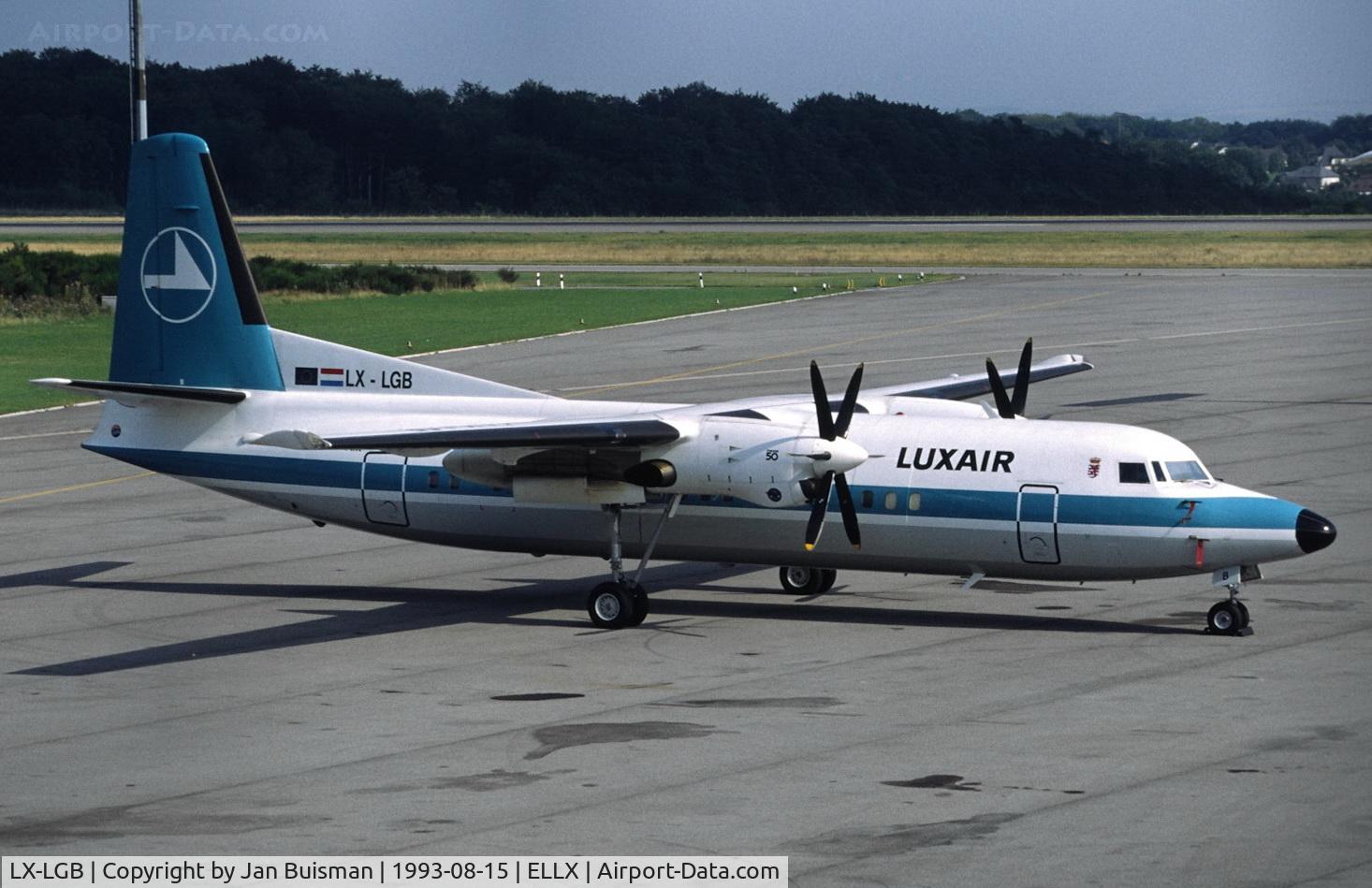
Luxair
Fokker 50
The Fokker 27 Mk050 registered LX-LGB and operated by Luxair left Berlin on 6 November 2002 at 07h 40min on flight LG 9642/LH 2420 with destination Luxembourg. Cruising level was at FL180. At 08h 50min, Frankfurt Control asked the crew to stop descent at FL 90, direct to Diekirch and at 08h 52min the flight was transferred to Luxembourg Approach. They were instructed to enter the Diekirch hold at FL90, to expect later on vectors for an ILS 24 and were given the latest RVR readings. At 08h 59min, well before reaching the Diekirch hold, the aircraft was recleared to 3000ft QNH and to turn left heading one three zero. At this time the aircraft flew in the clear sky above a fog layer. RVR was two hundred seventy five meters. The crew evoked a go-around if the RVR was not three hundred meters whilst passing ELU (it’s minima for a category II approach). At 09h04 min 36s, the aircraft passed overhead ELU maintaining 3000ft QNH. At 09h04 min 57s, the ATC controller transmitted an RVR of three hundred meters. Power was further reduced, flaps 10 were selected and the landing gear was lowered. Immediately after the landing gear was lowered, the pitch angle of the two propellers simultaneously reached a value that is lower than the minimum values for flight. This propeller pitch setting involves a rapid decrease of speed and altitude. During the following seconds, the left engine stopped and then the right engine stopped. The flight data recorders, no longer powered ceased functioning. At 09h05 min 42s (radar time base), the aircraft disappeared from the radar screen. It was immediately found in a field seven hundred meters to the north of runway centreline 24 and three point five kilometres to the east of the threshold. Six people were critically injured while 16 others were killed. Within the following hours, four of the survivors died from their injuries. The only two survivors were a passenger, a French citizen, and the captain.
Ocean Airlines
Let L-410
While approaching Mutsamudu Airport, the crew encountered poor weather conditions with thunderstorm activity and heavy rain falls. The crew followed a holding pattern about 30 km away from the airport for weather improvement. Few minutes later, the crew started the descent to Mutsamudu-Ouani Airport. On approach at an altitude of 2,500 feet, the aircraft was struck by lightning. The crew elected to initiate a go-around procedure but the electrical system partially failed due to lightning and both gyro compasses and artificial horizons failed. Control was lost and the aircraft crashed in a wooded area located few km from the airport. A passenger was killed while 15 other occupants were injured.