
Anchorage - Kake
Flight / Schedule
Anchorage - Kake
Aircraft
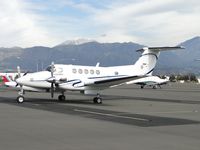
Beechcraft 200 Super King AirRegistration
N13LY
MSN
BB-1718
Year of Manufacture
2000
Operator
Guardian FlightDate
January 29, 2019 at 06:11 PM
Type
CRASHFlight Type
Ambulance
Flight Phase
Landing (descent or approach)
Crash Site
Lake, Sea, Ocean, River
Crash Location
Kake Alaska
Region
North America • United States of America
Coordinates
56.9758°, -133.9472°
Narrative Report
On January 29, 2019 at 06:11 PM, Anchorage - Kake experienced a crash involving Beechcraft 200 Super King Air, operated by Guardian Flight, with the event recorded near Kake Alaska.
The flight was categorized as ambulance and the reported phase was landing (descent or approach) at a lake, sea, ocean, river crash site.
3 people were known to be on board, 3 fatalities were recorded, 0 survivors were identified or estimated. This corresponds to an estimated fatality rate of 100.0%.
Crew on board: 1, crew fatalities: 1, passengers on board: 2, passenger fatalities: 2, other fatalities: 0.
The pilot of the medical transport flight had been cleared by the air traffic controller for the instrument approach and told by ATC to change to the advisory frequency, which the pilot acknowledged. After crossing the initial approach fix on the RNAV approach, the airplane began a gradual descent and continued northeast towards the intermediate fix. Before reaching the intermediate fix, the airplane entered a right turn and began a rapid descent, losing about 2,575 ft of altitude in 14 seconds; radar returns were then lost. A witness at the destination airport, who was scheduled to meet the accident airplane, observed the pilot-controlled runway lights illuminate. When the airplane failed to arrive, she contacted the company to inquire about the overdue airplane. The following day, debris was found floating on the surface of the ocean. About 48 days later, after an extensive underwater search, the heavily fragmented wreckage was located on the ocean floor at a depth of about 500 ft. A postaccident examination of the engines revealed contact signatures consistent with the engines developing power at the time of impact and no evidence of mechanical malfunctions or failures that would have precluded normal operation. A postaccident examination of the airframe revealed about a 10° asymmetric flap condition; however, significant impact damage was present to the flap actuator flex drive cables and flap actuators, indicating the flap actuator measurements were likely not a reliable source of preimpact flap settings. In addition, it is unlikely that a 10° asymmetric flap condition would result in a loss of control. The airplane was equipped with a total of 5 seats and 5 restraints. Of the three restraints recovered, none were buckled. The unbuckled restraints could suggest an emergency that required crewmembers to be up and moving about the cabin; however, the reason for the unbuckled restraints could not be confirmed. While the known circumstances of the accident are consistent with a loss of control event, the factual information available was limited because the wreckage in its entirety was not recovered, the CVR recording did not contain the accident flight, no non-volatile memory was recovered from the accident airplane, and no autopsy or toxicology of the pilot could be performed; therefore, the reason for the loss of control could not be determined. Due to the limited factual information that was available, without a working CVR there is little we know about this accident.
Aircraft reference details include registration N13LY, MSN BB-1718, year of manufacture 2000.
Geospatial coordinates for this crash are approximately 56.9758°, -133.9472°.
Fatalities
Total
3
Crew
1
Passengers
2
Other
0
Crash Summary
The pilot of the medical transport flight had been cleared by the air traffic controller for the instrument approach and told by ATC to change to the advisory frequency, which the pilot acknowledged. After crossing the initial approach fix on the RNAV approach, the airplane began a gradual descent and continued northeast towards the intermediate fix. Before reaching the intermediate fix, the airplane entered a right turn and began a rapid descent, losing about 2,575 ft of altitude in 14 seconds; radar returns were then lost. A witness at the destination airport, who was scheduled to meet the accident airplane, observed the pilot-controlled runway lights illuminate. When the airplane failed to arrive, she contacted the company to inquire about the overdue airplane. The following day, debris was found floating on the surface of the ocean. About 48 days later, after an extensive underwater search, the heavily fragmented wreckage was located on the ocean floor at a depth of about 500 ft. A postaccident examination of the engines revealed contact signatures consistent with the engines developing power at the time of impact and no evidence of mechanical malfunctions or failures that would have precluded normal operation. A postaccident examination of the airframe revealed about a 10° asymmetric flap condition; however, significant impact damage was present to the flap actuator flex drive cables and flap actuators, indicating the flap actuator measurements were likely not a reliable source of preimpact flap settings. In addition, it is unlikely that a 10° asymmetric flap condition would result in a loss of control. The airplane was equipped with a total of 5 seats and 5 restraints. Of the three restraints recovered, none were buckled. The unbuckled restraints could suggest an emergency that required crewmembers to be up and moving about the cabin; however, the reason for the unbuckled restraints could not be confirmed. While the known circumstances of the accident are consistent with a loss of control event, the factual information available was limited because the wreckage in its entirety was not recovered, the CVR recording did not contain the accident flight, no non-volatile memory was recovered from the accident airplane, and no autopsy or toxicology of the pilot could be performed; therefore, the reason for the loss of control could not be determined. Due to the limited factual information that was available, without a working CVR there is little we know about this accident.
Occupants & Outcome
Crew On Board
1
Passengers On Board
2
Estimated Survivors
0
Fatality Rate
100.0%
Known people on board: 3
Operational Details
Schedule / Flight
Anchorage - Kake
Operator
Guardian FlightFlight Type
Ambulance
Flight Phase
Landing (descent or approach)
Crash Site
Lake, Sea, Ocean, River
Region / Country
North America • United States of America
Aircraft Details
Similar Plane Crashes
United States Signal Corps - USSC
De Havilland DH.4
The single engine airplane departed Dayton-McCook Field for a local test flight. Shortly after takeoff, the aircraft stalled and crashed, killing both occupants. Crew: Maj Oscar Brindley, Lt Col Henry Damm.
United States Signal Corps - USSC
De Havilland DH.4
Lt. Frank Stuart Patterson, son and nephew of the co-founders of National Cash Register, is killed in the crash of his DH.4M, AS-32098, at Wilbur Wright Field during a flight test of a new mechanism for synchronizing machine gun and propeller, when a tie rod breaks during a dive from 15,000 feet (4,600 m), causing the wings to separate from the aircraft. Wishing to recognize the contributions of the Patterson family (owners of NCR) the area of Wright Field east of Huffman Dam (including Wilbur Wright Field, Fairfield Air Depot, and the Huffman Prairie) is renamed Patterson Field on 6 July 1931, in honor of Lt. Patterson.
United States Signal Corps - USSC
De Havilland DH.4
The aircraft crashed in unknown circumstances.
United States Signal Corps - USSC
De Havilland DH.4
The crew was completing a training mission. At an altitude of about 4,000 feet, the aircraft entered a spin and crashed in an open field near Everman-Barron Field Airport. A crew was killed and the second occupants was injured. The aircraft was destroyed.
U.S. Air Mail Service
De Havilland DH.4
Crashed following an engine failure. Pilot fate unknown.
United States Signal Corps - USSC
De Havilland DH.4
The accident occurred in unknown circumstances.