
Enstone – Dunkeswell
Flight / Schedule
Enstone – Dunkeswell
Aircraft
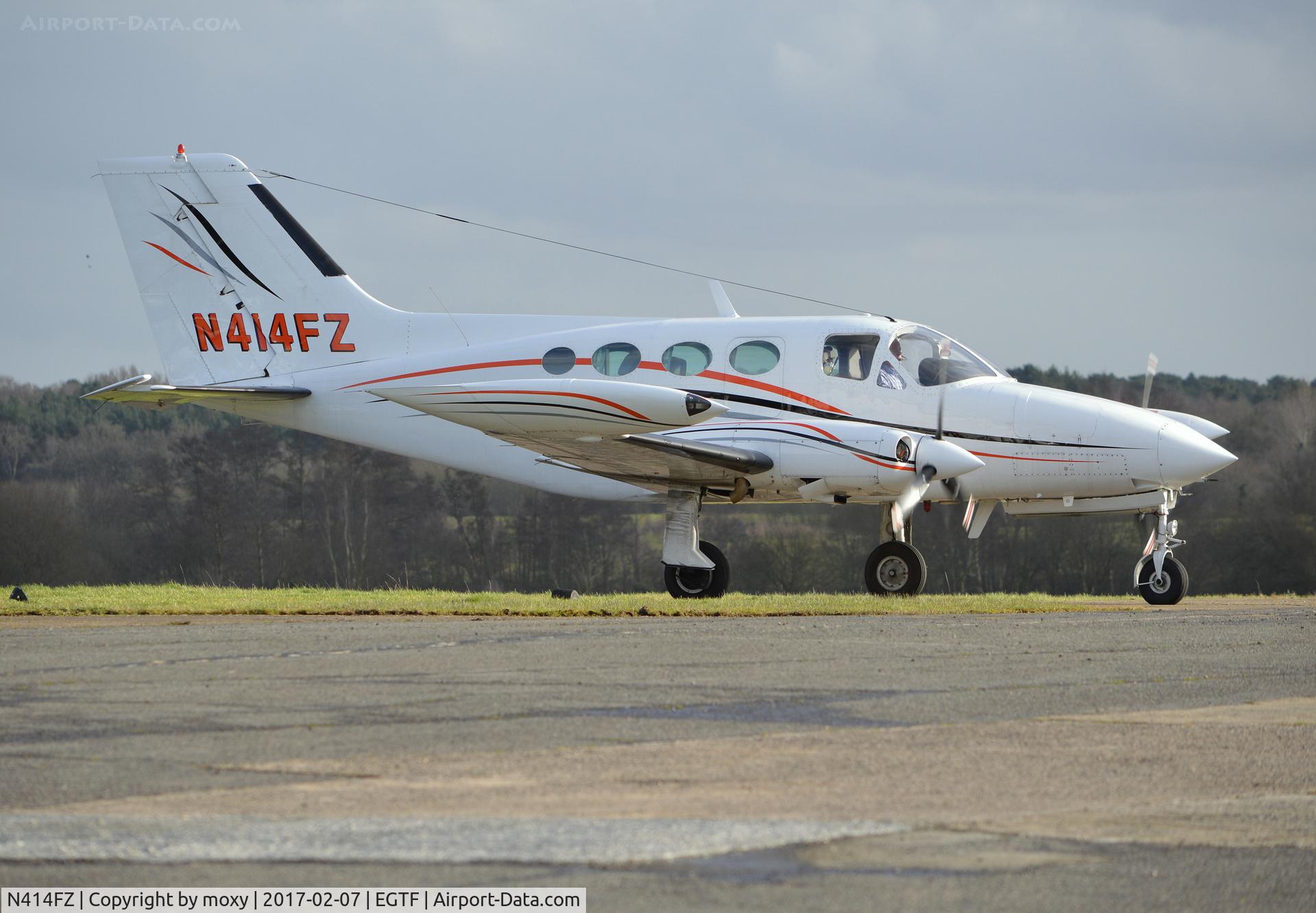
Cessna 414 ChancellorRegistration
N414FZ
MSN
414-0175
Year of Manufacture
1971
Operator
Southern Aircraft ConsultancyDate
June 26, 2018 at 01:20 PM
Type
CRASHFlight Type
Private
Flight Phase
Takeoff (climb)
Crash Site
City
Crash Location
Enstone Oxfordshire
Region
Europe • United Kingdom
Coordinates
51.9159°, -1.4538°
Crash Cause
Technical failure
Narrative Report
On June 26, 2018 at 01:20 PM, Enstone – Dunkeswell experienced a crash involving Cessna 414 Chancellor, operated by Southern Aircraft Consultancy, with the event recorded near Enstone Oxfordshire.
The flight was categorized as private and the reported phase was takeoff (climb) at a city crash site.
2 people were known to be on board, 0 fatalities were recorded, 2 survivors were identified or estimated. This corresponds to an estimated fatality rate of 0.0%.
Crew on board: 1, crew fatalities: 0, passengers on board: 1, passenger fatalities: 0, other fatalities: 0.
The listed crash cause is technical failure. The aircraft departed Dunkeswell Airfield on the morning of the accident for a flight to Retford (Gamston) Airfield with three passengers on board, two of whom held flying licences. The passengers all reported that the flight was uneventful and after spending an hour on the ground the aircraft departed with two passengers for Enstone Airfield. This flight was also flown without incident.The pilot reported that before departing Enstone he visually checked the level in the aircraft fuel tanks and there was 390 ltr (103 US gal) on board, approximately half of which was in the wingtip fuel tanks. After spending approximately one hour on the ground the pilot was heard to carry out his power checks before taxiing to the threshold of Runway 08 for a flight back to Dunkeswell with one passenger onboard). During the takeoff run the left engine was heard to stop and the aircraft veered to the left as it came to a halt. The pilot later recalled that he had seen birds in the climbout area and this was a factor in the abandoned takeoff. The aircraft was then seen to taxi to an area outside the Oxfordshire Sport Flying Club, where the pilot attempted to start the left engine, during which time the right engine also stopped. The right engine was restarted, and several attempts appeared to have been made to start the left engine, which spluttered into life before stopping again. Eventually the left engine started, blowing out clouds of white and black smoke. After the left engine was running smoothly the pilot was seen to taxi to the threshold for Runway 08. The takeoff run sounded normal and the landing gear was seen to retract at a height of approximately 200 ft agl. The climbout was captured on a video recording taken by an individual standing next to the disused runway, approximately 400 m to the south of Runway 08. The aircraft was initially captured while it was making a climbing turn to the right and after 10 seconds the wings levelled, the aircraft descended and disappeared behind a tree line. After a further 5 seconds the aircraft came into view flying west over buildings to the east of the disused runway at a low height, in a slightly nose-high attitude. The right propeller appeared to be rotating slowly, there was some left rudder applied and the aircraft was yawed to the right. The left engine could be heard running at a high rpm and the landing gear was in the extended position. The aircraft appeared to be in a gentle right turn and was last observed flying in a north-west direction. The video then cut away from the aircraft for a further 25 seconds and when it returned there was a plume of smoke coming from buildings to the north of the runway. The pilot reported that the engine had lost power during a right climbing turn during the departure. He recovered the aircraft to level flight and selected the ‘right fuel booster’ pump (auxiliary pump) and the engine recovered power. He decided to return to Enstone and when he was abeam the threshold for Runway 08 the right engine stopped. He feathered the propeller on the right engine and noted that the single-engine performance was insufficient to climb or manoeuvre and, therefore, he selected a ploughed field to the north of Enstone for a forced landing. During the approach the pilot noticed that the left engine would only produce “approximately 57%” of maximum power, with the result that he could not make the field and crashed into some farm buildings. There was an immediate fire following the accident and the pilot and passenger both escaped from the wreckage through the rear cabin door. The pilot sustained minor burns. The passenger, who was taken to the John Radcliffe Hospital in Oxford, sustained burns to his body, a fractured vertebra, impact injuries to his chest and lacerations to his head.
Aircraft reference details include registration N414FZ, MSN 414-0175, year of manufacture 1971.
Geospatial coordinates for this crash are approximately 51.9159°, -1.4538°.
Fatalities
Total
0
Crew
0
Passengers
0
Other
0
Crash Summary
The aircraft departed Dunkeswell Airfield on the morning of the accident for a flight to Retford (Gamston) Airfield with three passengers on board, two of whom held flying licences. The passengers all reported that the flight was uneventful and after spending an hour on the ground the aircraft departed with two passengers for Enstone Airfield. This flight was also flown without incident.The pilot reported that before departing Enstone he visually checked the level in the aircraft fuel tanks and there was 390 ltr (103 US gal) on board, approximately half of which was in the wingtip fuel tanks. After spending approximately one hour on the ground the pilot was heard to carry out his power checks before taxiing to the threshold of Runway 08 for a flight back to Dunkeswell with one passenger onboard). During the takeoff run the left engine was heard to stop and the aircraft veered to the left as it came to a halt. The pilot later recalled that he had seen birds in the climbout area and this was a factor in the abandoned takeoff. The aircraft was then seen to taxi to an area outside the Oxfordshire Sport Flying Club, where the pilot attempted to start the left engine, during which time the right engine also stopped. The right engine was restarted, and several attempts appeared to have been made to start the left engine, which spluttered into life before stopping again. Eventually the left engine started, blowing out clouds of white and black smoke. After the left engine was running smoothly the pilot was seen to taxi to the threshold for Runway 08. The takeoff run sounded normal and the landing gear was seen to retract at a height of approximately 200 ft agl. The climbout was captured on a video recording taken by an individual standing next to the disused runway, approximately 400 m to the south of Runway 08. The aircraft was initially captured while it was making a climbing turn to the right and after 10 seconds the wings levelled, the aircraft descended and disappeared behind a tree line. After a further 5 seconds the aircraft came into view flying west over buildings to the east of the disused runway at a low height, in a slightly nose-high attitude. The right propeller appeared to be rotating slowly, there was some left rudder applied and the aircraft was yawed to the right. The left engine could be heard running at a high rpm and the landing gear was in the extended position. The aircraft appeared to be in a gentle right turn and was last observed flying in a north-west direction. The video then cut away from the aircraft for a further 25 seconds and when it returned there was a plume of smoke coming from buildings to the north of the runway. The pilot reported that the engine had lost power during a right climbing turn during the departure. He recovered the aircraft to level flight and selected the ‘right fuel booster’ pump (auxiliary pump) and the engine recovered power. He decided to return to Enstone and when he was abeam the threshold for Runway 08 the right engine stopped. He feathered the propeller on the right engine and noted that the single-engine performance was insufficient to climb or manoeuvre and, therefore, he selected a ploughed field to the north of Enstone for a forced landing. During the approach the pilot noticed that the left engine would only produce “approximately 57%” of maximum power, with the result that he could not make the field and crashed into some farm buildings. There was an immediate fire following the accident and the pilot and passenger both escaped from the wreckage through the rear cabin door. The pilot sustained minor burns. The passenger, who was taken to the John Radcliffe Hospital in Oxford, sustained burns to his body, a fractured vertebra, impact injuries to his chest and lacerations to his head.
Cause: Technical failure
Occupants & Outcome
Crew On Board
1
Passengers On Board
1
Estimated Survivors
2
Fatality Rate
0.0%
Known people on board: 2
Operational Details
Schedule / Flight
Enstone – Dunkeswell
Operator
Southern Aircraft ConsultancyFlight Type
Private
Flight Phase
Takeoff (climb)
Crash Site
City
Region / Country
Europe • United Kingdom
Aircraft Details
Similar Plane Crashes
Handley Page Aircraft Company Ltd
Handley Page V/1500
Assembled at Cricklewood Airfield in May 1918, the aircraft departed Cricklewood for its 13th test flight, carrying six crew members. Shortly after takeoff, while climbing to a height of about 700-800 feet, all four engines stopped. The pilot elected to return for an emergency landing when the aircraft stalled and crashed in a field located in front of 21 Garrick Avenue in Golders Green, bursting into flames. Colonel Ogilvie, who was seating in the tail gunner position at the back of the plane, survived, while all five other occupants were killed. Crew: Cpt Vernon Earl George Busby, pilot, † Mr. Bertram G. Cooper, † Mr. R. P. Cooper, † Mr. W. H. Hathaway, † Mr. J. W. Windebank, † Colonel Ogilvie.
Marine Aeroplane Depot
Fairey III
The pilot departed Isle of Grain on a delivery flight to Glasgow-Renfrew Airport. On approach to RAF Usworth (RAF Hylton), he elected to make a go-around when the aircraft lost height and crashed. The aircraft was destroyed and the pilot, Captain Arthur Leslie Simms, was killed.
Royal Air Force - RAF
De Havilland DH.6
The crew was completing a local training flight at RAF Seaton Carew when the aircraft entered a spin and crashed in a field, bursting into flames. Both occupants were killed. Crew: Cpt Charles David Danby, pilot, 1st Class E. A. Bannister, mechanic.
Royal Air Force - RAF
Handley Page H.P.12
The aircraft departed Castle Bromwich for a test flight, carrying five engineers and two crew members. En route, the twin engine aircraft suffered technical problems with a wing, lost height and crashed in a field located in Maxstoke. The aircraft was destroyed and all seven occupants were killed. Crew: Lt Robert Edward Macbeth, Lt Frederick James Bravery, 1st Air Mechanic James Benjamn May, 2nd Air Mechanic Albert J. Winrow, 2nd Air Mechanic H. Simmonds, 3rd Air Mechanic Charles William Offord, 3rd George Greenland.
Royal Air Force - RAF
Blackburn R.T.1 Kangaroo
On final approach in bad visibility, aircraft was too low. It struck the ground short of runway and crashed. Both occupants were injured. Crew was performing a training flight on behalf of the 246th Squadron.
Royal Air Force - RAF
De Havilland DH.9
The pilot tried to return to his base but due to low visibility by night, he lost his orientation. He elected to make an emergency landing in an open field but the aircraft hit a tree and crashed. The pilot was injured.