
Renmark - Adelaide
Flight / Schedule
Renmark - Adelaide
Aircraft
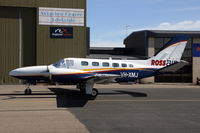
Cessna 441 ConquestRegistration
VH-XMJ
MSN
441-0113
Year of Manufacture
1980
Operator
Rossair CharterDate
May 30, 2017 at 04:30 PM
Type
CRASHFlight Type
Training
Flight Phase
Takeoff (climb)
Crash Site
Airport (less than 10 km from airport)
Crash Location
Renmark South Australia
Region
Oceania • Australia
Coordinates
-34.1750°, 140.7467°
Crash Cause
Human factor
Narrative Report
On May 30, 2017 at 04:30 PM, Renmark - Adelaide experienced a crash involving Cessna 441 Conquest, operated by Rossair Charter, with the event recorded near Renmark South Australia.
The flight was categorized as training and the reported phase was takeoff (climb) at a airport (less than 10 km from airport) crash site.
3 people were known to be on board, 3 fatalities were recorded, 0 survivors were identified or estimated. This corresponds to an estimated fatality rate of 100.0%.
Crew on board: 3, crew fatalities: 3, passengers on board: 0, passenger fatalities: 0, other fatalities: 0.
The listed crash cause is human factor. On 30 May 2017, a Cessna 441 Conquest II (Cessna 441), registered VH-XMJ (XMJ) and operated by AE Charter, trading as Rossair, departed Adelaide Airport, South Australia for a return flight via Renmark Airport, South Australia. On board the aircraft were: • an inductee pilot undergoing a proficiency check, flying from the front left control seat • the chief pilot conducting the proficiency check, and under assessment for the company training and checking role for Cessna 441 aircraft, seated in the front right control seat • a Civil Aviation Safety Authority flying operations inspector (FOI), observing and assessing the flight from the first passenger seat directly behind the left hand pilot seat. Each pilot was qualified to operate the aircraft. There were two purposes for the flight. The primary purpose was for the FOI to observe the chief pilot conducting an operational proficiency check (OPC), for the purposes of issuing him with a check pilot approval on the company’s Cessna 441 aircraft. The second purpose was for the inductee pilot, who had worked for Rossair previously, to complete an OPC as part of his return to line operations for the company. The three pilots reportedly started their pre-flight briefing at around 1300 Central Standard Time. There were two parts of the briefing – the FOI’s briefing to the chief pilot, and the chief pilot’s briefing to the inductee pilot. As the FOI was not occupying a control seat, he was monitoring and assessing the performance of the chief pilot in the conduct of the OPC. There were two distinct exercises listed for the flight (see the section titled Check flight sequences). Flight exercise 1 detailed that the inductee pilot was to conduct an instrument departure from Adelaide Airport, holding pattern and single engine RNAV2 approach, go around and landing at Renmark Airport. Flight exercise 2 included a normal take-off from Renmark Airport, simulated engine failure after take-off, and a two engine instrument approach on return to Adelaide. The aircraft departed from Adelaide at 1524, climbed to an altitude about 17,000 ft above mean sea level, and was cleared by air traffic control (ATC) to track to waypoint RENWB, which was the commencement of the Renmark runway 073 RNAV-Z GNSS approach. The pilot of XMJ was then cleared to descend, and notified ATC that they intended to carry out airwork in the Renmark area. The pilot further advised that they would call ATC again on the completion of the airwork, or at the latest by 1615. No further transmissions from XMJ were recorded on the area frequency and the aircraft left surveillance coverage as it descended towards waypoint RENWB. The common traffic advisory frequency used for air-to-air communications in the vicinity of Renmark Airport recorded several further transmissions from XMJ as the crew conducted practice holding patterns, and a practice runway 07 RNAV GNSS approach. Voice analysis confirmed that the inductee pilot made the radio transmissions, as expected for the check flight. At the completion of the approach, the aircraft circled for the opposite runway and landed on runway 25, before backtracking and lining up for departure. That sequence varied from the planned exercise in that no single-engine go-around was conducted prior to landing at Renmark. At 1614, the common traffic advisory frequency recorded a transmission from the pilot of XMJ stating that they would shortly depart Renmark using runway 25 to conduct further airwork in the circuit area of the runway. A witness at the airport reported that, prior to the take-off roll, the aircraft was briefly held stationary in the lined-up position with the engines operating at significant power. The take-off roll was described as normal however, and the witness looked away before the aircraft became airborne. The aircraft maintained the runway heading until reaching a height of between 300-400 ft above the ground (see the section titled Recorded flight data). At that point the aircraft began veering to the right of the extended runway centreline (Figures 1 and 15). The aircraft continued to climb to about 600 ft above the ground (700 ft altitude), and held this height for about 30 seconds, followed by a descent to about 500 ft (Figures 2 and 13). The information ceased 5 seconds later, which was about 60 seconds after take-off. A distress beacon broadcast was received by the Joint Rescue Coordination Centre and passed on to ATC at 1625. Following an air and ground search the aircraft was located by a ground party at 1856 about 4 km west of Renmark Airport. All on board were fatally injured and the aircraft was destroyed.
Aircraft reference details include registration VH-XMJ, MSN 441-0113, year of manufacture 1980.
Geospatial coordinates for this crash are approximately -34.1750°, 140.7467°.
Fatalities
Total
3
Crew
3
Passengers
0
Other
0
Crash Summary
On 30 May 2017, a Cessna 441 Conquest II (Cessna 441), registered VH-XMJ (XMJ) and operated by AE Charter, trading as Rossair, departed Adelaide Airport, South Australia for a return flight via Renmark Airport, South Australia. On board the aircraft were: • an inductee pilot undergoing a proficiency check, flying from the front left control seat • the chief pilot conducting the proficiency check, and under assessment for the company training and checking role for Cessna 441 aircraft, seated in the front right control seat • a Civil Aviation Safety Authority flying operations inspector (FOI), observing and assessing the flight from the first passenger seat directly behind the left hand pilot seat. Each pilot was qualified to operate the aircraft. There were two purposes for the flight. The primary purpose was for the FOI to observe the chief pilot conducting an operational proficiency check (OPC), for the purposes of issuing him with a check pilot approval on the company’s Cessna 441 aircraft. The second purpose was for the inductee pilot, who had worked for Rossair previously, to complete an OPC as part of his return to line operations for the company. The three pilots reportedly started their pre-flight briefing at around 1300 Central Standard Time. There were two parts of the briefing – the FOI’s briefing to the chief pilot, and the chief pilot’s briefing to the inductee pilot. As the FOI was not occupying a control seat, he was monitoring and assessing the performance of the chief pilot in the conduct of the OPC. There were two distinct exercises listed for the flight (see the section titled Check flight sequences). Flight exercise 1 detailed that the inductee pilot was to conduct an instrument departure from Adelaide Airport, holding pattern and single engine RNAV2 approach, go around and landing at Renmark Airport. Flight exercise 2 included a normal take-off from Renmark Airport, simulated engine failure after take-off, and a two engine instrument approach on return to Adelaide. The aircraft departed from Adelaide at 1524, climbed to an altitude about 17,000 ft above mean sea level, and was cleared by air traffic control (ATC) to track to waypoint RENWB, which was the commencement of the Renmark runway 073 RNAV-Z GNSS approach. The pilot of XMJ was then cleared to descend, and notified ATC that they intended to carry out airwork in the Renmark area. The pilot further advised that they would call ATC again on the completion of the airwork, or at the latest by 1615. No further transmissions from XMJ were recorded on the area frequency and the aircraft left surveillance coverage as it descended towards waypoint RENWB. The common traffic advisory frequency used for air-to-air communications in the vicinity of Renmark Airport recorded several further transmissions from XMJ as the crew conducted practice holding patterns, and a practice runway 07 RNAV GNSS approach. Voice analysis confirmed that the inductee pilot made the radio transmissions, as expected for the check flight. At the completion of the approach, the aircraft circled for the opposite runway and landed on runway 25, before backtracking and lining up for departure. That sequence varied from the planned exercise in that no single-engine go-around was conducted prior to landing at Renmark. At 1614, the common traffic advisory frequency recorded a transmission from the pilot of XMJ stating that they would shortly depart Renmark using runway 25 to conduct further airwork in the circuit area of the runway. A witness at the airport reported that, prior to the take-off roll, the aircraft was briefly held stationary in the lined-up position with the engines operating at significant power. The take-off roll was described as normal however, and the witness looked away before the aircraft became airborne. The aircraft maintained the runway heading until reaching a height of between 300-400 ft above the ground (see the section titled Recorded flight data). At that point the aircraft began veering to the right of the extended runway centreline (Figures 1 and 15). The aircraft continued to climb to about 600 ft above the ground (700 ft altitude), and held this height for about 30 seconds, followed by a descent to about 500 ft (Figures 2 and 13). The information ceased 5 seconds later, which was about 60 seconds after take-off. A distress beacon broadcast was received by the Joint Rescue Coordination Centre and passed on to ATC at 1625. Following an air and ground search the aircraft was located by a ground party at 1856 about 4 km west of Renmark Airport. All on board were fatally injured and the aircraft was destroyed.
Cause: Human factor
Occupants & Outcome
Crew On Board
3
Passengers On Board
0
Estimated Survivors
0
Fatality Rate
100.0%
Known people on board: 3
Operational Details
Schedule / Flight
Renmark - Adelaide
Operator
Rossair CharterFlight Type
Training
Flight Phase
Takeoff (climb)
Crash Site
Airport (less than 10 km from airport)
Region / Country
Oceania • Australia
Aircraft Details
Similar Plane Crashes
Royal Australian Air Force - RAAF
Avro 504
The crew was performing a training flight out from Point Cook. Shortly after takeoff, while climbing to an altitude of 500 feet, the aircraft dove into the ground and crashed, bursting into flames. One pilot was killed instantly while the second one died few hours later. This was the first accident involving an aircraft of the Royal Australian Air Force which was officially founded a week ago on March 31, 1921. Crew: Lt James Fryer-Smith, pilot Cpl Bertie W. Whicker, mechanic.
Western Australia Airways
Bristol Tourer
The crew was performing the inaugural flight from Geraldton to Derby which was considered as the first commercial flight within Australia. On approach to Kalbarri, the aircraft crashed for unknown reasons near the Murchinson River, killing both occupants. Crew: Ted Broad, Bob Fawcett.
O. Ramsay
Avro 504
During the takeoff roll, the pilot swerved the airplane to avoid two boys running across the runway. He lost control of the airplane that crashed near the beach. The aircraft was destroyed and all three occupants were injured.
Qantas Airways - Queensland and Northern Territory Aerial Services
Armstrong Whitworth F.K.8
Crashed on takeoff for unknown reasons. While the aircraft was damaged beyond repair, there were no casualties.
Qantas Airways - Queensland and Northern Territory Aerial Services
Armstrong Whitworth F.K.8
En route from Charleville to Longreach, the pilot encountered technical problems and elected to make an emergency landing in Blackall. While the pilot was uninjured, the aircraft was damaged beyond repair.
Royal Australian Air Force - RAAF
Avro 504
The pilot was performing a night training flight at Point Cook Airport. On final approach, he lost control of the aircraft that crashed near the airport. The pilot was injured and the aircraft was damaged beyond repair.