
Paris – Cairo
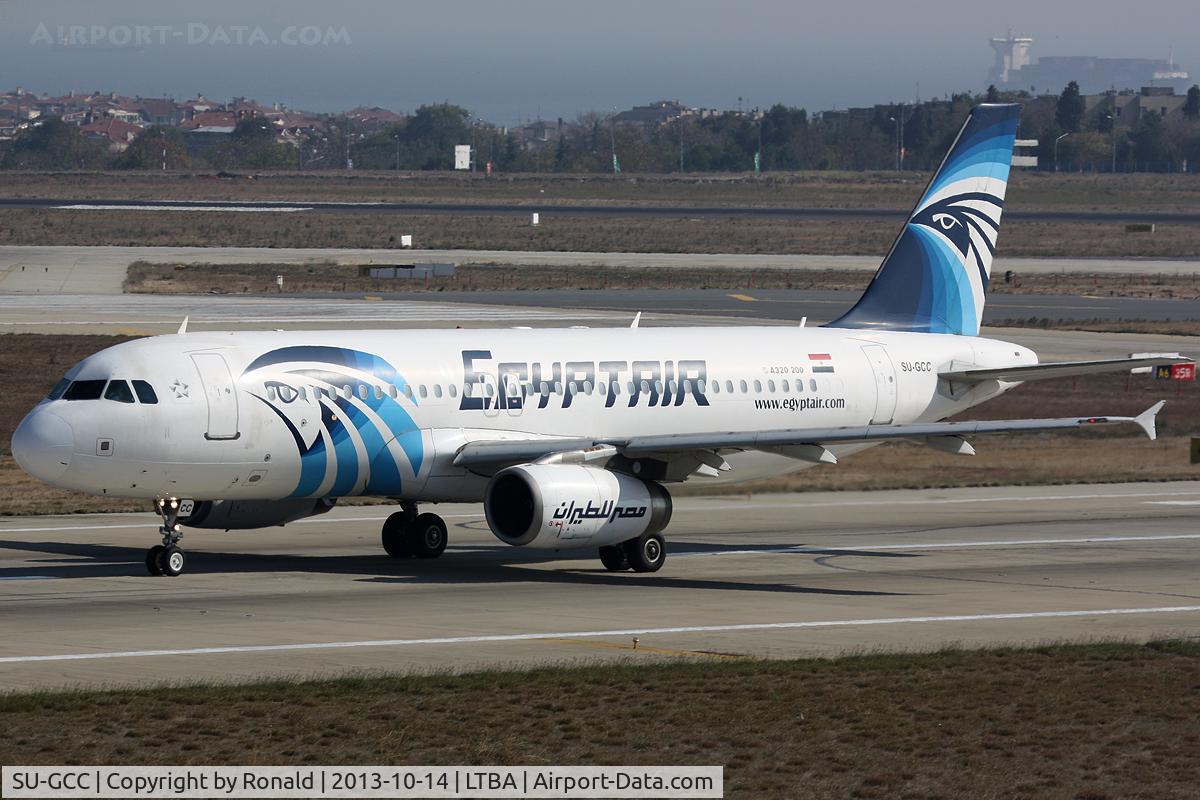
Flight / Schedule
Paris – Cairo
Aircraft
Airbus A320Registration
SU-GCC
MSN
2088
Year of Manufacture
2003
Operator
EgyptairDate
May 19, 2016 at 02:29 AM
Type
CRASHFlight Type
Scheduled Revenue Flight
Flight Phase
Flight
Crash Site
Lake, Sea, Ocean, River
Crash Location
Mediterranean Sea All World
Region
World • World
Narrative Report
On May 19, 2016 at 02:29 AM, Paris – Cairo experienced a crash involving Airbus A320, operated by Egyptair, with the event recorded near Mediterranean Sea All World.
The flight was categorized as scheduled revenue flight and the reported phase was flight at a lake, sea, ocean, river crash site.
66 people were known to be on board, 66 fatalities were recorded, 0 survivors were identified or estimated. This corresponds to an estimated fatality rate of 100.0%.
Crew on board: 10, crew fatalities: 10, passengers on board: 56, passenger fatalities: 56, other fatalities: 0.
The aircraft departed Paris-Roissy-Charles de Gaulle Airport at 2321LT on May 18 on an international schedule flight to Cairo. carrying 56 passengers and 10 crew members. The crew maintained radio contacts with the Greek ATC and was transferred to the Egyptian ATC but failed to respond. Two minutes after the airplane left the Greek Airspace, the aircraft descended from FL370 to FL220 in few seconds, apparently making a first turn to the left and then a 360 turn to the right before disappearing from the radar screen at 0229LT while at an altitude of 10'000 feet. It is believed that the aircraft crashed in the Mediterranean sea about 200 km north of Egyptian coast. The crew did not send any mayday message, thereby all assumptions remains open. It appears that some various debris such as luggage were found on May 20 about 290-300 km north of Alexandria. Two days after the accident, it is confirmed that ACARS messages reported smoke on board, apparently in the lavatory and also in a technical compartment located under the cockpit area. Above that, several technical issues were reported by the ACARS system. The CVR has been recovered on June 16, 2016, and the DFDR a day later. As both recorder systems are badly damaged, they will need to be repaired before analyzing any datas. On December 15, 2016, investigators reported that traces of explosives were found on several victims. Egyptian Authorities determined that there had been a malicious act. The formal investigation per ICAO Annex 13 was stopped and further investigation fell within the sole jurisdiction of the judicial authorities. Contradicting the Egyptian finding, the French BEA considered that the most likely hypothesis was that a fire broke out in the cockpit while the aircraft was flying at its cruise altitude and that the fire spread rapidly resulting in the loss of control of the aircraft.
Aircraft reference details include registration SU-GCC, MSN 2088, year of manufacture 2003.
Fatalities
Total
66
Crew
10
Passengers
56
Other
0
Crash Summary
The aircraft departed Paris-Roissy-Charles de Gaulle Airport at 2321LT on May 18 on an international schedule flight to Cairo. carrying 56 passengers and 10 crew members. The crew maintained radio contacts with the Greek ATC and was transferred to the Egyptian ATC but failed to respond. Two minutes after the airplane left the Greek Airspace, the aircraft descended from FL370 to FL220 in few seconds, apparently making a first turn to the left and then a 360 turn to the right before disappearing from the radar screen at 0229LT while at an altitude of 10'000 feet. It is believed that the aircraft crashed in the Mediterranean sea about 200 km north of Egyptian coast. The crew did not send any mayday message, thereby all assumptions remains open. It appears that some various debris such as luggage were found on May 20 about 290-300 km north of Alexandria. Two days after the accident, it is confirmed that ACARS messages reported smoke on board, apparently in the lavatory and also in a technical compartment located under the cockpit area. Above that, several technical issues were reported by the ACARS system. The CVR has been recovered on June 16, 2016, and the DFDR a day later. As both recorder systems are badly damaged, they will need to be repaired before analyzing any datas. On December 15, 2016, investigators reported that traces of explosives were found on several victims. Egyptian Authorities determined that there had been a malicious act. The formal investigation per ICAO Annex 13 was stopped and further investigation fell within the sole jurisdiction of the judicial authorities. Contradicting the Egyptian finding, the French BEA considered that the most likely hypothesis was that a fire broke out in the cockpit while the aircraft was flying at its cruise altitude and that the fire spread rapidly resulting in the loss of control of the aircraft.
Occupants & Outcome
Crew On Board
10
Passengers On Board
56
Estimated Survivors
0
Fatality Rate
100.0%
Known people on board: 66
Operational Details
Schedule / Flight
Paris – Cairo
Operator
EgyptairFlight Type
Scheduled Revenue Flight
Flight Phase
Flight
Crash Site
Lake, Sea, Ocean, River
Region / Country
World • World
Aircraft Details
Similar Plane Crashes
Compagnie Générale Transaérienne - CGT
Nieuport-Delage NiD-30
The pilot, sole on board, departed Paris-Le Bourget on a mail flight to Hounslow Heath, London. While cruising over The Channel, he encountered thick fog when the airplane crashed in the sea in unknown circumstances. The pilot was killed.
KLM Royal Dutch Airlines - Koninklijke Luchtvaart Maatschappij
Fokker F3
The aircraft departed Croydon Airport at 1043LT on a regular schedule service to Amsterdam with an intermediate stop in Rotterdam, carrying two passengers and one pilot. En route, the pilot encountered technical problems and diverted to Lympne Airport, Kent. After several repairs were made, he continued the flight with an unserviceable radio. While cruising over the North Sea (between The Channel and the North Sea), the pilot encountered foggy conditions when the aircraft crashed in unknown circumstances in the sea. As the aircraft failed to arrive in Rotterdam, SAR operations were initiated but no trace of the aircraft nor the three occupants was found. Crew: Adriaan Pijl, pilot. Passengers: Mr. W. J. van Hien, Mr. C. Modderman.
Regia Aeronautica
Dornier Do J Wal
The crew departed Pisa, Italy, last 25 July to perform a transatlantic flight to Canada on behalf of the 'Commissariato Aeronautica', the ancient name of the Italian Air Force. The seaplane made stops in Saint-Raphaël, south of France, Lausanne (quai of Ouchy on Lake of Geneva), Strasbourg, Rotterdam, Hull, Stromness (Orkneys Islands), Feroe Islands and Reykjavik. While flying over the Sea of Labrador, some 180 km south of Cape Farewell, Greenland, the crew encountered engine problems and elected to make an emergency landing. The twin engine seaplane landed safely and the crew sent several mayday message. All five occupants were later rescued and evacuated by the crew of 'USS Richmond' which deviated from his route to the accident site. In a rough sea, the seaplane sank later and was lost and not recovered. Crew: Lt Antonio Locatelli, pilot, Lt Crosio, Lt Marescalchi, Mr. Braccini, flight engineer, Mr. Falcinelli, flight engineer.
Compagnie Générale d'Entreprises Aéronautiques - CGEA
Lioré-et-Olivier LeO H-13
En route from Oran to Alicante, the crew was forced to make an emergency landing following an engine failure. The crew was rescued few hours later and the aircraft sank and was lost.
Compagnie Générale d'Entreprises Aéronautiques - CGEA
Lioré-et-Olivier LeO H-13
En route from Alicante to Oran, a structural failure occurred on the buckle, forcing the crew to ditch the aircraft. The aircraft sank and both crew members (who were slightly injured) were rescued by the crew of the British boat named 'Egyptian'. Crew: Léon Givon, pilot, François Urvoy, mechanic.
Compagnie Générale d'Entreprises Aéronautiques - CGEA
Lioré-et-Olivier LeO H-13
The crew was performing a mail flight from Oran to Alicante when an engine failed while overflying the Mediterranean Sea. The crew ditch the aircraft in the sea. Both pilots were rescued 15 hours later by a the crew of a Spanish speedboat. The aircraft sank and was lost.