
Stapleford - Brize Norton
Flight / Schedule
Stapleford - Brize Norton
Aircraft
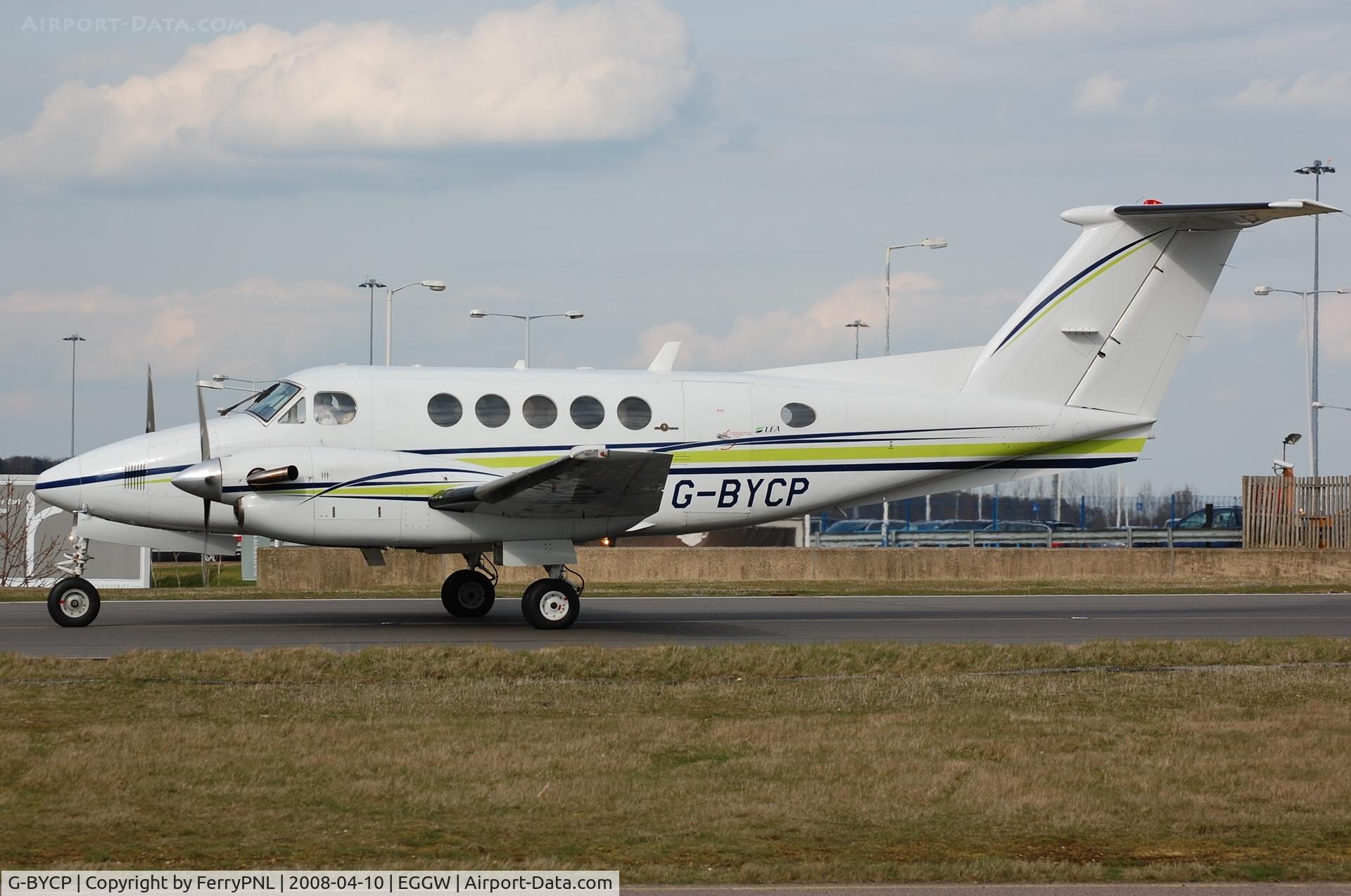
Beechcraft 200 Super King AirRegistration
G-BYCP
MSN
BB-966
Year of Manufacture
1982
Operator
London Executive AviationDate
October 3, 2015 at 10:20 AM
Type
CRASHFlight Type
Positioning
Flight Phase
Takeoff (climb)
Crash Site
Airport (less than 10 km from airport)
Crash Location
Stapleford Essex
Region
Europe • United Kingdom
Coordinates
51.6412°, 0.1738°
Crash Cause
Human factor
Narrative Report
On October 3, 2015 at 10:20 AM, Stapleford - Brize Norton experienced a crash involving Beechcraft 200 Super King Air, operated by London Executive Aviation, with the event recorded near Stapleford Essex.
The flight was categorized as positioning and the reported phase was takeoff (climb) at a airport (less than 10 km from airport) crash site.
2 people were known to be on board, 2 fatalities were recorded, 0 survivors were identified or estimated. This corresponds to an estimated fatality rate of 100.0%.
Crew on board: 1, crew fatalities: 1, passengers on board: 1, passenger fatalities: 1, other fatalities: 0.
The listed crash cause is human factor. G-BYCP was planned to operate a non-commercial flight from Stapleford Aerodrome to RAF Brize Norton with two company employees on board (including the pilot) to pick up two passengers for onward travel. The pilot (the aircraft commander) held a Commercial Pilot’s Licence (CPL) and occupied the left seat and another pilot, who held an Airline Transport Pilot’s Licence (ATPL), occupied the right. The second occupant worked for the operator of G-BYCP but his licence was valid on Bombardier Challenger 300 and Embraer ERJ 135/145 aircraft and not on the King Air. The pilot reported for work at approximately 0715 hrs for a planned departure at 0815 hrs but he delayed the flight because of poor meteorological visibility. The general weather conditions were fog and low cloud with a calm wind. At approximately 0850 hrs the visibility was judged to be approximately 600 m, based on the known distance from the operations room to a feature on the aerodrome. At approximately 0915 hrs, trees were visible just beyond the end of Runway 22L, indicating that visibility was at least 1,000 m and the pilot decided that conditions were suitable for departure. At 0908 hrs, the pilot called the en-route Air Navigation Service Provider (ANSP) on his mobile phone to ask for a departure clearance. He was instructed to remain clear of controlled airspace when airborne and call London Tactical Control Northeast (TCNE) on 118.825 MHz. The planned departure was to turn right after takeoff and intercept the 128° radial from Brookman’s Park VOR (BPK) heading towards the beacon, and climb to a maximum altitude of 2,400 ft amsl to remain below the London TMA which has a lower limit of 2,500 ft amsl. The aircraft took off at 0921 hrs and was observed climbing in a wings level attitude until it faded from view shortly after takeoff. After takeoff, the aircraft climbed on a track of approximately 205°M and, when passing approximately 750 ft amsl (565 ft aal), began to turn right. The aircraft continued to climb in the turn until it reached 875 ft amsl (690 ft aal) when it began to descend. The descent continued until the aircraft struck some trees at the edge of a field approximately 1.8 nm southwest of the aerodrome. The pilot and passenger were both fatally injured in the accident, which was not survivable. A secondary radar return, thought to be G-BYCP, was observed briefly near Stapleford Aerodrome by London ATC but no radio transmission was received from the aircraft. A witness was walking approximately 30 m north-east of where the aircraft struck the trees. She suddenly heard the aircraft, turned towards the sound and saw the aircraft in a nose-down attitude fly into the trees. Although she saw the aircraft only briefly, she saw clearly that the right wing was slightly low, and that the aircraft appeared to be intact and was not on fire. She also stated that the aircraft was “not falling” but flew “full pelt” into the ground.
Aircraft reference details include registration G-BYCP, MSN BB-966, year of manufacture 1982.
Geospatial coordinates for this crash are approximately 51.6412°, 0.1738°.
Fatalities
Total
2
Crew
1
Passengers
1
Other
0
Crash Summary
G-BYCP was planned to operate a non-commercial flight from Stapleford Aerodrome to RAF Brize Norton with two company employees on board (including the pilot) to pick up two passengers for onward travel. The pilot (the aircraft commander) held a Commercial Pilot’s Licence (CPL) and occupied the left seat and another pilot, who held an Airline Transport Pilot’s Licence (ATPL), occupied the right. The second occupant worked for the operator of G-BYCP but his licence was valid on Bombardier Challenger 300 and Embraer ERJ 135/145 aircraft and not on the King Air. The pilot reported for work at approximately 0715 hrs for a planned departure at 0815 hrs but he delayed the flight because of poor meteorological visibility. The general weather conditions were fog and low cloud with a calm wind. At approximately 0850 hrs the visibility was judged to be approximately 600 m, based on the known distance from the operations room to a feature on the aerodrome. At approximately 0915 hrs, trees were visible just beyond the end of Runway 22L, indicating that visibility was at least 1,000 m and the pilot decided that conditions were suitable for departure. At 0908 hrs, the pilot called the en-route Air Navigation Service Provider (ANSP) on his mobile phone to ask for a departure clearance. He was instructed to remain clear of controlled airspace when airborne and call London Tactical Control Northeast (TCNE) on 118.825 MHz. The planned departure was to turn right after takeoff and intercept the 128° radial from Brookman’s Park VOR (BPK) heading towards the beacon, and climb to a maximum altitude of 2,400 ft amsl to remain below the London TMA which has a lower limit of 2,500 ft amsl. The aircraft took off at 0921 hrs and was observed climbing in a wings level attitude until it faded from view shortly after takeoff. After takeoff, the aircraft climbed on a track of approximately 205°M and, when passing approximately 750 ft amsl (565 ft aal), began to turn right. The aircraft continued to climb in the turn until it reached 875 ft amsl (690 ft aal) when it began to descend. The descent continued until the aircraft struck some trees at the edge of a field approximately 1.8 nm southwest of the aerodrome. The pilot and passenger were both fatally injured in the accident, which was not survivable. A secondary radar return, thought to be G-BYCP, was observed briefly near Stapleford Aerodrome by London ATC but no radio transmission was received from the aircraft. A witness was walking approximately 30 m north-east of where the aircraft struck the trees. She suddenly heard the aircraft, turned towards the sound and saw the aircraft in a nose-down attitude fly into the trees. Although she saw the aircraft only briefly, she saw clearly that the right wing was slightly low, and that the aircraft appeared to be intact and was not on fire. She also stated that the aircraft was “not falling” but flew “full pelt” into the ground.
Cause: Human factor
Occupants & Outcome
Crew On Board
1
Passengers On Board
1
Estimated Survivors
0
Fatality Rate
100.0%
Known people on board: 2
Operational Details
Schedule / Flight
Stapleford - Brize Norton
Operator
London Executive AviationFlight Type
Positioning
Flight Phase
Takeoff (climb)
Crash Site
Airport (less than 10 km from airport)
Region / Country
Europe • United Kingdom
Aircraft Details
Similar Plane Crashes
Handley Page Aircraft Company Ltd
Handley Page V/1500
Assembled at Cricklewood Airfield in May 1918, the aircraft departed Cricklewood for its 13th test flight, carrying six crew members. Shortly after takeoff, while climbing to a height of about 700-800 feet, all four engines stopped. The pilot elected to return for an emergency landing when the aircraft stalled and crashed in a field located in front of 21 Garrick Avenue in Golders Green, bursting into flames. Colonel Ogilvie, who was seating in the tail gunner position at the back of the plane, survived, while all five other occupants were killed. Crew: Cpt Vernon Earl George Busby, pilot, † Mr. Bertram G. Cooper, † Mr. R. P. Cooper, † Mr. W. H. Hathaway, † Mr. J. W. Windebank, † Colonel Ogilvie.
Marine Aeroplane Depot
Fairey III
The pilot departed Isle of Grain on a delivery flight to Glasgow-Renfrew Airport. On approach to RAF Usworth (RAF Hylton), he elected to make a go-around when the aircraft lost height and crashed. The aircraft was destroyed and the pilot, Captain Arthur Leslie Simms, was killed.
Royal Air Force - RAF
De Havilland DH.6
The crew was completing a local training flight at RAF Seaton Carew when the aircraft entered a spin and crashed in a field, bursting into flames. Both occupants were killed. Crew: Cpt Charles David Danby, pilot, 1st Class E. A. Bannister, mechanic.
Royal Air Force - RAF
Handley Page H.P.12
The aircraft departed Castle Bromwich for a test flight, carrying five engineers and two crew members. En route, the twin engine aircraft suffered technical problems with a wing, lost height and crashed in a field located in Maxstoke. The aircraft was destroyed and all seven occupants were killed. Crew: Lt Robert Edward Macbeth, Lt Frederick James Bravery, 1st Air Mechanic James Benjamn May, 2nd Air Mechanic Albert J. Winrow, 2nd Air Mechanic H. Simmonds, 3rd Air Mechanic Charles William Offord, 3rd George Greenland.
Royal Air Force - RAF
Blackburn R.T.1 Kangaroo
On final approach in bad visibility, aircraft was too low. It struck the ground short of runway and crashed. Both occupants were injured. Crew was performing a training flight on behalf of the 246th Squadron.
Royal Air Force - RAF
De Havilland DH.9
The pilot tried to return to his base but due to low visibility by night, he lost his orientation. He elected to make an emergency landing in an open field but the aircraft hit a tree and crashed. The pilot was injured.