
Beverly - Milwaukee
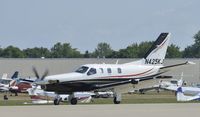
Flight / Schedule
Beverly - Milwaukee
Aircraft
Socata TBM-700Registration
N425KJ
MSN
518
Year of Manufacture
2009
Operator
Trustey Management CorporationDate
July 29, 2015 at 06:10 PM
Type
CRASHFlight Type
Private
Flight Phase
Landing (descent or approach)
Crash Site
Airport (less than 10 km from airport)
Crash Location
Milwaukee-Lawrence J. Timmerman Wisconsin
Region
North America • United States of America
Crash Cause
Human factor
Narrative Report
On July 29, 2015 at 06:10 PM, Beverly - Milwaukee experienced a crash involving Socata TBM-700, operated by Trustey Management Corporation, with the event recorded near Milwaukee-Lawrence J. Timmerman Wisconsin.
The flight was categorized as private and the reported phase was landing (descent or approach) at a airport (less than 10 km from airport) crash site.
2 people were known to be on board, 2 fatalities were recorded, 0 survivors were identified or estimated. This corresponds to an estimated fatality rate of 100.0%.
Crew on board: 1, crew fatalities: 1, passengers on board: 1, passenger fatalities: 1, other fatalities: 0.
The listed crash cause is human factor. The airline transport pilot was landing at the destination airport after a cross-country flight in visual meteorological conditions. The tower controller stated that the airplane's landing gear appeared to be extended during final approach and that the airplane landed within the runway's touchdown zone. The tower controller stated that, although the airplane made a normal landing, he heard a squealing noise that continued longer than what he believed was typical. The pilot subsequently transmitted "go-around." The tower controller acknowledged the go-around and cleared the pilot to enter a left traffic pattern. The tower controller stated that he heard the engine speed accelerate while the airplane maintained a level attitude over the runway until it passed midfield. He then saw the airplane pitch up and enter a climbing left turn. The tower controller stated that the airplane appeared to enter an aerodynamic stall before it descended into terrain in a left-wing-down attitude. Another witness reported that he saw the airplane, with its landing gear extended, in a steep left turn before it descended rapidly into terrain. A postaccident examination did not reveal any evidence of flight control, landing gear, or engine malfunction. An examination of the runway revealed numerous propeller slash marks that began about 215 ft past the runway's touchdown zone; however, there was no evidence that any portion of the airframe had impacted the runway during the landing. Additionally, measurement of the landing gear actuators confirmed that all three landing gear were fully extended at the accident site. Therefore, the pilot likely did not adequately control the airplane's pitch during the landing, which allowed the propeller to contact the runway. Due to the propeller strikes, the propeller was likely damaged and unable to provide adequate thrust during the go-around. Further, based on the witness accounts, the pilot likely did not maintain adequate airspeed during the climbing left turn, which resulted in the airplane exceeding its critical angle of attack and experiencing an aerodynamic stall at a low altitude.
Aircraft reference details include registration N425KJ, MSN 518, year of manufacture 2009.
Fatalities
Total
2
Crew
1
Passengers
1
Other
0
Crash Summary
The airline transport pilot was landing at the destination airport after a cross-country flight in visual meteorological conditions. The tower controller stated that the airplane's landing gear appeared to be extended during final approach and that the airplane landed within the runway's touchdown zone. The tower controller stated that, although the airplane made a normal landing, he heard a squealing noise that continued longer than what he believed was typical. The pilot subsequently transmitted "go-around." The tower controller acknowledged the go-around and cleared the pilot to enter a left traffic pattern. The tower controller stated that he heard the engine speed accelerate while the airplane maintained a level attitude over the runway until it passed midfield. He then saw the airplane pitch up and enter a climbing left turn. The tower controller stated that the airplane appeared to enter an aerodynamic stall before it descended into terrain in a left-wing-down attitude. Another witness reported that he saw the airplane, with its landing gear extended, in a steep left turn before it descended rapidly into terrain. A postaccident examination did not reveal any evidence of flight control, landing gear, or engine malfunction. An examination of the runway revealed numerous propeller slash marks that began about 215 ft past the runway's touchdown zone; however, there was no evidence that any portion of the airframe had impacted the runway during the landing. Additionally, measurement of the landing gear actuators confirmed that all three landing gear were fully extended at the accident site. Therefore, the pilot likely did not adequately control the airplane's pitch during the landing, which allowed the propeller to contact the runway. Due to the propeller strikes, the propeller was likely damaged and unable to provide adequate thrust during the go-around. Further, based on the witness accounts, the pilot likely did not maintain adequate airspeed during the climbing left turn, which resulted in the airplane exceeding its critical angle of attack and experiencing an aerodynamic stall at a low altitude.
Cause: Human factor
Occupants & Outcome
Crew On Board
1
Passengers On Board
1
Estimated Survivors
0
Fatality Rate
100.0%
Known people on board: 2
Operational Details
Schedule / Flight
Beverly - Milwaukee
Operator
Trustey Management CorporationFlight Type
Private
Flight Phase
Landing (descent or approach)
Crash Site
Airport (less than 10 km from airport)
Region / Country
North America • United States of America
Aircraft Details
Similar Plane Crashes
United States Signal Corps - USSC
De Havilland DH.4
The single engine airplane departed Dayton-McCook Field for a local test flight. Shortly after takeoff, the aircraft stalled and crashed, killing both occupants. Crew: Maj Oscar Brindley, Lt Col Henry Damm.
United States Signal Corps - USSC
De Havilland DH.4
Lt. Frank Stuart Patterson, son and nephew of the co-founders of National Cash Register, is killed in the crash of his DH.4M, AS-32098, at Wilbur Wright Field during a flight test of a new mechanism for synchronizing machine gun and propeller, when a tie rod breaks during a dive from 15,000 feet (4,600 m), causing the wings to separate from the aircraft. Wishing to recognize the contributions of the Patterson family (owners of NCR) the area of Wright Field east of Huffman Dam (including Wilbur Wright Field, Fairfield Air Depot, and the Huffman Prairie) is renamed Patterson Field on 6 July 1931, in honor of Lt. Patterson.
United States Signal Corps - USSC
De Havilland DH.4
The aircraft crashed in unknown circumstances.
United States Signal Corps - USSC
De Havilland DH.4
The crew was completing a training mission. At an altitude of about 4,000 feet, the aircraft entered a spin and crashed in an open field near Everman-Barron Field Airport. A crew was killed and the second occupants was injured. The aircraft was destroyed.
U.S. Air Mail Service
De Havilland DH.4
Crashed following an engine failure. Pilot fate unknown.
United States Signal Corps - USSC
De Havilland DH.4
The accident occurred in unknown circumstances.