
Seoul – Hiroshima
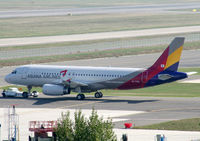
Flight / Schedule
Seoul – Hiroshima
Aircraft
Airbus A320Registration
HL7762
MSN
3244
Year of Manufacture
2007
Operator
Asiana AirlinesDate
April 14, 2015 at 08:05 PM
Type
CRASHFlight Type
Scheduled Revenue Flight
Flight Phase
Landing (descent or approach)
Crash Site
Airport (less than 10 km from airport)
Crash Location
Hiroshima Chugoku
Region
Asia • Japan
Coordinates
34.5775°, 132.4610°
Crash Cause
Human factor
Narrative Report
On April 14, 2015 at 08:05 PM, Seoul – Hiroshima experienced a crash involving Airbus A320, operated by Asiana Airlines, with the event recorded near Hiroshima Chugoku.
The flight was categorized as scheduled revenue flight and the reported phase was landing (descent or approach) at a airport (less than 10 km from airport) crash site.
82 people were known to be on board, 0 fatalities were recorded, 82 survivors were identified or estimated. This corresponds to an estimated fatality rate of 0.0%.
Crew on board: 8, crew fatalities: 0, passengers on board: 74, passenger fatalities: 0, other fatalities: 0.
The listed crash cause is human factor. The approach to Hiroshima Airport was completed in marginal weather conditions. The autopilot was disengaged at 2,100 feet MSL when the aircraft descended below the glide path and hit approach lights and the localiser antenna located 325 meters short of runway 28. The aircraft continued the descent, hit the soft ground short of runway. Then it rolled on runway for some 1,154 meters, veered to the left, went off runway and came to rest 130 meters to the left of the concrete runway, some 1,477 meters past the runway threshold. All 82 occupants were evacuated, among them 27 (25 passengers and 2 crew members) were injured. The aircraft was considered as written off due to severe damages on both engines, ailerons, wings and the bottom of the fuselage. At the time of the accident, weather conditions were difficult with visibility up to 4 km, RVR on runway 28 variable from 300 to 1,800 meters, light rain, partial fog, one octa cloud at 0 feet, 4 octas at 500 feet, 6 octas at 1,200 feet.
Aircraft reference details include registration HL7762, MSN 3244, year of manufacture 2007.
Geospatial coordinates for this crash are approximately 34.5775°, 132.4610°.
Fatalities
Total
0
Crew
0
Passengers
0
Other
0
Crash Summary
The approach to Hiroshima Airport was completed in marginal weather conditions. The autopilot was disengaged at 2,100 feet MSL when the aircraft descended below the glide path and hit approach lights and the localiser antenna located 325 meters short of runway 28. The aircraft continued the descent, hit the soft ground short of runway. Then it rolled on runway for some 1,154 meters, veered to the left, went off runway and came to rest 130 meters to the left of the concrete runway, some 1,477 meters past the runway threshold. All 82 occupants were evacuated, among them 27 (25 passengers and 2 crew members) were injured. The aircraft was considered as written off due to severe damages on both engines, ailerons, wings and the bottom of the fuselage. At the time of the accident, weather conditions were difficult with visibility up to 4 km, RVR on runway 28 variable from 300 to 1,800 meters, light rain, partial fog, one octa cloud at 0 feet, 4 octas at 500 feet, 6 octas at 1,200 feet.
Cause: Human factor
Occupants & Outcome
Crew On Board
8
Passengers On Board
74
Estimated Survivors
82
Fatality Rate
0.0%
Known people on board: 82
Operational Details
Schedule / Flight
Seoul – Hiroshima
Operator
Asiana AirlinesFlight Type
Scheduled Revenue Flight
Flight Phase
Landing (descent or approach)
Crash Site
Airport (less than 10 km from airport)
Region / Country
Asia • Japan
Aircraft Details
Similar Plane Crashes
Nakajima Aircraft Company
Nakajima N36
The single engine departed Tokyo on its second test flight, carrying eight crew members, engineers and pilots. The airplane crashed in unknown circumstances, killing all eight occupants. The first test flight has been completed the day prior to the accident.
Private Japanese
Junkers A.50
Crashed in unknown circumstances in Shinchi, northeast of Fukushima. Occupant's fate unknown.
Hochi Shimbun
Junkers A.50
The pilot Seiji Yoshihara was attempting a second non stop flight from Tokyo to Los Angeles on this single engine aircraft owned by Hochi Shimbun. While flying off Nemuro, the airplane crashed in unknown circumstances into the Nemuro Bay. While the pilot was rescued seven hours later, the aircraft sank and was lost. A first attempt to cross the north Atlantic ocean from Tokyo to Los Angeles failed last 14 of May when the aircraft crashed into the sea some 40 miles off the Kurile Islands.
Francis Charles Chichester
De Havilland DH.60 Moth
After takeoff, the single engine airplane collided with power cables and crashed in the Katsuura Bay. The pilot was seriously injured.
Japan Air Transport
Dornier Do J Wal
En route, the crew was forced to attempt an emergency landing and to ditch the airplane off Yawata. Upon landing, the seaplane disintegrated. Four crew members were killed and a fifth was injured.
Asahi Shimbun
De Havilland DH.80 Puss Moth
En route from Matsue to Osaka, the aircraft crashed in unknown circumstances into the sea few dozen metres off Tohaku, Tottori prefecture. The pilot was rescued and the aircraft sank and was lost.