
Heraklion – Rhodes
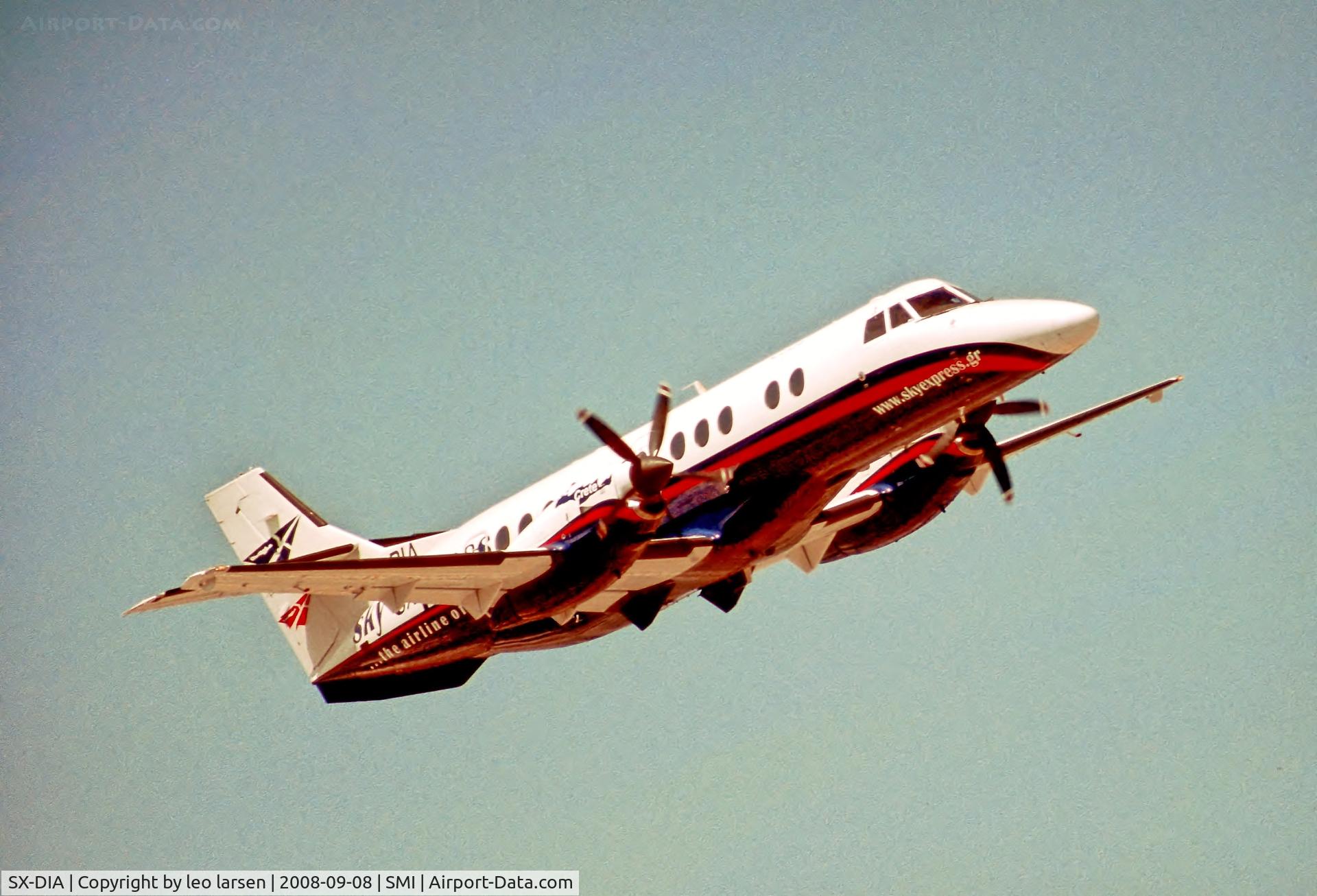
Flight / Schedule
Heraklion – Rhodes
Aircraft
Bae Jetstream 41Registration
SX-DIA
MSN
41075
Year of Manufacture
1995
Operator
Sky ExpressDate
February 2, 2015 at 07:36 AM
Type
CRASHFlight Type
Scheduled Revenue Flight
Flight Phase
Landing (descent or approach)
Crash Site
Airport (less than 10 km from airport)
Crash Location
Rhodes-Diagoras South Aegean / <U+039D><U+03CC>t<U+03B9><U+03BF> <U+0391><U+03B9><U+03B3>a<U+03AF><U+03BF>
Region
Europe • Greece
Crash Cause
Human factor
Narrative Report
On February 2, 2015 at 07:36 AM, Heraklion – Rhodes experienced a crash involving Bae Jetstream 41, operated by Sky Express, with the event recorded near Rhodes-Diagoras South Aegean / <U+039D><U+03CC>t<U+03B9><U+03BF> <U+0391><U+03B9><U+03B3>a<U+03AF><U+03BF>.
The flight was categorized as scheduled revenue flight and the reported phase was landing (descent or approach) at a airport (less than 10 km from airport) crash site.
19 people were known to be on board, 0 fatalities were recorded, 19 survivors were identified or estimated. This corresponds to an estimated fatality rate of 0.0%.
Crew on board: 3, crew fatalities: 0, passengers on board: 16, passenger fatalities: 0, other fatalities: 0.
The listed crash cause is human factor. The Jetstream 41 aircraft, with registration number SX-DIA, operated by “SKY EXPRESS”, took off on 2nd February 2015 at 07:00 hrs. local time from the Airport of Heraklion ‘N. Kazantzakis’, performing the scheduled flight No. ‘SEH100’, the first in the day, destined for the Airport of Rhodes ‘Diagoras’. Pre-flight checks were completed with no findings and in this flight the Captain was designated as the Pilot Flying. A 3-member crew and 16 passengers were onboard. The flight crew reported for duty one hour prior to the time of flight and proceeded with all actions as laid down in the Company manual. The flight crew was also briefed that in the area of the Airport of Rhodes the winds were S-SE at 17 kt with Wind Gust 36 kt. At 07:23:54 hrs., approximately 12 min prior to landing, in the first contact of the flight crew with the Control Tower of the Airport of Rhodes, the flight crew was briefed by the Air Traffic Controller (ATC) with respect to the weather conditions at the area of the airport, variable winds prevailing with a direction from 20° to 160°, average wind direction from 110°, wind velocity 20 kt gusting 38 kt. As laid down in the airport procedures, ATC, given the weather conditions, alerted the fire service vehicles to be stationed in readiness at their designated positions on the taxiways. At 07:24:43 hrs. Rhodes ATC contacted the flight crew wishing to remind that as a result of the strong wind shear and turbulence, landing at the airport is not recommended under the circumstances. At 07:29:34 hrs. Rhodes ATC contacted again the flight crew informing that the wind is shifting from 40° to 260°, average wind direction from 120°, mean wind velocity 20 kt and wind gust 32 kt. At 07:32:36 hrs., at about 8nm to the airport, the ATC contacting again the flight crew informed that wind in the last ten minutes is shifting in all directions, with mean wind velocity 16 kt and wind gust 37 kt; ATC also reminded that under these conditions landing is not recommended. At 07:34:04 hrs., at about 4 nm to the airport, Rhodes ATC contacted again the flight crew informing that wind is shifting from 60° to 200°, mean wind velocity 15 kt, wind gust 32 kt and that runway 07 is free for landing. At 07:35:08 hrs. ATC again reports wind direction from 110°, 17kt. Communication between ATC and the flight crew was smooth without any problem, with the flight crew each time acknowledging the information provided by ATC. Given the prevailing winds, landing with 9° flaps and an airspeed of about 129 kt was selected. With the flight crew having performed all pre-landing checks prescribed in the manual and with the indicator lights for the ‘Down and Lock’ landing system being illuminated green, at about 07:36 hrs. the aircraft landed, with the right main landing gear touching down first. During deceleration immediately after touchdown, with the flight crew having performed all checks specified in the a/c manual and after ATC directed the aircraft to vacate the runway via taxiway ‘C’, the aircraft veered to the left and came to rest at the left edge of the runway without exiting the runway, with an eastward direction. With the fire service vehicle approaching the aircraft, the flight crew contacted the Control Tower of the airport stating that everything is ok, and then reporting inability to taxi when asked whether the aircraft is able to taxi; when asked whether a tire was burst, the flight crew confirmed that this is the case. At 07:37:49 hrs. the Fire Service advises the Control Tower of the airport that the fire truck sprays foam due to fuel leakage. At 07:41:08 hrs. the Control Tower, when so asked by the ‘follow me’ vehicle, inquired of the flight crew whether passengers could be disembarked and the answer was that getting off from the passenger door (forward left) would not be feasible given the presence of the fire-fighting foam on the runway, and that the rear right door (Emergency Exit) would be used instead. As reported by the Air Traffic Controller passengers were disembarked 15 minutes after the incident, and the process lasted approximately 10 minutes. Upon a first visual inspection at the accident site and before the left wing of the aircraft was raised on jacks, it appeared that the left main landing gear folded back resulting in the aircraft’s left side dragging the runway (the left main landing gear and its housing into contact with the runway) and stopping at the left edge of the runway facing to the east.
Aircraft reference details include registration SX-DIA, MSN 41075, year of manufacture 1995.
Fatalities
Total
0
Crew
0
Passengers
0
Other
0
Crash Summary
The Jetstream 41 aircraft, with registration number SX-DIA, operated by “SKY EXPRESS”, took off on 2nd February 2015 at 07:00 hrs. local time from the Airport of Heraklion ‘N. Kazantzakis’, performing the scheduled flight No. ‘SEH100’, the first in the day, destined for the Airport of Rhodes ‘Diagoras’. Pre-flight checks were completed with no findings and in this flight the Captain was designated as the Pilot Flying. A 3-member crew and 16 passengers were onboard. The flight crew reported for duty one hour prior to the time of flight and proceeded with all actions as laid down in the Company manual. The flight crew was also briefed that in the area of the Airport of Rhodes the winds were S-SE at 17 kt with Wind Gust 36 kt. At 07:23:54 hrs., approximately 12 min prior to landing, in the first contact of the flight crew with the Control Tower of the Airport of Rhodes, the flight crew was briefed by the Air Traffic Controller (ATC) with respect to the weather conditions at the area of the airport, variable winds prevailing with a direction from 20° to 160°, average wind direction from 110°, wind velocity 20 kt gusting 38 kt. As laid down in the airport procedures, ATC, given the weather conditions, alerted the fire service vehicles to be stationed in readiness at their designated positions on the taxiways. At 07:24:43 hrs. Rhodes ATC contacted the flight crew wishing to remind that as a result of the strong wind shear and turbulence, landing at the airport is not recommended under the circumstances. At 07:29:34 hrs. Rhodes ATC contacted again the flight crew informing that the wind is shifting from 40° to 260°, average wind direction from 120°, mean wind velocity 20 kt and wind gust 32 kt. At 07:32:36 hrs., at about 8nm to the airport, the ATC contacting again the flight crew informed that wind in the last ten minutes is shifting in all directions, with mean wind velocity 16 kt and wind gust 37 kt; ATC also reminded that under these conditions landing is not recommended. At 07:34:04 hrs., at about 4 nm to the airport, Rhodes ATC contacted again the flight crew informing that wind is shifting from 60° to 200°, mean wind velocity 15 kt, wind gust 32 kt and that runway 07 is free for landing. At 07:35:08 hrs. ATC again reports wind direction from 110°, 17kt. Communication between ATC and the flight crew was smooth without any problem, with the flight crew each time acknowledging the information provided by ATC. Given the prevailing winds, landing with 9° flaps and an airspeed of about 129 kt was selected. With the flight crew having performed all pre-landing checks prescribed in the manual and with the indicator lights for the ‘Down and Lock’ landing system being illuminated green, at about 07:36 hrs. the aircraft landed, with the right main landing gear touching down first. During deceleration immediately after touchdown, with the flight crew having performed all checks specified in the a/c manual and after ATC directed the aircraft to vacate the runway via taxiway ‘C’, the aircraft veered to the left and came to rest at the left edge of the runway without exiting the runway, with an eastward direction. With the fire service vehicle approaching the aircraft, the flight crew contacted the Control Tower of the airport stating that everything is ok, and then reporting inability to taxi when asked whether the aircraft is able to taxi; when asked whether a tire was burst, the flight crew confirmed that this is the case. At 07:37:49 hrs. the Fire Service advises the Control Tower of the airport that the fire truck sprays foam due to fuel leakage. At 07:41:08 hrs. the Control Tower, when so asked by the ‘follow me’ vehicle, inquired of the flight crew whether passengers could be disembarked and the answer was that getting off from the passenger door (forward left) would not be feasible given the presence of the fire-fighting foam on the runway, and that the rear right door (Emergency Exit) would be used instead. As reported by the Air Traffic Controller passengers were disembarked 15 minutes after the incident, and the process lasted approximately 10 minutes. Upon a first visual inspection at the accident site and before the left wing of the aircraft was raised on jacks, it appeared that the left main landing gear folded back resulting in the aircraft’s left side dragging the runway (the left main landing gear and its housing into contact with the runway) and stopping at the left edge of the runway facing to the east.
Cause: Human factor
Occupants & Outcome
Crew On Board
3
Passengers On Board
16
Estimated Survivors
19
Fatality Rate
0.0%
Known people on board: 19
Operational Details
Schedule / Flight
Heraklion – Rhodes
Operator
Sky ExpressFlight Type
Scheduled Revenue Flight
Flight Phase
Landing (descent or approach)
Crash Site
Airport (less than 10 km from airport)
Region / Country
Europe • Greece
Aircraft Details
Similar Plane Crashes
Blackburn Aeroplane %26 Motor Company
Blackburn R.T.1 Kangaroo
In November, the Australian government offered a price of 10,000 dollars to any Australian airmen who will be able to fly from England to Australia within 30 days. The crew departed Hounslow Heath Airport (some 3 km southeast of Heathrow) on 21NOV1919. While overflying the island of Crete, in Greece, the crew encountered engine problems and elected to make an emergency landing in an open field located near Suda, east of Chania. The aircraft impacted ground and came to rest against a stonewall. All three occupants escaped uninjured while the aircraft was damaged beyond repair and abandoned.
Martinsyde Ltd
Martinsyde Type A
In November, the Australian government offered a price of 10,000 dollars to any Australian airmen who will be able to fly from England to Australia within 30 days. The crew departed Hounslow Heath Airport (some 3 km southeast of Heathrow) on 12DEC1919. While approaching Kerkyra, Greece, the aircraft crashed in unknown circumstances in the sea, killing both pilots.
Aero Espresso Italiana
CMASA Wal
While cruising over the Ionian Sea, the crew encountered poor weather conditions with thunderstorm activity and decided to make a precautionary landing off Kerkira. Upon landing in rough sea, the aircraft was hit by big waves and came to rest. One crew member and one passenger were killed while seven other occupants were injured.
Aero Espresso Italiana
CMASA Wal
The seaplane departed Istanbul at 1000LT on a mail flight to Athens with a crew of five on board. At 1230LT, the radio operator reported his position over Lesbos Island. About 30 minutes later, the crew encountered engine problems and attempted to ditch the aircraft in the Aegean Sea off the Ágios Efstrátios Island. SAR operations were initiated but no trace of the aircraft nor the 5 crew members was ever found, among them Captain Achille Rossi.
Hellenic Air Force - Elleniki Polemiki Aeroporia
Breguet 19
Crashed in unknown circumstances, killing both crew members among them Stefanos Tzagias, pilot.
Aero Espresso Italiana
CMASA Wal
The seaplane departed Istanbul on a flight to Brindisi with intermediate stops in Mitilíni (Lesbos Island) and Athens, carrying 9 passengers and a crew of three. After the engine got started, the crew was ready for takeoff from the bay of Mitilíni when an engine exploded and caught fire. All 12 occupants were able to evacuate the cabin safely and the aircraft was totally destroyed by fire.