
Bedford – Atlantic City
Flight / Schedule
Bedford – Atlantic City
Aircraft
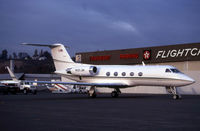
Gulfstream GIVRegistration
N121JM
MSN
1399
Year of Manufacture
2000
Operator
SK TravelDate
May 31, 2014 at 09:40 PM
Type
CRASHFlight Type
Private
Flight Phase
Takeoff (climb)
Crash Site
Airport (less than 10 km from airport)
Crash Location
Bedford-Laurence G. Hanscom Field Massachusetts
Region
North America • United States of America
Crash Cause
Human factor
Narrative Report
On May 31, 2014 at 09:40 PM, Bedford – Atlantic City experienced a crash involving Gulfstream GIV, operated by SK Travel, with the event recorded near Bedford-Laurence G. Hanscom Field Massachusetts.
The flight was categorized as private and the reported phase was takeoff (climb) at a airport (less than 10 km from airport) crash site.
7 people were known to be on board, 7 fatalities were recorded, 0 survivors were identified or estimated. This corresponds to an estimated fatality rate of 100.0%.
Crew on board: 3, crew fatalities: 3, passengers on board: 4, passenger fatalities: 4, other fatalities: 0.
The listed crash cause is human factor. The aircraft crashed after it overran the end of runway 11 during a rejected takeoff at Laurence G. Hanscom Field (BED), Bedford, Massachusetts. The airplane rolled through the paved overrun area and across a grassy area, collided with approach lights and a localizer antenna, passed through the airport’s perimeter fence, and came to a stop in a ravine. The two pilots, a flight attendant, and four passengers died. The airplane was destroyed by impact forces and a postcrash fire. The corporate flight, which was destined for Atlantic City International Airport, Atlantic City, New Jersey, was conducted under the provisions of 14 Code of Federal Regulations (CFR) Part 91. An instrument flight rules flight plan was filed. Night visual meteorological conditions prevailed at the time of the accident. During the engine start process, the flight crew neglected to disengage the airplane’s gust lock system, which locks the elevator, ailerons, and rudder while the airplane is parked to protect them against wind gust loads. Further, before initiating takeoff, the pilots neglected to perform a flight control check that would have alerted them of the locked flight controls. A review of data from the airplane’s quick access recorder revealed that the pilots had neglected to perform complete flight control checks before 98% of their previous 175 takeoffs in the airplane, indicating that this oversight was habitual and not an anomaly. A mechanical interlock between the gust lock handle and the throttle levers restricts the movement of the throttle levers when the gust lock handle is in the ON position. According to Gulfstream, the interlock mechanism was intended to limit throttle lever movement to a throttle lever angle (TLA) of no greater than 6° during operation with the gust lock on. However, postaccident testing on nine in-service G-IV airplanes found that, with the gust lock handle in the ON position, the forward throttle lever movement that could be achieved on the G-IV was 3 to 4 times greater than the intended TLA of 6°. During takeoff, the pilot-in-command (PIC) manually advanced the throttle levers, but the engine pressure ratio (EPR) did not reach the expected level due to the throttles contacting the gust lock/throttle lever interlock. The PIC did not immediately reject the takeoff; instead, he engaged the autothrottle, and the throttle levers moved slightly forward, which allowed the engines to attain an EPR value that approached (but never reached) the target setting. As the takeoff roll continued, the second-in-command made the standard takeoff speed callouts as the airplane successively reached 80 knots, the takeoff safety speed, and the rotation speed. When the PIC attempted to rotate the airplane, he discovered that he could not move the control yoke and began calling out “(steer) lock is on.” At this point, the PIC clearly understood that the controls were locked but still did not immediately initiate a rejected takeoff. If the flight crew had initiated a rejected takeoff at the time of the PIC’s first “lock is on” comment or at any time up until about 11 seconds after this comment, the airplane could have been stopped on the paved surface. However, the flight crew delayed applying brakes for about 10 seconds and further delayed reducing power by 4 seconds; therefore, the rejected takeoff was not initiated until the accident was unavoidable. Among the victims was Lewis Katz, co-owner of the 'Philadelphia Inquirer'.
Aircraft reference details include registration N121JM, MSN 1399, year of manufacture 2000.
Fatalities
Total
7
Crew
3
Passengers
4
Other
0
Crash Summary
The aircraft crashed after it overran the end of runway 11 during a rejected takeoff at Laurence G. Hanscom Field (BED), Bedford, Massachusetts. The airplane rolled through the paved overrun area and across a grassy area, collided with approach lights and a localizer antenna, passed through the airport’s perimeter fence, and came to a stop in a ravine. The two pilots, a flight attendant, and four passengers died. The airplane was destroyed by impact forces and a postcrash fire. The corporate flight, which was destined for Atlantic City International Airport, Atlantic City, New Jersey, was conducted under the provisions of 14 Code of Federal Regulations (CFR) Part 91. An instrument flight rules flight plan was filed. Night visual meteorological conditions prevailed at the time of the accident. During the engine start process, the flight crew neglected to disengage the airplane’s gust lock system, which locks the elevator, ailerons, and rudder while the airplane is parked to protect them against wind gust loads. Further, before initiating takeoff, the pilots neglected to perform a flight control check that would have alerted them of the locked flight controls. A review of data from the airplane’s quick access recorder revealed that the pilots had neglected to perform complete flight control checks before 98% of their previous 175 takeoffs in the airplane, indicating that this oversight was habitual and not an anomaly. A mechanical interlock between the gust lock handle and the throttle levers restricts the movement of the throttle levers when the gust lock handle is in the ON position. According to Gulfstream, the interlock mechanism was intended to limit throttle lever movement to a throttle lever angle (TLA) of no greater than 6° during operation with the gust lock on. However, postaccident testing on nine in-service G-IV airplanes found that, with the gust lock handle in the ON position, the forward throttle lever movement that could be achieved on the G-IV was 3 to 4 times greater than the intended TLA of 6°. During takeoff, the pilot-in-command (PIC) manually advanced the throttle levers, but the engine pressure ratio (EPR) did not reach the expected level due to the throttles contacting the gust lock/throttle lever interlock. The PIC did not immediately reject the takeoff; instead, he engaged the autothrottle, and the throttle levers moved slightly forward, which allowed the engines to attain an EPR value that approached (but never reached) the target setting. As the takeoff roll continued, the second-in-command made the standard takeoff speed callouts as the airplane successively reached 80 knots, the takeoff safety speed, and the rotation speed. When the PIC attempted to rotate the airplane, he discovered that he could not move the control yoke and began calling out “(steer) lock is on.” At this point, the PIC clearly understood that the controls were locked but still did not immediately initiate a rejected takeoff. If the flight crew had initiated a rejected takeoff at the time of the PIC’s first “lock is on” comment or at any time up until about 11 seconds after this comment, the airplane could have been stopped on the paved surface. However, the flight crew delayed applying brakes for about 10 seconds and further delayed reducing power by 4 seconds; therefore, the rejected takeoff was not initiated until the accident was unavoidable. Among the victims was Lewis Katz, co-owner of the 'Philadelphia Inquirer'.
Cause: Human factor
Occupants & Outcome
Crew On Board
3
Passengers On Board
4
Estimated Survivors
0
Fatality Rate
100.0%
Known people on board: 7
Operational Details
Schedule / Flight
Bedford – Atlantic City
Operator
SK TravelFlight Type
Private
Flight Phase
Takeoff (climb)
Crash Site
Airport (less than 10 km from airport)
Region / Country
North America • United States of America
Aircraft Details
Similar Plane Crashes
United States Signal Corps - USSC
De Havilland DH.4
The single engine airplane departed Dayton-McCook Field for a local test flight. Shortly after takeoff, the aircraft stalled and crashed, killing both occupants. Crew: Maj Oscar Brindley, Lt Col Henry Damm.
United States Signal Corps - USSC
De Havilland DH.4
Lt. Frank Stuart Patterson, son and nephew of the co-founders of National Cash Register, is killed in the crash of his DH.4M, AS-32098, at Wilbur Wright Field during a flight test of a new mechanism for synchronizing machine gun and propeller, when a tie rod breaks during a dive from 15,000 feet (4,600 m), causing the wings to separate from the aircraft. Wishing to recognize the contributions of the Patterson family (owners of NCR) the area of Wright Field east of Huffman Dam (including Wilbur Wright Field, Fairfield Air Depot, and the Huffman Prairie) is renamed Patterson Field on 6 July 1931, in honor of Lt. Patterson.
United States Signal Corps - USSC
De Havilland DH.4
The aircraft crashed in unknown circumstances.
United States Signal Corps - USSC
De Havilland DH.4
The crew was completing a training mission. At an altitude of about 4,000 feet, the aircraft entered a spin and crashed in an open field near Everman-Barron Field Airport. A crew was killed and the second occupants was injured. The aircraft was destroyed.
U.S. Air Mail Service
De Havilland DH.4
Crashed following an engine failure. Pilot fate unknown.
United States Signal Corps - USSC
De Havilland DH.4
The accident occurred in unknown circumstances.