
Fort Lauderdale – Marsh Harbour
Flight / Schedule
Fort Lauderdale – Marsh Harbour
Aircraft
Saab 340Registration
C6-SBJ
MSN
316
Year of Manufacture
1992
Operator
Sky BahamasDate
June 13, 2013 at 01:45 PM
Type
CRASHFlight Type
Scheduled Revenue Flight
Flight Phase
Landing (descent or approach)
Crash Site
Airport (less than 10 km from airport)
Crash Location
Marsh Harbour Central Abaco
Region
Central America • Bahamas
Coordinates
26.5416°, -77.0573°
Crash Cause
Human factor
Narrative Report
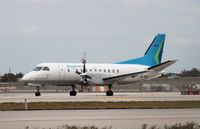
On June 13, 2013 at 01:45 PM, Fort Lauderdale – Marsh Harbour experienced a crash involving Saab 340, operated by Sky Bahamas, with the event recorded near Marsh Harbour Central Abaco.
The flight was categorized as scheduled revenue flight and the reported phase was landing (descent or approach) at a airport (less than 10 km from airport) crash site.
24 people were known to be on board, 0 fatalities were recorded, 24 survivors were identified or estimated. This corresponds to an estimated fatality rate of 0.0%.
Crew on board: 3, crew fatalities: 0, passengers on board: 21, passenger fatalities: 0, other fatalities: 0.
The listed crash cause is human factor. On Thursday June 13, 2013 at approximately 1750UTC (1:50pm local time), a fixed wing, twin turboprop regional airliner, was involved in an accident as a result of a runway excursion while landing during heavy rain showers at Marsh Harbor Int’l Airport, Marsh Harbor, Abaco, Bahamas. The aircraft, a SAAB 340B aircraft was operated by SkyBahamas Airlines and bore Bahamas registration C6-SBJ, serial number 316. C6-SBJ departed Fort Lauderdale Int’l Airport (KFLL), Fort Lauderdale, Florida in the USA as Tropical Sky 9561. The airline, SkyBahamas Airline is a Bahamas Air Operator Certificate Holder with approved scheduled operations to and from Fort Lauderdale International Airport, Florida USA (KFLL) and Marsh Harbor Int’l Airport, Marsh Harbor, Abaco in the Bahamas. The crew received weather information and IFR route clearance from KFLL Control Tower. This passenger carrying flight departed KFLL at 1706UTC (1:06pm local) on an instrument flight rules (IFR) flight plan. The point of intended landing was Marsh Harbor International Airport, Abaco, Bahamas (MYAM). The crew selected runway 09 at MYAM for landing. At 17:45:30, the aircraft leveled off at 1,500 feet ASL on a heading of 096 degrees magnetic, with airspeed of 236 knots indicated (KIAS). The flaps were extended to 15 degrees at 17:47:18 with the aircraft level at 1,300 feet ASL, approximately 4.2 nm on the approach. The autopilot was disconnected at 17:47:26 with the aircraft level at 1,300 feet ASL, approximately 3.8 nm on the approach. Heading was 097 degrees magnetic and airspeed was 166 KIAS. The Landing Gear was extended and in the down and locked position by 17:48:01 as the aircraft descended through 730 feet ASL. At 17:48:03, the flaps were extended to landing flap 20 degrees with the aircraft approximately 1.9 nm from the runway on the approach. At 17:48:47, as the aircraft approached the threshold, the power levers were retarded (from 52 degrees) and the engine torques decreased from approximately 20%. Approximately one second later, the aircraft crossed the threshold at a radio altitude of 50 feet AGL on a heading 098 degrees magnetic and airspeed of 171 KIAS. The crew encountered rain showers and a reduction in visibility. The aircraft initially touched down at 17:49:02 with a recorded vertical load factor of +2.16G, approximately 14 seconds after crossing the threshold. There were no indications on the runway to indicate where the initial touchdown had occurred. Upon initial landing however, the aircraft bounced and became airborne, reaching a calculated maximum height of approximately 15 feet AGL. The aircraft bounced a second time at 17:49:07 with a recorded vertical load factor of +3.19* G. During this second bounce, the pitch attitude was 1.8 degrees nose down, heading 102 degrees magnetic and airspeed 106 KIAS. The aircraft made consecutive contact with the runway approximately three times. The third and final bounce occurred at 17:49:14 with a recorded vertical load factor of +3.66G*. During the third bounce, the pitch attitude was 2.2 degrees nose down, heading 099 degrees magnetic and airspeed 98 KIAS. As a result of the hard touchdown, damage was sustained to the right wing and right hand engine/propeller. The right hand engine parameters recorded a rapid loss of power with decreasing engine speed and torque, and subsequent propeller stoppage. The aircraft veered off to the right at approximate time of 17:49:20 on a heading of 131 degrees magnetic at a point approximately 6,044 feet from the threshold of runway 09. The recorded airspeed was 44 KIAS with the left hand engine torque at 26 % and the right hand engine torque at 0%. The aircraft came to a full stop at approximate time 17:49:25 on a heading of 231 degrees magnetic. When the aircraft came to a stop, the flight and cabin crew and twenty-one (21) passengers evacuated the aircraft. The evacuation was uneventful using the main entrance door. Due to the damage sustained by the right wing and engine, evacuation on the right side was not considered. The evacuation occurred during heavy rainfall. No injuries were reported as a result of the accident or evacuation process. The airplane sustained substantial damage as a result of the impact sequence. The elevation of the accident site was reported as approximately 10 feet Mean Sea Level (MSL). Instrument Meteorological Conditions (IMC) prevailed at the time of the accident. The cockpit voice recorder (CVR) uncovered that this crew used no crew resource management or adherence to company standard operating procedures. During the final seconds of the flight, there was complete confusion on the flight deck as to who was in control of the aircraft. After failure of the windshield wiper on the left side of the aircraft, the captain continued to maneuver the aircraft despite having no visual contact of the field due to heavy rain. Sterile Cockpit procedures were not adhered to by this crew as they continued with non-essential conversation throughout the flight regime from engine start up in KFLL up until the “before landing checklist” was requested prior to landing.
Aircraft reference details include registration C6-SBJ, MSN 316, year of manufacture 1992.
Geospatial coordinates for this crash are approximately 26.5416°, -77.0573°.
Fatalities
Total
0
Crew
0
Passengers
0
Other
0
Crash Summary
On Thursday June 13, 2013 at approximately 1750UTC (1:50pm local time), a fixed wing, twin turboprop regional airliner, was involved in an accident as a result of a runway excursion while landing during heavy rain showers at Marsh Harbor Int’l Airport, Marsh Harbor, Abaco, Bahamas. The aircraft, a SAAB 340B aircraft was operated by SkyBahamas Airlines and bore Bahamas registration C6-SBJ, serial number 316. C6-SBJ departed Fort Lauderdale Int’l Airport (KFLL), Fort Lauderdale, Florida in the USA as Tropical Sky 9561. The airline, SkyBahamas Airline is a Bahamas Air Operator Certificate Holder with approved scheduled operations to and from Fort Lauderdale International Airport, Florida USA (KFLL) and Marsh Harbor Int’l Airport, Marsh Harbor, Abaco in the Bahamas. The crew received weather information and IFR route clearance from KFLL Control Tower. This passenger carrying flight departed KFLL at 1706UTC (1:06pm local) on an instrument flight rules (IFR) flight plan. The point of intended landing was Marsh Harbor International Airport, Abaco, Bahamas (MYAM). The crew selected runway 09 at MYAM for landing. At 17:45:30, the aircraft leveled off at 1,500 feet ASL on a heading of 096 degrees magnetic, with airspeed of 236 knots indicated (KIAS). The flaps were extended to 15 degrees at 17:47:18 with the aircraft level at 1,300 feet ASL, approximately 4.2 nm on the approach. The autopilot was disconnected at 17:47:26 with the aircraft level at 1,300 feet ASL, approximately 3.8 nm on the approach. Heading was 097 degrees magnetic and airspeed was 166 KIAS. The Landing Gear was extended and in the down and locked position by 17:48:01 as the aircraft descended through 730 feet ASL. At 17:48:03, the flaps were extended to landing flap 20 degrees with the aircraft approximately 1.9 nm from the runway on the approach. At 17:48:47, as the aircraft approached the threshold, the power levers were retarded (from 52 degrees) and the engine torques decreased from approximately 20%. Approximately one second later, the aircraft crossed the threshold at a radio altitude of 50 feet AGL on a heading 098 degrees magnetic and airspeed of 171 KIAS. The crew encountered rain showers and a reduction in visibility. The aircraft initially touched down at 17:49:02 with a recorded vertical load factor of +2.16G, approximately 14 seconds after crossing the threshold. There were no indications on the runway to indicate where the initial touchdown had occurred. Upon initial landing however, the aircraft bounced and became airborne, reaching a calculated maximum height of approximately 15 feet AGL. The aircraft bounced a second time at 17:49:07 with a recorded vertical load factor of +3.19* G. During this second bounce, the pitch attitude was 1.8 degrees nose down, heading 102 degrees magnetic and airspeed 106 KIAS. The aircraft made consecutive contact with the runway approximately three times. The third and final bounce occurred at 17:49:14 with a recorded vertical load factor of +3.66G*. During the third bounce, the pitch attitude was 2.2 degrees nose down, heading 099 degrees magnetic and airspeed 98 KIAS. As a result of the hard touchdown, damage was sustained to the right wing and right hand engine/propeller. The right hand engine parameters recorded a rapid loss of power with decreasing engine speed and torque, and subsequent propeller stoppage. The aircraft veered off to the right at approximate time of 17:49:20 on a heading of 131 degrees magnetic at a point approximately 6,044 feet from the threshold of runway 09. The recorded airspeed was 44 KIAS with the left hand engine torque at 26 % and the right hand engine torque at 0%. The aircraft came to a full stop at approximate time 17:49:25 on a heading of 231 degrees magnetic. When the aircraft came to a stop, the flight and cabin crew and twenty-one (21) passengers evacuated the aircraft. The evacuation was uneventful using the main entrance door. Due to the damage sustained by the right wing and engine, evacuation on the right side was not considered. The evacuation occurred during heavy rainfall. No injuries were reported as a result of the accident or evacuation process. The airplane sustained substantial damage as a result of the impact sequence. The elevation of the accident site was reported as approximately 10 feet Mean Sea Level (MSL). Instrument Meteorological Conditions (IMC) prevailed at the time of the accident. The cockpit voice recorder (CVR) uncovered that this crew used no crew resource management or adherence to company standard operating procedures. During the final seconds of the flight, there was complete confusion on the flight deck as to who was in control of the aircraft. After failure of the windshield wiper on the left side of the aircraft, the captain continued to maneuver the aircraft despite having no visual contact of the field due to heavy rain. Sterile Cockpit procedures were not adhered to by this crew as they continued with non-essential conversation throughout the flight regime from engine start up in KFLL up until the “before landing checklist” was requested prior to landing.
Cause: Human factor
Occupants & Outcome
Crew On Board
3
Passengers On Board
21
Estimated Survivors
24
Fatality Rate
0.0%
Known people on board: 24
Operational Details
Schedule / Flight
Fort Lauderdale – Marsh Harbour
Operator
Sky BahamasFlight Type
Scheduled Revenue Flight
Flight Phase
Landing (descent or approach)
Crash Site
Airport (less than 10 km from airport)
Region / Country
Central America • Bahamas
Aircraft Details
Similar Plane Crashes
Frederick Edward Guest
De Havilland DH.60 Moth
Shortly after takeoff from the Freeport harbor, the aircraft stalled and crashed in the sea. Both occupants were injured.
United States Navy - USN
Consolidated PBY-5A Catalina
The seaplane registered 7247 (VP-92) crashed while landing off Stocking Island. The aircraft sunk and was lost. The fate of the crew remains unknown. Pilot R. J. Finnie.
Royal Air Force - RAF
North American B-25 Mitchell
The crew departed Nassau on a local night training cession. While flying at low height, the airplane crashed onto a house located in Delaport, some 7 km northeast of the airfield. All four crew members escaped uninjured while three people in the house were killed.
United States Army Air Forces - USAAF
Curtiss C-46 Commando
Crashed in unknown circumstances into the sea off the Great Inagua Island. Crew fate remains unknown.
Royal Air Force - RAF
North American B-25 Mitchell
The airplane departed Nassau Airport on an anti-submarine exercise with six crew members on board. The crew reported his position over Great Sale Cay and requested permission for descent through exercise. It is believed that the pilot-in-command lost control of the airplane that crashed into the sea some 8 km southwest off Clifton Bluff. No trace of the wreckage was found and all six crew members, one RAAF and five RCAF were considered as deceased. The following test was found from RAF record books: B-25 FR-383 DX airborne for Anti-Submarine Patrol Number 3, sent signal reporting position over Great Sale Cay, requested permission for descent through cloud exercise. Then aircraft failed to reply to signal to commence, exercise, was not heard again, failed to return to base, so overdue, action was taken. Four aircraft dispatched to search waters adjacent to island. B-25 FV-946 FF is airborne to search for missing aircraft 3 nm southwest of Main Field, when smoke is sighted through the trees, crew caught sight of wrecked plane in the area, circled aircraft found to be a Baltimore aircraft, signal sent to base conveying this information. Aircraft continued search, oil patch was sighted, patch was 50 yards wide and seemed to extend in an up wind direction, aircraft returned to base and the Captain gave fuller details to the Controller on the information passed. The Marine 216 Craft at Lyford Cay was ordered to put to sea to investigate the oil patches, aircraft set course for the position of the oil patch, aircraft passed the coast, the ASR launch from Lyford Cay was seen heading towards the oil patch, aircraft was directly over the oil patch, and a smoke float was dropped, aircraft flew to the launch and headed it towards the patch, and then dived to 100 feet over the patch, continued to search the oil patch, and the launch was observed to have reduced speed and to be proceeding to the southeast up the patch. Instructions were received to continue the search of the area, and a sailing vessel was observed 4 nm to the north of the patch, heading towards Nassau. Aircraft landed back with nothing further to report. B-25 FR-393 DF is airborne to search south of the island to a distance of 15 nm off shore for oil patch, aircraft circled to investigate, message was received from base, message was sent to base that the ASR launch was standing by and that the aircraft was over the oil patch, oil patch extended 3 miles in length in a west-to-east direction, patch appeared to extend up wind from narrow end, no sign of a dinghy, survivors or wreckage. Aircraft remained over patch for 45 minutes, a constant series of orange flashes were seen emerging from two points near the narrow point of the oil patch, flashes appeared to be on the surface and appeared frequently, but at irregular intervals, message was sent to base that the aircraft was returning. The ASR boat was still standing by. Aircraft landed back with nothing further to report whilst the aircraft was over oil patch, it was joined by two other aircraft. B-25 FV-949 FD is airborne to search for the missing aircraft on receipt of a signal from base to search in the area of the oil patch, the aircraft proceeded to the reported position and observed two other aircraft in the vicinity. The ASR launch was seen to be searching the oil patch series of yellow flashes on the surface of water appearing at the easterly end of the oil patch; these are presumed to be smoke floats, and the aircraft returned to base.
United States Army Air Forces - USAAF
Douglas C-47 Skytrain (DC-3)
The crew was on his way from Morrison AFB (West Palm Beach, Florida) to Borinquen, Porto Rico, as the aircraft should be delivered in Algiers, Algeria. En route, while cruising off The Bahamas Islands, pilot was forced to ditch the aircraft for unknown reason. A crew member was killed while all four others were rescued.