
King Salmon - Dillingham
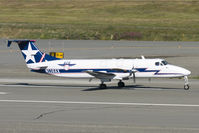
Flight / Schedule
King Salmon - Dillingham
Aircraft
Beechcraft 1900CRegistration
N116AX
MSN
UC-17
Year of Manufacture
1988
Operator
ACE Air CargoDate
March 8, 2013 at 08:15 AM
Type
CRASHFlight Type
Cargo
Flight Phase
Landing (descent or approach)
Crash Site
Mountains
Crash Location
Dillingham Alaska
Region
North America • United States of America
Coordinates
59.0399°, -158.4604°
Crash Cause
Human factor
Narrative Report
On March 8, 2013 at 08:15 AM, King Salmon - Dillingham experienced a crash involving Beechcraft 1900C, operated by ACE Air Cargo, with the event recorded near Dillingham Alaska.
The flight was categorized as cargo and the reported phase was landing (descent or approach) at a mountains crash site.
2 people were known to be on board, 2 fatalities were recorded, 0 survivors were identified or estimated. This corresponds to an estimated fatality rate of 100.0%.
Crew on board: 2, crew fatalities: 2, passengers on board: 0, passenger fatalities: 0, other fatalities: 0.
The listed crash cause is human factor. Aircraft was destroyed when it impacted rising terrain about 10 miles east of Aleknagik, Alaska. The airplane was operated as Flight 51, by Alaska Central Express, Inc., Anchorage, Alaska, as an on demand cargo flight under the provisions of 14 Code of Federal Regulations (CFR) Part 135. The airline transport certificated captain and the commercial certificated first officer sustained fatal injuries. Instrument meteorological conditions were reported in the area at the time of the accident, and the airplane was operating on an instrument flight rules (IFR) flight plan. The flight had originally departed Anchorage about 0544, and made a scheduled stop at King Salmon, Alaska, before continuing on to the next scheduled stop, Dillingham, Alaska. According to Federal Aviation Administration (FAA) personnel, as the airplane approached Dillingham, the flight crew requested the RNAV GPS 19 instrument approach to the Dillingham Airport about 0757 from controllers at the Anchorage Air Route Traffic Control Center (ARTCC). The ARTCC specialist on duty subsequently granted the request by issuing the clearance, with instructions to proceed direct to the Initial Approach Fix (IAF) to begin the approach, and to maintain an altitude of 2,000 feet or above. A short time later the flight crew requested to enter a holding pattern at the IAF so that they could contact the Flight Service Station (FSS) for a runway conditions report, and the ARTCC specialist granted that request. The ARTCC specialist then made several attempts to contact the aircraft, but was unsuccessful and subsequently lost radar track on the aircraft. When the airplane failed to arrive at the Dillingham Airport, ARTCC personnel initiated a radio search to see if the airplane had diverted to another airport. Unable to locate the airplane, the FAA issued an alert notice (ALNOT) at 0835. Search personnel from the Alaska State Troopers, Alaska Air National Guard, and the U.S. Coast Guard, along with several volunteer pilots, were dispatched to conduct an extensive search effort. Rescue personnel aboard an Air National Guard C-130 airplane tracked 406 MHz emergency locater transmitter (ELT) signal to an area of mountainous terrain about 20 miles north of Dillingham, but poor weather prohibited searchers from reaching the site until the next morning. Once the crew of a HH-60G helicopter from the Air National Guard's 210th Air Rescue Squadron, Anchorage, Alaska, reached the steep, snow and ice-covered site, they confirmed that both pilots sustained fatal injuries.
Aircraft reference details include registration N116AX, MSN UC-17, year of manufacture 1988.
Geospatial coordinates for this crash are approximately 59.0399°, -158.4604°.
Fatalities
Total
2
Crew
2
Passengers
0
Other
0
Crash Summary
Aircraft was destroyed when it impacted rising terrain about 10 miles east of Aleknagik, Alaska. The airplane was operated as Flight 51, by Alaska Central Express, Inc., Anchorage, Alaska, as an on demand cargo flight under the provisions of 14 Code of Federal Regulations (CFR) Part 135. The airline transport certificated captain and the commercial certificated first officer sustained fatal injuries. Instrument meteorological conditions were reported in the area at the time of the accident, and the airplane was operating on an instrument flight rules (IFR) flight plan. The flight had originally departed Anchorage about 0544, and made a scheduled stop at King Salmon, Alaska, before continuing on to the next scheduled stop, Dillingham, Alaska. According to Federal Aviation Administration (FAA) personnel, as the airplane approached Dillingham, the flight crew requested the RNAV GPS 19 instrument approach to the Dillingham Airport about 0757 from controllers at the Anchorage Air Route Traffic Control Center (ARTCC). The ARTCC specialist on duty subsequently granted the request by issuing the clearance, with instructions to proceed direct to the Initial Approach Fix (IAF) to begin the approach, and to maintain an altitude of 2,000 feet or above. A short time later the flight crew requested to enter a holding pattern at the IAF so that they could contact the Flight Service Station (FSS) for a runway conditions report, and the ARTCC specialist granted that request. The ARTCC specialist then made several attempts to contact the aircraft, but was unsuccessful and subsequently lost radar track on the aircraft. When the airplane failed to arrive at the Dillingham Airport, ARTCC personnel initiated a radio search to see if the airplane had diverted to another airport. Unable to locate the airplane, the FAA issued an alert notice (ALNOT) at 0835. Search personnel from the Alaska State Troopers, Alaska Air National Guard, and the U.S. Coast Guard, along with several volunteer pilots, were dispatched to conduct an extensive search effort. Rescue personnel aboard an Air National Guard C-130 airplane tracked 406 MHz emergency locater transmitter (ELT) signal to an area of mountainous terrain about 20 miles north of Dillingham, but poor weather prohibited searchers from reaching the site until the next morning. Once the crew of a HH-60G helicopter from the Air National Guard's 210th Air Rescue Squadron, Anchorage, Alaska, reached the steep, snow and ice-covered site, they confirmed that both pilots sustained fatal injuries.
Cause: Human factor
Occupants & Outcome
Crew On Board
2
Passengers On Board
0
Estimated Survivors
0
Fatality Rate
100.0%
Known people on board: 2
Operational Details
Schedule / Flight
King Salmon - Dillingham
Operator
ACE Air CargoFlight Type
Cargo
Flight Phase
Landing (descent or approach)
Crash Site
Mountains
Region / Country
North America • United States of America
Aircraft Details
Similar Plane Crashes
United States Signal Corps - USSC
De Havilland DH.4
The single engine airplane departed Dayton-McCook Field for a local test flight. Shortly after takeoff, the aircraft stalled and crashed, killing both occupants. Crew: Maj Oscar Brindley, Lt Col Henry Damm.
United States Signal Corps - USSC
De Havilland DH.4
Lt. Frank Stuart Patterson, son and nephew of the co-founders of National Cash Register, is killed in the crash of his DH.4M, AS-32098, at Wilbur Wright Field during a flight test of a new mechanism for synchronizing machine gun and propeller, when a tie rod breaks during a dive from 15,000 feet (4,600 m), causing the wings to separate from the aircraft. Wishing to recognize the contributions of the Patterson family (owners of NCR) the area of Wright Field east of Huffman Dam (including Wilbur Wright Field, Fairfield Air Depot, and the Huffman Prairie) is renamed Patterson Field on 6 July 1931, in honor of Lt. Patterson.
United States Signal Corps - USSC
De Havilland DH.4
The aircraft crashed in unknown circumstances.
United States Signal Corps - USSC
De Havilland DH.4
The crew was completing a training mission. At an altitude of about 4,000 feet, the aircraft entered a spin and crashed in an open field near Everman-Barron Field Airport. A crew was killed and the second occupants was injured. The aircraft was destroyed.
U.S. Air Mail Service
De Havilland DH.4
Crashed following an engine failure. Pilot fate unknown.
United States Signal Corps - USSC
De Havilland DH.4
The accident occurred in unknown circumstances.