
Nice - Le Castellet
Flight / Schedule
Nice - Le Castellet
Aircraft
Gulfstream GIVRegistration
N823GA
MSN
1005
Year of Manufacture
1987
Operator
Universal Jet AviationDate
July 13, 2012 at 03:18 PM
Type
CRASHFlight Type
Positioning
Flight Phase
Landing (descent or approach)
Crash Site
Airport (less than 10 km from airport)
Crash Location
Le Castellet Var
Region
Europe • France
Coordinates
43.2028°, 5.7761°
Crash Cause
Human factor
Narrative Report
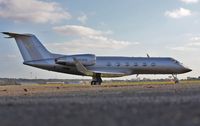
On July 13, 2012 at 03:18 PM, Nice - Le Castellet experienced a crash involving Gulfstream GIV, operated by Universal Jet Aviation, with the event recorded near Le Castellet Var.
The flight was categorized as positioning and the reported phase was landing (descent or approach) at a airport (less than 10 km from airport) crash site.
3 people were known to be on board, 3 fatalities were recorded, 0 survivors were identified or estimated. This corresponds to an estimated fatality rate of 100.0%.
Crew on board: 3, crew fatalities: 3, passengers on board: 0, passenger fatalities: 0, other fatalities: 0.
The listed crash cause is human factor. The crew, consisting of a Captain and a co-pilot, took off at around 6 h 00 for a flight between Athens and Istanbul Sabiha Gokcen (Turkey). A cabin aid was also on board the aeroplane. The crew then made the journey between Istanbul and Nice (06) with three passengers. After dropping them off in Nice, the aeroplane took off at 12 h 56 for a flight to Le Castellet aerodrome in order to park the airplane for several days, the parking area at Nice being full. The Captain, in the left seat, was Pilot Monitoring (PM). The copilot, in the right seat, was Pilot Flying (PF). Flights were operated according to US regulation 14 CFR Part 135 (special rules applicable for the operation of flights on demand). The flight leg was short and the cruise, carried out at FL160, lasted about 5 minutes. At the destination, the crew was cleared to perform a visual approach to runway 13. The autopilot and the auto-throttle were disengaged, the gear was down and the flaps in the landing position. The GND SPOILER UNARM message, indicating nonarming of the ground spoilers, was displayed on the EICAS and the associated single chime aural warning was triggered. This message remained displayed on the EICAS until the end of the flight since the crew forgot to arm the ground spoilers during the approach. At a height of 25 ft, while the aircraft was flying over the runway threshold slightly below the theoretical descent path, a SINK RATE warning was triggered. The PF corrected the flight path and the touchdown of the main landing gear took place 15 metres after the touchdown zone - that’s to say 365 metres from the threshold - and slightly left of the centre line of runway 13(3). The ground spoilers, not armed, did not automatically deploy. The crew braked and actuated the deployment of the thrust reversers, which did not deploy completely(4). The hydraulic pressure available at brake level slightly increased. The deceleration of the aeroplane was slow. Four seconds after touchdown, a MASTER WARNING was triggered. A second MASTER WARNING(5) was generated five seconds later. The nose landing gear touched down for the first time 785 metres beyond the threshold before the aeroplane’s pitch attitude increased again, causing a loss of contact of the nose gear with the ground. The aircraft crossed the runway centre line to the right, the crew correcting this by a slight input on the rudder pedals to the left. They applied a strong nose-down input and the nose gear touched down on the runway a second time, 1,050 metres beyond the threshold. The speed brakes were then manually actuated by the crew with an input on the speed brake control, which then deployed the panels. Maximum thrust from the thrust reversers was reached one second later(6). The aircraft at this time was 655 metres from the runway end and its path began to curve to the left. In response to this deviation, the crew made a sharp input on the right rudder pedal, to the stop, and an input on the right brake, but failed to correct the trajectory. The aeroplane, skidding to the right(7), ran off the runway to the left 385 metres from the runway end at a ground speed of approximately 95 knots. It struck a runway edge light, the PAPI of runway 31, a metal fence then trees and caught fire instantly. An aerodrome firefighter responded quickly onsite but did not succeed in bringing the fire under control. The occupants were unable to evacuate the aircraft.
Aircraft reference details include registration N823GA, MSN 1005, year of manufacture 1987.
Geospatial coordinates for this crash are approximately 43.2028°, 5.7761°.
Fatalities
Total
3
Crew
3
Passengers
0
Other
0
Crash Summary
The crew, consisting of a Captain and a co-pilot, took off at around 6 h 00 for a flight between Athens and Istanbul Sabiha Gokcen (Turkey). A cabin aid was also on board the aeroplane. The crew then made the journey between Istanbul and Nice (06) with three passengers. After dropping them off in Nice, the aeroplane took off at 12 h 56 for a flight to Le Castellet aerodrome in order to park the airplane for several days, the parking area at Nice being full. The Captain, in the left seat, was Pilot Monitoring (PM). The copilot, in the right seat, was Pilot Flying (PF). Flights were operated according to US regulation 14 CFR Part 135 (special rules applicable for the operation of flights on demand). The flight leg was short and the cruise, carried out at FL160, lasted about 5 minutes. At the destination, the crew was cleared to perform a visual approach to runway 13. The autopilot and the auto-throttle were disengaged, the gear was down and the flaps in the landing position. The GND SPOILER UNARM message, indicating nonarming of the ground spoilers, was displayed on the EICAS and the associated single chime aural warning was triggered. This message remained displayed on the EICAS until the end of the flight since the crew forgot to arm the ground spoilers during the approach. At a height of 25 ft, while the aircraft was flying over the runway threshold slightly below the theoretical descent path, a SINK RATE warning was triggered. The PF corrected the flight path and the touchdown of the main landing gear took place 15 metres after the touchdown zone - that’s to say 365 metres from the threshold - and slightly left of the centre line of runway 13(3). The ground spoilers, not armed, did not automatically deploy. The crew braked and actuated the deployment of the thrust reversers, which did not deploy completely(4). The hydraulic pressure available at brake level slightly increased. The deceleration of the aeroplane was slow. Four seconds after touchdown, a MASTER WARNING was triggered. A second MASTER WARNING(5) was generated five seconds later. The nose landing gear touched down for the first time 785 metres beyond the threshold before the aeroplane’s pitch attitude increased again, causing a loss of contact of the nose gear with the ground. The aircraft crossed the runway centre line to the right, the crew correcting this by a slight input on the rudder pedals to the left. They applied a strong nose-down input and the nose gear touched down on the runway a second time, 1,050 metres beyond the threshold. The speed brakes were then manually actuated by the crew with an input on the speed brake control, which then deployed the panels. Maximum thrust from the thrust reversers was reached one second later(6). The aircraft at this time was 655 metres from the runway end and its path began to curve to the left. In response to this deviation, the crew made a sharp input on the right rudder pedal, to the stop, and an input on the right brake, but failed to correct the trajectory. The aeroplane, skidding to the right(7), ran off the runway to the left 385 metres from the runway end at a ground speed of approximately 95 knots. It struck a runway edge light, the PAPI of runway 31, a metal fence then trees and caught fire instantly. An aerodrome firefighter responded quickly onsite but did not succeed in bringing the fire under control. The occupants were unable to evacuate the aircraft.
Cause: Human factor
Occupants & Outcome
Crew On Board
3
Passengers On Board
0
Estimated Survivors
0
Fatality Rate
100.0%
Known people on board: 3
Operational Details
Schedule / Flight
Nice - Le Castellet
Operator
Universal Jet AviationFlight Type
Positioning
Flight Phase
Landing (descent or approach)
Crash Site
Airport (less than 10 km from airport)
Region / Country
Europe • France
Aircraft Details
Similar Plane Crashes
French Air Force - Armée de l'Air
Breguet 14
The aircraft crashed iupon landing somewhere in France. Pilot Charles C. Bassett survived.
Royal Air Force - RAF
De Havilland DH.4
The airplane crashed in unknown circumstances in the sea off Saint-Vaast-la-Hougue, killing both crew members. Crew: 2Lt A. H. Aitken, 2Lt D. U. Thomas.
French Air Force - Armée de l'Air
De Havilland DH.4
The DH.4 collided with a Salmson aircraft over Latrecey-Ormoy-sur-Aube and crashed, killing the pilot Raymond B. Messer.
Royal Air Force - RAF
De Havilland DH.4
The single engine aircraft departed London on a flight to Paris, carrying one pilot and one passenger, the agronomist and botanist Aaron Aaronsohn. While flying over The Channel, the aircraft crashed in unknown circumstances in the sea off Boulogne-sur-Mer. Both occupants were killed.
Vickers-Armstrongs Ltd
Vickers Viking (Serie I/II/III & IV)
The British aviator John William Alcock departed Brooklands (Weybridge) that day to Paris-Le Bourget to take part to the first airplane exhibition in Europe after the WWI. While overflying Seine-Maritime, the pilot lost control of the seaplane that crashed in Cottévrard, some 20 km north of Rouen. The pilot was seriously injured (skull fracture) and died few hours later. He performed the first nonstop transatlantic flight from Newfoundland to Ireland last 15JUN1919 with Arthur Whitten Brown. He was aged 27.
Adastral Air Lines
Avro 504
Crashed in unknown circumstances somewhere in France. While all three occupants were slightly injured, the aircraft was destroyed.