
Cedar City - Cedar City
Flight / Schedule
Cedar City - Cedar City
Aircraft
Lockheed P-2 NeptuneRegistration
N14447
MSN
826-8010
Year of Manufacture
1959
Operator
Neptune Aviation CharterDate
June 3, 2012 at 01:47 PM
Type
CRASHFlight Type
Fire fighting
Flight Phase
Flight
Crash Site
Mountains
Crash Location
Modena Utah
Region
North America • United States of America
Coordinates
37.7982°, -113.9251°
Crash Cause
Human factor
Narrative Report
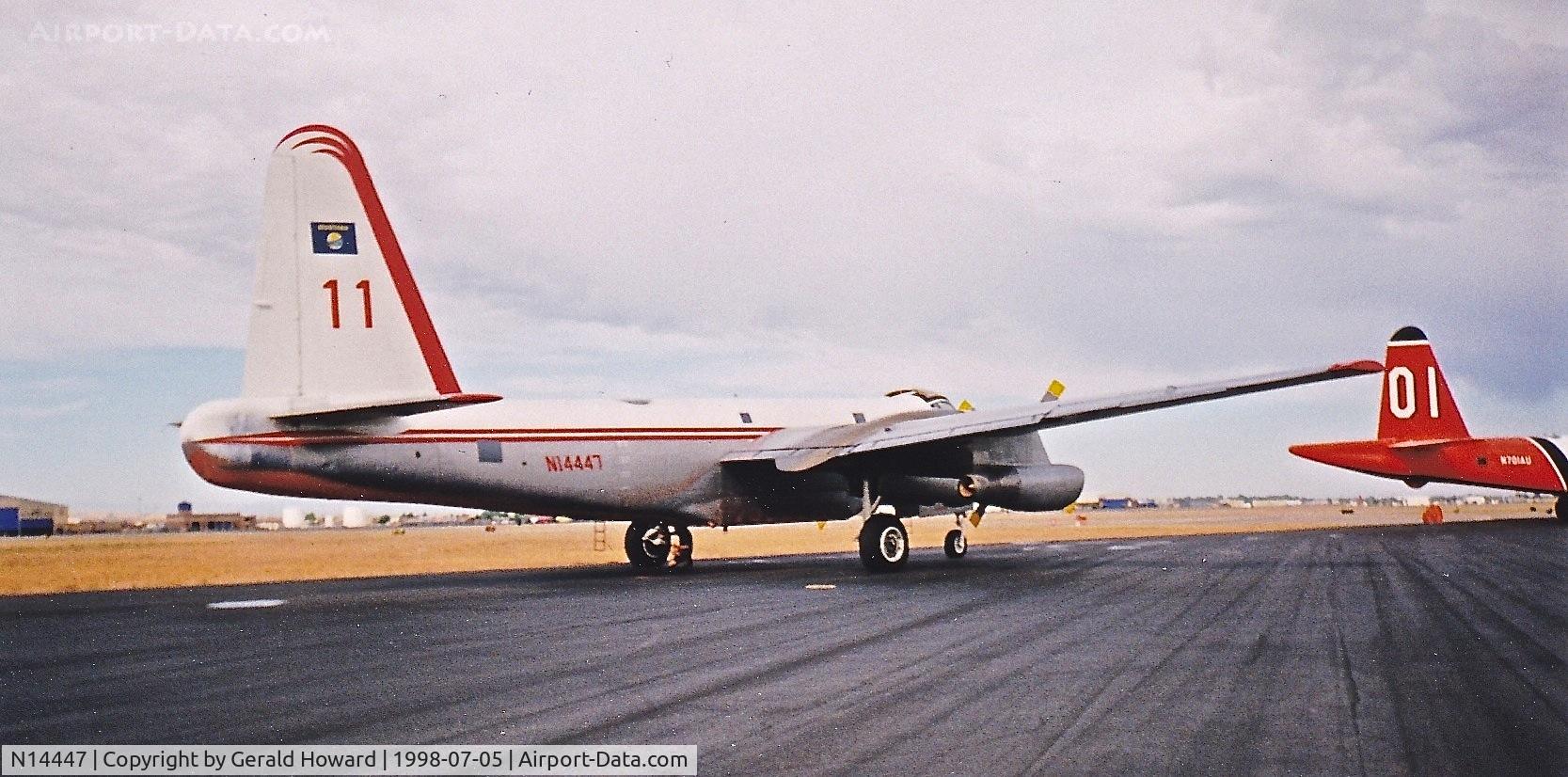
On June 3, 2012 at 01:47 PM, Cedar City - Cedar City experienced a crash involving Lockheed P-2 Neptune, operated by Neptune Aviation Charter, with the event recorded near Modena Utah.
The flight was categorized as fire fighting and the reported phase was flight at a mountains crash site.
2 people were known to be on board, 2 fatalities were recorded, 0 survivors were identified or estimated. This corresponds to an estimated fatality rate of 100.0%.
Crew on board: 2, crew fatalities: 2, passengers on board: 0, passenger fatalities: 0, other fatalities: 0.
The listed crash cause is human factor. The airplane collided with mountainous terrain while conducting firefighting operations, 20 miles north of Modena, Utah. The airplane was operated by Neptune Aviation Services under contract with the US Forest Service as an exclusive public-use fixed-wing airtanker service contract conducted under the operational control of the Bureau of Land management (BLM). Both pilots were fatally injured. The airplane was destroyed by impact forces and post crash fire. Visual meteorological conditions prevailed, and a company flight plan had been filed. The flight originated in Cedar City, Utah, at 1315. The crew of Tanker 11 consisted of the pilot, copilot, and crew chief. They were based out of Missoula, MT, and had been together as a crew for the previous 3 weeks. Normally, the crews stay together for the entire fire season. Tanker 11 crew had operated out of Reno for the 2 weeks prior to the accident. During fire drop operations the tanker is manned by the pilot and copilot, while the crew chief remains at the fire base as ground personnel. The day before the accident while en route from Reno to Cedar City they performed one retardant drop on the White Rock fire, then landed at Cedar City. The crew departed the Cedar City tanker base and arrived at their hotel in Cedar City around 2230. The following morning, the day of the accident, the crew met at 0815, and rode into the Cedar City tanker base together. Tanker 11 took off at 1214 on its first drop on the White Rock fire, and returned at 1254. The crew shut down the airplane, reloaded the airplane with retardant, and did not take on any fuel. Tanker 11 departed the tanker base at 1307 to conduct its second retardant drop of the day, which was to be in the same location as the first drop. Upon arriving in the Fire Traffic Area (FTA) Tanker 11 followed the lead airplane, a Beech Kingair 90, into the drop zone. The drop zone was located in a shallow valley that was 0.4 miles wide and 350 feet deep. The lead airplane flew a shallow right-hand turn on to final, then dropped to an altitude of 150 feet above the valley floor over the intended drop area. While making the right turn on to final behind the lead plane, Tanker 11's right wing tip collided with terrain that was about 700 feet left of the lead airplane's flight path, which resulted in a rapid right yaw, followed by impact with terrain; a fire ball subsequently erupted. Tanker 11 created a 1,088-foot-long debris field and post impact fire.
Aircraft reference details include registration N14447, MSN 826-8010, year of manufacture 1959.
Geospatial coordinates for this crash are approximately 37.7982°, -113.9251°.
Fatalities
Total
2
Crew
2
Passengers
0
Other
0
Crash Summary
The airplane collided with mountainous terrain while conducting firefighting operations, 20 miles north of Modena, Utah. The airplane was operated by Neptune Aviation Services under contract with the US Forest Service as an exclusive public-use fixed-wing airtanker service contract conducted under the operational control of the Bureau of Land management (BLM). Both pilots were fatally injured. The airplane was destroyed by impact forces and post crash fire. Visual meteorological conditions prevailed, and a company flight plan had been filed. The flight originated in Cedar City, Utah, at 1315. The crew of Tanker 11 consisted of the pilot, copilot, and crew chief. They were based out of Missoula, MT, and had been together as a crew for the previous 3 weeks. Normally, the crews stay together for the entire fire season. Tanker 11 crew had operated out of Reno for the 2 weeks prior to the accident. During fire drop operations the tanker is manned by the pilot and copilot, while the crew chief remains at the fire base as ground personnel. The day before the accident while en route from Reno to Cedar City they performed one retardant drop on the White Rock fire, then landed at Cedar City. The crew departed the Cedar City tanker base and arrived at their hotel in Cedar City around 2230. The following morning, the day of the accident, the crew met at 0815, and rode into the Cedar City tanker base together. Tanker 11 took off at 1214 on its first drop on the White Rock fire, and returned at 1254. The crew shut down the airplane, reloaded the airplane with retardant, and did not take on any fuel. Tanker 11 departed the tanker base at 1307 to conduct its second retardant drop of the day, which was to be in the same location as the first drop. Upon arriving in the Fire Traffic Area (FTA) Tanker 11 followed the lead airplane, a Beech Kingair 90, into the drop zone. The drop zone was located in a shallow valley that was 0.4 miles wide and 350 feet deep. The lead airplane flew a shallow right-hand turn on to final, then dropped to an altitude of 150 feet above the valley floor over the intended drop area. While making the right turn on to final behind the lead plane, Tanker 11's right wing tip collided with terrain that was about 700 feet left of the lead airplane's flight path, which resulted in a rapid right yaw, followed by impact with terrain; a fire ball subsequently erupted. Tanker 11 created a 1,088-foot-long debris field and post impact fire.
Cause: Human factor
Occupants & Outcome
Crew On Board
2
Passengers On Board
0
Estimated Survivors
0
Fatality Rate
100.0%
Known people on board: 2
Operational Details
Schedule / Flight
Cedar City - Cedar City
Operator
Neptune Aviation CharterFlight Type
Fire fighting
Flight Phase
Flight
Crash Site
Mountains
Region / Country
North America • United States of America
Aircraft Details
Similar Plane Crashes
United States Signal Corps - USSC
De Havilland DH.4
The single engine airplane departed Dayton-McCook Field for a local test flight. Shortly after takeoff, the aircraft stalled and crashed, killing both occupants. Crew: Maj Oscar Brindley, Lt Col Henry Damm.
United States Signal Corps - USSC
De Havilland DH.4
Lt. Frank Stuart Patterson, son and nephew of the co-founders of National Cash Register, is killed in the crash of his DH.4M, AS-32098, at Wilbur Wright Field during a flight test of a new mechanism for synchronizing machine gun and propeller, when a tie rod breaks during a dive from 15,000 feet (4,600 m), causing the wings to separate from the aircraft. Wishing to recognize the contributions of the Patterson family (owners of NCR) the area of Wright Field east of Huffman Dam (including Wilbur Wright Field, Fairfield Air Depot, and the Huffman Prairie) is renamed Patterson Field on 6 July 1931, in honor of Lt. Patterson.
United States Signal Corps - USSC
De Havilland DH.4
The aircraft crashed in unknown circumstances.
United States Signal Corps - USSC
De Havilland DH.4
The crew was completing a training mission. At an altitude of about 4,000 feet, the aircraft entered a spin and crashed in an open field near Everman-Barron Field Airport. A crew was killed and the second occupants was injured. The aircraft was destroyed.
U.S. Air Mail Service
De Havilland DH.4
Crashed following an engine failure. Pilot fate unknown.
United States Signal Corps - USSC
De Havilland DH.4
The accident occurred in unknown circumstances.