
Jesup - Chicago
Flight / Schedule
Jesup - Chicago
Aircraft
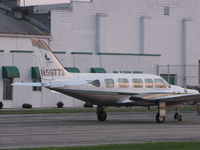
Piper PA-31-350 Navajo ChieftainRegistration
N59773
MSN
31-7652044
Year of Manufacture
1976
Operator
Trans North AviationDate
November 28, 2011 at 10:50 PM
Type
CRASHFlight Type
Ambulance
Flight Phase
Landing (descent or approach)
Crash Site
Airport (less than 10 km from airport)
Crash Location
Chicago-Executive (Palwaukee) Illinois
Region
North America • United States of America
Coordinates
42.1172°, -87.9013°
Crash Cause
Human factor
Narrative Report
On November 28, 2011 at 10:50 PM, Jesup - Chicago experienced a crash involving Piper PA-31-350 Navajo Chieftain, operated by Trans North Aviation, with the event recorded near Chicago-Executive (Palwaukee) Illinois.
The flight was categorized as ambulance and the reported phase was landing (descent or approach) at a airport (less than 10 km from airport) crash site.
5 people were known to be on board, 3 fatalities were recorded, 2 survivors were identified or estimated. This corresponds to an estimated fatality rate of 60.0%.
Crew on board: 2, crew fatalities: 1, passengers on board: 3, passenger fatalities: 2, other fatalities: 0.
The listed crash cause is human factor. The airplane was dispatched on an emergency medical services flight. While being vectored for an instrument approach, the pilot declared an emergency and reported that the airplane was out of fuel. He said the airplane lost engine power and that he was heading toward the destination airport. The airplane descended through clouds and impacted trees and terrain short of its destination. No preimpact anomalies were found during a postaccident examination. The postaccident examination revealed about 1.5 ounces of a liquid consistent with avgas within the airplane fuel system. Based on the three previous flight legs and refueling receipts, postaccident calculations indicated that the airplane was consuming fuel at a higher rate than referenced in the airplane flight manual. Based on this consumption rate, the airplane did not have enough fuel to reach the destination airport; however, a 20-knot tailwind was predicted, so it is likely that the pilot was relying on this to help the airplane reach the airport. Regardless, he would have been flying with less than the 45-minute fuel reserve that is required for an instrument flight rules flight. The pilot failed to recognize and compensate for the airplane’s high fuel consumption rate during the accident flight. It is likely that had the pilot monitored the gauges and the consumption rate for the flight he would have determined that he did not have adequate fuel to complete the flight. Toxicology tests showed the pilot had tetrahydrocannabinol and tetrahydrocannabinol carboxylic acid (marijuana) in his system; however, the level of impairment could not be determined based on the information available. However, marijuana use can impair the ability to concentrate and maintain vigilance and can distort the perception of time and distance. As a professional pilot, the use of marijuana prior to the flight raises questions about the pilot’s decision-making. The investigation also identified several issues that were not causal to the accident but nevertheless raised concerns about the company’s operational control of the flight. The operator had instituted a fuel log, but it was not regularly monitored. The recovered load manifest showed the pilot had been on duty for more than 15 hours, which exceeded the maximum of 14 hours for a regularly assigned duty period per 14 Code of Federal Regulations Part 135. The operator stated that it was aware of the pilot’s two driving while under the influence of alcohol convictions, but the operator did not request a background report on the pilot before he was hired. Further, the operator did not list the pilot-rated passenger as a member of the flight crew, yet he had flown previous positioning legs on the dispatched EMS mission as the pilot-in-command.
Aircraft reference details include registration N59773, MSN 31-7652044, year of manufacture 1976.
Geospatial coordinates for this crash are approximately 42.1172°, -87.9013°.
Fatalities
Total
3
Crew
1
Passengers
2
Other
0
Crash Summary
The airplane was dispatched on an emergency medical services flight. While being vectored for an instrument approach, the pilot declared an emergency and reported that the airplane was out of fuel. He said the airplane lost engine power and that he was heading toward the destination airport. The airplane descended through clouds and impacted trees and terrain short of its destination. No preimpact anomalies were found during a postaccident examination. The postaccident examination revealed about 1.5 ounces of a liquid consistent with avgas within the airplane fuel system. Based on the three previous flight legs and refueling receipts, postaccident calculations indicated that the airplane was consuming fuel at a higher rate than referenced in the airplane flight manual. Based on this consumption rate, the airplane did not have enough fuel to reach the destination airport; however, a 20-knot tailwind was predicted, so it is likely that the pilot was relying on this to help the airplane reach the airport. Regardless, he would have been flying with less than the 45-minute fuel reserve that is required for an instrument flight rules flight. The pilot failed to recognize and compensate for the airplane’s high fuel consumption rate during the accident flight. It is likely that had the pilot monitored the gauges and the consumption rate for the flight he would have determined that he did not have adequate fuel to complete the flight. Toxicology tests showed the pilot had tetrahydrocannabinol and tetrahydrocannabinol carboxylic acid (marijuana) in his system; however, the level of impairment could not be determined based on the information available. However, marijuana use can impair the ability to concentrate and maintain vigilance and can distort the perception of time and distance. As a professional pilot, the use of marijuana prior to the flight raises questions about the pilot’s decision-making. The investigation also identified several issues that were not causal to the accident but nevertheless raised concerns about the company’s operational control of the flight. The operator had instituted a fuel log, but it was not regularly monitored. The recovered load manifest showed the pilot had been on duty for more than 15 hours, which exceeded the maximum of 14 hours for a regularly assigned duty period per 14 Code of Federal Regulations Part 135. The operator stated that it was aware of the pilot’s two driving while under the influence of alcohol convictions, but the operator did not request a background report on the pilot before he was hired. Further, the operator did not list the pilot-rated passenger as a member of the flight crew, yet he had flown previous positioning legs on the dispatched EMS mission as the pilot-in-command.
Cause: Human factor
Occupants & Outcome
Crew On Board
2
Passengers On Board
3
Estimated Survivors
2
Fatality Rate
60.0%
Known people on board: 5
Operational Details
Schedule / Flight
Jesup - Chicago
Operator
Trans North AviationFlight Type
Ambulance
Flight Phase
Landing (descent or approach)
Crash Site
Airport (less than 10 km from airport)
Region / Country
North America • United States of America
Aircraft Details
Aircraft
Piper PA-31-350 Navajo ChieftainRegistration
N59773
MSN
31-7652044
Year of Manufacture
1976
Similar Plane Crashes
United States Signal Corps - USSC
De Havilland DH.4
The single engine airplane departed Dayton-McCook Field for a local test flight. Shortly after takeoff, the aircraft stalled and crashed, killing both occupants. Crew: Maj Oscar Brindley, Lt Col Henry Damm.
United States Signal Corps - USSC
De Havilland DH.4
Lt. Frank Stuart Patterson, son and nephew of the co-founders of National Cash Register, is killed in the crash of his DH.4M, AS-32098, at Wilbur Wright Field during a flight test of a new mechanism for synchronizing machine gun and propeller, when a tie rod breaks during a dive from 15,000 feet (4,600 m), causing the wings to separate from the aircraft. Wishing to recognize the contributions of the Patterson family (owners of NCR) the area of Wright Field east of Huffman Dam (including Wilbur Wright Field, Fairfield Air Depot, and the Huffman Prairie) is renamed Patterson Field on 6 July 1931, in honor of Lt. Patterson.
United States Signal Corps - USSC
De Havilland DH.4
The aircraft crashed in unknown circumstances.
United States Signal Corps - USSC
De Havilland DH.4
The crew was completing a training mission. At an altitude of about 4,000 feet, the aircraft entered a spin and crashed in an open field near Everman-Barron Field Airport. A crew was killed and the second occupants was injured. The aircraft was destroyed.
U.S. Air Mail Service
De Havilland DH.4
Crashed following an engine failure. Pilot fate unknown.
United States Signal Corps - USSC
De Havilland DH.4
The accident occurred in unknown circumstances.