
Port Moresby - Lae - Madang
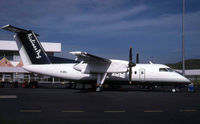
Flight / Schedule
Port Moresby - Lae - Madang
Aircraft
De Havilland DHC-8-100 (Dash-8)Registration
P2-MCJ
MSN
125
Year of Manufacture
1988
Operator
Airlines PNGDate
October 13, 2011 at 05:17 PM
Type
CRASHFlight Type
Scheduled Revenue Flight
Flight Phase
Landing (descent or approach)
Crash Site
Plain, Valley
Crash Location
Madang Madang
Region
Oceania • Papua New Guinea
Coordinates
-5.2120°, 145.8054°
Crash Cause
Human factor
Narrative Report
On October 13, 2011 at 05:17 PM, Port Moresby - Lae - Madang experienced a crash involving De Havilland DHC-8-100 (Dash-8), operated by Airlines PNG, with the event recorded near Madang Madang.
The flight was categorized as scheduled revenue flight and the reported phase was landing (descent or approach) at a plain, valley crash site.
32 people were known to be on board, 28 fatalities were recorded, 4 survivors were identified or estimated. This corresponds to an estimated fatality rate of 87.5%.
Crew on board: 4, crew fatalities: 1, passengers on board: 28, passenger fatalities: 27, other fatalities: 0.
The listed crash cause is human factor. On the afternoon of 13 October 2011, an Airlines PNG Bombardier DHC-8-103, registered P2-MCJ (MCJ), was conducting a regular public transport flight from Nadzab, Morobe Province, to Madang, Madang Province under the Instrument Flight Rules (IFR). On board the aircraft were two flight crew, a flight attendant, and 29 passengers. Earlier in the afternoon, the same crew had flown MCJ from Port Moresby to Nadzab. The autopilot could not be used because the yaw damper was unserviceable so the aircraft had to be hand-flown by the pilots. At Nadzab, the aircraft was refuelled with sufficient fuel for the flight to Madang and a planned subsequent flight from Madang to Port Moresby. MCJ departed Nadzab at 1647 LMT with the Pilot-in-Command as the handling pilot. The aircraft climbed to 16,000 ft with an estimated arrival time at Madang of 1717. Once in the cruise, the flight crew diverted right of the flight planned track to avoid thunderstorms and cloud. The Pilot-in-Command reported that communications between Madang Tower and an aircraft in the vicinity of Madang indicated a storm was approaching the aerodrome. He recalled that he had intended to descend below the cloud in order to be able to see across the sea to Madang and had been concentrating on manoeuvring the aircraft to remain clear of thunderstorms and cloud, so he had been looking mainly outside the cockpit. Because of the storm in the vicinity of the airport, he said there had been „some urgency<U+201F> to descend beneath the cloud base to position for a right base for runway 07 at Madang, the anticipated approach. On this route, the descent to Madang was steep (because of the need to remain above the Finisterre Ranges until close to Madang) and, although the aircraft was descending steeply, the propellers were at their cruise setting of 900 revolutions per minute (RPM). Neither pilot noticed the airspeed increasing towards the maximum operating speed (VMO); the Pilot-in-Command reported afterwards that he had been „distracted<U+201F> by the weather. When the aircraft reached VMO as it passed through 10,500 ft, with a rate of descent between 3,500 and 4,200 ft per minute, and the propellers set at 900 RPM, the VMO overspeed warning sounded. The Pilot-in-command reported that he had been about to ask the First Officer to increase the propeller speed to 1,050 RPM to slow the aircraft when this occurred. He raised the nose of the aircraft in response to the warning and this reduced the rate of descent to about 2,000 ft per minute, however, the VMO overspeed warning continued. The First Officer recalled the Pilot-in-Command moved the power levers back „quite quickly<U+201F>. Shortly after the power levers had been moved back, both propellers oversped simultaneously, exceeding their maximum permitted speed of 1,200 RPM by over 60 % and seriously damaging the left hand engine and rendering both engines unusable. Villagers on the ground reported hearing a loud „bang<U+201F> as the aircraft passed overhead. The noise in the cockpit was deafening, rendering communication between the pilots extremely difficult, and internal damage to the engines caused smoke to enter the cockpit and cabin through the bleed air and air conditioning systems. The emergency caught both pilots by surprise. There was confusion and shock on the flight deck, a situation compounded by the extremely loud noise from the overspeeding propellers. About four seconds after the double propeller overspeed began, the beta warning horn started to sound intermittently, although the pilots stated afterwards they did not hear it. The left propeller RPM reduced to 900 RPM (in the governing range) after about 10 seconds. It remained in the governing range for about 5 seconds before overspeeding again for about 15 seconds, then returned to the governing range. During this second overspeed of the left propeller, the left engine high speed compressor increased above 110 % NH, becoming severely damaged in the process. About 3 seconds after the left propeller began overspeeding for the second time, the right propeller went into uncommanded feather due to a propeller control unit (PCU) beta switch malfunction, while the right engine was still running at flight idle (75% NH). Nine seconds after the double propeller overspeed event began, the Pilot-in-command shouted to the First Officer „what have we done?<U+201F> The First Officer replied there had been a double propeller overspeed. The Pilot-in-command then shouted a second and third time „what have we done?<U+201F>. The First Officer repeated that there was a double propeller overspeed and said that the right engine had shut down. The Pilot-in-Command shouted that he could not hear the First Officer, who – just as the left propeller began governing again and the overspeed noise subsided – repeated that the right engine had shut down and asked if the left engine was still working. The Pilot-in-command replied that it was not working. Both pilots then agreed that they had „nothing<U+201F>. At this point, about 40 seconds after the propeller overspeed event began, the left propeller was windmilling and the left engine was no longer producing any power because of the damage caused to it by the overspeed. The right engine was operating at flight idle, although the propeller could not be unfeathered and therefore could not produce any thrust. On the order of the Pilot-in-Command, the First Officer made a mayday call to Madang Tower and gave the aircraft's GPS position; he remained in a radio exchange with Madang Tower for 63 seconds. The flight crew did not conduct emergency checklists and procedures. Instead, their attention turned to where they were going to make a forced landing. The aircraft descended at a high rate of descent, with the windmilling left propeller creating extra drag. The asymmetry between the windmilling left propeller and the feathered right propeller made the aircraft difficult to control. The average rate of descent between the onset of the emergency and arrival at the crash site was 2,500 ft per minute and at one point exceeded 6,000 ft per minute, and the VMO overspeed warning sounded again. During his long radio exchange with Madang Tower, the First Officer had said that they would ditch the aircraft, although, after a brief discussion, the Pilot-in-command subsequently decided to make a forced landing in the mouth of the Guabe River. The First Officer asked the Pilot-in-command if he should shut both engines down and the Pilot-in-command replied that he should shut „everything<U+201F> down. Approximately 800 feet above ground level and 72 seconds before impact, the left propeller was feathered and both engines were shut down. The Pilot-in-Command reported afterwards that he ultimately decided to land beside the river instead of in the river bed because the river bed contained large boulders. The area chosen beside the river bed also contained boulders beneath the vegetation, but they were not readily visible from the air. He recalled afterwards that he overshot the area he had originally been aiming for. The aircraft impacted terrain at 114 knots with the flaps and the landing gear retracted. The Flight Attendant, who was facing the rear of the aircraft, reported that the tail impacted first. During the impact sequence, the left wing and tail became detached. The wreckage came to rest 300 metres from the initial impact point and was consumed by a fuel-fed fire. The front of the aircraft fractured behind the cockpit and rotated through 180 degrees, so that it was inverted when it came to rest. Of the 32 occupants of the aircraft only the two pilots, the flight attendant, and one passenger survived by escaping from the wreckage before it was destroyed by fire.
Aircraft reference details include registration P2-MCJ, MSN 125, year of manufacture 1988.
Geospatial coordinates for this crash are approximately -5.2120°, 145.8054°.
Fatalities
Total
28
Crew
1
Passengers
27
Other
0
Crash Summary
On the afternoon of 13 October 2011, an Airlines PNG Bombardier DHC-8-103, registered P2-MCJ (MCJ), was conducting a regular public transport flight from Nadzab, Morobe Province, to Madang, Madang Province under the Instrument Flight Rules (IFR). On board the aircraft were two flight crew, a flight attendant, and 29 passengers. Earlier in the afternoon, the same crew had flown MCJ from Port Moresby to Nadzab. The autopilot could not be used because the yaw damper was unserviceable so the aircraft had to be hand-flown by the pilots. At Nadzab, the aircraft was refuelled with sufficient fuel for the flight to Madang and a planned subsequent flight from Madang to Port Moresby. MCJ departed Nadzab at 1647 LMT with the Pilot-in-Command as the handling pilot. The aircraft climbed to 16,000 ft with an estimated arrival time at Madang of 1717. Once in the cruise, the flight crew diverted right of the flight planned track to avoid thunderstorms and cloud. The Pilot-in-Command reported that communications between Madang Tower and an aircraft in the vicinity of Madang indicated a storm was approaching the aerodrome. He recalled that he had intended to descend below the cloud in order to be able to see across the sea to Madang and had been concentrating on manoeuvring the aircraft to remain clear of thunderstorms and cloud, so he had been looking mainly outside the cockpit. Because of the storm in the vicinity of the airport, he said there had been „some urgency<U+201F> to descend beneath the cloud base to position for a right base for runway 07 at Madang, the anticipated approach. On this route, the descent to Madang was steep (because of the need to remain above the Finisterre Ranges until close to Madang) and, although the aircraft was descending steeply, the propellers were at their cruise setting of 900 revolutions per minute (RPM). Neither pilot noticed the airspeed increasing towards the maximum operating speed (VMO); the Pilot-in-Command reported afterwards that he had been „distracted<U+201F> by the weather. When the aircraft reached VMO as it passed through 10,500 ft, with a rate of descent between 3,500 and 4,200 ft per minute, and the propellers set at 900 RPM, the VMO overspeed warning sounded. The Pilot-in-command reported that he had been about to ask the First Officer to increase the propeller speed to 1,050 RPM to slow the aircraft when this occurred. He raised the nose of the aircraft in response to the warning and this reduced the rate of descent to about 2,000 ft per minute, however, the VMO overspeed warning continued. The First Officer recalled the Pilot-in-Command moved the power levers back „quite quickly<U+201F>. Shortly after the power levers had been moved back, both propellers oversped simultaneously, exceeding their maximum permitted speed of 1,200 RPM by over 60 % and seriously damaging the left hand engine and rendering both engines unusable. Villagers on the ground reported hearing a loud „bang<U+201F> as the aircraft passed overhead. The noise in the cockpit was deafening, rendering communication between the pilots extremely difficult, and internal damage to the engines caused smoke to enter the cockpit and cabin through the bleed air and air conditioning systems. The emergency caught both pilots by surprise. There was confusion and shock on the flight deck, a situation compounded by the extremely loud noise from the overspeeding propellers. About four seconds after the double propeller overspeed began, the beta warning horn started to sound intermittently, although the pilots stated afterwards they did not hear it. The left propeller RPM reduced to 900 RPM (in the governing range) after about 10 seconds. It remained in the governing range for about 5 seconds before overspeeding again for about 15 seconds, then returned to the governing range. During this second overspeed of the left propeller, the left engine high speed compressor increased above 110 % NH, becoming severely damaged in the process. About 3 seconds after the left propeller began overspeeding for the second time, the right propeller went into uncommanded feather due to a propeller control unit (PCU) beta switch malfunction, while the right engine was still running at flight idle (75% NH). Nine seconds after the double propeller overspeed event began, the Pilot-in-command shouted to the First Officer „what have we done?<U+201F> The First Officer replied there had been a double propeller overspeed. The Pilot-in-command then shouted a second and third time „what have we done?<U+201F>. The First Officer repeated that there was a double propeller overspeed and said that the right engine had shut down. The Pilot-in-Command shouted that he could not hear the First Officer, who – just as the left propeller began governing again and the overspeed noise subsided – repeated that the right engine had shut down and asked if the left engine was still working. The Pilot-in-command replied that it was not working. Both pilots then agreed that they had „nothing<U+201F>. At this point, about 40 seconds after the propeller overspeed event began, the left propeller was windmilling and the left engine was no longer producing any power because of the damage caused to it by the overspeed. The right engine was operating at flight idle, although the propeller could not be unfeathered and therefore could not produce any thrust. On the order of the Pilot-in-Command, the First Officer made a mayday call to Madang Tower and gave the aircraft's GPS position; he remained in a radio exchange with Madang Tower for 63 seconds. The flight crew did not conduct emergency checklists and procedures. Instead, their attention turned to where they were going to make a forced landing. The aircraft descended at a high rate of descent, with the windmilling left propeller creating extra drag. The asymmetry between the windmilling left propeller and the feathered right propeller made the aircraft difficult to control. The average rate of descent between the onset of the emergency and arrival at the crash site was 2,500 ft per minute and at one point exceeded 6,000 ft per minute, and the VMO overspeed warning sounded again. During his long radio exchange with Madang Tower, the First Officer had said that they would ditch the aircraft, although, after a brief discussion, the Pilot-in-command subsequently decided to make a forced landing in the mouth of the Guabe River. The First Officer asked the Pilot-in-command if he should shut both engines down and the Pilot-in-command replied that he should shut „everything<U+201F> down. Approximately 800 feet above ground level and 72 seconds before impact, the left propeller was feathered and both engines were shut down. The Pilot-in-Command reported afterwards that he ultimately decided to land beside the river instead of in the river bed because the river bed contained large boulders. The area chosen beside the river bed also contained boulders beneath the vegetation, but they were not readily visible from the air. He recalled afterwards that he overshot the area he had originally been aiming for. The aircraft impacted terrain at 114 knots with the flaps and the landing gear retracted. The Flight Attendant, who was facing the rear of the aircraft, reported that the tail impacted first. During the impact sequence, the left wing and tail became detached. The wreckage came to rest 300 metres from the initial impact point and was consumed by a fuel-fed fire. The front of the aircraft fractured behind the cockpit and rotated through 180 degrees, so that it was inverted when it came to rest. Of the 32 occupants of the aircraft only the two pilots, the flight attendant, and one passenger survived by escaping from the wreckage before it was destroyed by fire.
Cause: Human factor
Occupants & Outcome
Crew On Board
4
Passengers On Board
28
Estimated Survivors
4
Fatality Rate
87.5%
Known people on board: 32
Operational Details
Schedule / Flight
Port Moresby - Lae - Madang
Operator
Airlines PNGFlight Type
Scheduled Revenue Flight
Flight Phase
Landing (descent or approach)
Crash Site
Plain, Valley
Region / Country
Oceania • Papua New Guinea
Aircraft Details
Similar Plane Crashes
Guinea Airways
De Havilland DH.9
Shortly after takeoff from Wau Airport, while climbing, the aircraft stalled and crashed in the Bulolo River, some 8 miles north of the airport. While both occupants were injured, the aircraft was damaged beyond repair.
Airgold
Ryan B-1 Brougham
On approach to Lae, the single engine airplane stalled and crashed in the sea. Both occupants were rescued and the aircraft sank and was lost.
Airgold
Avro 504
While on approach to Lae, the single engine airplane crashed, bursting into flames. Both occupants were injured.
Guinea Airways
Junkers W.34
On final approach to Wau, the aircraft stalled and crashed. The pilot was injured and the aircraft was destroyed.
Ellyou Goldfields Development Corporation
Handley Page H.P.27
En route from Salamaua to Wau, the aircraft hit the slope of Mt Misim located in the Kuper Range, some 10 km east of Wau. The occupant fate remains unknown.
Guinea Airways
De Havilland DH.60 Moth
On the last segment, while landing, the aircraft was caught by strong winds. The single engine airplane hit the ground, went out of control, veered off runway and came to rest. While both occupants were injured, the aircraft was damaged beyond repair.