
Old Harbor - Kodiak
Flight / Schedule
Old Harbor - Kodiak
Aircraft
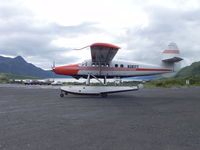
De Havilland DHC-3 OtterRegistration
N361TT
MSN
361
Year of Manufacture
1960
Operator
Servant AirDate
September 23, 2011 at 07:30 PM
Type
CRASHFlight Type
Scheduled Revenue Flight
Flight Phase
Flight
Crash Site
Mountains
Crash Location
Kodiak Alaska
Region
North America • United States of America
Coordinates
57.7902°, -152.4067°
Crash Cause
Human factor
Narrative Report
On September 23, 2011 at 07:30 PM, Old Harbor - Kodiak experienced a crash involving De Havilland DHC-3 Otter, operated by Servant Air, with the event recorded near Kodiak Alaska.
The flight was categorized as scheduled revenue flight and the reported phase was flight at a mountains crash site.
3 people were known to be on board, 1 fatalities were recorded, 2 survivors were identified or estimated. This corresponds to an estimated fatality rate of 33.3%.
Crew on board: 1, crew fatalities: 1, passengers on board: 2, passenger fatalities: 0, other fatalities: 0.
The listed crash cause is human factor. According to a passenger who was seated in the front, right seat, as the flight progressed toward the destination, the pilot decided to make an unscheduled landing at a lake that was surrounded by rising terrain. The passenger said that after making an easterly approach to the lake, before touching down, the pilot initiated a go-around. The passenger said they flew low over the surface of the lake toward a “V” shaped notch formed by a creek with hills on either side at the east end of the lake. He said that while flying through the notch, he thought the left wing of the airplane had hit the hillside. He said the pilot reacted by pulling back hard on the control yoke and rolling the airplane to the right. The airplane entered a steep climb, it began to shake, and stall warning horn sounded. The airplane then rolled left into a steep descent and impacted the ground in a nose-down attitude. The airplane’s left wing had impacted a tree on the creek bank prior to the crash. A postaccident examination of the airframe and engine revealed no evidence of mechanical malfunctions or failures that would have precluded normal operation. Toxicological tests detected the pilot’s recent use of over-the-counter medications used for relief of cold and flu symptoms. Two of these medications are sedating. The use of these sedating medications on the day of the accident or the underlying illness may have affected the pilot’s performance. Given the lack of mechanical deficiencies with the airplane, and the passenger's account of the accident, it is likely the pilot failed to maintain adequate clearance with a tree while performing a low altitude maneuver following a go-around.
Aircraft reference details include registration N361TT, MSN 361, year of manufacture 1960.
Geospatial coordinates for this crash are approximately 57.7902°, -152.4067°.
Fatalities
Total
1
Crew
1
Passengers
0
Other
0
Crash Summary
According to a passenger who was seated in the front, right seat, as the flight progressed toward the destination, the pilot decided to make an unscheduled landing at a lake that was surrounded by rising terrain. The passenger said that after making an easterly approach to the lake, before touching down, the pilot initiated a go-around. The passenger said they flew low over the surface of the lake toward a “V” shaped notch formed by a creek with hills on either side at the east end of the lake. He said that while flying through the notch, he thought the left wing of the airplane had hit the hillside. He said the pilot reacted by pulling back hard on the control yoke and rolling the airplane to the right. The airplane entered a steep climb, it began to shake, and stall warning horn sounded. The airplane then rolled left into a steep descent and impacted the ground in a nose-down attitude. The airplane’s left wing had impacted a tree on the creek bank prior to the crash. A postaccident examination of the airframe and engine revealed no evidence of mechanical malfunctions or failures that would have precluded normal operation. Toxicological tests detected the pilot’s recent use of over-the-counter medications used for relief of cold and flu symptoms. Two of these medications are sedating. The use of these sedating medications on the day of the accident or the underlying illness may have affected the pilot’s performance. Given the lack of mechanical deficiencies with the airplane, and the passenger's account of the accident, it is likely the pilot failed to maintain adequate clearance with a tree while performing a low altitude maneuver following a go-around.
Cause: Human factor
Occupants & Outcome
Crew On Board
1
Passengers On Board
2
Estimated Survivors
2
Fatality Rate
33.3%
Known people on board: 3
Operational Details
Schedule / Flight
Old Harbor - Kodiak
Operator
Servant AirFlight Type
Scheduled Revenue Flight
Flight Phase
Flight
Crash Site
Mountains
Region / Country
North America • United States of America
Aircraft Details
Similar Plane Crashes
United States Signal Corps - USSC
De Havilland DH.4
The single engine airplane departed Dayton-McCook Field for a local test flight. Shortly after takeoff, the aircraft stalled and crashed, killing both occupants. Crew: Maj Oscar Brindley, Lt Col Henry Damm.
United States Signal Corps - USSC
De Havilland DH.4
Lt. Frank Stuart Patterson, son and nephew of the co-founders of National Cash Register, is killed in the crash of his DH.4M, AS-32098, at Wilbur Wright Field during a flight test of a new mechanism for synchronizing machine gun and propeller, when a tie rod breaks during a dive from 15,000 feet (4,600 m), causing the wings to separate from the aircraft. Wishing to recognize the contributions of the Patterson family (owners of NCR) the area of Wright Field east of Huffman Dam (including Wilbur Wright Field, Fairfield Air Depot, and the Huffman Prairie) is renamed Patterson Field on 6 July 1931, in honor of Lt. Patterson.
United States Signal Corps - USSC
De Havilland DH.4
The aircraft crashed in unknown circumstances.
United States Signal Corps - USSC
De Havilland DH.4
The crew was completing a training mission. At an altitude of about 4,000 feet, the aircraft entered a spin and crashed in an open field near Everman-Barron Field Airport. A crew was killed and the second occupants was injured. The aircraft was destroyed.
U.S. Air Mail Service
De Havilland DH.4
Crashed following an engine failure. Pilot fate unknown.
United States Signal Corps - USSC
De Havilland DH.4
The accident occurred in unknown circumstances.