
New York - Port of Spain - Georgetown
Flight / Schedule
New York - Port of Spain - Georgetown
Aircraft
Boeing 737-800Registration
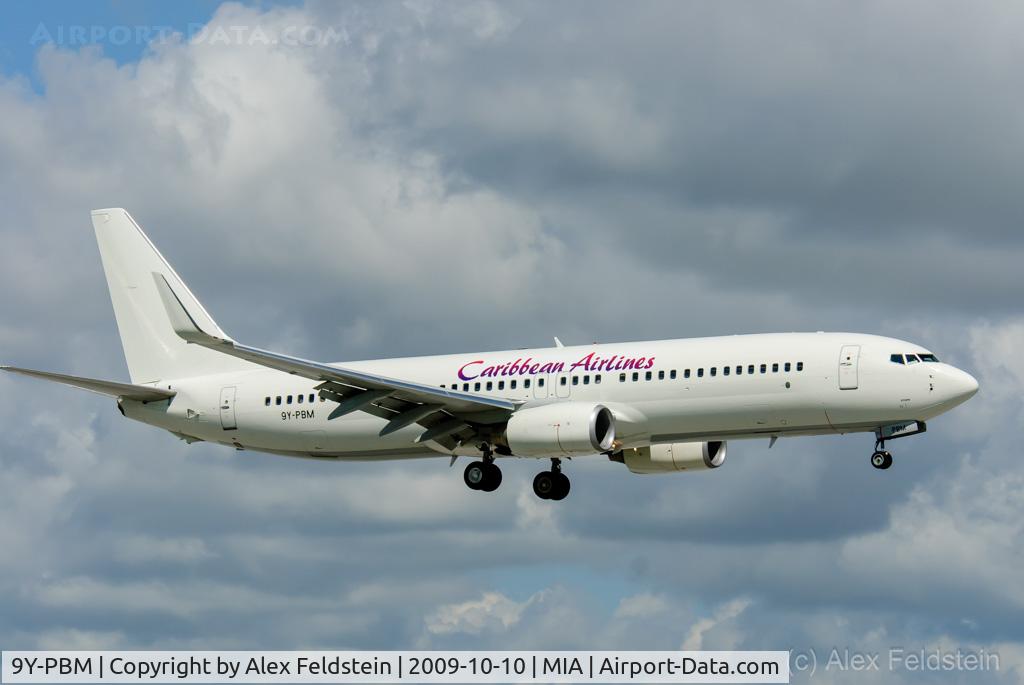
9Y-PBM
MSN
29635/2326
Year of Manufacture
2007
Date
July 30, 2011 at 01:32 AM
Type
CRASHFlight Type
Scheduled Revenue Flight
Flight Phase
Landing (descent or approach)
Crash Site
Airport (less than 10 km from airport)
Crash Location
Georgetown-Cheddi Jagan (ex Timehri) Demerara-Mahaica
Region
South America • Guyana
Crash Cause
Human factor
Narrative Report
On July 30, 2011 at 01:32 AM, New York - Port of Spain - Georgetown experienced a crash involving Boeing 737-800, operated by Caribbean Airlines - Trinidad %26 Tobago, with the event recorded near Georgetown-Cheddi Jagan (ex Timehri) Demerara-Mahaica.
The flight was categorized as scheduled revenue flight and the reported phase was landing (descent or approach) at a airport (less than 10 km from airport) crash site.
163 people were known to be on board, 0 fatalities were recorded, 163 survivors were identified or estimated. This corresponds to an estimated fatality rate of 0.0%.
Crew on board: 6, crew fatalities: 0, passengers on board: 157, passenger fatalities: 0, other fatalities: 0.
The listed crash cause is human factor. The flight originated in New York as BW 523, and made a passenger and fuel stop in Port-of-Spain, Trinidad where there was also a change of crew comprising two pilots and four flight attendants before proceeding to Georgetown, Guyana. The flight departed Piarco at 04:36UTC. The aircraft proceeded to Georgetown from Port of Spain at Flight Level (FL) 330, was given descent clearance and was cleared for an RNAV (GPS) approach to RWY 06, landing at 05:32 UTC. There were no reported anomalies in the en-route profile, although during the transition from cruise to approach to RWY 06 the aircraft deviated to avoid some thunderstorm cells north and east of the Airport. The reported visibility was 9,000m. Light rain was encountered during the approach. The pilot reported that after visual contact was made and after crossing the Final Approach Fix (FAF), he disengaged the auto pilot and configured the aircraft for landing. The Flight Data Recorder (FDR) indicated that the flight was normal until the aircraft was approaching the runway. Even before the aircraft was over the threshold, the captain commented that he was not landing here. As the flight continued over the runway, comments on the Cockpit Voice Recorder (CVR), revealed that the captain indicated to the First Officer (FO) that the aircraft was not touching down. A go-around call was made by the Captain and acknowledged by the First Officer, however three seconds elapsed and the aircraft subsequently touched down approximately 4700ft from the threshold of RWY06, leaving just over 2700 feet of runway surface remaining. Upon touchdown, brake pressure was gradually increased and maximum brake pressure of 3000psi was not achieved until the aircraft was 250ft from the end of the runway or 450ft from the end of the paved area. The ground spoilers were extended on touchdown. The thrust reversers were partially deployed after touchdown. The aircraft did not stop and overran the runway. It then assumed a downward trajectory followed by a loud impact.
Aircraft reference details include registration 9Y-PBM, MSN 29635/2326, year of manufacture 2007.
Fatalities
Total
0
Crew
0
Passengers
0
Other
0
Crash Summary
The flight originated in New York as BW 523, and made a passenger and fuel stop in Port-of-Spain, Trinidad where there was also a change of crew comprising two pilots and four flight attendants before proceeding to Georgetown, Guyana. The flight departed Piarco at 04:36UTC. The aircraft proceeded to Georgetown from Port of Spain at Flight Level (FL) 330, was given descent clearance and was cleared for an RNAV (GPS) approach to RWY 06, landing at 05:32 UTC. There were no reported anomalies in the en-route profile, although during the transition from cruise to approach to RWY 06 the aircraft deviated to avoid some thunderstorm cells north and east of the Airport. The reported visibility was 9,000m. Light rain was encountered during the approach. The pilot reported that after visual contact was made and after crossing the Final Approach Fix (FAF), he disengaged the auto pilot and configured the aircraft for landing. The Flight Data Recorder (FDR) indicated that the flight was normal until the aircraft was approaching the runway. Even before the aircraft was over the threshold, the captain commented that he was not landing here. As the flight continued over the runway, comments on the Cockpit Voice Recorder (CVR), revealed that the captain indicated to the First Officer (FO) that the aircraft was not touching down. A go-around call was made by the Captain and acknowledged by the First Officer, however three seconds elapsed and the aircraft subsequently touched down approximately 4700ft from the threshold of RWY06, leaving just over 2700 feet of runway surface remaining. Upon touchdown, brake pressure was gradually increased and maximum brake pressure of 3000psi was not achieved until the aircraft was 250ft from the end of the runway or 450ft from the end of the paved area. The ground spoilers were extended on touchdown. The thrust reversers were partially deployed after touchdown. The aircraft did not stop and overran the runway. It then assumed a downward trajectory followed by a loud impact.
Cause: Human factor
Occupants & Outcome
Crew On Board
6
Passengers On Board
157
Estimated Survivors
163
Fatality Rate
0.0%
Known people on board: 163
Operational Details
Schedule / Flight
New York - Port of Spain - Georgetown
Flight Type
Scheduled Revenue Flight
Flight Phase
Landing (descent or approach)
Crash Site
Airport (less than 10 km from airport)
Region / Country
South America • Guyana
Aircraft Details
Similar Plane Crashes
Paul Rinaldo Redfern
Stinson SM-1 Detroiter
The pilot Paul Rinaldo Redfern, sole on board, was performing a flight from Brunswick, Georgia, to Rio de Janeiro, Brazil. At 1500LT, the crew of a Dutch Ship spotted the aircraft flying over the Caribbean Sea. Few hours later, the aircraft named 'Port of Brunswick' disappeared without trace. SAR operations were initiated but eventually suspended after few days as no trace of the aircraft nor the pilot was found. During a 13th expedition, an American team found the wreckage of the airplane in the jungle of Guyana 10 years later.
United States Army Air Forces - USAAF
Douglas A-20 Havoc
Crashed on take off from Georgetown-Atkinson Field Airport. Both crew members were killed.
Lucille Rushing
Cessna 207 Skywagon/Stationair
Crashed in unknown circumstances into the Potaro River. There were no casualties.
Guyana Airways
De Havilland DHC-6 Twin Otter
While descending to Kurupung, the twin engine airplane struck a mountain and crashed. A passenger survived while three other occupants were killed.
M.C. Correia Holdings
Britten-Norman Islander
Crashed upon landing for unknown reasons. There were no casualties.
Venezuelan National Guard - Guardia Nacional Bolivariana de Venezuela
IAI Arava 201
The twin engine airplane was completing a flight from Ciudad Bolívar to Santa Elena de Uairén. En route, the crew became lost after weather conditions deteriorated. Finally, he decided to attempt at emergency landing when the airplane hit obstacles and crashed near Matthew's Ridge, Guyana. Three occupants were killed while six others were injured.