
Richmond - Charlotte
Flight / Schedule
Richmond - Charlotte
Aircraft
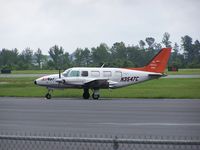
Piper PA-31-350 Navajo ChieftainRegistration
N3547C
MSN
31-8052018
Year of Manufacture
1980
Operator
AirNet SystemsDate
April 11, 2011 at 09:27 PM
Type
CRASHFlight Type
Cargo
Flight Phase
Takeoff (climb)
Crash Site
Airport (less than 10 km from airport)
Crash Location
Richmond-Byrd Field Virginia
Region
North America • United States of America
Crash Cause
Human factor
Narrative Report
On April 11, 2011 at 09:27 PM, Richmond - Charlotte experienced a crash involving Piper PA-31-350 Navajo Chieftain, operated by AirNet Systems, with the event recorded near Richmond-Byrd Field Virginia.
The flight was categorized as cargo and the reported phase was takeoff (climb) at a airport (less than 10 km from airport) crash site.
1 people were known to be on board, 0 fatalities were recorded, 1 survivors were identified or estimated. This corresponds to an estimated fatality rate of 0.0%.
Crew on board: 1, crew fatalities: 0, passengers on board: 0, passenger fatalities: 0, other fatalities: 0.
The listed crash cause is human factor. The twin-engine airplane was scheduled for a routine night cargo flight. Witnesses and radar data described the airplane accelerating down the runway to a maximum ground speed of 97 knots, then entering an aggressive climb before leveling and pitching down. The airplane subsequently impacted a parallel taxiway with its landing gear retracted. Slash marks observed on the taxiway pavement, as well as rotation signatures observed on the remaining propeller blades, indicated that both engines were operating at impact. Additionally, postaccident examination of the wreckage revealed no evidence of any preimpact mechanical failures or malfunctions of the airframe or either engine. The as-found position of the cargo placed the airplane within the normal weight and balance envelope, with no evidence of a cargo-shift having occurred, and the as-found position of the elevator trim jackscrew was consistent with a neutral pitch trim setting. According to the airframe manufacturer's prescribed takeoff procedure, the pilot was to accelerate the airplane to an airspeed of 85 knots, increase the pitch to a climb angle that would allow the airplane to accelerate past 96 knots, and retract the landing gear before accelerating past 128 knots. Given the loading and environmental conditions that existed on the night of the accident, the airplane's calculated climb performance should have been 1,800 feet per minute. Applying the prevailing wind conditions about time of the accident to the airplane's radar-observed ground speed during the takeoff revealed a maximum estimated airspeed of 111 knots, and the airplane's maximum calculated climb rate briefly exceeded 3,000 feet per minute. The airplane then leveled for a brief time, decelerated, and began descending, a profile that suggested that the airplane likely entered an aerodynamic stall during the initial climb.
Aircraft reference details include registration N3547C, MSN 31-8052018, year of manufacture 1980.
Fatalities
Total
0
Crew
0
Passengers
0
Other
0
Crash Summary
The twin-engine airplane was scheduled for a routine night cargo flight. Witnesses and radar data described the airplane accelerating down the runway to a maximum ground speed of 97 knots, then entering an aggressive climb before leveling and pitching down. The airplane subsequently impacted a parallel taxiway with its landing gear retracted. Slash marks observed on the taxiway pavement, as well as rotation signatures observed on the remaining propeller blades, indicated that both engines were operating at impact. Additionally, postaccident examination of the wreckage revealed no evidence of any preimpact mechanical failures or malfunctions of the airframe or either engine. The as-found position of the cargo placed the airplane within the normal weight and balance envelope, with no evidence of a cargo-shift having occurred, and the as-found position of the elevator trim jackscrew was consistent with a neutral pitch trim setting. According to the airframe manufacturer's prescribed takeoff procedure, the pilot was to accelerate the airplane to an airspeed of 85 knots, increase the pitch to a climb angle that would allow the airplane to accelerate past 96 knots, and retract the landing gear before accelerating past 128 knots. Given the loading and environmental conditions that existed on the night of the accident, the airplane's calculated climb performance should have been 1,800 feet per minute. Applying the prevailing wind conditions about time of the accident to the airplane's radar-observed ground speed during the takeoff revealed a maximum estimated airspeed of 111 knots, and the airplane's maximum calculated climb rate briefly exceeded 3,000 feet per minute. The airplane then leveled for a brief time, decelerated, and began descending, a profile that suggested that the airplane likely entered an aerodynamic stall during the initial climb.
Cause: Human factor
Occupants & Outcome
Crew On Board
1
Passengers On Board
0
Estimated Survivors
1
Fatality Rate
0.0%
Known people on board: 1
Operational Details
Schedule / Flight
Richmond - Charlotte
Operator
AirNet SystemsFlight Type
Cargo
Flight Phase
Takeoff (climb)
Crash Site
Airport (less than 10 km from airport)
Region / Country
North America • United States of America
Aircraft Details
Aircraft
Piper PA-31-350 Navajo ChieftainRegistration
N3547C
MSN
31-8052018
Year of Manufacture
1980
Similar Plane Crashes
United States Signal Corps - USSC
De Havilland DH.4
The single engine airplane departed Dayton-McCook Field for a local test flight. Shortly after takeoff, the aircraft stalled and crashed, killing both occupants. Crew: Maj Oscar Brindley, Lt Col Henry Damm.
United States Signal Corps - USSC
De Havilland DH.4
Lt. Frank Stuart Patterson, son and nephew of the co-founders of National Cash Register, is killed in the crash of his DH.4M, AS-32098, at Wilbur Wright Field during a flight test of a new mechanism for synchronizing machine gun and propeller, when a tie rod breaks during a dive from 15,000 feet (4,600 m), causing the wings to separate from the aircraft. Wishing to recognize the contributions of the Patterson family (owners of NCR) the area of Wright Field east of Huffman Dam (including Wilbur Wright Field, Fairfield Air Depot, and the Huffman Prairie) is renamed Patterson Field on 6 July 1931, in honor of Lt. Patterson.
United States Signal Corps - USSC
De Havilland DH.4
The aircraft crashed in unknown circumstances.
United States Signal Corps - USSC
De Havilland DH.4
The crew was completing a training mission. At an altitude of about 4,000 feet, the aircraft entered a spin and crashed in an open field near Everman-Barron Field Airport. A crew was killed and the second occupants was injured. The aircraft was destroyed.
U.S. Air Mail Service
De Havilland DH.4
Crashed following an engine failure. Pilot fate unknown.
United States Signal Corps - USSC
De Havilland DH.4
The accident occurred in unknown circumstances.