
Belfast – Cork
Flight / Schedule
Belfast – Cork
Aircraft
Swearingen SA227 Metro IIIRegistration
EC-ITP
MSN
BC-789B
Year of Manufacture
1992
Operator
Manx2Date
February 10, 2011 at 09:50 AM
Type
CRASHFlight Type
Scheduled Revenue Flight
Flight Phase
Landing (descent or approach)
Crash Site
Airport (less than 10 km from airport)
Crash Location
Cork Munster
Region
Europe • Ireland
Coordinates
51.8328°, -8.3053°
Crash Cause
Human factor
Narrative Report
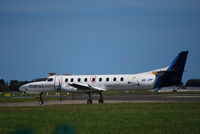
On February 10, 2011 at 09:50 AM, Belfast – Cork experienced a crash involving Swearingen SA227 Metro III, operated by Manx2, with the event recorded near Cork Munster.
The flight was categorized as scheduled revenue flight and the reported phase was landing (descent or approach) at a airport (less than 10 km from airport) crash site.
12 people were known to be on board, 6 fatalities were recorded, 6 survivors were identified or estimated. This corresponds to an estimated fatality rate of 50.0%.
Crew on board: 2, crew fatalities: 2, passengers on board: 10, passenger fatalities: 4, other fatalities: 0.
The listed crash cause is human factor. The aircraft departed Belfast City Airport (EGAC) on an international scheduled passenger service to Cork Airport (EICK). Low Visibility Procedures (LVP) were in operation at the destination. The aircraft carried out two ILS1 approaches, each followed by a missed approach. The aircraft then entered a holding pattern following which a third ILS approach was made to Runway (RWY) 17. The approach was continued below Decision Height (200 ft) and a missed approach was initiated. Approaching the runway threshold, the aircraft rolled to the left followed by a rapid roll to the right during which the right wingtip contacted the runway surface. The aircraft continued to roll and impacted the runway in a fully inverted position. The aircraft departed the runway surface to the right and came to rest in soft ground. A significant quantity of mud entered the aircraft through a fracture in the roof, partially filling the cabin. Six persons (including the two Flight Crew members) were fatally injured, four were seriously injured and two received minor injuries. The propeller blades on both engines were severely damaged; three of the four propeller blades on the right-hand engine detached during the impact sequence. Fire occurred in both engines after impact. These fires were extinguished expeditiously by the Airport Fire Service.
Aircraft reference details include registration EC-ITP, MSN BC-789B, year of manufacture 1992.
Geospatial coordinates for this crash are approximately 51.8328°, -8.3053°.
Fatalities
Total
6
Crew
2
Passengers
4
Other
0
Crash Summary
The aircraft departed Belfast City Airport (EGAC) on an international scheduled passenger service to Cork Airport (EICK). Low Visibility Procedures (LVP) were in operation at the destination. The aircraft carried out two ILS1 approaches, each followed by a missed approach. The aircraft then entered a holding pattern following which a third ILS approach was made to Runway (RWY) 17. The approach was continued below Decision Height (200 ft) and a missed approach was initiated. Approaching the runway threshold, the aircraft rolled to the left followed by a rapid roll to the right during which the right wingtip contacted the runway surface. The aircraft continued to roll and impacted the runway in a fully inverted position. The aircraft departed the runway surface to the right and came to rest in soft ground. A significant quantity of mud entered the aircraft through a fracture in the roof, partially filling the cabin. Six persons (including the two Flight Crew members) were fatally injured, four were seriously injured and two received minor injuries. The propeller blades on both engines were severely damaged; three of the four propeller blades on the right-hand engine detached during the impact sequence. Fire occurred in both engines after impact. These fires were extinguished expeditiously by the Airport Fire Service.
Cause: Human factor
Occupants & Outcome
Crew On Board
2
Passengers On Board
10
Estimated Survivors
6
Fatality Rate
50.0%
Known people on board: 12
Operational Details
Schedule / Flight
Belfast – Cork
Operator
Manx2Flight Type
Scheduled Revenue Flight
Flight Phase
Landing (descent or approach)
Crash Site
Airport (less than 10 km from airport)
Region / Country
Europe • Ireland
Aircraft Details
Similar Plane Crashes
Vickers-Armstrongs Ltd
Vickers FB.27 Vimy Commercial
British aviators John Alcock and Arthur Whitten Brown were performing one of the first transatlantic crossflight from the US to Europe. The aircraft departed Saint John’s-Lester Field, Newfoundland, on 14JUN1919 at 1345LT. Following an uneventful flight of 15 hours and 57 minutes at an altitude of 12,000 feet and at an average speed of 185 km/h, both pilots reached the Irish coast on the morning of June 15. While landing in an open field located in Clifden, Galway, the twin engine aircraft nosed down and came to rest. Both pilots were slightly injured while the aircraft was damaged beyond repair.
Irish Air Corps - Aer Chór na hÉireann
De Havilland DH.9
The crew was completing a local training flight at Fermoy Aerodrome. The accident occurred in unknown circumstances. While the pilot was seriously injured, the observer was killed. Crew: Lt McCullogh, pilot, Lt John Francis McDonagh, observer. †
Irish Air Corps - Aer Chór na hÉireann
De Havilland DH.60 Moth
Shortly after takeoff, while climbing, the aircraft went out of control and crashed, killing the pilot, sole on board.
Irish Air Corps - Aer Chór na hÉireann
De Havilland DH.60 Moth
The crew was engaged in a local training mission at Baldonnel-Casement AFB. On final approach, the aircraft crashed in unknown circumstances, injuring both pilots.
Iona National Airways
De Havilland DH.60 Moth
The single engine airplane departed Kildonan Aerodrome in Finglas with one passenger and one pilot on board. In unknown circumstances, the aircraft crashed on the roof of a farm located in Bundoran, Ulster. Both occupants were injured and the aircraft was destroyed. Crew: L. S. Coogan, pilot. Passenger: J. Doherty.
Macfadden Publications
Lockheed 8 Sirius/Altair
The pilot Lou Reichers departed Harbour Grace on a new record solo flight to Paris. While cruising over Ireland, he encountered an unexpected situation and was forced to ditch the airplane in the Bandon River off Kinsale, south Ireland. He was rescued by the crew of 'USS President Roosevelt' while the airplane sank and was lost.