
Chicago - Springfield
Flight / Schedule
Chicago - Springfield
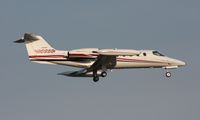
Aircraft
Learjet 35Registration
N800GP
MSN
35A-158
Year of Manufacture
1978
Operator
Priester AviationDate
January 6, 2011 at 11:00 AM
Type
CRASHFlight Type
Charter/Taxi (Non Scheduled Revenue Flight)
Flight Phase
Landing (descent or approach)
Crash Site
Airport (less than 10 km from airport)
Crash Location
Springfield-Abraham Lincoln Illinois
Region
North America • United States of America
Crash Cause
Human factor
Narrative Report
On January 6, 2011 at 11:00 AM, Chicago - Springfield experienced a crash involving Learjet 35, operated by Priester Aviation, with the event recorded near Springfield-Abraham Lincoln Illinois.
The flight was categorized as charter/taxi (non scheduled revenue flight) and the reported phase was landing (descent or approach) at a airport (less than 10 km from airport) crash site.
6 people were known to be on board, 0 fatalities were recorded, 6 survivors were identified or estimated. This corresponds to an estimated fatality rate of 0.0%.
Crew on board: 2, crew fatalities: 0, passengers on board: 4, passenger fatalities: 0, other fatalities: 0.
The listed crash cause is human factor. The flight encountered light rime icing during an instrument approach to the destination airport. The copilot was the pilot flying at the time of the accident. He reported that the airframe anti-icing system was turned off upon intercepting the instrument approach glide slope, which was shortly before the airplane descended below the cloud layer. He recalled observing light frost on the outboard wing and tip tank during the approach. The stick shaker activated on short final, and the airplane impacted left of the runway centerline before it ultimately departed the right side of the runway pavement and crossed a slight rise before coming to rest in the grass. The cockpit voice recorder transcript indicated that the pilots were operating in icing conditions without the wing anti- ice system activated for about 4 1/2 minutes prior to activation of the stick shaker. A postaccident examination of the airplane did not reveal any anomalies consistent with a preimpact failure of the flight control system or a loss of anti-ice system functionality. A performance study determined that the airplane’s airspeed during the final 30 seconds of the flight was about 114 knots and that the angle of attack ultimately met the stick shaker threshold. The expected stall speed for the airplane was about 93 knots. The airplane flight manual stated that anti-ice systems should be turned on prior to operation in icing conditions during normal operations. The manual warned that even small accumulations of ice on the wing leading edge can cause an aerodynamic stall prior to activation of the stick shaker and/or stick pusher.
Aircraft reference details include registration N800GP, MSN 35A-158, year of manufacture 1978.
Fatalities
Total
0
Crew
0
Passengers
0
Other
0
Crash Summary
The flight encountered light rime icing during an instrument approach to the destination airport. The copilot was the pilot flying at the time of the accident. He reported that the airframe anti-icing system was turned off upon intercepting the instrument approach glide slope, which was shortly before the airplane descended below the cloud layer. He recalled observing light frost on the outboard wing and tip tank during the approach. The stick shaker activated on short final, and the airplane impacted left of the runway centerline before it ultimately departed the right side of the runway pavement and crossed a slight rise before coming to rest in the grass. The cockpit voice recorder transcript indicated that the pilots were operating in icing conditions without the wing anti- ice system activated for about 4 1/2 minutes prior to activation of the stick shaker. A postaccident examination of the airplane did not reveal any anomalies consistent with a preimpact failure of the flight control system or a loss of anti-ice system functionality. A performance study determined that the airplane’s airspeed during the final 30 seconds of the flight was about 114 knots and that the angle of attack ultimately met the stick shaker threshold. The expected stall speed for the airplane was about 93 knots. The airplane flight manual stated that anti-ice systems should be turned on prior to operation in icing conditions during normal operations. The manual warned that even small accumulations of ice on the wing leading edge can cause an aerodynamic stall prior to activation of the stick shaker and/or stick pusher.
Cause: Human factor
Occupants & Outcome
Crew On Board
2
Passengers On Board
4
Estimated Survivors
6
Fatality Rate
0.0%
Known people on board: 6
Operational Details
Schedule / Flight
Chicago - Springfield
Operator
Priester AviationFlight Type
Charter/Taxi (Non Scheduled Revenue Flight)
Flight Phase
Landing (descent or approach)
Crash Site
Airport (less than 10 km from airport)
Region / Country
North America • United States of America
Aircraft Details
Similar Plane Crashes
United States Signal Corps - USSC
De Havilland DH.4
The single engine airplane departed Dayton-McCook Field for a local test flight. Shortly after takeoff, the aircraft stalled and crashed, killing both occupants. Crew: Maj Oscar Brindley, Lt Col Henry Damm.
United States Signal Corps - USSC
De Havilland DH.4
Lt. Frank Stuart Patterson, son and nephew of the co-founders of National Cash Register, is killed in the crash of his DH.4M, AS-32098, at Wilbur Wright Field during a flight test of a new mechanism for synchronizing machine gun and propeller, when a tie rod breaks during a dive from 15,000 feet (4,600 m), causing the wings to separate from the aircraft. Wishing to recognize the contributions of the Patterson family (owners of NCR) the area of Wright Field east of Huffman Dam (including Wilbur Wright Field, Fairfield Air Depot, and the Huffman Prairie) is renamed Patterson Field on 6 July 1931, in honor of Lt. Patterson.
United States Signal Corps - USSC
De Havilland DH.4
The aircraft crashed in unknown circumstances.
United States Signal Corps - USSC
De Havilland DH.4
The crew was completing a training mission. At an altitude of about 4,000 feet, the aircraft entered a spin and crashed in an open field near Everman-Barron Field Airport. A crew was killed and the second occupants was injured. The aircraft was destroyed.
U.S. Air Mail Service
De Havilland DH.4
Crashed following an engine failure. Pilot fate unknown.
United States Signal Corps - USSC
De Havilland DH.4
The accident occurred in unknown circumstances.