
Helsinki – Tallinn
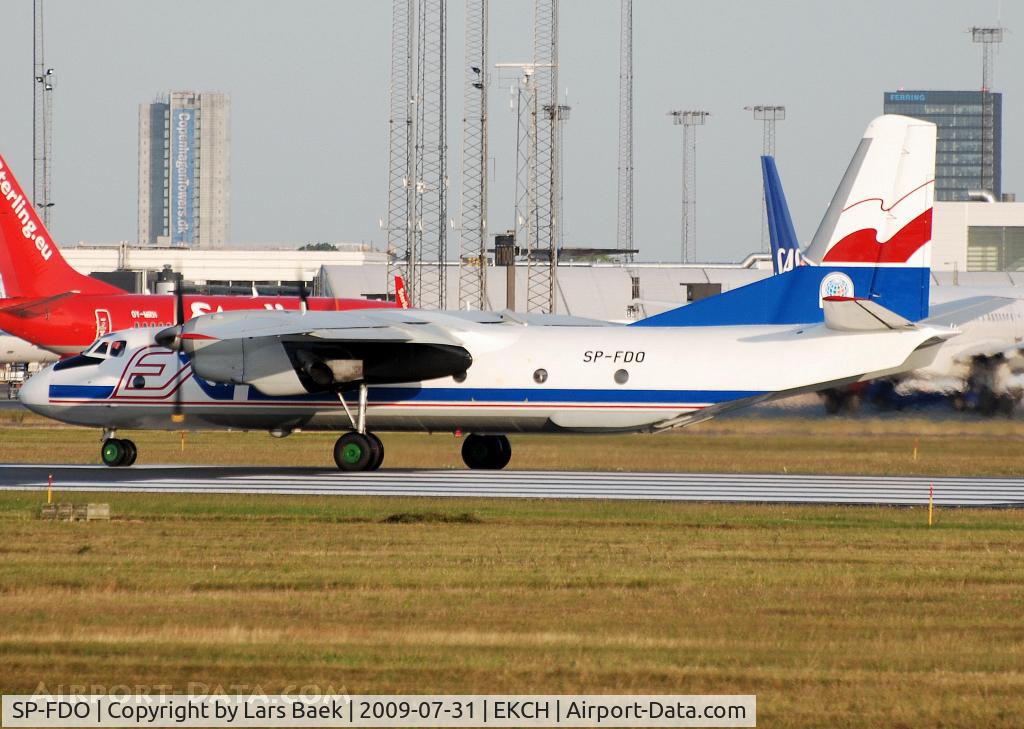
Flight / Schedule
Helsinki – Tallinn
Aircraft
Antonov AN-26Registration
SP-FDO
MSN
105 03
Year of Manufacture
1980
Operator
ExinDate
March 18, 2010 at 10:18 AM
Type
CRASHFlight Type
Cargo
Flight Phase
Landing (descent or approach)
Crash Site
Airport (less than 10 km from airport)
Crash Location
Tallinn-Lennart Meri-Ülemiste Harjumaa
Region
Europe • Estonia
Crash Cause
Technical failure
Narrative Report
On March 18, 2010 at 10:18 AM, Helsinki – Tallinn experienced a crash involving Antonov AN-26, operated by Exin, with the event recorded near Tallinn-Lennart Meri-Ülemiste Harjumaa.
The flight was categorized as cargo and the reported phase was landing (descent or approach) at a airport (less than 10 km from airport) crash site.
6 people were known to be on board, 0 fatalities were recorded, 6 survivors were identified or estimated. This corresponds to an estimated fatality rate of 0.0%.
Crew on board: 6, crew fatalities: 0, passengers on board: 0, passenger fatalities: 0, other fatalities: 0.
The listed crash cause is technical failure. Exin Co was operating An-26B for regular cargo flight between Tallinn and Helsinki. The crew performed last maintenance check in Tallinn on previous day and made uneventful flight to Helsinki on 17th March afternoon. Next morning the aircraft took off from Helsinki for regular flight EXN3589 to Tallinn at 09:46 local time. The takeoff weight was 23,954 kg, 46 kg below the MTOW. Four crewmembers, company mechanic and one cargo attendant were on board. During takeoff crew used RU 19-300 APU for additional thrust as prescribed in AFM. The RU 19-300 was shot down after takeoff. The flight was uneventful until 08:14:50, 9.5 nm from the runway 26. When power levers were retarded to flight idle crew noticed engine vibration and smelled a smoke in the cockpit. The engine chip detector indicator in the cockpit was lit. After short discussion about which engine should be shot down the flight engineer shot down the left engine and the captain tried to start the RU19A-300 (APU) to gain more thrust. During the approach the air traffic controller noticed the aircraft deviation from the approach path to the left and notified the crew. According to the FDR and CVR data the crew was unable to maintain a proper approach path both in lateral and vertical dimensions. The attempts to start RU19A-300 engine failed. Visual contact with the RWY was established 0.5 nm from the threshold. The aircraft crossed the airport boundary being not configured for landing and with IAS 295-300 km/h. The flaps were extended for 10° over the threshold; the landing gear was lowered after passing the RWY threshold and retracted again. The aircraft made a high speed low path over the runway on ca 10-15 feet altitude with the landing gear traveling down and up again. Flaps were extended over runway, and then retracted again seconds before impact. At the end of the RWY the full power on right engine was selected, aircraft climbed 15-20 feet and started turning left. Crew started retracting flaps and lowered landing gear. Aircraft crossed the highway at the end of the RWY on altitude ca 30 feet, then descended again, collided with the treetops at the lake shore and made crash-landing on the snow and ice-covered lake waterline. Due to the thick ice the aircraft remained on the ice and glided 151 m on the ice with heading 238° before coming to full stop. After the impact the flight engineer shoot down the RH engine and power and released all engine fire extinguishers. All persons onboard escaped immediately through the main door. No emergency was declares and despite suggestions from FO go-around was not commanded.
Aircraft reference details include registration SP-FDO, MSN 105 03, year of manufacture 1980.
Fatalities
Total
0
Crew
0
Passengers
0
Other
0
Crash Summary
Exin Co was operating An-26B for regular cargo flight between Tallinn and Helsinki. The crew performed last maintenance check in Tallinn on previous day and made uneventful flight to Helsinki on 17th March afternoon. Next morning the aircraft took off from Helsinki for regular flight EXN3589 to Tallinn at 09:46 local time. The takeoff weight was 23,954 kg, 46 kg below the MTOW. Four crewmembers, company mechanic and one cargo attendant were on board. During takeoff crew used RU 19-300 APU for additional thrust as prescribed in AFM. The RU 19-300 was shot down after takeoff. The flight was uneventful until 08:14:50, 9.5 nm from the runway 26. When power levers were retarded to flight idle crew noticed engine vibration and smelled a smoke in the cockpit. The engine chip detector indicator in the cockpit was lit. After short discussion about which engine should be shot down the flight engineer shot down the left engine and the captain tried to start the RU19A-300 (APU) to gain more thrust. During the approach the air traffic controller noticed the aircraft deviation from the approach path to the left and notified the crew. According to the FDR and CVR data the crew was unable to maintain a proper approach path both in lateral and vertical dimensions. The attempts to start RU19A-300 engine failed. Visual contact with the RWY was established 0.5 nm from the threshold. The aircraft crossed the airport boundary being not configured for landing and with IAS 295-300 km/h. The flaps were extended for 10° over the threshold; the landing gear was lowered after passing the RWY threshold and retracted again. The aircraft made a high speed low path over the runway on ca 10-15 feet altitude with the landing gear traveling down and up again. Flaps were extended over runway, and then retracted again seconds before impact. At the end of the RWY the full power on right engine was selected, aircraft climbed 15-20 feet and started turning left. Crew started retracting flaps and lowered landing gear. Aircraft crossed the highway at the end of the RWY on altitude ca 30 feet, then descended again, collided with the treetops at the lake shore and made crash-landing on the snow and ice-covered lake waterline. Due to the thick ice the aircraft remained on the ice and glided 151 m on the ice with heading 238° before coming to full stop. After the impact the flight engineer shoot down the RH engine and power and released all engine fire extinguishers. All persons onboard escaped immediately through the main door. No emergency was declares and despite suggestions from FO go-around was not commanded.
Cause: Technical failure
Occupants & Outcome
Crew On Board
6
Passengers On Board
0
Estimated Survivors
6
Fatality Rate
0.0%
Known people on board: 6
Operational Details
Schedule / Flight
Helsinki – Tallinn
Operator
ExinFlight Type
Cargo
Flight Phase
Landing (descent or approach)
Crash Site
Airport (less than 10 km from airport)
Region / Country
Europe • Estonia
Aircraft Details
Similar Plane Crashes
Aeronaut
Junkers F.13
Shortly after takeoff from Tallinn-Reval Airport, the engine lost power. The aircraft stalled and crashed. The pilot Harald Stunde and three passengers were injured while a fourth passenger, Mr. Jakob Tillo, was killed.
Aero Oy
Junkers F.13
While landing in the harbour of Tallinn, the seaplane went out of control and crashed. All five occupants were slightly injured while the aircraft was damaged beyond repair.
Deruluft - Deutsch-Russische Luftverkehrs Gesellschaft
Junkers F.13
Crashed in unknown circumstances in a wooded area somewhere in Estonia. The aircraft named 'Koenigsadler' broke in two and was damaged beyond repair. There were no casualties.
Aero Oy
Junkers JU.52
Shortly after take off from Tallinn-Ylemiste Airport, while overflying the Gulf of Finland, the three engine aircraft christened 'Kaleva' was shot down by the pilots of two Soviet Air Force Tupolev SB-2. Out of control, the aircraft crashed into the sea off the Keri Island, killing all nine occupants.
Aeroflot - Russian International Airlines
Douglas C-47 Skytrain (DC-3)
The crew left Kudrovo AFB in Leningrad to the area of Tartu in order to drop a reconnaissance team behind the German lines. The aircraft crashed in unknown circumstances near the target, about 20 km from Tartu. No trace of the aircraft nor the six crew members was found.
Aeroflot - Russian International Airlines
Avia 14
While cruising on a flight from Leningrad to Tallinn, a passenger gave a message to the stewardess to be transmitted to the flying crew. The claims remains unclear and unable to enter the cockpit, the hijacker set on an artisanal bomb and a fire erupted in the cabin. From an altitude of 900 meters, the crew started a steep descent and completed an emergency landing at Jõhvi Airport. All crew members and passengers were able to evacuate the cabin and were uninjured while the hijacker was killed when the airplane was destroyed by fire.