
Sanaa - Moroni
Flight / Schedule
Sanaa - Moroni
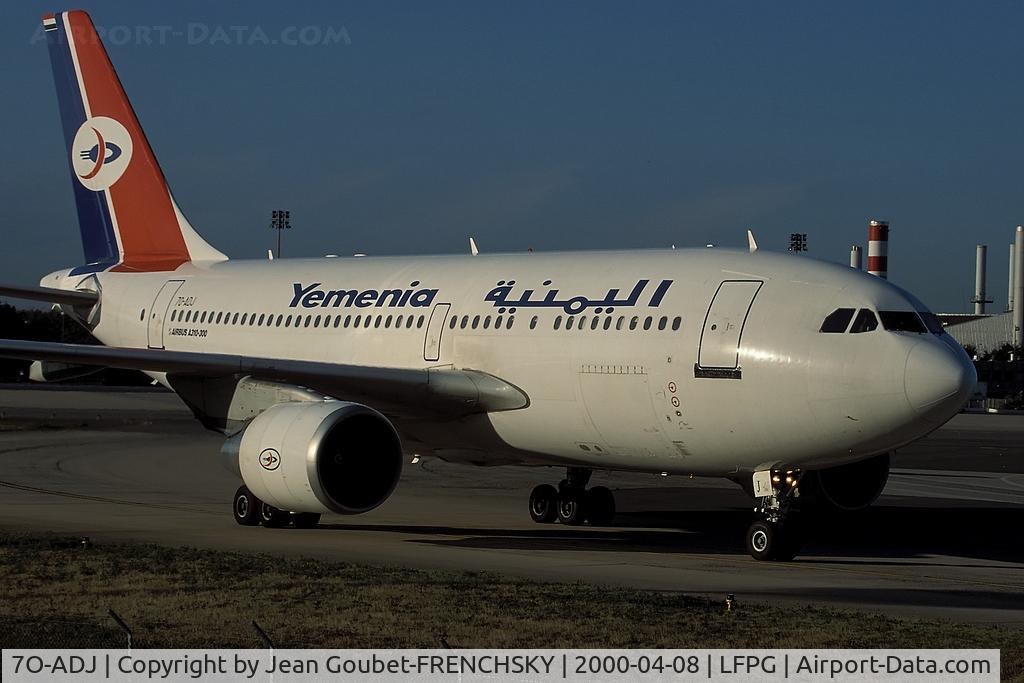
Aircraft
Airbus A310Registration
7O-ADJ
MSN
535
Year of Manufacture
1990
Operator
Yemenia Yemen AirwaysDate
June 30, 2009 at 01:54 AM
Type
CRASHFlight Type
Scheduled Revenue Flight
Flight Phase
Landing (descent or approach)
Crash Site
Lake, Sea, Ocean, River
Crash Location
Moroni-Prince Saïd Ibrahim (ex Hahaya) All Comoros Islands
Region
Africa • Comoros Islands
Crash Cause
Human factor
Narrative Report
On June 30, 2009 at 01:54 AM, Sanaa - Moroni experienced a crash involving Airbus A310, operated by Yemenia Yemen Airways, with the event recorded near Moroni-Prince Saïd Ibrahim (ex Hahaya) All Comoros Islands.
The flight was categorized as scheduled revenue flight and the reported phase was landing (descent or approach) at a lake, sea, ocean, river crash site.
153 people were known to be on board, 152 fatalities were recorded, 1 survivors were identified or estimated. This corresponds to an estimated fatality rate of 99.3%.
Crew on board: 11, crew fatalities: 11, passengers on board: 142, passenger fatalities: 141, other fatalities: 0.
The listed crash cause is human factor. Following an uneventful flight from Sana'a, the crew started a night approach to Moroni-Prince Saïd Ibrahim Airport runway 02. Weather conditions were considered as good with a 10 km visibility, an OAT of 24° C. and a wind from 180° gusting to 25 knots for runway 20. For unknown reasons, the crew initiated a go-around procedure when the aircraft entered an uncontrolled descent and crashed in the sea about 6 km from the airport. A young girl aged 12 was found alive few hours later while 152 other occupants were killed. Both CVR and DFDR were found almost two months later at a depth of 1,200 metres. The final report was published in June 2013.
Aircraft reference details include registration 7O-ADJ, MSN 535, year of manufacture 1990.
Fatalities
Total
152
Crew
11
Passengers
141
Other
0
Crash Summary
Following an uneventful flight from Sana'a, the crew started a night approach to Moroni-Prince Saïd Ibrahim Airport runway 02. Weather conditions were considered as good with a 10 km visibility, an OAT of 24° C. and a wind from 180° gusting to 25 knots for runway 20. For unknown reasons, the crew initiated a go-around procedure when the aircraft entered an uncontrolled descent and crashed in the sea about 6 km from the airport. A young girl aged 12 was found alive few hours later while 152 other occupants were killed. Both CVR and DFDR were found almost two months later at a depth of 1,200 metres. The final report was published in June 2013.
Cause: Human factor
Occupants & Outcome
Crew On Board
11
Passengers On Board
142
Estimated Survivors
1
Fatality Rate
99.3%
Known people on board: 153
Operational Details
Schedule / Flight
Sanaa - Moroni
Operator
Yemenia Yemen AirwaysFlight Type
Scheduled Revenue Flight
Flight Phase
Landing (descent or approach)
Crash Site
Lake, Sea, Ocean, River
Region / Country
Africa • Comoros Islands
Aircraft Details
Similar Plane Crashes
Air Comores
De Havilland DH.114 Heron
During the final approach to Moroni-Hahaya Airport following an uneventful flight from Dar es-Salaam, the crew failed to realize that his altitude was insufficient. On short final, the right wing struck approach lights. The captain increased engine power in an attempt to make a go-around when the airplane went to an excessive nose-up attitude, stalled and crashed into the sea near to the shore. None of the 16 occupants survived the crash.
Yemenia Yemen Airways
Douglas DC-3
The aircraft crashed upon landing in unclear circumstances. Occupant's fate remains unknown.
Yemenia Yemen Airways
Douglas DC-3
Crashed in unknown circumstances upon landing at Ta'izz-Al Janad Airport. There were no casualties but the aircraft was damaged beyond repair.
Yemenia Yemen Airways
Douglas C-47 Skytrain (DC-3)
Damaged beyond repair following a hard landing at Ma'rib Airstrip. There were no casualties.
French Navy
Breguet Bre.1150 Atlantic
Following a night takeoff from Moroni-Hahaya Airport runway 02, while climbing at an altitude of 500 feet, the airplane entered a right turn when it crashed on the slope of Mt Zembadjou located about 8 km northeast of the airport, bursting into flames. All 18 occupants were killed. Crew: Lt dV Philippe Mougenot, Ens dV Jean-Yves Cistas, Ens dV Olivier de Lassus Saint-Geniès, MP Eugène Normant, PM Serge Lapp, PM Alain de Maison, PM Yves Hennequart, M Jean-Claude Montfort, M Michel Renier, M Éric Peraudeau, M Dominique Faure, M Patrick Boudouin, M Dominique Moisdon, SM François-Xavier Winterhalter, SM Patrick Rousseau, SM Jean-Louis Audren, QM Bertrand Lion, QM Éric Lourenco.
Thai Airways International
Airbus A310
Thai Airways Flight 311 was conducting the Sierra (VOR/DME) approach to runway 02 at Tribhuvan International Airport, in instrument weather conditions. A flap fault occurred while the flight was on the approach; this caused the crew to ask for clearance back to Calcutta, a decision that was in keeping with both Company and performance requirements, which necessitate the use of full flaps for the steep final approach. Shortly (21 seconds) after making this request, at a distance of approximately 12 nm from the Kathmandu VOR, the flap fault was rectified by retracting and then reselecting the flaps. The crew determined that it was not possible to continue the straight-in approach, due to the steep descent angles required and the position of the aircraft. The crew stated to the control tower that they wished to start their approach again and requested a left turn back to the Romeo fix, which is 41 nm south south-west (202 radial) of the Kathmandu VOR. The Controller, in the non-radar environment, responded by clearing the flight to make the Sierra approach, which starts at the 202 radial and 16 nautical miles from the VOR. The crew response to the clearance was to report that, at the moment, they couldn't land and to ask again for left turn back to Romeo to start their approach again. After further dialogue with the controller, which included requests for a left turn, the crew unilaterally initiated a right turn from the aircraft's 025° heading and commenced a climb from an altitude of 10,500 feet to FL180, when the flight was about 7 nm south of the Kathmandu VOR. The crew reported to the tower controller that the flight was climbing and the controller replied by instructing the crew to report at 16 nm for the Sierra approach. During the turn, there was more discussion between the tower controller and the flight, where it was established that the aircraft was to maintain an altitude of FL115 and was to 'proceed to Romeo' and contact the Area Control Center (ACC) controller. The flight, commencing a descent while in the turn, completed a 360° turn, momentarily rolling out on headings of 045° and 340°, and again proceeded toward the north on a heading of 025° magnetic. When the flight was about 5 nm south-west of the Kathmandu VOR, the crew contacted the ACC and stated that the aircraft was 'heading 025' and they wished to proceed to Romeo to start their approach again; adding they had 'technical problems concerned with the flight.' It was again established that the flight was to proceed to Romeo and the crew agreed to 'report over Romeo.' It was determined from the cockpit voice recorder that the crew was in the process of inserting 'Romeo' and other related navigational information in the Flight Management System, but were experiencing difficulties. The flight continued towards the north on a heading of 025° and then, at about 16 nm north, the heading was altered to the left to 005°. Slightly over one minute later, the Ground Proximity Warning System (GPWS) sounded the warning 'terrain, terrain' followed by 'whoop whoop pull-up'; the aural warning continued until impact approximately 16 seconds later. Engine thrust was increasing and 'Level Change' had been announced on the cockpit, just before the impact occurred at the 11,500-foot level of a 16,000-foot peak; the accident site was located on the 015 radial (north-north east) at 23.3 nm from the Kathmandu VOR. The aircraft was destroyed and all 113 occupants were killed.