
Reno - Reno
Flight / Schedule
Reno - Reno
Aircraft
Lockheed P-2 NeptuneRegistration
N4235T
MSN
726-7285
Year of Manufacture
1958
Operator
Neptune Aviation CharterDate
September 1, 2008 at 06:10 PM
Type
CRASHFlight Type
Fire fighting
Flight Phase
Takeoff (climb)
Crash Site
Airport (less than 10 km from airport)
Crash Location
Reno-Stead Nevada
Region
North America • United States of America
Coordinates
39.6817°, -119.8800°
Crash Cause
Technical failure
Narrative Report
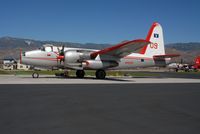
On September 1, 2008 at 06:10 PM, Reno - Reno experienced a crash involving Lockheed P-2 Neptune, operated by Neptune Aviation Charter, with the event recorded near Reno-Stead Nevada.
The flight was categorized as fire fighting and the reported phase was takeoff (climb) at a airport (less than 10 km from airport) crash site.
3 people were known to be on board, 3 fatalities were recorded, 0 survivors were identified or estimated. This corresponds to an estimated fatality rate of 100.0%.
Crew on board: 3, crew fatalities: 3, passengers on board: 0, passenger fatalities: 0, other fatalities: 0.
The listed crash cause is technical failure. Just after the airplane's landing gear was retracted during takeoff for a retardant drop mission, a ball of fire was observed coming out of the left jet engine before the airplane rolled steeply to the left and descended into the terrain. Prior to takeoff, the captain said he would make the takeoff and provided a takeoff briefing concerning the runway to be used and his intentions should an emergency develop. Shortly thereafter, the captain informed the co-pilot that this would actually be his (the co-pilot's) takeoff. On the cockpit voice recorder, the co-pilot stated "Same briefing (sound of laughter)". The co-pilot did not give an additional takeoff briefing beyond the one given by the captain and the captain did not ask the co-pilot to give one. During the initial climb, the captain said he detected a fire on the left side of the airplane and the copilot responded that he was holding full right aileron. At no point did either pilot call for the jettisoning of the retardant load as required by company standard operating procedures, or verbally enunciate the jet engine fire emergency checklist. Recorded data showed that the airplane's airspeed then decayed below the minimum air control speed, which resulted in an increased roll rate to the left and impact with terrain. The 11th stage compressor disc of the left jet engine failed in fatigue, which caused a catastrophic failure of the compressor section and the initiation of the engine fire. Metallurgical examination of the fracture identified several origin points at scratches in the surface finish of the disk. The scratches were too small to have been observed with the approved inspection procedures used by the company. A review of the FAA sanctioned Approved Aircraft Inspection Program, revealed no shortcomings or anomalies in the performance or documentation of the program. A post-accident examination of the airframe and three remaining engines revealed no anomalies that would have precluded normal operations.
Aircraft reference details include registration N4235T, MSN 726-7285, year of manufacture 1958.
Geospatial coordinates for this crash are approximately 39.6817°, -119.8800°.
Fatalities
Total
3
Crew
3
Passengers
0
Other
0
Crash Summary
Just after the airplane's landing gear was retracted during takeoff for a retardant drop mission, a ball of fire was observed coming out of the left jet engine before the airplane rolled steeply to the left and descended into the terrain. Prior to takeoff, the captain said he would make the takeoff and provided a takeoff briefing concerning the runway to be used and his intentions should an emergency develop. Shortly thereafter, the captain informed the co-pilot that this would actually be his (the co-pilot's) takeoff. On the cockpit voice recorder, the co-pilot stated "Same briefing (sound of laughter)". The co-pilot did not give an additional takeoff briefing beyond the one given by the captain and the captain did not ask the co-pilot to give one. During the initial climb, the captain said he detected a fire on the left side of the airplane and the copilot responded that he was holding full right aileron. At no point did either pilot call for the jettisoning of the retardant load as required by company standard operating procedures, or verbally enunciate the jet engine fire emergency checklist. Recorded data showed that the airplane's airspeed then decayed below the minimum air control speed, which resulted in an increased roll rate to the left and impact with terrain. The 11th stage compressor disc of the left jet engine failed in fatigue, which caused a catastrophic failure of the compressor section and the initiation of the engine fire. Metallurgical examination of the fracture identified several origin points at scratches in the surface finish of the disk. The scratches were too small to have been observed with the approved inspection procedures used by the company. A review of the FAA sanctioned Approved Aircraft Inspection Program, revealed no shortcomings or anomalies in the performance or documentation of the program. A post-accident examination of the airframe and three remaining engines revealed no anomalies that would have precluded normal operations.
Cause: Technical failure
Occupants & Outcome
Crew On Board
3
Passengers On Board
0
Estimated Survivors
0
Fatality Rate
100.0%
Known people on board: 3
Operational Details
Schedule / Flight
Reno - Reno
Operator
Neptune Aviation CharterFlight Type
Fire fighting
Flight Phase
Takeoff (climb)
Crash Site
Airport (less than 10 km from airport)
Region / Country
North America • United States of America
Aircraft Details
Similar Plane Crashes
United States Signal Corps - USSC
De Havilland DH.4
The single engine airplane departed Dayton-McCook Field for a local test flight. Shortly after takeoff, the aircraft stalled and crashed, killing both occupants. Crew: Maj Oscar Brindley, Lt Col Henry Damm.
United States Signal Corps - USSC
De Havilland DH.4
Lt. Frank Stuart Patterson, son and nephew of the co-founders of National Cash Register, is killed in the crash of his DH.4M, AS-32098, at Wilbur Wright Field during a flight test of a new mechanism for synchronizing machine gun and propeller, when a tie rod breaks during a dive from 15,000 feet (4,600 m), causing the wings to separate from the aircraft. Wishing to recognize the contributions of the Patterson family (owners of NCR) the area of Wright Field east of Huffman Dam (including Wilbur Wright Field, Fairfield Air Depot, and the Huffman Prairie) is renamed Patterson Field on 6 July 1931, in honor of Lt. Patterson.
United States Signal Corps - USSC
De Havilland DH.4
The aircraft crashed in unknown circumstances.
United States Signal Corps - USSC
De Havilland DH.4
The crew was completing a training mission. At an altitude of about 4,000 feet, the aircraft entered a spin and crashed in an open field near Everman-Barron Field Airport. A crew was killed and the second occupants was injured. The aircraft was destroyed.
U.S. Air Mail Service
De Havilland DH.4
Crashed following an engine failure. Pilot fate unknown.
United States Signal Corps - USSC
De Havilland DH.4
The accident occurred in unknown circumstances.