
Biggin Hill – Pau
Flight / Schedule
Biggin Hill – Pau
Aircraft
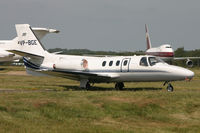
Cessna 500 CitationRegistration
VP-BGE
MSN
500-0287
Year of Manufacture
1975
Operator
Ross Aviation - UKDate
March 30, 2008 at 02:38 PM
Type
CRASHFlight Type
Charter/Taxi (Non Scheduled Revenue Flight)
Flight Phase
Takeoff (climb)
Crash Site
City
Crash Location
Biggin Hill London Metropolis
Region
Europe • United Kingdom
Crash Cause
Technical failure
Narrative Report
On March 30, 2008 at 02:38 PM, Biggin Hill – Pau experienced a crash involving Cessna 500 Citation, operated by Ross Aviation - UK, with the event recorded near Biggin Hill London Metropolis.
The flight was categorized as charter/taxi (non scheduled revenue flight) and the reported phase was takeoff (climb) at a city crash site.
5 people were known to be on board, 5 fatalities were recorded, 0 survivors were identified or estimated. This corresponds to an estimated fatality rate of 100.0%.
Crew on board: 2, crew fatalities: 2, passengers on board: 3, passenger fatalities: 3, other fatalities: 0.
The listed crash cause is technical failure. Pilot B arrived at Biggin Hill Airport, Kent, at about 1100 hrs for the planned flight to Pau, France. At about 1130 hrs he helped tow the aircraft from its overnight parking position on the Southern Apron to a nearby handling agent whose services were being used for the flight. A member of staff employed by the handling agent saw Pilot B carry out what was believed to be an external pre-flight check of the aircraft. Pilot B also asked another member of staff to provide a print out of the weather information for the flight. Pilot A arrived at about 1145 hrs and joined Pilot B at the aircraft. Witnesses described nothing unusual in either pilots’ demeanour. Three passengers arrived at the handling agent at about 1300 hrs and waited in a lounge whilst their bags were taken to the aircraft and loaded into the baggage hold in the nose. A member of the handling agency, who later took the passengers to the aircraft, reported that Pilot B met them outside the aircraft. After they had all boarded, the agent heard Pilot B say that he would give them a safety brief. Pilot B then closed the aircraft door. Pilot A called for start at 1317 hrs. He called for taxi at 1320 hrs and the aircraft was cleared to taxi to the holding point A1. No one could be identified as a witness to the aircraft’s start or subsequent taxi to the holding point. At 1331 hrs ATC cleared the aircraft to line up on Runway 21 and at 1332 hrs cleared it to take off. Both clearances were acknowledged by Pilot A. The takeoff was observed by the tower controller who stated that everything appeared normal. No transmissions were made between the aircraft and ATC until one minute after takeoff when, at 1334 hrs, the following exchange was made. Numerous witnesses reported seeing the aircraft at around this time flying over a built-up area, about 2 nm north-north-east of Biggin Hill Airport, where it was observed flying low, passing over playing fields and nearby houses. Witnesses reported that the aircraft was maintaining a normal flying attitude with some reporting that the landing gear was up and others that it was down. Some described seeing it adopt a nose-high attitude and banking away from the houses just before it crashed. Some witnesses stated that there was no engine noise coming from the aircraft whilst others stated that they became aware of the aircraft as it flew low overhead due to the loud noise it was making, as if the engines were at high thrust. Two witnesses described hearing the aircraft make a pulsing, intermittent noise. The location of witnesses and the description of the aircraft noise they heard are also shown in Figure 1. Having flown over several houses at an extremely low height the aircraft’s left wing clipped a house which bordered a small area of woodland. The aircraft then impacted the ground between this and another house and caught fire. There were no injuries to anyone on the ground but all those on board the aircraft were fatally injured.
Aircraft reference details include registration VP-BGE, MSN 500-0287, year of manufacture 1975.
Fatalities
Total
5
Crew
2
Passengers
3
Other
0
Crash Summary
Pilot B arrived at Biggin Hill Airport, Kent, at about 1100 hrs for the planned flight to Pau, France. At about 1130 hrs he helped tow the aircraft from its overnight parking position on the Southern Apron to a nearby handling agent whose services were being used for the flight. A member of staff employed by the handling agent saw Pilot B carry out what was believed to be an external pre-flight check of the aircraft. Pilot B also asked another member of staff to provide a print out of the weather information for the flight. Pilot A arrived at about 1145 hrs and joined Pilot B at the aircraft. Witnesses described nothing unusual in either pilots’ demeanour. Three passengers arrived at the handling agent at about 1300 hrs and waited in a lounge whilst their bags were taken to the aircraft and loaded into the baggage hold in the nose. A member of the handling agency, who later took the passengers to the aircraft, reported that Pilot B met them outside the aircraft. After they had all boarded, the agent heard Pilot B say that he would give them a safety brief. Pilot B then closed the aircraft door. Pilot A called for start at 1317 hrs. He called for taxi at 1320 hrs and the aircraft was cleared to taxi to the holding point A1. No one could be identified as a witness to the aircraft’s start or subsequent taxi to the holding point. At 1331 hrs ATC cleared the aircraft to line up on Runway 21 and at 1332 hrs cleared it to take off. Both clearances were acknowledged by Pilot A. The takeoff was observed by the tower controller who stated that everything appeared normal. No transmissions were made between the aircraft and ATC until one minute after takeoff when, at 1334 hrs, the following exchange was made. Numerous witnesses reported seeing the aircraft at around this time flying over a built-up area, about 2 nm north-north-east of Biggin Hill Airport, where it was observed flying low, passing over playing fields and nearby houses. Witnesses reported that the aircraft was maintaining a normal flying attitude with some reporting that the landing gear was up and others that it was down. Some described seeing it adopt a nose-high attitude and banking away from the houses just before it crashed. Some witnesses stated that there was no engine noise coming from the aircraft whilst others stated that they became aware of the aircraft as it flew low overhead due to the loud noise it was making, as if the engines were at high thrust. Two witnesses described hearing the aircraft make a pulsing, intermittent noise. The location of witnesses and the description of the aircraft noise they heard are also shown in Figure 1. Having flown over several houses at an extremely low height the aircraft’s left wing clipped a house which bordered a small area of woodland. The aircraft then impacted the ground between this and another house and caught fire. There were no injuries to anyone on the ground but all those on board the aircraft were fatally injured.
Cause: Technical failure
Occupants & Outcome
Crew On Board
2
Passengers On Board
3
Estimated Survivors
0
Fatality Rate
100.0%
Known people on board: 5
Operational Details
Schedule / Flight
Biggin Hill – Pau
Operator
Ross Aviation - UKFlight Type
Charter/Taxi (Non Scheduled Revenue Flight)
Flight Phase
Takeoff (climb)
Crash Site
City
Region / Country
Europe • United Kingdom
Aircraft Details
Similar Plane Crashes
Handley Page Aircraft Company Ltd
Handley Page V/1500
Assembled at Cricklewood Airfield in May 1918, the aircraft departed Cricklewood for its 13th test flight, carrying six crew members. Shortly after takeoff, while climbing to a height of about 700-800 feet, all four engines stopped. The pilot elected to return for an emergency landing when the aircraft stalled and crashed in a field located in front of 21 Garrick Avenue in Golders Green, bursting into flames. Colonel Ogilvie, who was seating in the tail gunner position at the back of the plane, survived, while all five other occupants were killed. Crew: Cpt Vernon Earl George Busby, pilot, † Mr. Bertram G. Cooper, † Mr. R. P. Cooper, † Mr. W. H. Hathaway, † Mr. J. W. Windebank, † Colonel Ogilvie.
Marine Aeroplane Depot
Fairey III
The pilot departed Isle of Grain on a delivery flight to Glasgow-Renfrew Airport. On approach to RAF Usworth (RAF Hylton), he elected to make a go-around when the aircraft lost height and crashed. The aircraft was destroyed and the pilot, Captain Arthur Leslie Simms, was killed.
Royal Air Force - RAF
De Havilland DH.6
The crew was completing a local training flight at RAF Seaton Carew when the aircraft entered a spin and crashed in a field, bursting into flames. Both occupants were killed. Crew: Cpt Charles David Danby, pilot, 1st Class E. A. Bannister, mechanic.
Royal Air Force - RAF
Handley Page H.P.12
The aircraft departed Castle Bromwich for a test flight, carrying five engineers and two crew members. En route, the twin engine aircraft suffered technical problems with a wing, lost height and crashed in a field located in Maxstoke. The aircraft was destroyed and all seven occupants were killed. Crew: Lt Robert Edward Macbeth, Lt Frederick James Bravery, 1st Air Mechanic James Benjamn May, 2nd Air Mechanic Albert J. Winrow, 2nd Air Mechanic H. Simmonds, 3rd Air Mechanic Charles William Offord, 3rd George Greenland.
Royal Air Force - RAF
Blackburn R.T.1 Kangaroo
On final approach in bad visibility, aircraft was too low. It struck the ground short of runway and crashed. Both occupants were injured. Crew was performing a training flight on behalf of the 246th Squadron.
Royal Air Force - RAF
De Havilland DH.9
The pilot tried to return to his base but due to low visibility by night, he lost his orientation. He elected to make an emergency landing in an open field but the aircraft hit a tree and crashed. The pilot was injured.