
Winchester - Butler
Flight / Schedule
Winchester - Butler
Aircraft
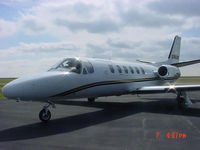
Cessna 550 Citation IIRegistration
N492AT
MSN
550-0472
Year of Manufacture
1983
Operator
Air Ambulance by Air TrekDate
January 24, 2007 at 09:05 AM
Type
CRASHFlight Type
Ambulance
Flight Phase
Landing (descent or approach)
Crash Site
Airport (less than 10 km from airport)
Crash Location
Butler Pennsylvania
Region
North America • United States of America
Coordinates
40.8605°, -79.8971°
Crash Cause
Human factor
Narrative Report
On January 24, 2007 at 09:05 AM, Winchester - Butler experienced a crash involving Cessna 550 Citation II, operated by Air Ambulance by Air Trek, with the event recorded near Butler Pennsylvania.
The flight was categorized as ambulance and the reported phase was landing (descent or approach) at a airport (less than 10 km from airport) crash site.
4 people were known to be on board, 0 fatalities were recorded, 4 survivors were identified or estimated. This corresponds to an estimated fatality rate of 0.0%.
Crew on board: 2, crew fatalities: 0, passengers on board: 2, passenger fatalities: 0, other fatalities: 0.
The listed crash cause is human factor. The Citation 550 was being repositioned for an air ambulance transportation flight, and was on approach to land on a 4,801-foot-long, grooved, asphalt runway. The airplane was being flown manually by the copilot, who reported that the landing approach speed (Vref) was 106 knots. The pilot-in-command (PIC) estimated that the airplane "broke out" of the clouds about two miles from the runway. Both pilots stated that the airplane continued to descend toward the runway, while on the glide slope and localizer. Neither pilot could recall the airplane's touchdown point on the runway, or the speed at touchdown. Witnesses observed the airplane, "high and fast" as it crossed over the runway threshold. The airplane touched down about halfway down the runway, and continued off the departure end. It then struck a wooden localizer antenna platform, and the airport perimeter fence, before crossing a road, and coming to rest about 400 feet from the end of the runway. Data downloaded from the airplane's Enhanced Ground Proximity Warning System (EGPWS) revealed that the airplane's groundspeed at touchdown was about 140 knots. Review of the cockpit voice recorder suggested that the PIC failed to activate the airplane's speed brake upon touchdown. Braking action was estimated to be "fair" at the time of the accident, with about 1/4 to 1/2 inches of loose, "fluffy" snow on the runway. The PIC reported that he thought the runway might be covered with an inch or two of snow, which did not concern him. The copilot reported encountering light snow during the approach. Both pilots stated that they were not aware of any mechanical failures, or system malfunctions during the accident; nor were any discovered during post accident examinations. According to the airplane flight manual, the conditions applicable to the accident flight prescribed a Vref of 110 knots, with a required landing distance on an uncontaminated runway of approximately 2,740 feet. The prescribed landing distance on a runway contaminated with 1-inch of snow, at a Vref of 110 knots was approximately 5,800 feet. At Vref + 10 knots, the required landing distance increased to about 7,750 feet.
Aircraft reference details include registration N492AT, MSN 550-0472, year of manufacture 1983.
Geospatial coordinates for this crash are approximately 40.8605°, -79.8971°.
Fatalities
Total
0
Crew
0
Passengers
0
Other
0
Crash Summary
The Citation 550 was being repositioned for an air ambulance transportation flight, and was on approach to land on a 4,801-foot-long, grooved, asphalt runway. The airplane was being flown manually by the copilot, who reported that the landing approach speed (Vref) was 106 knots. The pilot-in-command (PIC) estimated that the airplane "broke out" of the clouds about two miles from the runway. Both pilots stated that the airplane continued to descend toward the runway, while on the glide slope and localizer. Neither pilot could recall the airplane's touchdown point on the runway, or the speed at touchdown. Witnesses observed the airplane, "high and fast" as it crossed over the runway threshold. The airplane touched down about halfway down the runway, and continued off the departure end. It then struck a wooden localizer antenna platform, and the airport perimeter fence, before crossing a road, and coming to rest about 400 feet from the end of the runway. Data downloaded from the airplane's Enhanced Ground Proximity Warning System (EGPWS) revealed that the airplane's groundspeed at touchdown was about 140 knots. Review of the cockpit voice recorder suggested that the PIC failed to activate the airplane's speed brake upon touchdown. Braking action was estimated to be "fair" at the time of the accident, with about 1/4 to 1/2 inches of loose, "fluffy" snow on the runway. The PIC reported that he thought the runway might be covered with an inch or two of snow, which did not concern him. The copilot reported encountering light snow during the approach. Both pilots stated that they were not aware of any mechanical failures, or system malfunctions during the accident; nor were any discovered during post accident examinations. According to the airplane flight manual, the conditions applicable to the accident flight prescribed a Vref of 110 knots, with a required landing distance on an uncontaminated runway of approximately 2,740 feet. The prescribed landing distance on a runway contaminated with 1-inch of snow, at a Vref of 110 knots was approximately 5,800 feet. At Vref + 10 knots, the required landing distance increased to about 7,750 feet.
Cause: Human factor
Occupants & Outcome
Crew On Board
2
Passengers On Board
2
Estimated Survivors
4
Fatality Rate
0.0%
Known people on board: 4
Operational Details
Schedule / Flight
Winchester - Butler
Operator
Air Ambulance by Air TrekFlight Type
Ambulance
Flight Phase
Landing (descent or approach)
Crash Site
Airport (less than 10 km from airport)
Region / Country
North America • United States of America
Aircraft Details
Similar Plane Crashes
United States Signal Corps - USSC
De Havilland DH.4
The single engine airplane departed Dayton-McCook Field for a local test flight. Shortly after takeoff, the aircraft stalled and crashed, killing both occupants. Crew: Maj Oscar Brindley, Lt Col Henry Damm.
United States Signal Corps - USSC
De Havilland DH.4
Lt. Frank Stuart Patterson, son and nephew of the co-founders of National Cash Register, is killed in the crash of his DH.4M, AS-32098, at Wilbur Wright Field during a flight test of a new mechanism for synchronizing machine gun and propeller, when a tie rod breaks during a dive from 15,000 feet (4,600 m), causing the wings to separate from the aircraft. Wishing to recognize the contributions of the Patterson family (owners of NCR) the area of Wright Field east of Huffman Dam (including Wilbur Wright Field, Fairfield Air Depot, and the Huffman Prairie) is renamed Patterson Field on 6 July 1931, in honor of Lt. Patterson.
United States Signal Corps - USSC
De Havilland DH.4
The aircraft crashed in unknown circumstances.
United States Signal Corps - USSC
De Havilland DH.4
The crew was completing a training mission. At an altitude of about 4,000 feet, the aircraft entered a spin and crashed in an open field near Everman-Barron Field Airport. A crew was killed and the second occupants was injured. The aircraft was destroyed.
U.S. Air Mail Service
De Havilland DH.4
Crashed following an engine failure. Pilot fate unknown.
United States Signal Corps - USSC
De Havilland DH.4
The accident occurred in unknown circumstances.