
Seattle - Memphis
Flight / Schedule
Seattle - Memphis
Aircraft
Douglas DC-10Registration
N391FE
MSN
46625/169
Year of Manufacture
1975
Operator
Federal Express - FedExDate
July 28, 2006 at 11:25 AM
Type
CRASHFlight Type
Cargo
Flight Phase
Landing (descent or approach)
Crash Site
Airport (less than 10 km from airport)
Crash Location
Memphis Tennessee
Region
North America • United States of America
Coordinates
35.1460°, -90.0518°
Crash Cause
Technical failure
Narrative Report
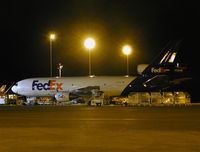
On July 28, 2006 at 11:25 AM, Seattle - Memphis experienced a crash involving Douglas DC-10, operated by Federal Express - FedEx, with the event recorded near Memphis Tennessee.
The flight was categorized as cargo and the reported phase was landing (descent or approach) at a airport (less than 10 km from airport) crash site.
3 people were known to be on board, 0 fatalities were recorded, 3 survivors were identified or estimated. This corresponds to an estimated fatality rate of 0.0%.
Crew on board: 3, crew fatalities: 0, passengers on board: 0, passenger fatalities: 0, other fatalities: 0.
The listed crash cause is technical failure. The approach and landing were stabilized and within specified limits. Recorded data indicates that the loads experienced by the landing gear at touchdown were within the certification limits for an intact landing gear without any pre-existing cracks or flaws. The weather and runway conditions did not affect the landing. The application of braking by the accident crew, and the overall effect of the carbon brake modification did not initiate or contribute to the landing gear fracture. Post-accident modifications to the MD-10 carbon brake system were implemented due to investigative findings for the purposes of braking effectiveness and reliability. Post accident emergency response by the flight crew and ARFF was timely and correct. The left main landing gear (LMLG) outer cylinder on the accident airplane had been operated about 8 ½ years since its last overhaul where stray nickel plating likely was introduced in the air filler valve hole. Nickel plating is a permissible procedure for maintaining the tolerances of the inner diameter of the outer gear cylinder, however the plating is not allowed in the air filler valve bore hole. Literature and test research revealed that a nickel plating thickness of 0.008" results in a stress factor increase of 35%. At some point in the life of the LMLG, there was a load event that compressively yielded the material in the vicinity of the air filler valve hole causing a residual tension stress. During normal operations the stress levels in the air filler valve hole were likely within the design envelope, but the addition of the residual stress and the stress intensity factor due to the nickel increased these to a level high enough to initiate and grow a fatigue crack on each side of the air filler valve hole. The stresses at the air filler valve hole were examined via development of a Finite Element Model (FEM) which was validated with data gathered from an instrumented in-service FedEx MD-10 airplane. The in-service data and FEM showed that for all of the conditions, the stress in the air filler valve hole was much higher than anticipated in the design of the outer cylinder. Fatigue analysis of the in service findings and using the nickel plating factor resulted in a significantly reduced fatigue life of the gear cylinder compared with the certification limits. During the accident landing the spring back loads on the LMLG were sufficient to produce a stress level in the air filler valve hole that exceeded the residual strength of the material with the fatigue cracks present.
Aircraft reference details include registration N391FE, MSN 46625/169, year of manufacture 1975.
Geospatial coordinates for this crash are approximately 35.1460°, -90.0518°.
Fatalities
Total
0
Crew
0
Passengers
0
Other
0
Crash Summary
The approach and landing were stabilized and within specified limits. Recorded data indicates that the loads experienced by the landing gear at touchdown were within the certification limits for an intact landing gear without any pre-existing cracks or flaws. The weather and runway conditions did not affect the landing. The application of braking by the accident crew, and the overall effect of the carbon brake modification did not initiate or contribute to the landing gear fracture. Post-accident modifications to the MD-10 carbon brake system were implemented due to investigative findings for the purposes of braking effectiveness and reliability. Post accident emergency response by the flight crew and ARFF was timely and correct. The left main landing gear (LMLG) outer cylinder on the accident airplane had been operated about 8 ½ years since its last overhaul where stray nickel plating likely was introduced in the air filler valve hole. Nickel plating is a permissible procedure for maintaining the tolerances of the inner diameter of the outer gear cylinder, however the plating is not allowed in the air filler valve bore hole. Literature and test research revealed that a nickel plating thickness of 0.008" results in a stress factor increase of 35%. At some point in the life of the LMLG, there was a load event that compressively yielded the material in the vicinity of the air filler valve hole causing a residual tension stress. During normal operations the stress levels in the air filler valve hole were likely within the design envelope, but the addition of the residual stress and the stress intensity factor due to the nickel increased these to a level high enough to initiate and grow a fatigue crack on each side of the air filler valve hole. The stresses at the air filler valve hole were examined via development of a Finite Element Model (FEM) which was validated with data gathered from an instrumented in-service FedEx MD-10 airplane. The in-service data and FEM showed that for all of the conditions, the stress in the air filler valve hole was much higher than anticipated in the design of the outer cylinder. Fatigue analysis of the in service findings and using the nickel plating factor resulted in a significantly reduced fatigue life of the gear cylinder compared with the certification limits. During the accident landing the spring back loads on the LMLG were sufficient to produce a stress level in the air filler valve hole that exceeded the residual strength of the material with the fatigue cracks present.
Cause: Technical failure
Occupants & Outcome
Crew On Board
3
Passengers On Board
0
Estimated Survivors
3
Fatality Rate
0.0%
Known people on board: 3
Operational Details
Schedule / Flight
Seattle - Memphis
Operator
Federal Express - FedExFlight Type
Cargo
Flight Phase
Landing (descent or approach)
Crash Site
Airport (less than 10 km from airport)
Region / Country
North America • United States of America
Aircraft Details
Similar Plane Crashes
United States Signal Corps - USSC
De Havilland DH.4
The single engine airplane departed Dayton-McCook Field for a local test flight. Shortly after takeoff, the aircraft stalled and crashed, killing both occupants. Crew: Maj Oscar Brindley, Lt Col Henry Damm.
United States Signal Corps - USSC
De Havilland DH.4
Lt. Frank Stuart Patterson, son and nephew of the co-founders of National Cash Register, is killed in the crash of his DH.4M, AS-32098, at Wilbur Wright Field during a flight test of a new mechanism for synchronizing machine gun and propeller, when a tie rod breaks during a dive from 15,000 feet (4,600 m), causing the wings to separate from the aircraft. Wishing to recognize the contributions of the Patterson family (owners of NCR) the area of Wright Field east of Huffman Dam (including Wilbur Wright Field, Fairfield Air Depot, and the Huffman Prairie) is renamed Patterson Field on 6 July 1931, in honor of Lt. Patterson.
United States Signal Corps - USSC
De Havilland DH.4
The aircraft crashed in unknown circumstances.
United States Signal Corps - USSC
De Havilland DH.4
The crew was completing a training mission. At an altitude of about 4,000 feet, the aircraft entered a spin and crashed in an open field near Everman-Barron Field Airport. A crew was killed and the second occupants was injured. The aircraft was destroyed.
U.S. Air Mail Service
De Havilland DH.4
Crashed following an engine failure. Pilot fate unknown.
United States Signal Corps - USSC
De Havilland DH.4
The accident occurred in unknown circumstances.