
Salt Lake City - Kansas City
Flight / Schedule
Salt Lake City - Kansas City
Aircraft
Learjet 35Registration
N911AE
MSN
35-109
Year of Manufacture
1977
Operator
Million Air CharterDate
January 28, 2005 at 10:17 PM
Type
CRASHFlight Type
Positioning
Flight Phase
Landing (descent or approach)
Crash Site
Airport (less than 10 km from airport)
Crash Location
Kansas City-Charles B. Wheeler-Downtown Missouri
Region
North America • United States of America
Crash Cause
Human factor
Narrative Report
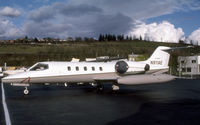
On January 28, 2005 at 10:17 PM, Salt Lake City - Kansas City experienced a crash involving Learjet 35, operated by Million Air Charter, with the event recorded near Kansas City-Charles B. Wheeler-Downtown Missouri.
The flight was categorized as positioning and the reported phase was landing (descent or approach) at a airport (less than 10 km from airport) crash site.
2 people were known to be on board, 0 fatalities were recorded, 2 survivors were identified or estimated. This corresponds to an estimated fatality rate of 0.0%.
Crew on board: 2, crew fatalities: 0, passengers on board: 0, passenger fatalities: 0, other fatalities: 0.
The listed crash cause is human factor. The Learjet 35A received substantial damage on impact with airport property and terrain during a landing overrun on runway 19 (7,002 feet by 150 feet, grooved asphalt) at Charles B. Wheeler Downtown Airport (MKC), Kansas City, Missouri. The airplane was operated by a commercial operator as a positioning flight to Kansas City International Airport (MCI), Kansas City, Missouri, with a filed alternate destination of Lincoln Airport (LNK), Lincoln, Nebraska. Night instrument meteorological conditions prevailed at the time of the accident. LNK was a certificated airport with a snow removal plan and was served by runway 17R (12,901 feet by 200 feet, grooved asphalt and concrete). The flight was en route to MCI to pick up passengers and continue on as an on-demand charter but diverted to MKC following the closure of MCI. MCI was closed due to a McDonnell Douglas MD83 sliding off a taxiway during an after landing taxi on contaminated runway/taxiway conditions. MKC held a limited airport certificate that did not have a snow removal plan and was served by runway 19. Following a precision approach and landing on runway 19 at MKC, the Learjet 35A slid off the departure end of the runway and impacted airport property and terrain. The Learjet 35A was operated with inoperative thrust reversers as per the airplane's minimum equipment list at the time of the accident. About 1:05 hours before the accident, runway 19 Tapley values were recorded as 21-22-22 with 1/2 inch of wet snow. About 17 minutes before the accident, MKC began snow removal operations. About 7 minutes before the accident, the MKC air traffic control tower (TWR) instructed the snow removal vehicles to clear the runway for inbound traffic. TWR was advised by airport personnel that runway 19 was plowed and surface conditions were 1/4 inch of snow of snow; friction values were not taken or reported. While inbound, the Learjet 35A requested any braking action reports from TWR. The first airplane to land was a Cessna 210 Centurion, and the pilot reported braking action to the TWR as "moderate", which was then transmitted by TWR as "fair" from a Centurion in response to the Learjet 35A's query. The Cessna 210 Centurion pilot did not use brakes during landing and did not indicate this to TWR during his braking action report. The Aeronautical Information Manual states that no correlation has been established between MU values and the descriptive terms "good," fair," and "nil" used in braking action reports. The Airport Winter Safety and Operations advisory circular (AC) states that "pilot braking action reports oftentimes have been found to vary significantly, even when reported on the same frozen contaminant surface conditions." The AC also states, "It is generally accepted that friction surveys will be reliable as long as the depth of snow does not exceed 1 inch (2.5 cm) and/or depth of wet snow/slush does not exceed 1/8 inch (3mm). The Learjet 35A flightcrew calculated a landing distance 5,400 feet. Two of the cockpit voice recording channels, which normally contain the pilot and copilot audio panel information, were blank.
Aircraft reference details include registration N911AE, MSN 35-109, year of manufacture 1977.
Fatalities
Total
0
Crew
0
Passengers
0
Other
0
Crash Summary
The Learjet 35A received substantial damage on impact with airport property and terrain during a landing overrun on runway 19 (7,002 feet by 150 feet, grooved asphalt) at Charles B. Wheeler Downtown Airport (MKC), Kansas City, Missouri. The airplane was operated by a commercial operator as a positioning flight to Kansas City International Airport (MCI), Kansas City, Missouri, with a filed alternate destination of Lincoln Airport (LNK), Lincoln, Nebraska. Night instrument meteorological conditions prevailed at the time of the accident. LNK was a certificated airport with a snow removal plan and was served by runway 17R (12,901 feet by 200 feet, grooved asphalt and concrete). The flight was en route to MCI to pick up passengers and continue on as an on-demand charter but diverted to MKC following the closure of MCI. MCI was closed due to a McDonnell Douglas MD83 sliding off a taxiway during an after landing taxi on contaminated runway/taxiway conditions. MKC held a limited airport certificate that did not have a snow removal plan and was served by runway 19. Following a precision approach and landing on runway 19 at MKC, the Learjet 35A slid off the departure end of the runway and impacted airport property and terrain. The Learjet 35A was operated with inoperative thrust reversers as per the airplane's minimum equipment list at the time of the accident. About 1:05 hours before the accident, runway 19 Tapley values were recorded as 21-22-22 with 1/2 inch of wet snow. About 17 minutes before the accident, MKC began snow removal operations. About 7 minutes before the accident, the MKC air traffic control tower (TWR) instructed the snow removal vehicles to clear the runway for inbound traffic. TWR was advised by airport personnel that runway 19 was plowed and surface conditions were 1/4 inch of snow of snow; friction values were not taken or reported. While inbound, the Learjet 35A requested any braking action reports from TWR. The first airplane to land was a Cessna 210 Centurion, and the pilot reported braking action to the TWR as "moderate", which was then transmitted by TWR as "fair" from a Centurion in response to the Learjet 35A's query. The Cessna 210 Centurion pilot did not use brakes during landing and did not indicate this to TWR during his braking action report. The Aeronautical Information Manual states that no correlation has been established between MU values and the descriptive terms "good," fair," and "nil" used in braking action reports. The Airport Winter Safety and Operations advisory circular (AC) states that "pilot braking action reports oftentimes have been found to vary significantly, even when reported on the same frozen contaminant surface conditions." The AC also states, "It is generally accepted that friction surveys will be reliable as long as the depth of snow does not exceed 1 inch (2.5 cm) and/or depth of wet snow/slush does not exceed 1/8 inch (3mm). The Learjet 35A flightcrew calculated a landing distance 5,400 feet. Two of the cockpit voice recording channels, which normally contain the pilot and copilot audio panel information, were blank.
Cause: Human factor
Occupants & Outcome
Crew On Board
2
Passengers On Board
0
Estimated Survivors
2
Fatality Rate
0.0%
Known people on board: 2
Operational Details
Schedule / Flight
Salt Lake City - Kansas City
Operator
Million Air CharterFlight Type
Positioning
Flight Phase
Landing (descent or approach)
Crash Site
Airport (less than 10 km from airport)
Region / Country
North America • United States of America
Aircraft Details
Similar Plane Crashes
United States Signal Corps - USSC
De Havilland DH.4
The single engine airplane departed Dayton-McCook Field for a local test flight. Shortly after takeoff, the aircraft stalled and crashed, killing both occupants. Crew: Maj Oscar Brindley, Lt Col Henry Damm.
United States Signal Corps - USSC
De Havilland DH.4
Lt. Frank Stuart Patterson, son and nephew of the co-founders of National Cash Register, is killed in the crash of his DH.4M, AS-32098, at Wilbur Wright Field during a flight test of a new mechanism for synchronizing machine gun and propeller, when a tie rod breaks during a dive from 15,000 feet (4,600 m), causing the wings to separate from the aircraft. Wishing to recognize the contributions of the Patterson family (owners of NCR) the area of Wright Field east of Huffman Dam (including Wilbur Wright Field, Fairfield Air Depot, and the Huffman Prairie) is renamed Patterson Field on 6 July 1931, in honor of Lt. Patterson.
United States Signal Corps - USSC
De Havilland DH.4
The aircraft crashed in unknown circumstances.
United States Signal Corps - USSC
De Havilland DH.4
The crew was completing a training mission. At an altitude of about 4,000 feet, the aircraft entered a spin and crashed in an open field near Everman-Barron Field Airport. A crew was killed and the second occupants was injured. The aircraft was destroyed.
U.S. Air Mail Service
De Havilland DH.4
Crashed following an engine failure. Pilot fate unknown.
United States Signal Corps - USSC
De Havilland DH.4
The accident occurred in unknown circumstances.