
Farnborough – Luton – Teterboro
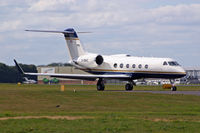
Flight / Schedule
Farnborough – Luton – Teterboro
Aircraft
Gulfstream GIVRegistration
G-GMAC
MSN
1058
Year of Manufacture
1988
Operator
Gama AviationDate
December 1, 2004 at 04:23 PM
Type
CRASHFlight Type
Charter/Taxi (Non Scheduled Revenue Flight)
Flight Phase
Landing (descent or approach)
Crash Site
Airport (less than 10 km from airport)
Crash Location
Teterboro New Jersey
Region
North America • United States of America
Coordinates
40.8598°, -74.0593°
Crash Cause
Human factor
Narrative Report
On December 1, 2004 at 04:23 PM, Farnborough – Luton – Teterboro experienced a crash involving Gulfstream GIV, operated by Gama Aviation, with the event recorded near Teterboro New Jersey.
The flight was categorized as charter/taxi (non scheduled revenue flight) and the reported phase was landing (descent or approach) at a airport (less than 10 km from airport) crash site.
9 people were known to be on board, 0 fatalities were recorded, 9 survivors were identified or estimated. This corresponds to an estimated fatality rate of 0.0%.
Crew on board: 3, crew fatalities: 0, passengers on board: 6, passenger fatalities: 0, other fatalities: 0.
The listed crash cause is human factor. The flight was cleared for the ILS Runway 19 approach, circle-to-land on Runway 24; a 6,013-foot-long, 150-foot wide, asphalt runway. The auto throttle and autopilot were disengaged during the approach, about 800 feet agl. However, the auto throttle reengaged just prior to touchdown, about 35 feet agl. The flightcrew did not recall reengaging the auto throttle, and were not aware of the autothrottle reengagement. According to the auto throttle computers, the reengagement was commanded through one of the Engage/Disengage paddle switches located on each power lever. The target airspeed set for the auto throttle system was 138 knots. After touchdown, as the airplane decelerated below 138 knots, the auto throttle system gradually increased the power levers in an attempt to maintain the target airspeed. Without the power levers in the idle position, the ground spoilers and thrust reversers would not deploy. While the flightcrew was pulling up on the thrust reverser levers, they may not have initially provided enough aft force on the power levers (15 to 32 lbs.) to override and disconnect the auto throttle system. The flight data recorder indicated that the autothrottle system disengaged 16 seconds after the weight-on-wheels switches were activated in ground mode. As the airplane neared the end of the runway, the pilot engaged the emergency brake, and the airplane departed the right side of the runway. The autothrottle Engage/Disengage paddle switches were not equipped with switch guards. Although the autothrottle system provided an audible tone when disengaged, it did not provide a tone when engaged. The reported wind about the time of the accident was from 290 degrees at 16 knots, gusting to 25 knots, with a peak wind from 300 degrees at 32 knots.
Aircraft reference details include registration G-GMAC, MSN 1058, year of manufacture 1988.
Geospatial coordinates for this crash are approximately 40.8598°, -74.0593°.
Fatalities
Total
0
Crew
0
Passengers
0
Other
0
Crash Summary
The flight was cleared for the ILS Runway 19 approach, circle-to-land on Runway 24; a 6,013-foot-long, 150-foot wide, asphalt runway. The auto throttle and autopilot were disengaged during the approach, about 800 feet agl. However, the auto throttle reengaged just prior to touchdown, about 35 feet agl. The flightcrew did not recall reengaging the auto throttle, and were not aware of the autothrottle reengagement. According to the auto throttle computers, the reengagement was commanded through one of the Engage/Disengage paddle switches located on each power lever. The target airspeed set for the auto throttle system was 138 knots. After touchdown, as the airplane decelerated below 138 knots, the auto throttle system gradually increased the power levers in an attempt to maintain the target airspeed. Without the power levers in the idle position, the ground spoilers and thrust reversers would not deploy. While the flightcrew was pulling up on the thrust reverser levers, they may not have initially provided enough aft force on the power levers (15 to 32 lbs.) to override and disconnect the auto throttle system. The flight data recorder indicated that the autothrottle system disengaged 16 seconds after the weight-on-wheels switches were activated in ground mode. As the airplane neared the end of the runway, the pilot engaged the emergency brake, and the airplane departed the right side of the runway. The autothrottle Engage/Disengage paddle switches were not equipped with switch guards. Although the autothrottle system provided an audible tone when disengaged, it did not provide a tone when engaged. The reported wind about the time of the accident was from 290 degrees at 16 knots, gusting to 25 knots, with a peak wind from 300 degrees at 32 knots.
Cause: Human factor
Occupants & Outcome
Crew On Board
3
Passengers On Board
6
Estimated Survivors
9
Fatality Rate
0.0%
Known people on board: 9
Operational Details
Schedule / Flight
Farnborough – Luton – Teterboro
Operator
Gama AviationFlight Type
Charter/Taxi (Non Scheduled Revenue Flight)
Flight Phase
Landing (descent or approach)
Crash Site
Airport (less than 10 km from airport)
Region / Country
North America • United States of America
Aircraft Details
Similar Plane Crashes
United States Signal Corps - USSC
De Havilland DH.4
The single engine airplane departed Dayton-McCook Field for a local test flight. Shortly after takeoff, the aircraft stalled and crashed, killing both occupants. Crew: Maj Oscar Brindley, Lt Col Henry Damm.
United States Signal Corps - USSC
De Havilland DH.4
Lt. Frank Stuart Patterson, son and nephew of the co-founders of National Cash Register, is killed in the crash of his DH.4M, AS-32098, at Wilbur Wright Field during a flight test of a new mechanism for synchronizing machine gun and propeller, when a tie rod breaks during a dive from 15,000 feet (4,600 m), causing the wings to separate from the aircraft. Wishing to recognize the contributions of the Patterson family (owners of NCR) the area of Wright Field east of Huffman Dam (including Wilbur Wright Field, Fairfield Air Depot, and the Huffman Prairie) is renamed Patterson Field on 6 July 1931, in honor of Lt. Patterson.
United States Signal Corps - USSC
De Havilland DH.4
The aircraft crashed in unknown circumstances.
United States Signal Corps - USSC
De Havilland DH.4
The crew was completing a training mission. At an altitude of about 4,000 feet, the aircraft entered a spin and crashed in an open field near Everman-Barron Field Airport. A crew was killed and the second occupants was injured. The aircraft was destroyed.
U.S. Air Mail Service
De Havilland DH.4
Crashed following an engine failure. Pilot fate unknown.
United States Signal Corps - USSC
De Havilland DH.4
The accident occurred in unknown circumstances.