
Aberdeen - Aalborg
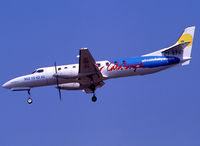
Flight / Schedule
Aberdeen - Aalborg
Aircraft
Swearingen SA227 Metro IIIRegistration
OY-BPH
MSN
AC-580B
Year of Manufacture
1984
Operator
North FlyingDate
December 24, 2002 at 07:45 AM
Type
CRASHFlight Type
Ferry
Flight Phase
Takeoff (climb)
Crash Site
Airport (less than 10 km from airport)
Crash Location
Aberdeen-Dyce Aberdeenshire
Region
Europe • United Kingdom
Coordinates
57.2311°, -2.1847°
Crash Cause
Human factor
Narrative Report
On December 24, 2002 at 07:45 AM, Aberdeen - Aalborg experienced a crash involving Swearingen SA227 Metro III, operated by North Flying, with the event recorded near Aberdeen-Dyce Aberdeenshire.
The flight was categorized as ferry and the reported phase was takeoff (climb) at a airport (less than 10 km from airport) crash site.
2 people were known to be on board, 0 fatalities were recorded, 2 survivors were identified or estimated. This corresponds to an estimated fatality rate of 0.0%.
Crew on board: 2, crew fatalities: 0, passengers on board: 0, passenger fatalities: 0, other fatalities: 0.
The listed crash cause is human factor. At approximately 0630 hrs on 24 December 2002, the pilots arrived by car at Aberdeen Airport. With no requirement for their aircraft to transport mail on this occasion, it was decided to fly directly to their home airport in Denmark. The aircraft had been refuelled the previous day and the total fuel on board of 2,200 lb was sufficient for the flight; with no cargo on board, take-off weight was calculated as 12,000 lb (maximum take-off weight: 16,000 lb). The commander carried out an external inspection on OY-BPH while the co-pilot, who was the designated handling pilot for the flight to Denmark, submitted a flight plan. The weather at 0720 hrs was reported as follows: Surface wind 150°M/ 12 kt; visibility 2,500 metres in mist; cloud scattered 100 feet agl, overcast at 200 feet agl; air temperature +9°C; QNH 994 hPa. The runway was reported as wet and Low Visibility Procedures (LVP) had been in force at Aberdeen since 0633 hrs. OY-BPH, callsign 'Birdie Nine Two Four', was parked on Taxiway Bravo and the crew called for, and were given, start clearance at 0736 hrs by 'Ground Movement Control' on frequency 121.7 MHz. Then, following their after-start checks, the crew were cleared to taxi to 'Whiskey Five' for Runway 16 at 0740 hrs. During taxi, the crew were passed and correctly acknowledged the following clearance: "LEAVE CONTROLLED AIRSPACE CLIMBING FLIGHT LEVEL ONE FIVE FIVE SQUAWK SIX TWO FOUR ZERO". Then, at 0742 hrs as the aircraft approached 'Whiskey Five', the crew were transferred to 'Aberdeen Tower' on frequency 118.1 MHz. On the 'Tower' frequency, they were given line-up clearance for Runway 16. At 0743 hrs, the controller transmitted: "BIRDIE NINE TWO FOUR WITH A LEFT TURN DIRECT KARLI CLEAR TAKE OFF ONE SIX SURFACE WIND ONE SIX ZERO ONE TWO KNOTS". The crew correctly acknowledged this clearance. The controller watched the initial movement of the aircraft along the runway before transferring her attention to another aircraft, which was lining up. Shortly after, at 0746 hrs, she transmitted: "OY-BPH REPORT TURNING LEFT" but received no reply. About this time, a telephone message was received in the 'Tower' from a witness in front of the Terminal Building to the effect that an aircraft appeared to have crashed just south of the airfield. This witness had heard a "change in pitch" from the aircraft but had seen no flames prior to it disappearing from his sight: ATC personnel immediately activated their emergency procedures. For the reduced power take-off roll, with the flaps at ¼, the power was set by the commander. The crew considered that the performance of the aircraft was normal, with no unusual instrument indications. The calculated V1 and VR speeds (co-incident at 100 kt) were achieved and called by the commander and, at VR, the co-pilot rotated the aircraft to a pitch attitude of about 12° to 15° nose-up. As the aircraft left the ground, the co-pilot detected the aircraft 'yawing' to the right; almost immediately, he was also aware of a distinct smell of smoke. He called to the commander that he had an engine failure, called for maximum power and tried to maintain control by corrective aileron and rudder inputs. The commander felt the aircraft roll about 15° to the right and realised that there was a problem with the right (No 2) engine. He reached for both power levers and moved them forward. There were no audio or visual warnings associated with the apparent problem. The commander looked at the EGT gauges with the power levers fully forward and noted that the No 2 engine indicated about 600°C EGT, whereas the left (No 1) engine indicated greater than 650°C EGT (the normal maximum) and that its fuel 'Bypass' light was on. He retarded the No 1 power lever until the 'Bypass' light extinguished and noted the resultant EGT at about 630°C. He did not recall any other abnormal indications on the engine instruments but, later in the investigation, the commander recalled hearing a sound "like a compressor stall from the right engine". About this time, the co-pilot heard the automatic "Bank Angle" voice activate. As the aircraft continued to turn to the right, the co-pilot called that he "couldn't control the aircraft". The commander reached for and pulled No 2 engine 'Stop and Feather Control' but, almost immediately, OY-BPH struck the ground initially with the right wing. The aircraft slid along the surface of a field, through a fence and onto a road, before coming to rest. As it did so, the co-pilot was aware that the aircraft had struck a car, which was now at rest outside the right forward side of the cockpit. The co-pilot saw that the whole of the right wing was on fire and called this to the commander before evacuating out of the left door of the aircraft. As the copilot left, the commander pulled No 1 engine 'Stop and Feather Control' and activated both engine fire extinguishers before leaving the aircraft. Outside OY-BPH, the co-pilot went to the car to check if anyone was still inside; as he did so, he saw someone running away. With the intense fire and the car apparently empty, both pilots moved well away from the aircraft. At 0748 hrs, the co-pilot used his mobile phone to advise ATC of the accident and to request assistance. The local emergency services had been alerted at 0745 hrs by a member of the public, who reported a road accident; by 0753 hrs, the local fire service was on the scene. By 0754 hrs, the first AFS vehicle was on the scene and three further AFS vehicles arrived one minute later. A fifth vehicle arrived at 0800 hrs. The fire was quickly extinguished and the Fire Officer confirmed that all the aircraft and vehicle occupants had been located and that there had been no serious injuries. Following runway and taxiway inspections, the airport was re-opened at 0954 hrs.
Aircraft reference details include registration OY-BPH, MSN AC-580B, year of manufacture 1984.
Geospatial coordinates for this crash are approximately 57.2311°, -2.1847°.
Fatalities
Total
0
Crew
0
Passengers
0
Other
0
Crash Summary
At approximately 0630 hrs on 24 December 2002, the pilots arrived by car at Aberdeen Airport. With no requirement for their aircraft to transport mail on this occasion, it was decided to fly directly to their home airport in Denmark. The aircraft had been refuelled the previous day and the total fuel on board of 2,200 lb was sufficient for the flight; with no cargo on board, take-off weight was calculated as 12,000 lb (maximum take-off weight: 16,000 lb). The commander carried out an external inspection on OY-BPH while the co-pilot, who was the designated handling pilot for the flight to Denmark, submitted a flight plan. The weather at 0720 hrs was reported as follows: Surface wind 150°M/ 12 kt; visibility 2,500 metres in mist; cloud scattered 100 feet agl, overcast at 200 feet agl; air temperature +9°C; QNH 994 hPa. The runway was reported as wet and Low Visibility Procedures (LVP) had been in force at Aberdeen since 0633 hrs. OY-BPH, callsign 'Birdie Nine Two Four', was parked on Taxiway Bravo and the crew called for, and were given, start clearance at 0736 hrs by 'Ground Movement Control' on frequency 121.7 MHz. Then, following their after-start checks, the crew were cleared to taxi to 'Whiskey Five' for Runway 16 at 0740 hrs. During taxi, the crew were passed and correctly acknowledged the following clearance: "LEAVE CONTROLLED AIRSPACE CLIMBING FLIGHT LEVEL ONE FIVE FIVE SQUAWK SIX TWO FOUR ZERO". Then, at 0742 hrs as the aircraft approached 'Whiskey Five', the crew were transferred to 'Aberdeen Tower' on frequency 118.1 MHz. On the 'Tower' frequency, they were given line-up clearance for Runway 16. At 0743 hrs, the controller transmitted: "BIRDIE NINE TWO FOUR WITH A LEFT TURN DIRECT KARLI CLEAR TAKE OFF ONE SIX SURFACE WIND ONE SIX ZERO ONE TWO KNOTS". The crew correctly acknowledged this clearance. The controller watched the initial movement of the aircraft along the runway before transferring her attention to another aircraft, which was lining up. Shortly after, at 0746 hrs, she transmitted: "OY-BPH REPORT TURNING LEFT" but received no reply. About this time, a telephone message was received in the 'Tower' from a witness in front of the Terminal Building to the effect that an aircraft appeared to have crashed just south of the airfield. This witness had heard a "change in pitch" from the aircraft but had seen no flames prior to it disappearing from his sight: ATC personnel immediately activated their emergency procedures. For the reduced power take-off roll, with the flaps at ¼, the power was set by the commander. The crew considered that the performance of the aircraft was normal, with no unusual instrument indications. The calculated V1 and VR speeds (co-incident at 100 kt) were achieved and called by the commander and, at VR, the co-pilot rotated the aircraft to a pitch attitude of about 12° to 15° nose-up. As the aircraft left the ground, the co-pilot detected the aircraft 'yawing' to the right; almost immediately, he was also aware of a distinct smell of smoke. He called to the commander that he had an engine failure, called for maximum power and tried to maintain control by corrective aileron and rudder inputs. The commander felt the aircraft roll about 15° to the right and realised that there was a problem with the right (No 2) engine. He reached for both power levers and moved them forward. There were no audio or visual warnings associated with the apparent problem. The commander looked at the EGT gauges with the power levers fully forward and noted that the No 2 engine indicated about 600°C EGT, whereas the left (No 1) engine indicated greater than 650°C EGT (the normal maximum) and that its fuel 'Bypass' light was on. He retarded the No 1 power lever until the 'Bypass' light extinguished and noted the resultant EGT at about 630°C. He did not recall any other abnormal indications on the engine instruments but, later in the investigation, the commander recalled hearing a sound "like a compressor stall from the right engine". About this time, the co-pilot heard the automatic "Bank Angle" voice activate. As the aircraft continued to turn to the right, the co-pilot called that he "couldn't control the aircraft". The commander reached for and pulled No 2 engine 'Stop and Feather Control' but, almost immediately, OY-BPH struck the ground initially with the right wing. The aircraft slid along the surface of a field, through a fence and onto a road, before coming to rest. As it did so, the co-pilot was aware that the aircraft had struck a car, which was now at rest outside the right forward side of the cockpit. The co-pilot saw that the whole of the right wing was on fire and called this to the commander before evacuating out of the left door of the aircraft. As the copilot left, the commander pulled No 1 engine 'Stop and Feather Control' and activated both engine fire extinguishers before leaving the aircraft. Outside OY-BPH, the co-pilot went to the car to check if anyone was still inside; as he did so, he saw someone running away. With the intense fire and the car apparently empty, both pilots moved well away from the aircraft. At 0748 hrs, the co-pilot used his mobile phone to advise ATC of the accident and to request assistance. The local emergency services had been alerted at 0745 hrs by a member of the public, who reported a road accident; by 0753 hrs, the local fire service was on the scene. By 0754 hrs, the first AFS vehicle was on the scene and three further AFS vehicles arrived one minute later. A fifth vehicle arrived at 0800 hrs. The fire was quickly extinguished and the Fire Officer confirmed that all the aircraft and vehicle occupants had been located and that there had been no serious injuries. Following runway and taxiway inspections, the airport was re-opened at 0954 hrs.
Cause: Human factor
Occupants & Outcome
Crew On Board
2
Passengers On Board
0
Estimated Survivors
2
Fatality Rate
0.0%
Known people on board: 2
Operational Details
Schedule / Flight
Aberdeen - Aalborg
Operator
North FlyingFlight Type
Ferry
Flight Phase
Takeoff (climb)
Crash Site
Airport (less than 10 km from airport)
Region / Country
Europe • United Kingdom
Aircraft Details
Similar Plane Crashes
Handley Page Aircraft Company Ltd
Handley Page V/1500
Assembled at Cricklewood Airfield in May 1918, the aircraft departed Cricklewood for its 13th test flight, carrying six crew members. Shortly after takeoff, while climbing to a height of about 700-800 feet, all four engines stopped. The pilot elected to return for an emergency landing when the aircraft stalled and crashed in a field located in front of 21 Garrick Avenue in Golders Green, bursting into flames. Colonel Ogilvie, who was seating in the tail gunner position at the back of the plane, survived, while all five other occupants were killed. Crew: Cpt Vernon Earl George Busby, pilot, † Mr. Bertram G. Cooper, † Mr. R. P. Cooper, † Mr. W. H. Hathaway, † Mr. J. W. Windebank, † Colonel Ogilvie.
Marine Aeroplane Depot
Fairey III
The pilot departed Isle of Grain on a delivery flight to Glasgow-Renfrew Airport. On approach to RAF Usworth (RAF Hylton), he elected to make a go-around when the aircraft lost height and crashed. The aircraft was destroyed and the pilot, Captain Arthur Leslie Simms, was killed.
Royal Air Force - RAF
De Havilland DH.6
The crew was completing a local training flight at RAF Seaton Carew when the aircraft entered a spin and crashed in a field, bursting into flames. Both occupants were killed. Crew: Cpt Charles David Danby, pilot, 1st Class E. A. Bannister, mechanic.
Royal Air Force - RAF
Handley Page H.P.12
The aircraft departed Castle Bromwich for a test flight, carrying five engineers and two crew members. En route, the twin engine aircraft suffered technical problems with a wing, lost height and crashed in a field located in Maxstoke. The aircraft was destroyed and all seven occupants were killed. Crew: Lt Robert Edward Macbeth, Lt Frederick James Bravery, 1st Air Mechanic James Benjamn May, 2nd Air Mechanic Albert J. Winrow, 2nd Air Mechanic H. Simmonds, 3rd Air Mechanic Charles William Offord, 3rd George Greenland.
Royal Air Force - RAF
Blackburn R.T.1 Kangaroo
On final approach in bad visibility, aircraft was too low. It struck the ground short of runway and crashed. Both occupants were injured. Crew was performing a training flight on behalf of the 246th Squadron.
Royal Air Force - RAF
De Havilland DH.9
The pilot tried to return to his base but due to low visibility by night, he lost his orientation. He elected to make an emergency landing in an open field but the aircraft hit a tree and crashed. The pilot was injured.