
Hakodate - Magadan
Flight / Schedule
Hakodate - Magadan
Aircraft
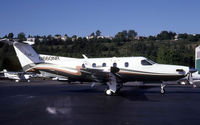
Pilatus PC-12Registration
N660NR
MSN
356
Year of Manufacture
2000
Operator
Access AirDate
July 8, 2001 at 01:45 PM
Type
CRASHFlight Type
Charter/Taxi (Non Scheduled Revenue Flight)
Flight Phase
Flight
Crash Site
Lake, Sea, Ocean, River
Crash Location
Sea of Okhotsk All Russia
Region
Asia • Russia
Crash Cause
Technical failure
Narrative Report
On July 8, 2001 at 01:45 PM, Hakodate - Magadan experienced a crash involving Pilatus PC-12, operated by Access Air, with the event recorded near Sea of Okhotsk All Russia.
The flight was categorized as charter/taxi (non scheduled revenue flight) and the reported phase was flight at a lake, sea, ocean, river crash site.
4 people were known to be on board, 0 fatalities were recorded, 4 survivors were identified or estimated. This corresponds to an estimated fatality rate of 0.0%.
Crew on board: 1, crew fatalities: 0, passengers on board: 3, passenger fatalities: 0, other fatalities: 0.
The listed crash cause is technical failure. On July 8, 2001, approximately 1345 local time (0245UTC), a Pilatus PC-12/45, N660NR, registered to a US private owner, operated by Jeflyn Aviation, Inc. doing business as Access Air, and being flown by a US certificated airline transport rated pilot, was presumed destroyed following a ditching in the Sea of Okhotsk, Western Pacific Ocean. The pilot sustained minor injuries and the three remaining Japanese passengers were uninjured. Instrument meteorological conditions prevailed, and an IFR flight plan had been filed and activated. The flight, which was returning to the United States following a round-the-world trip, was being operated under 14CFR91 as a business trip. The aircraft had originated from Hakodate, Japan, departing 0910 hours local time and was destined for Magadan, Russia. The pilot reported in a telephonic interview that the aircraft was established in cruise at 8,100 meters altitude when he felt a vibration followed by a rapid increase in the engine's Turbine Temperature Indication (TTI). He reported that the TTI reached 1144 degrees during which there was a compressor stall. He shut the engine down, feathered the propeller, and initiated a power off emergency descent. During the emergency descent the pilot radioed a mayday on 121.5 MHz, set his transponder to code 7700, and manually activated the emergency locator beacon. The aircraft descended through multiple cloud layers during which the pilot and passengers prepared for the ditching. The pilot reported that upon breaking through the bottom of the last overcast layer, at 100 feet above the water, he encountered swells of approximately 8-12 feet height. He ditched the aircraft on the crest of a swell and the aircraft came to a stop floating in an upright, level attitude. All four occupants exited the aircraft through the main cabin door into a life raft. Over a period of several hours the occupants lost sight of the floating aircraft and after about 15 hours they were picked up by a Russian container ship and airlifted to Sakhalin Island.
Aircraft reference details include registration N660NR, MSN 356, year of manufacture 2000.
Fatalities
Total
0
Crew
0
Passengers
0
Other
0
Crash Summary
On July 8, 2001, approximately 1345 local time (0245UTC), a Pilatus PC-12/45, N660NR, registered to a US private owner, operated by Jeflyn Aviation, Inc. doing business as Access Air, and being flown by a US certificated airline transport rated pilot, was presumed destroyed following a ditching in the Sea of Okhotsk, Western Pacific Ocean. The pilot sustained minor injuries and the three remaining Japanese passengers were uninjured. Instrument meteorological conditions prevailed, and an IFR flight plan had been filed and activated. The flight, which was returning to the United States following a round-the-world trip, was being operated under 14CFR91 as a business trip. The aircraft had originated from Hakodate, Japan, departing 0910 hours local time and was destined for Magadan, Russia. The pilot reported in a telephonic interview that the aircraft was established in cruise at 8,100 meters altitude when he felt a vibration followed by a rapid increase in the engine's Turbine Temperature Indication (TTI). He reported that the TTI reached 1144 degrees during which there was a compressor stall. He shut the engine down, feathered the propeller, and initiated a power off emergency descent. During the emergency descent the pilot radioed a mayday on 121.5 MHz, set his transponder to code 7700, and manually activated the emergency locator beacon. The aircraft descended through multiple cloud layers during which the pilot and passengers prepared for the ditching. The pilot reported that upon breaking through the bottom of the last overcast layer, at 100 feet above the water, he encountered swells of approximately 8-12 feet height. He ditched the aircraft on the crest of a swell and the aircraft came to a stop floating in an upright, level attitude. All four occupants exited the aircraft through the main cabin door into a life raft. Over a period of several hours the occupants lost sight of the floating aircraft and after about 15 hours they were picked up by a Russian container ship and airlifted to Sakhalin Island.
Cause: Technical failure
Occupants & Outcome
Crew On Board
1
Passengers On Board
3
Estimated Survivors
4
Fatality Rate
0.0%
Known people on board: 4
Operational Details
Schedule / Flight
Hakodate - Magadan
Operator
Access AirFlight Type
Charter/Taxi (Non Scheduled Revenue Flight)
Flight Phase
Flight
Crash Site
Lake, Sea, Ocean, River
Region / Country
Asia • Russia
Aircraft Details
Similar Plane Crashes
Dobrolet
Junkers F.13
On approach to Moscow-Khodynka Airport following an uneventful flight from Germany, the pilot encountered engine problems. He attempted an emergency landing when the aircraft named 'Prasidium WSNCh' crashed in the Moskova River. The pilot Fritz Kiessner was killed and all four passengers were injured.
Deruluft - Deutsch-Russische Luftverkehrs Gesellschaft
LVG C.VI
Crashed in unknown circumstances somewhere in October 1924, exact date unknown.
Aviakhim
Khioni-Konek-Gorbunok Kh-5
Crashed in unknown circumstances.
Aviakhim
Farman F.30
Crashed in unknown circumstances.
Dobrolet
Aleksandrov-Kalinin AK-1
Crashed in unknown circumstances while approaching Kazan Airport following a flight from Moscow. The aircraft named 'Latyshskii Strelok' was destroyed. Occupant fate unknown.
Aviakhim
Khioni-Konek-Gorbunok Kh-5
Crashed in unknown circumstances somewehere in Russia. Crew fate unknown.