
Abidjan - Lagos - Nairobi
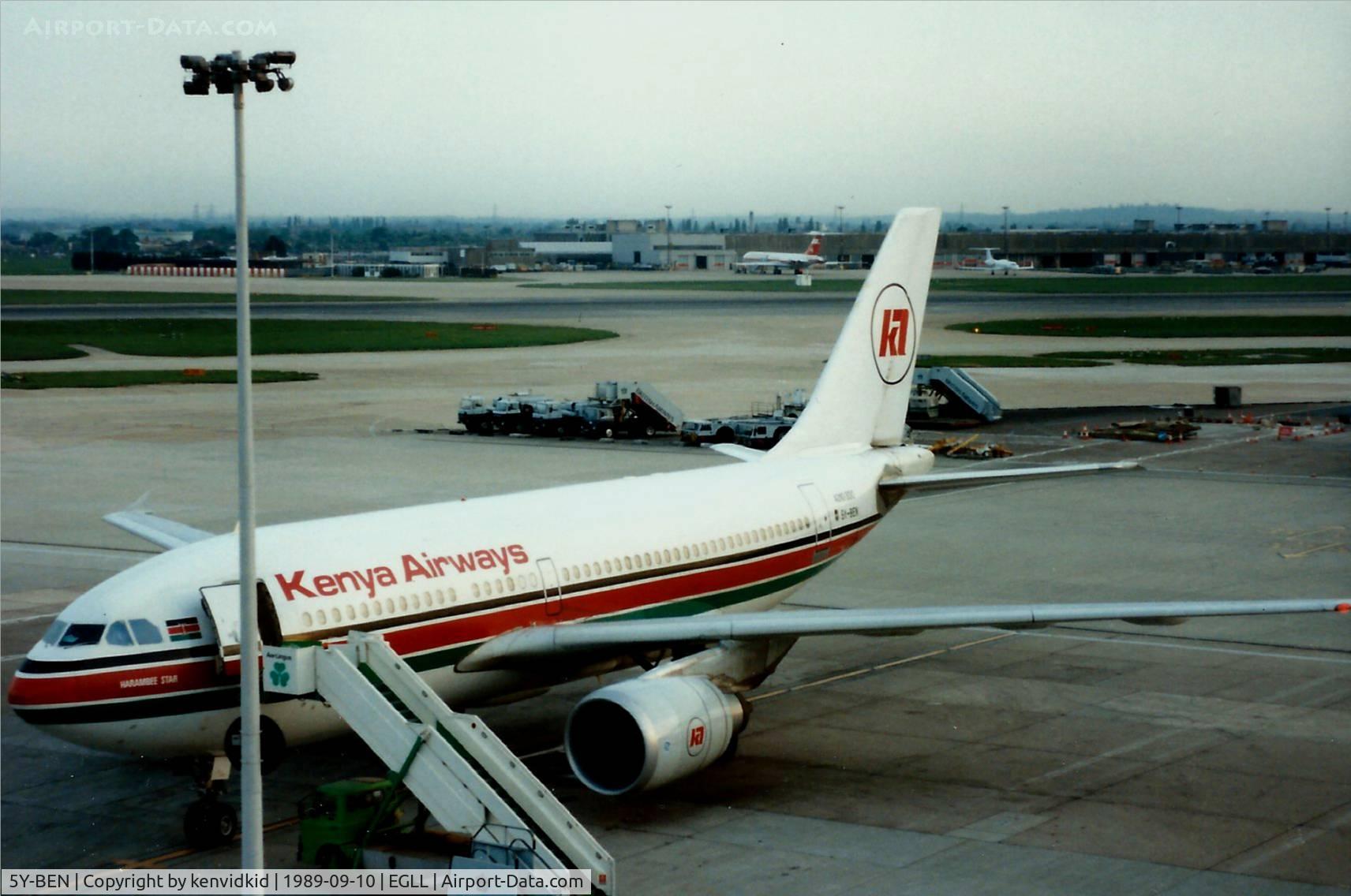
Flight / Schedule
Abidjan - Lagos - Nairobi
Aircraft
Airbus A310Registration
5Y-BEN
MSN
426
Year of Manufacture
1986
Operator
Kenya AirwaysDate
January 30, 2000 at 09:09 PM
Type
CRASHFlight Type
Scheduled Revenue Flight
Flight Phase
Takeoff (climb)
Crash Site
Airport (less than 10 km from airport)
Crash Location
Abidjan Lagunes
Region
Africa • Ivory Coast
Coordinates
5.6756°, -4.5697°
Crash Cause
Human factor
Narrative Report
On January 30, 2000 at 09:09 PM, Abidjan - Lagos - Nairobi experienced a crash involving Airbus A310, operated by Kenya Airways, with the event recorded near Abidjan Lagunes.
The flight was categorized as scheduled revenue flight and the reported phase was takeoff (climb) at a airport (less than 10 km from airport) crash site.
179 people were known to be on board, 169 fatalities were recorded, 10 survivors were identified or estimated. This corresponds to an estimated fatality rate of 94.4%.
Crew on board: 10, crew fatalities: 10, passengers on board: 169, passenger fatalities: 159, other fatalities: 0.
The listed crash cause is human factor. On Sunday 30 January 2000, the Kenya Airways Airbus 310-304, registered 5Y-BEN, was undertaking the scheduled international flight KQ 431 transporting passengers from Abidjan to Nairobi, via Lagos. On board there were 10 crewmembers and 169 passengers. On the same day, in the afternoon, 5Y-BEN had flown in from Nairobi and landed at Félix Houphouët-Boigny International Airport in Abidjan at 15 h 15. The unfavorable meteorological at Lagos had obliged the pilot, after a thirty minutes hold at Lagos, to divert to Abidjan. The relief crew, which had arrived two days previously on flight KQ 430 on Friday 28 January 2000, at 15 h 44, took over on board 5Y-BEN, to undertake flight KQ 431 from Abidjan to Nairobi, via Lagos. Departure was scheduled for 21 h 00, in accordance with the initial program. The copilot was pilot flying, the Captain was pilot not flying. At 20 h 55 min 22 s, the crew established contact with Abidjan Airport control tower and asked for start-up clearance. This was granted. At 20 h 56 min 09 s, the Captain ordered the checklist to be performed and announced the type of take-off by saying "Flex sixty" at 20 h 56 min 19 s. At 21 h 00 min 18 s, three minutes and nineteen seconds after the start-up of the first engine (engine n° 2), the Captain announced over the interphone that linked him with the ground mechanic “we have two normal start-ups”. At 21 h 01 min 07 s, the crew of 5Y-BEN asked for clearance to taxi. The tower controller put them on standby. A few seconds later, he cleared them to taxi. At 21 h 02 min 33 s, the Captain ordered the Copilot to set the flaps at 15°. Later, at 21 h 04 min 50 s , the copilot announced "trim: 0.9 nose up, Slats/flaps 15/15". The airplane began to taxi at 21 h 07 min 35 s, the tower controller informed the crew of the latest wind, cleared them to take off and asked the crew the call back when they reached flight level 40. At 21 h 07 min 45 s, the copilot read back the clearance. This was the last communication between the crew and the control tower. At 21 h 08 min 08 s, the copilot announced "Take-off checklist completed … cleared for take-off". At 21 h 08 min 18 s, the Captain applied take-off power and announced "thrust, SRS, and runway" then, nine seconds later “100 knots”. At 21 h 08 min 50 s, the Captain announced "V1 and Rotate(4)", then two seconds later "Positive". The airplane took off. At 21 h 08 min 57 s, the copilot announced "Positive rate of climb, gear up". Less than two seconds later the stall warning sounded. At 21 h 09 min 07 s, the automatic call out (AC) announced 300 feet. At 21 h 09 min 14 s, the copilot asked "what’s the problem?". From 21 h 09 min 16 s, the AC announced successively 200, 100, 50, 30, 20 and 10 feet. Meanwhile, at 21 h 09 min 18 s, the copilot ordered the aural warning to be cut. Two seconds later, the GPWS sounded the “Whoop...” alarm followed, a half a second later, by the AC announcement of 50 feet. At 21 h 09 min 22 s, an aural master warning started, immediately followed by an order from the Captain to climb: "Go up!", though this was preceded six tenths of a second by the AC announcement of 10 feet. At 21 h 09 min 23.9 s, end of the master warning, followed immediately within a tenth of a second by the noise of the impact. The time of the accident is presumed to be 21 h 09 min 24 s.
Aircraft reference details include registration 5Y-BEN, MSN 426, year of manufacture 1986.
Geospatial coordinates for this crash are approximately 5.6756°, -4.5697°.
Fatalities
Total
169
Crew
10
Passengers
159
Other
0
Crash Summary
On Sunday 30 January 2000, the Kenya Airways Airbus 310-304, registered 5Y-BEN, was undertaking the scheduled international flight KQ 431 transporting passengers from Abidjan to Nairobi, via Lagos. On board there were 10 crewmembers and 169 passengers. On the same day, in the afternoon, 5Y-BEN had flown in from Nairobi and landed at Félix Houphouët-Boigny International Airport in Abidjan at 15 h 15. The unfavorable meteorological at Lagos had obliged the pilot, after a thirty minutes hold at Lagos, to divert to Abidjan. The relief crew, which had arrived two days previously on flight KQ 430 on Friday 28 January 2000, at 15 h 44, took over on board 5Y-BEN, to undertake flight KQ 431 from Abidjan to Nairobi, via Lagos. Departure was scheduled for 21 h 00, in accordance with the initial program. The copilot was pilot flying, the Captain was pilot not flying. At 20 h 55 min 22 s, the crew established contact with Abidjan Airport control tower and asked for start-up clearance. This was granted. At 20 h 56 min 09 s, the Captain ordered the checklist to be performed and announced the type of take-off by saying "Flex sixty" at 20 h 56 min 19 s. At 21 h 00 min 18 s, three minutes and nineteen seconds after the start-up of the first engine (engine n° 2), the Captain announced over the interphone that linked him with the ground mechanic “we have two normal start-ups”. At 21 h 01 min 07 s, the crew of 5Y-BEN asked for clearance to taxi. The tower controller put them on standby. A few seconds later, he cleared them to taxi. At 21 h 02 min 33 s, the Captain ordered the Copilot to set the flaps at 15°. Later, at 21 h 04 min 50 s , the copilot announced "trim: 0.9 nose up, Slats/flaps 15/15". The airplane began to taxi at 21 h 07 min 35 s, the tower controller informed the crew of the latest wind, cleared them to take off and asked the crew the call back when they reached flight level 40. At 21 h 07 min 45 s, the copilot read back the clearance. This was the last communication between the crew and the control tower. At 21 h 08 min 08 s, the copilot announced "Take-off checklist completed … cleared for take-off". At 21 h 08 min 18 s, the Captain applied take-off power and announced "thrust, SRS, and runway" then, nine seconds later “100 knots”. At 21 h 08 min 50 s, the Captain announced "V1 and Rotate(4)", then two seconds later "Positive". The airplane took off. At 21 h 08 min 57 s, the copilot announced "Positive rate of climb, gear up". Less than two seconds later the stall warning sounded. At 21 h 09 min 07 s, the automatic call out (AC) announced 300 feet. At 21 h 09 min 14 s, the copilot asked "what’s the problem?". From 21 h 09 min 16 s, the AC announced successively 200, 100, 50, 30, 20 and 10 feet. Meanwhile, at 21 h 09 min 18 s, the copilot ordered the aural warning to be cut. Two seconds later, the GPWS sounded the “Whoop...” alarm followed, a half a second later, by the AC announcement of 50 feet. At 21 h 09 min 22 s, an aural master warning started, immediately followed by an order from the Captain to climb: "Go up!", though this was preceded six tenths of a second by the AC announcement of 10 feet. At 21 h 09 min 23.9 s, end of the master warning, followed immediately within a tenth of a second by the noise of the impact. The time of the accident is presumed to be 21 h 09 min 24 s.
Cause: Human factor
Occupants & Outcome
Crew On Board
10
Passengers On Board
169
Estimated Survivors
10
Fatality Rate
94.4%
Known people on board: 179
Operational Details
Schedule / Flight
Abidjan - Lagos - Nairobi
Operator
Kenya AirwaysFlight Type
Scheduled Revenue Flight
Flight Phase
Takeoff (climb)
Crash Site
Airport (less than 10 km from airport)
Region / Country
Africa • Ivory Coast
Aircraft Details
Similar Plane Crashes
United States Army Air Forces - USAAF
Douglas C-47 Skytrain (DC-3)
The aircraft was performing a flight from Accra to Monrovia with members of the USAF female corps on board, on behalf of the Air Transport Command. While flying along the shore, the crew sent a brief mayday message when the aircraft dove into the sea and crashed nose down by 45° angle. All 21 occupants were killed. Crew: 1st Lt Alfred R. Ellis, F/O Robert E. Mulhern , Cpl George A. Shiffman.
ARCO Bermuda
Douglas DC-7
The crew was completing a ferry flight from Kinshasa to Liverpool with several intermediate stops in Abidjan, Dakar, Agadir and Basel. The purpose of the flight was for maintenance as the n°4 engine was inoperative. En route, while cruising on the three remaining engines, the crew informed ATC that the engine n°3 caught fire. While descending to an altitude of 6,000 feet, the engine n°3 exploded and detached. The crew continued the approach but was unable to lower the undercarriage. A belly landing was completed at Abidjan Airport and the airplane slid on several dozen meters before coming to rest. All four crew members escaped uninjured while the aircraft was damaged beyond repair.
Interivoire
Britten-Norman Islander
Suffered an accident somewhere in Ivory Coast. There were no casualties.
Motor Parts Manufacturers - MPM
MBB HFB-320 Hansa Jet
The aircraft was performing an executive flight from Lagos to Abidjan. While completing a last turn to the right to join the glide for runway 03, the airplane lost height then crashed into the sea, about 500 meters offshore. The aircraft was destroyed and all three occupants were killed. No flight plan was filed and it was reported that the aircraft did not have all required certificates while flying for the first time since its delivery two years ago.
Air Ivoire
Fokker F27 Friendship
During the takeoff roll at Tabou Airport, one of the nose gear tyre burst. The crew decided to abandon the takeoff procedure and initiated an emergency braking maneuver. Unable to stop within the remaining distance, the aircraft overran and came to rest few dozen meters further. All 29 occupants escaped uninjured while the aircraft was damaged beyond repair.
VARIG - Viação Aérea Rio Grandense
Boeing 707
About 20 minutes after takeoff from Abidjan-Port-Bouet Airport, while cruising over the Atlantic Ocean, the fire alarm on engine n°1 sounded. As the fuel temperature was abnormally high, it was decided to shut down the engine. The captain declared an emergency and was cleared to return. On approach, he was cleared to land on runway 03 but preferred to land on runway 21 that was equipped with an ILS system. After completing a back circuit by night but in relative good visibility, the airplane passed over the Abidjan VOR then the pilot-in-command initiated a left turn when the stall warning sounded. While completing a left turn in a flaps and landing gear up configuration, the airplane banked left, stalled and crashed in the forest of Akakro located about 10 km northeast of Abidjan Airport, near the city of Bingerville. A passenger was seriously injured while 50 other occupants were killed.