
Los Angeles – New York – Cairo
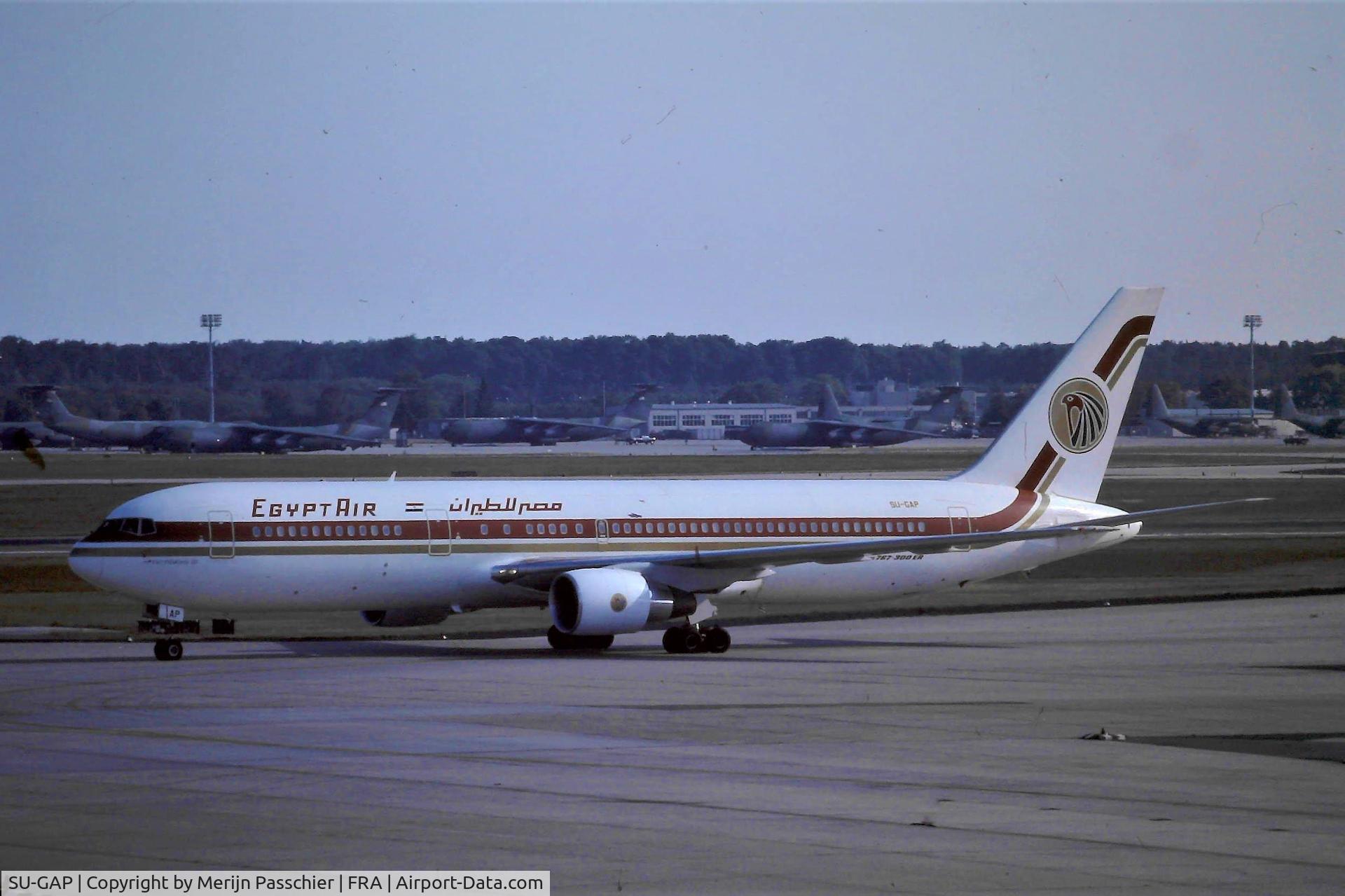
Flight / Schedule
Los Angeles – New York – Cairo
Aircraft
Boeing 767-300Registration
SU-GAP
MSN
24542
Year of Manufacture
1989
Operator
EgyptairDate
October 31, 1999 at 01:52 AM
Type
CRASHFlight Type
Scheduled Revenue Flight
Flight Phase
Flight
Crash Site
Lake, Sea, Ocean, River
Crash Location
Atlantic Ocean All World
Region
World • World
Crash Cause
Human factor
Narrative Report
On October 31, 1999 at 01:52 AM, Los Angeles – New York – Cairo experienced a crash involving Boeing 767-300, operated by Egyptair, with the event recorded near Atlantic Ocean All World.
The flight was categorized as scheduled revenue flight and the reported phase was flight at a lake, sea, ocean, river crash site.
217 people were known to be on board, 217 fatalities were recorded, 0 survivors were identified or estimated. This corresponds to an estimated fatality rate of 100.0%.
Crew on board: 15, crew fatalities: 15, passengers on board: 202, passenger fatalities: 202, other fatalities: 0.
The listed crash cause is human factor. EgyptAir Flight 990 departed Los Angeles International Airport, destined for Cairo, with a scheduled intermediate stop at New York-JFK. The aircraft landed at JFK about 23:48 EDT and arrived at the gate about 00:10 EDT. Two designated flight crews (each crew consisting of a captain and first officer) boarded the aircraft at JFK. The aircraft taxied to runway 22R and was cleared for takeoff at 01:19. Shortly after liftoff, the pilots of EgyptAir flight 990 contacted New York Terminal Radar Approach (and departure) Control (TRACON). New York TRACON issued a series of climb instructions and, at 01:26, instructed the flight to climb to FL230 and contact New York Air Route Traffic Control Center (ARTCC). At 01:35, New York ARTCC instructed EgyptAir flight 990 to climb to FL330 and proceed directly to DOVEY intersection. About 01:40 the relief first officer suggested that he relieve the command first officer at the controls. The command first officer agreed and left the flightdeck. The airplane leveled at FL330 four minutes later. At 01:48, the command captain decided to go to the toilet and left the flightdeck. At 01:48:30, about 11 seconds after the captain left the cockpit, the CVR recorded an unintelligible comment. Ten seconds later, the relief first officer stated quietly, "I rely on God." There were no sounds or events recorded by the flight recorders that would indicate that an airplane anomaly or other unusual circumstance preceded the relief first officer's statement. At 01:49:18, the CVR recorded the sound of an electric seat motor and 27 seconds later the autopilot was disconnected. At 01:49:48, the relief first officer again stated quietly, "I rely on God." At 01:49:53, the throttle levers were moved from their cruise power setting to idle, and, one second later, the FDR recorded an abrupt nose-down elevator movement and a very slight movement of the inboard ailerons. Subsequently, the airplane began to rapidly pitch nose down and descend. Between 0149:57 and 0150:05, the relief first officer quietly repeated, "I rely on God," seven additional times. During this time, as a result of the nose-down elevator movement, the airplane's load factor decreased from about 1 to about 0.2 G (almost weightlessness). Then the elevators started moving further in the nose-down direction. Immediately thereafter the captain entered the flightdeck and asked loudly, "What's happening? What's happening?". As he airplane's load factor reached negative G loads (about -0.2 G) the relief first officer stated for the tenth time, "I rely on God." At 01:50:08, as the airplane exceeded its maximum operating airspeed (0.86 Mach), a master warning alarm began to sound and the relief first officer stated quietly for the eleventh and final time, "I rely on God," and the captain repeated his question, "What's happening?" At 0150:15, as the airplane was descending through about 27,300 feet the airplane's rate of descent began to decrease. About 6 seconds later the left and right elevator surfaces began to move in opposite directions. The engine start lever switches for both engines then moved from the run to the cutoff position. At 01:50:24 the throttle levers started to move from their idle position to full throttle, and the speedbrake handle moved to its fully deployed position. The captain again asked "What is this? What is this? Did you shut the engine(s)?" At 01:50:26, the captain stated, "Get away in the engines ... shut the engines". The relief first officer replied "It's shut". Between 01:50:31 and 01:50:37, the captain repeatedly stated, "Pull with me." However, the elevator surfaces remained in a split condition (with the left surface commanding nose up and the right surface commanding nose down) until the FDR and CVR stopped recording. at 0150:36.64 and 0150:38.47, respectively. The height estimates based on primary radar data from the joint use FAA/U.S. Air Force (USAF) radar sites indicated that the airplane's descent stopped about 01:50:38 and that the airplane subsequently climbed to about 25,000 feet msl and changed heading from 80º to 140º before it started a second descent, which continued until the airplane impacted the ocean.
Aircraft reference details include registration SU-GAP, MSN 24542, year of manufacture 1989.
Fatalities
Total
217
Crew
15
Passengers
202
Other
0
Crash Summary
EgyptAir Flight 990 departed Los Angeles International Airport, destined for Cairo, with a scheduled intermediate stop at New York-JFK. The aircraft landed at JFK about 23:48 EDT and arrived at the gate about 00:10 EDT. Two designated flight crews (each crew consisting of a captain and first officer) boarded the aircraft at JFK. The aircraft taxied to runway 22R and was cleared for takeoff at 01:19. Shortly after liftoff, the pilots of EgyptAir flight 990 contacted New York Terminal Radar Approach (and departure) Control (TRACON). New York TRACON issued a series of climb instructions and, at 01:26, instructed the flight to climb to FL230 and contact New York Air Route Traffic Control Center (ARTCC). At 01:35, New York ARTCC instructed EgyptAir flight 990 to climb to FL330 and proceed directly to DOVEY intersection. About 01:40 the relief first officer suggested that he relieve the command first officer at the controls. The command first officer agreed and left the flightdeck. The airplane leveled at FL330 four minutes later. At 01:48, the command captain decided to go to the toilet and left the flightdeck. At 01:48:30, about 11 seconds after the captain left the cockpit, the CVR recorded an unintelligible comment. Ten seconds later, the relief first officer stated quietly, "I rely on God." There were no sounds or events recorded by the flight recorders that would indicate that an airplane anomaly or other unusual circumstance preceded the relief first officer's statement. At 01:49:18, the CVR recorded the sound of an electric seat motor and 27 seconds later the autopilot was disconnected. At 01:49:48, the relief first officer again stated quietly, "I rely on God." At 01:49:53, the throttle levers were moved from their cruise power setting to idle, and, one second later, the FDR recorded an abrupt nose-down elevator movement and a very slight movement of the inboard ailerons. Subsequently, the airplane began to rapidly pitch nose down and descend. Between 0149:57 and 0150:05, the relief first officer quietly repeated, "I rely on God," seven additional times. During this time, as a result of the nose-down elevator movement, the airplane's load factor decreased from about 1 to about 0.2 G (almost weightlessness). Then the elevators started moving further in the nose-down direction. Immediately thereafter the captain entered the flightdeck and asked loudly, "What's happening? What's happening?". As he airplane's load factor reached negative G loads (about -0.2 G) the relief first officer stated for the tenth time, "I rely on God." At 01:50:08, as the airplane exceeded its maximum operating airspeed (0.86 Mach), a master warning alarm began to sound and the relief first officer stated quietly for the eleventh and final time, "I rely on God," and the captain repeated his question, "What's happening?" At 0150:15, as the airplane was descending through about 27,300 feet the airplane's rate of descent began to decrease. About 6 seconds later the left and right elevator surfaces began to move in opposite directions. The engine start lever switches for both engines then moved from the run to the cutoff position. At 01:50:24 the throttle levers started to move from their idle position to full throttle, and the speedbrake handle moved to its fully deployed position. The captain again asked "What is this? What is this? Did you shut the engine(s)?" At 01:50:26, the captain stated, "Get away in the engines ... shut the engines". The relief first officer replied "It's shut". Between 01:50:31 and 01:50:37, the captain repeatedly stated, "Pull with me." However, the elevator surfaces remained in a split condition (with the left surface commanding nose up and the right surface commanding nose down) until the FDR and CVR stopped recording. at 0150:36.64 and 0150:38.47, respectively. The height estimates based on primary radar data from the joint use FAA/U.S. Air Force (USAF) radar sites indicated that the airplane's descent stopped about 01:50:38 and that the airplane subsequently climbed to about 25,000 feet msl and changed heading from 80º to 140º before it started a second descent, which continued until the airplane impacted the ocean.
Cause: Human factor
Occupants & Outcome
Crew On Board
15
Passengers On Board
202
Estimated Survivors
0
Fatality Rate
100.0%
Known people on board: 217
Operational Details
Schedule / Flight
Los Angeles – New York – Cairo
Operator
EgyptairFlight Type
Scheduled Revenue Flight
Flight Phase
Flight
Crash Site
Lake, Sea, Ocean, River
Region / Country
World • World
Aircraft Details
Similar Plane Crashes
Compagnie Générale Transaérienne - CGT
Nieuport-Delage NiD-30
The pilot, sole on board, departed Paris-Le Bourget on a mail flight to Hounslow Heath, London. While cruising over The Channel, he encountered thick fog when the airplane crashed in the sea in unknown circumstances. The pilot was killed.
KLM Royal Dutch Airlines - Koninklijke Luchtvaart Maatschappij
Fokker F3
The aircraft departed Croydon Airport at 1043LT on a regular schedule service to Amsterdam with an intermediate stop in Rotterdam, carrying two passengers and one pilot. En route, the pilot encountered technical problems and diverted to Lympne Airport, Kent. After several repairs were made, he continued the flight with an unserviceable radio. While cruising over the North Sea (between The Channel and the North Sea), the pilot encountered foggy conditions when the aircraft crashed in unknown circumstances in the sea. As the aircraft failed to arrive in Rotterdam, SAR operations were initiated but no trace of the aircraft nor the three occupants was found. Crew: Adriaan Pijl, pilot. Passengers: Mr. W. J. van Hien, Mr. C. Modderman.
Regia Aeronautica
Dornier Do J Wal
The crew departed Pisa, Italy, last 25 July to perform a transatlantic flight to Canada on behalf of the 'Commissariato Aeronautica', the ancient name of the Italian Air Force. The seaplane made stops in Saint-Raphaël, south of France, Lausanne (quai of Ouchy on Lake of Geneva), Strasbourg, Rotterdam, Hull, Stromness (Orkneys Islands), Feroe Islands and Reykjavik. While flying over the Sea of Labrador, some 180 km south of Cape Farewell, Greenland, the crew encountered engine problems and elected to make an emergency landing. The twin engine seaplane landed safely and the crew sent several mayday message. All five occupants were later rescued and evacuated by the crew of 'USS Richmond' which deviated from his route to the accident site. In a rough sea, the seaplane sank later and was lost and not recovered. Crew: Lt Antonio Locatelli, pilot, Lt Crosio, Lt Marescalchi, Mr. Braccini, flight engineer, Mr. Falcinelli, flight engineer.
Compagnie Générale d'Entreprises Aéronautiques - CGEA
Lioré-et-Olivier LeO H-13
En route from Oran to Alicante, the crew was forced to make an emergency landing following an engine failure. The crew was rescued few hours later and the aircraft sank and was lost.
Compagnie Générale d'Entreprises Aéronautiques - CGEA
Lioré-et-Olivier LeO H-13
En route from Alicante to Oran, a structural failure occurred on the buckle, forcing the crew to ditch the aircraft. The aircraft sank and both crew members (who were slightly injured) were rescued by the crew of the British boat named 'Egyptian'. Crew: Léon Givon, pilot, François Urvoy, mechanic.
Compagnie Générale d'Entreprises Aéronautiques - CGEA
Lioré-et-Olivier LeO H-13
The crew was performing a mail flight from Oran to Alicante when an engine failed while overflying the Mediterranean Sea. The crew ditch the aircraft in the sea. Both pilots were rescued 15 hours later by a the crew of a Spanish speedboat. The aircraft sank and was lost.