
Victoria – Houston
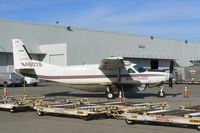
Flight / Schedule
Victoria – Houston
Aircraft
Cessna 208B Grand CaravanRegistration
N4602B
MSN
208B-0140
Year of Manufacture
1988
Operator
MartinaireDate
December 9, 2019 at 08:17 PM
Type
CRASHFlight Type
Cargo
Flight Phase
Flight
Crash Site
Airport (less than 10 km from airport)
Crash Location
Victoria Texas
Region
North America • United States of America
Coordinates
28.8026°, -96.9766°
Crash Cause
Human factor
Narrative Report
On December 9, 2019 at 08:17 PM, Victoria – Houston experienced a crash involving Cessna 208B Grand Caravan, operated by Martinaire, with the event recorded near Victoria Texas.
The flight was categorized as cargo and the reported phase was flight at a airport (less than 10 km from airport) crash site.
1 people were known to be on board, 1 fatalities were recorded, 0 survivors were identified or estimated. This corresponds to an estimated fatality rate of 100.0%.
Crew on board: 1, crew fatalities: 1, passengers on board: 0, passenger fatalities: 0, other fatalities: 0.
The listed crash cause is human factor. The airline transport pilot departed on a night cargo flight into conditions that included an overcast cloud ceiling and “hazy” visibility, as reported by another pilot. About one minute after takeoff, the pilot made a series of course changes and large altitude and airspeed deviations. Following several queries from the air traffic controller concerning the airplane’s erratic flight path, the pilot responded that he had “some instrument problems.” The pilot attempted to return to land at the departure airport, but the airplane impacted terrain after entering a near-vertical dive. The airplane was one of two in the operator’s fleet equipped with an inverter system that electrically powered the pilot’s (left side) flight instruments. Examination of the annunciator panel lighting filaments revealed that the inverter system was not powered when the airplane impacted the ground. Without electrical power from an inverter, the pilot’s side attitude indicator and horizontal situation indicator (HSI) would have been inoperative and warning flags would have been displayed over the respective instruments. The pilot had a history of poor procedural knowledge and weak flying skills. It is possible that he either failed to turn on an inverter during ground operations and did not respond to the accompanying warning flags, or he did not switch to the other inverter in the event that an inverter failed inflight. Due to impact damage, the operational status of the two inverters installed in the airplane could not be confirmed. However, the vacuum-powered flight instruments on the copilot’s (right side) were operational, and the pilot could have referenced these instruments to maintain orientation. Based on the available information, the pilot likely lost control of the airplane after experiencing spatial disorientation. The night marginal visual flight rules conditions and instrumentation problems would have been conducive to the development of spatial disorientation, and the airplane’s extensive fragmentation indicative of a high-energy impact was consistent with the known effects of spatial disorientation. Ethanol identified during toxicology testing may have come from postmortem production and based on the low levels recorded, was unlikely to have contributed to this accident. Morphine identified in the pilot’s liver could not be used to extrapolate to antemortem blood levels; therefore, whether or to what extent the pilot’s use of morphine contributed to the accident could not be determined.
Aircraft reference details include registration N4602B, MSN 208B-0140, year of manufacture 1988.
Geospatial coordinates for this crash are approximately 28.8026°, -96.9766°.
Fatalities
Total
1
Crew
1
Passengers
0
Other
0
Crash Summary
The airline transport pilot departed on a night cargo flight into conditions that included an overcast cloud ceiling and “hazy” visibility, as reported by another pilot. About one minute after takeoff, the pilot made a series of course changes and large altitude and airspeed deviations. Following several queries from the air traffic controller concerning the airplane’s erratic flight path, the pilot responded that he had “some instrument problems.” The pilot attempted to return to land at the departure airport, but the airplane impacted terrain after entering a near-vertical dive. The airplane was one of two in the operator’s fleet equipped with an inverter system that electrically powered the pilot’s (left side) flight instruments. Examination of the annunciator panel lighting filaments revealed that the inverter system was not powered when the airplane impacted the ground. Without electrical power from an inverter, the pilot’s side attitude indicator and horizontal situation indicator (HSI) would have been inoperative and warning flags would have been displayed over the respective instruments. The pilot had a history of poor procedural knowledge and weak flying skills. It is possible that he either failed to turn on an inverter during ground operations and did not respond to the accompanying warning flags, or he did not switch to the other inverter in the event that an inverter failed inflight. Due to impact damage, the operational status of the two inverters installed in the airplane could not be confirmed. However, the vacuum-powered flight instruments on the copilot’s (right side) were operational, and the pilot could have referenced these instruments to maintain orientation. Based on the available information, the pilot likely lost control of the airplane after experiencing spatial disorientation. The night marginal visual flight rules conditions and instrumentation problems would have been conducive to the development of spatial disorientation, and the airplane’s extensive fragmentation indicative of a high-energy impact was consistent with the known effects of spatial disorientation. Ethanol identified during toxicology testing may have come from postmortem production and based on the low levels recorded, was unlikely to have contributed to this accident. Morphine identified in the pilot’s liver could not be used to extrapolate to antemortem blood levels; therefore, whether or to what extent the pilot’s use of morphine contributed to the accident could not be determined.
Cause: Human factor
Occupants & Outcome
Crew On Board
1
Passengers On Board
0
Estimated Survivors
0
Fatality Rate
100.0%
Known people on board: 1
Operational Details
Schedule / Flight
Victoria – Houston
Operator
MartinaireFlight Type
Cargo
Flight Phase
Flight
Crash Site
Airport (less than 10 km from airport)
Region / Country
North America • United States of America
Aircraft Details
Similar Plane Crashes
United States Signal Corps - USSC
De Havilland DH.4
The single engine airplane departed Dayton-McCook Field for a local test flight. Shortly after takeoff, the aircraft stalled and crashed, killing both occupants. Crew: Maj Oscar Brindley, Lt Col Henry Damm.
United States Signal Corps - USSC
De Havilland DH.4
Lt. Frank Stuart Patterson, son and nephew of the co-founders of National Cash Register, is killed in the crash of his DH.4M, AS-32098, at Wilbur Wright Field during a flight test of a new mechanism for synchronizing machine gun and propeller, when a tie rod breaks during a dive from 15,000 feet (4,600 m), causing the wings to separate from the aircraft. Wishing to recognize the contributions of the Patterson family (owners of NCR) the area of Wright Field east of Huffman Dam (including Wilbur Wright Field, Fairfield Air Depot, and the Huffman Prairie) is renamed Patterson Field on 6 July 1931, in honor of Lt. Patterson.
United States Signal Corps - USSC
De Havilland DH.4
The aircraft crashed in unknown circumstances.
United States Signal Corps - USSC
De Havilland DH.4
The crew was completing a training mission. At an altitude of about 4,000 feet, the aircraft entered a spin and crashed in an open field near Everman-Barron Field Airport. A crew was killed and the second occupants was injured. The aircraft was destroyed.
U.S. Air Mail Service
De Havilland DH.4
Crashed following an engine failure. Pilot fate unknown.
United States Signal Corps - USSC
De Havilland DH.4
The accident occurred in unknown circumstances.