
Seldovia – Anchorage
Flight / Schedule
Seldovia – Anchorage
Aircraft
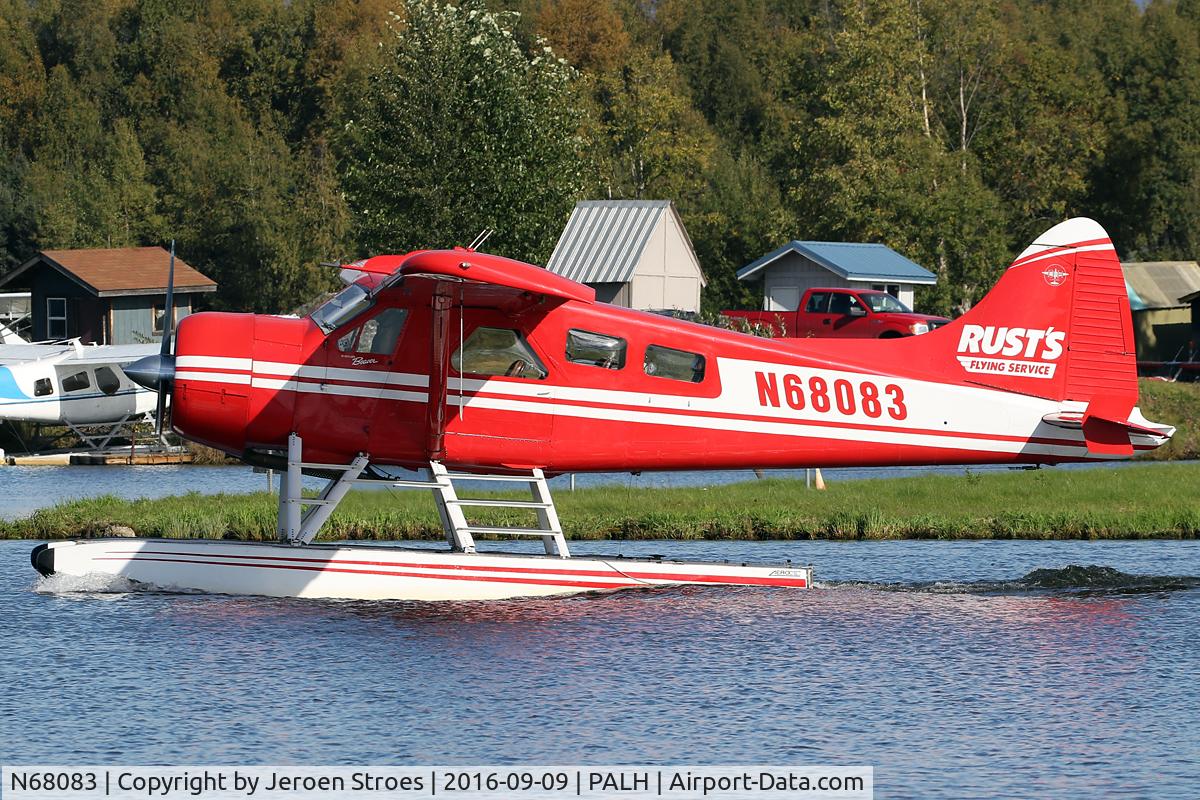
De Havilland DHC-2 BeaverRegistration
N68083
MSN
1254
Year of Manufacture
1958
Operator
Rust's Flying Service - RustairDate
July 19, 2019 at 10:10 AM
Type
CRASHFlight Type
Charter/Taxi (Non Scheduled Revenue Flight)
Flight Phase
Takeoff (climb)
Crash Site
Lake, Sea, Ocean, River
Crash Location
Seldovia Alaska
Region
North America • United States of America
Coordinates
59.4392°, -151.7139°
Crash Cause
Other causes
Narrative Report
On July 19, 2019 at 10:10 AM, Seldovia – Anchorage experienced a crash involving De Havilland DHC-2 Beaver, operated by Rust's Flying Service - Rustair, with the event recorded near Seldovia Alaska.
The flight was categorized as charter/taxi (non scheduled revenue flight) and the reported phase was takeoff (climb) at a lake, sea, ocean, river crash site.
7 people were known to be on board, 1 fatalities were recorded, 6 survivors were identified or estimated. This corresponds to an estimated fatality rate of 14.3%.
Crew on board: 1, crew fatalities: 0, passengers on board: 6, passenger fatalities: 1, other fatalities: 0.
The listed crash cause is other causes. The pilot stated that, during takeoff in the float-equipped airplane, he saw the left float begin to move into his peripheral vision from the left cockpit window and the airplane began to yaw to the left. The left wing subsequently impacted the water and the airplane nosed over, separating the right wing from the fuselage. The passengers consistently reported choppy water conditions at the time of the accident; one passenger reported that white caps were visible on the ocean waves in the distance. The passengers said that, during the takeoff, the airplane impacted a swell or wave and nosed over abruptly, and the cabin rapidly filled with water. Examination of the float assembly revealed fractures in the left front flying wire attachment fitting and the right rear flying wire attachment strap and hole elongation in the left rear flying wire attachment fitting. Additionally, the bolts attaching the two left flying wire attachment fittings to the left float were bent, and the two flying wires that had been attached to the fractured attachment fitting and attachment strap were buckled. While some areas of corrosion were observed on the fractured left forward fitting, the total area of corrosion was a small percentage of the total cross-section, and the remainder of the fracture and associated deformation of the lug was consistent with ductile overstress fracture. Similar areas of corrosion were also observed on each of the intact flying wire attachment fittings. Post-accident testing completed by the float manufacturer revealed that buckling of flying wires similar to that observed on the accident airplane was only reproduced at strap and fitting failure loads above 9,000 pounds force; the design specification load was 3,453 pounds of force. This indicates that the small amount of corrosion present on the fractured flying wire attachment fitting did not reduce its loadcarrying capability below the design specification load of 3,453 pounds of force, and that both the flying wire attachment fitting and flying wire attachment strap fractured due to overload. Therefore, it is likely that the accident airplane floats were subject to forces that exceeded their design limitations, resulting in overload of the flying wires attached to the left float. It is also likely that, given the lack of damage on either float, the force was due to impact with an ocean wave or swell and not by striking an object.
Aircraft reference details include registration N68083, MSN 1254, year of manufacture 1958.
Geospatial coordinates for this crash are approximately 59.4392°, -151.7139°.
Fatalities
Total
1
Crew
0
Passengers
1
Other
0
Crash Summary
The pilot stated that, during takeoff in the float-equipped airplane, he saw the left float begin to move into his peripheral vision from the left cockpit window and the airplane began to yaw to the left. The left wing subsequently impacted the water and the airplane nosed over, separating the right wing from the fuselage. The passengers consistently reported choppy water conditions at the time of the accident; one passenger reported that white caps were visible on the ocean waves in the distance. The passengers said that, during the takeoff, the airplane impacted a swell or wave and nosed over abruptly, and the cabin rapidly filled with water. Examination of the float assembly revealed fractures in the left front flying wire attachment fitting and the right rear flying wire attachment strap and hole elongation in the left rear flying wire attachment fitting. Additionally, the bolts attaching the two left flying wire attachment fittings to the left float were bent, and the two flying wires that had been attached to the fractured attachment fitting and attachment strap were buckled. While some areas of corrosion were observed on the fractured left forward fitting, the total area of corrosion was a small percentage of the total cross-section, and the remainder of the fracture and associated deformation of the lug was consistent with ductile overstress fracture. Similar areas of corrosion were also observed on each of the intact flying wire attachment fittings. Post-accident testing completed by the float manufacturer revealed that buckling of flying wires similar to that observed on the accident airplane was only reproduced at strap and fitting failure loads above 9,000 pounds force; the design specification load was 3,453 pounds of force. This indicates that the small amount of corrosion present on the fractured flying wire attachment fitting did not reduce its loadcarrying capability below the design specification load of 3,453 pounds of force, and that both the flying wire attachment fitting and flying wire attachment strap fractured due to overload. Therefore, it is likely that the accident airplane floats were subject to forces that exceeded their design limitations, resulting in overload of the flying wires attached to the left float. It is also likely that, given the lack of damage on either float, the force was due to impact with an ocean wave or swell and not by striking an object.
Cause: Other causes
Occupants & Outcome
Crew On Board
1
Passengers On Board
6
Estimated Survivors
6
Fatality Rate
14.3%
Known people on board: 7
Operational Details
Schedule / Flight
Seldovia – Anchorage
Operator
Rust's Flying Service - RustairFlight Type
Charter/Taxi (Non Scheduled Revenue Flight)
Flight Phase
Takeoff (climb)
Crash Site
Lake, Sea, Ocean, River
Region / Country
North America • United States of America
Aircraft Details
Similar Plane Crashes
United States Signal Corps - USSC
De Havilland DH.4
The single engine airplane departed Dayton-McCook Field for a local test flight. Shortly after takeoff, the aircraft stalled and crashed, killing both occupants. Crew: Maj Oscar Brindley, Lt Col Henry Damm.
United States Signal Corps - USSC
De Havilland DH.4
Lt. Frank Stuart Patterson, son and nephew of the co-founders of National Cash Register, is killed in the crash of his DH.4M, AS-32098, at Wilbur Wright Field during a flight test of a new mechanism for synchronizing machine gun and propeller, when a tie rod breaks during a dive from 15,000 feet (4,600 m), causing the wings to separate from the aircraft. Wishing to recognize the contributions of the Patterson family (owners of NCR) the area of Wright Field east of Huffman Dam (including Wilbur Wright Field, Fairfield Air Depot, and the Huffman Prairie) is renamed Patterson Field on 6 July 1931, in honor of Lt. Patterson.
United States Signal Corps - USSC
De Havilland DH.4
The aircraft crashed in unknown circumstances.
United States Signal Corps - USSC
De Havilland DH.4
The crew was completing a training mission. At an altitude of about 4,000 feet, the aircraft entered a spin and crashed in an open field near Everman-Barron Field Airport. A crew was killed and the second occupants was injured. The aircraft was destroyed.
U.S. Air Mail Service
De Havilland DH.4
Crashed following an engine failure. Pilot fate unknown.
United States Signal Corps - USSC
De Havilland DH.4
The accident occurred in unknown circumstances.