
Newtok – Bethel
Flight / Schedule
Newtok – Bethel
Aircraft
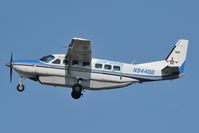
Cessna 208B Grand CaravanRegistration
N9448B
MSN
208B-0121
Year of Manufacture
1988
Operator
Grant AviationDate
July 8, 2019 at 03:05 PM
Type
CRASHFlight Type
Scheduled Revenue Flight
Flight Phase
Landing (descent or approach)
Crash Site
Airport (less than 10 km from airport)
Crash Location
Bethel Alaska
Region
North America • United States of America
Coordinates
60.7922°, -161.7558°
Crash Cause
Human factor
Narrative Report
On July 8, 2019 at 03:05 PM, Newtok – Bethel experienced a crash involving Cessna 208B Grand Caravan, operated by Grant Aviation, with the event recorded near Bethel Alaska.
The flight was categorized as scheduled revenue flight and the reported phase was landing (descent or approach) at a airport (less than 10 km from airport) crash site.
6 people were known to be on board, 0 fatalities were recorded, 6 survivors were identified or estimated. This corresponds to an estimated fatality rate of 0.0%.
Crew on board: 1, crew fatalities: 0, passengers on board: 5, passenger fatalities: 0, other fatalities: 0.
The listed crash cause is human factor. On July 8, 2019, about 1505 Alaska daylight time, Grant Aviation flight GV262 Cessna 208B airplane, N9448B, was destroyed by a post-crash fire during an accident at the Bethel Airport (BET), Bethel, Alaska. The commercial pilot and five passengers sustained minor injuries. The airplane was operated under the provisions of Title 14 Code of Federal Regulations Part 135 scheduled commuter flight. The pilot stated that the accident flight was the last of a 5-leg scheduled passenger flight from Newtok Airport to the company’s base airport, BET. After contacting the BET air traffic control tower (ATCT) about 10 miles west of the airport, the pilot offered to use runway 12, because it was a more expeditious arrival from the west, and he wanted to "make it easier" for the tower controller who was very busy with arrivals of other airplanes using runways 1L and 1R. The pilot reported that, about 4 miles southwest of the airport, the tower controller cleared him to land on runway 12. He selected a higher-than-normal traffic pattern altitude, due to the limited visibility and terrain located on the west side of the airport. He conducted a visual approach to runway 12, with an increased rate of descent and full flaps. During the landing flare, the airplane floated about halfway down the runway, and the pilot executed a go-around due to insufficient runway stopping distance remaining. He advanced the throttle to maximum, retracted the flaps to 20°, increased the airplane's pitch attitude as the main landing gear momentarily touched down. The pilot transmitted on the tower frequency that he was going around and the ATCT local controller (LC) instructed him twice to turn left immediately. The pilot stated that he was aware that an airplane was on short final approach to runway 1L, but he did not know where the other airplanes were and was concerned about conflicting with cross traffic flow. In an attempt to comply with tower instructions and deconflict with traffic, he applied left aileron and the airplane stalled, rolled right and descended, impacting the ground in a right-wing-low attitude. He attempted to regain control and he recalled selecting the flaps up. The airplane came to rest on its right side in the grass covered drainage ditch between runways 1L and 1R. The pilot stated that he saw fire through the right window, and immediately went to the back of the airplane to help with the evacuation of the two children and three adult passengers through the left cargo door before the airplane was consumed by fire.
Aircraft reference details include registration N9448B, MSN 208B-0121, year of manufacture 1988.
Geospatial coordinates for this crash are approximately 60.7922°, -161.7558°.
Fatalities
Total
0
Crew
0
Passengers
0
Other
0
Crash Summary
On July 8, 2019, about 1505 Alaska daylight time, Grant Aviation flight GV262 Cessna 208B airplane, N9448B, was destroyed by a post-crash fire during an accident at the Bethel Airport (BET), Bethel, Alaska. The commercial pilot and five passengers sustained minor injuries. The airplane was operated under the provisions of Title 14 Code of Federal Regulations Part 135 scheduled commuter flight. The pilot stated that the accident flight was the last of a 5-leg scheduled passenger flight from Newtok Airport to the company’s base airport, BET. After contacting the BET air traffic control tower (ATCT) about 10 miles west of the airport, the pilot offered to use runway 12, because it was a more expeditious arrival from the west, and he wanted to "make it easier" for the tower controller who was very busy with arrivals of other airplanes using runways 1L and 1R. The pilot reported that, about 4 miles southwest of the airport, the tower controller cleared him to land on runway 12. He selected a higher-than-normal traffic pattern altitude, due to the limited visibility and terrain located on the west side of the airport. He conducted a visual approach to runway 12, with an increased rate of descent and full flaps. During the landing flare, the airplane floated about halfway down the runway, and the pilot executed a go-around due to insufficient runway stopping distance remaining. He advanced the throttle to maximum, retracted the flaps to 20°, increased the airplane's pitch attitude as the main landing gear momentarily touched down. The pilot transmitted on the tower frequency that he was going around and the ATCT local controller (LC) instructed him twice to turn left immediately. The pilot stated that he was aware that an airplane was on short final approach to runway 1L, but he did not know where the other airplanes were and was concerned about conflicting with cross traffic flow. In an attempt to comply with tower instructions and deconflict with traffic, he applied left aileron and the airplane stalled, rolled right and descended, impacting the ground in a right-wing-low attitude. He attempted to regain control and he recalled selecting the flaps up. The airplane came to rest on its right side in the grass covered drainage ditch between runways 1L and 1R. The pilot stated that he saw fire through the right window, and immediately went to the back of the airplane to help with the evacuation of the two children and three adult passengers through the left cargo door before the airplane was consumed by fire.
Cause: Human factor
Occupants & Outcome
Crew On Board
1
Passengers On Board
5
Estimated Survivors
6
Fatality Rate
0.0%
Known people on board: 6
Operational Details
Schedule / Flight
Newtok – Bethel
Operator
Grant AviationFlight Type
Scheduled Revenue Flight
Flight Phase
Landing (descent or approach)
Crash Site
Airport (less than 10 km from airport)
Region / Country
North America • United States of America
Aircraft Details
Similar Plane Crashes
United States Signal Corps - USSC
De Havilland DH.4
The single engine airplane departed Dayton-McCook Field for a local test flight. Shortly after takeoff, the aircraft stalled and crashed, killing both occupants. Crew: Maj Oscar Brindley, Lt Col Henry Damm.
United States Signal Corps - USSC
De Havilland DH.4
Lt. Frank Stuart Patterson, son and nephew of the co-founders of National Cash Register, is killed in the crash of his DH.4M, AS-32098, at Wilbur Wright Field during a flight test of a new mechanism for synchronizing machine gun and propeller, when a tie rod breaks during a dive from 15,000 feet (4,600 m), causing the wings to separate from the aircraft. Wishing to recognize the contributions of the Patterson family (owners of NCR) the area of Wright Field east of Huffman Dam (including Wilbur Wright Field, Fairfield Air Depot, and the Huffman Prairie) is renamed Patterson Field on 6 July 1931, in honor of Lt. Patterson.
United States Signal Corps - USSC
De Havilland DH.4
The aircraft crashed in unknown circumstances.
United States Signal Corps - USSC
De Havilland DH.4
The crew was completing a training mission. At an altitude of about 4,000 feet, the aircraft entered a spin and crashed in an open field near Everman-Barron Field Airport. A crew was killed and the second occupants was injured. The aircraft was destroyed.
U.S. Air Mail Service
De Havilland DH.4
Crashed following an engine failure. Pilot fate unknown.
United States Signal Corps - USSC
De Havilland DH.4
The accident occurred in unknown circumstances.