
Arlington - Santa Fe
Flight / Schedule
Arlington - Santa Fe
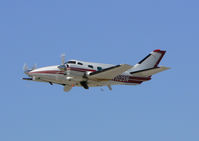
Aircraft
Beechcraft 60 DukeRegistration
N102SN
MSN
P-217
Year of Manufacture
1973
Operator
Roberto DecenaDate
May 5, 2019 at 04:00 PM
Type
CRASHFlight Type
Private
Flight Phase
Landing (descent or approach)
Crash Site
Airport (less than 10 km from airport)
Crash Location
Santa Rosa-Route 66 New Mexico
Region
North America • United States of America
Coordinates
34.9472°, -104.6484°
Crash Cause
Human factor
Narrative Report
On May 5, 2019 at 04:00 PM, Arlington - Santa Fe experienced a crash involving Beechcraft 60 Duke, operated by Roberto Decena, with the event recorded near Santa Rosa-Route 66 New Mexico.
The flight was categorized as private and the reported phase was landing (descent or approach) at a airport (less than 10 km from airport) crash site.
2 people were known to be on board, 2 fatalities were recorded, 0 survivors were identified or estimated. This corresponds to an estimated fatality rate of 100.0%.
Crew on board: 1, crew fatalities: 1, passengers on board: 1, passenger fatalities: 1, other fatalities: 0.
The listed crash cause is human factor. The pilot was performing a personal cross-country flight. While en route to the intended destination, the pilot contacted air traffic control to report that the airplane was having a fuel pump issue and requested to divert to the nearest airport. The pilot stated that the request was only precautionary and did not declare an emergency during the flight; he provided no further information about the fuel pump. As the airplane approached the diversion airport, witnesses observed the airplane flying low and rolling to the left just before impacting terrain, after which a postcrash fire ensued. An examination of the airframe revealed no preimpact mechanical malfunctions or failures that would have precluded normal operation. A postaccident examination and review of recorded data indicated that the left engine was secured and in the feather position, and that the right engine was operating at a high RPM setting. The left engine-driven fuel pump was found fractured. Further examination of the fuel pump revealed fatigue failure of the pressure relief valve. The fatigue failure initiated in upward bending on one side of the valve disk and progressed around both sides of the valve stem. As the cracks grew, the stem separated from the disk on one side and began to tilt in relation to the disk and the valve guide due to the non-symmetric support, which caused the lower end of the stem to rub against the valve guide, creating wear marks. The increasing stem tilt would have impinged against the valve guide, and the valve might have begun to stick in the closed position. If the valve were stuck in the closed position, it would not be able to open, and the outlet fuel pressure could rise above the set point pressure. Because the pump was driven by the engine, there would not be a way for the pilot to shut it off, disconnect it, or bypass it. Instead, the fuel pressure would continue to rise until the valve were to unstick. Thus, the pilot was likely experiencing variable fuel pressure as the valve became stuck and unstuck. Examination of the spring seat and the diaphragm plate, which were in contact with each other in the fuel pump assembly, revealed wear marks on the surface of each component, with one mark on the diaphragm plate and two wear marks on the spring seat. The two wear marks on the spring seat were distinct features separated by material with no wear indications in between. The only way that these wear marks could have occurred were if the spring seat was separated from the diaphragm plate and reinstalled in a different orientation. Thus, it is likely that the pilot had encountered a fuel pump problem before the accident flight and that someone tried to troubleshoot the problem. The last radar data point indicated that the airplane was traveling at a groundspeed of about 98 knots, and had passed north of the airport, traveling to the southwest. The minimum control speed for the airplane with single-engine operation was 88 knots. However, it is likely that if the pilot initiated a left turn back toward the airport, that the right engine torque and the 14 knot wind with gusts to 24 knots would have necessitated a higher speed. Because appropriate control inputs and airspeed were not maintained, the airplane rolled in the direction of the feathered engine (due to the left fuel pump problem), resulting in a loss of control. The pilot's toxicology report was positive for cetirizine, sumatriptan, gabapentin, topiramate, and duloxetine. All of these drugs act in the central nervous system and can be impairing alone or in combination. Although this investigation could not determine the reason(s) for the pilot's use of these drugs, they are commonly used to treat chronic pain syndromes or seizures. It is likely that the pilot was experiencing some impairment because of multiple impairing medications and was unable to successfully respond to the in-flight urgent situation and safely land the airplane.
Aircraft reference details include registration N102SN, MSN P-217, year of manufacture 1973.
Geospatial coordinates for this crash are approximately 34.9472°, -104.6484°.
Fatalities
Total
2
Crew
1
Passengers
1
Other
0
Crash Summary
The pilot was performing a personal cross-country flight. While en route to the intended destination, the pilot contacted air traffic control to report that the airplane was having a fuel pump issue and requested to divert to the nearest airport. The pilot stated that the request was only precautionary and did not declare an emergency during the flight; he provided no further information about the fuel pump. As the airplane approached the diversion airport, witnesses observed the airplane flying low and rolling to the left just before impacting terrain, after which a postcrash fire ensued. An examination of the airframe revealed no preimpact mechanical malfunctions or failures that would have precluded normal operation. A postaccident examination and review of recorded data indicated that the left engine was secured and in the feather position, and that the right engine was operating at a high RPM setting. The left engine-driven fuel pump was found fractured. Further examination of the fuel pump revealed fatigue failure of the pressure relief valve. The fatigue failure initiated in upward bending on one side of the valve disk and progressed around both sides of the valve stem. As the cracks grew, the stem separated from the disk on one side and began to tilt in relation to the disk and the valve guide due to the non-symmetric support, which caused the lower end of the stem to rub against the valve guide, creating wear marks. The increasing stem tilt would have impinged against the valve guide, and the valve might have begun to stick in the closed position. If the valve were stuck in the closed position, it would not be able to open, and the outlet fuel pressure could rise above the set point pressure. Because the pump was driven by the engine, there would not be a way for the pilot to shut it off, disconnect it, or bypass it. Instead, the fuel pressure would continue to rise until the valve were to unstick. Thus, the pilot was likely experiencing variable fuel pressure as the valve became stuck and unstuck. Examination of the spring seat and the diaphragm plate, which were in contact with each other in the fuel pump assembly, revealed wear marks on the surface of each component, with one mark on the diaphragm plate and two wear marks on the spring seat. The two wear marks on the spring seat were distinct features separated by material with no wear indications in between. The only way that these wear marks could have occurred were if the spring seat was separated from the diaphragm plate and reinstalled in a different orientation. Thus, it is likely that the pilot had encountered a fuel pump problem before the accident flight and that someone tried to troubleshoot the problem. The last radar data point indicated that the airplane was traveling at a groundspeed of about 98 knots, and had passed north of the airport, traveling to the southwest. The minimum control speed for the airplane with single-engine operation was 88 knots. However, it is likely that if the pilot initiated a left turn back toward the airport, that the right engine torque and the 14 knot wind with gusts to 24 knots would have necessitated a higher speed. Because appropriate control inputs and airspeed were not maintained, the airplane rolled in the direction of the feathered engine (due to the left fuel pump problem), resulting in a loss of control. The pilot's toxicology report was positive for cetirizine, sumatriptan, gabapentin, topiramate, and duloxetine. All of these drugs act in the central nervous system and can be impairing alone or in combination. Although this investigation could not determine the reason(s) for the pilot's use of these drugs, they are commonly used to treat chronic pain syndromes or seizures. It is likely that the pilot was experiencing some impairment because of multiple impairing medications and was unable to successfully respond to the in-flight urgent situation and safely land the airplane.
Cause: Human factor
Occupants & Outcome
Crew On Board
1
Passengers On Board
1
Estimated Survivors
0
Fatality Rate
100.0%
Known people on board: 2
Operational Details
Schedule / Flight
Arlington - Santa Fe
Operator
Roberto DecenaFlight Type
Private
Flight Phase
Landing (descent or approach)
Crash Site
Airport (less than 10 km from airport)
Region / Country
North America • United States of America
Aircraft Details
Similar Plane Crashes
United States Signal Corps - USSC
De Havilland DH.4
The single engine airplane departed Dayton-McCook Field for a local test flight. Shortly after takeoff, the aircraft stalled and crashed, killing both occupants. Crew: Maj Oscar Brindley, Lt Col Henry Damm.
United States Signal Corps - USSC
De Havilland DH.4
Lt. Frank Stuart Patterson, son and nephew of the co-founders of National Cash Register, is killed in the crash of his DH.4M, AS-32098, at Wilbur Wright Field during a flight test of a new mechanism for synchronizing machine gun and propeller, when a tie rod breaks during a dive from 15,000 feet (4,600 m), causing the wings to separate from the aircraft. Wishing to recognize the contributions of the Patterson family (owners of NCR) the area of Wright Field east of Huffman Dam (including Wilbur Wright Field, Fairfield Air Depot, and the Huffman Prairie) is renamed Patterson Field on 6 July 1931, in honor of Lt. Patterson.
United States Signal Corps - USSC
De Havilland DH.4
The aircraft crashed in unknown circumstances.
United States Signal Corps - USSC
De Havilland DH.4
The crew was completing a training mission. At an altitude of about 4,000 feet, the aircraft entered a spin and crashed in an open field near Everman-Barron Field Airport. A crew was killed and the second occupants was injured. The aircraft was destroyed.
U.S. Air Mail Service
De Havilland DH.4
Crashed following an engine failure. Pilot fate unknown.
United States Signal Corps - USSC
De Havilland DH.4
The accident occurred in unknown circumstances.