
Cambridge – Bathurst Harbour
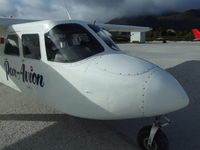
Flight / Schedule
Cambridge – Bathurst Harbour
Aircraft
Britten-Norman IslanderRegistration
VH-OBL
MSN
2035
Year of Manufacture
1986
Operator
Par-AvionDate
December 8, 2018 at 08:28 AM
Type
CRASHFlight Type
Positioning
Flight Phase
Flight
Crash Site
Mountains
Crash Location
West Portal (Southwest National Park) Tasmania
Region
Oceania • Australia
Crash Cause
Human factor
Narrative Report
On December 8, 2018 at 08:28 AM, Cambridge – Bathurst Harbour experienced a crash involving Britten-Norman Islander, operated by Par-Avion, with the event recorded near West Portal (Southwest National Park) Tasmania.
The flight was categorized as positioning and the reported phase was flight at a mountains crash site.
1 people were known to be on board, 1 fatalities were recorded, 0 survivors were identified or estimated. This corresponds to an estimated fatality rate of 100.0%.
Crew on board: 1, crew fatalities: 1, passengers on board: 0, passenger fatalities: 0, other fatalities: 0.
The listed crash cause is human factor. On 8 December 2018, the pilot of a Pilatus Britten-Norman BN2A-20 Islander, registered VH-OBL and operated by Airlines of Tasmania, was conducting a positioning flight under the visual flight rules from Cambridge Airport to the Bathurst Harbour aeroplane landing area (ALA), Tasmania. The aircraft departed Cambridge at about 0748 Eastern Daylight-saving Time and was scheduled to arrive at Bathurst Harbour about 0830 to pick up five passengers for the return flight. The passengers were part of a conservation project that flew to south-west Tasmania regularly, and it was the pilot’s only flight for that day. Automatic dependent surveillance broadcast (ADS-B) position and altitude data (refer to the section titled Recorded information) showed the aircraft tracked to the south-west towards Bathurst Harbour (Figure 1). At about 0816, the aircraft approached a gap in the Arthur Range known as ‘the portals’. The portals are a saddle (lowest area) between the Eastern and Western Arthur Range, and was an optional route that Airlines of Tasmania used between Cambridge and Bathurst Harbour when the cloud base prevented flight over the mountain range. After passing through the portals, the aircraft proceeded to conduct a number of turns below the height of the surrounding highest terrain. The final data point recorded was at about At about 0829, the Australian Maritime Safety Authority received advice that an emergency locator transmitter allocated to VH-OBL had activated. They subsequently advised the Tasmanian Police and the aircraft operator of the activation, and initiated search and rescue efforts. The rescue efforts included two helicopters and a Challenger 604 search and rescue jet aircraft. The Challenger arrived over the emergency locator transmitter signal location at around 0925, however, due to cloud cover the crew were unable to visually identify the precise location of VH-OBL. A police rescue helicopter arrived at the search area at about 1030. The pilot of that helicopter reported observing cloud covering the eastern side of the Western Arthur Range, and described a wall of cloud with its base sitting on the bottom of the west portal. Multiple attempts were made throughout the day to locate the accident site, however, due to low-level cloud, and fluctuating weather conditions, the search and rescue operation was unable to confirm visual location of the aircraft until about 1900. The aircraft wreckage was found in mountainous terrain of the Western Arthur Range in the Southwest National Park (Figure 2) . The search and rescue crew assessed that the accident was unlikely to have been survivable. The helicopter crew considered winching personnel to the site, however, due to a number of risks, including potential for cloud reforming, the time of day and lighting, and other hazards associated with the mountainous location, the helicopter departed the area. The aircraft wreckage was accessed the following day, when it was confirmed that the pilot was fatally injured.
Aircraft reference details include registration VH-OBL, MSN 2035, year of manufacture 1986.
Fatalities
Total
1
Crew
1
Passengers
0
Other
0
Crash Summary
On 8 December 2018, the pilot of a Pilatus Britten-Norman BN2A-20 Islander, registered VH-OBL and operated by Airlines of Tasmania, was conducting a positioning flight under the visual flight rules from Cambridge Airport to the Bathurst Harbour aeroplane landing area (ALA), Tasmania. The aircraft departed Cambridge at about 0748 Eastern Daylight-saving Time and was scheduled to arrive at Bathurst Harbour about 0830 to pick up five passengers for the return flight. The passengers were part of a conservation project that flew to south-west Tasmania regularly, and it was the pilot’s only flight for that day. Automatic dependent surveillance broadcast (ADS-B) position and altitude data (refer to the section titled Recorded information) showed the aircraft tracked to the south-west towards Bathurst Harbour (Figure 1). At about 0816, the aircraft approached a gap in the Arthur Range known as ‘the portals’. The portals are a saddle (lowest area) between the Eastern and Western Arthur Range, and was an optional route that Airlines of Tasmania used between Cambridge and Bathurst Harbour when the cloud base prevented flight over the mountain range. After passing through the portals, the aircraft proceeded to conduct a number of turns below the height of the surrounding highest terrain. The final data point recorded was at about At about 0829, the Australian Maritime Safety Authority received advice that an emergency locator transmitter allocated to VH-OBL had activated. They subsequently advised the Tasmanian Police and the aircraft operator of the activation, and initiated search and rescue efforts. The rescue efforts included two helicopters and a Challenger 604 search and rescue jet aircraft. The Challenger arrived over the emergency locator transmitter signal location at around 0925, however, due to cloud cover the crew were unable to visually identify the precise location of VH-OBL. A police rescue helicopter arrived at the search area at about 1030. The pilot of that helicopter reported observing cloud covering the eastern side of the Western Arthur Range, and described a wall of cloud with its base sitting on the bottom of the west portal. Multiple attempts were made throughout the day to locate the accident site, however, due to low-level cloud, and fluctuating weather conditions, the search and rescue operation was unable to confirm visual location of the aircraft until about 1900. The aircraft wreckage was found in mountainous terrain of the Western Arthur Range in the Southwest National Park (Figure 2) . The search and rescue crew assessed that the accident was unlikely to have been survivable. The helicopter crew considered winching personnel to the site, however, due to a number of risks, including potential for cloud reforming, the time of day and lighting, and other hazards associated with the mountainous location, the helicopter departed the area. The aircraft wreckage was accessed the following day, when it was confirmed that the pilot was fatally injured.
Cause: Human factor
Occupants & Outcome
Crew On Board
1
Passengers On Board
0
Estimated Survivors
0
Fatality Rate
100.0%
Known people on board: 1
Operational Details
Schedule / Flight
Cambridge – Bathurst Harbour
Operator
Par-AvionFlight Type
Positioning
Flight Phase
Flight
Crash Site
Mountains
Region / Country
Oceania • Australia
Aircraft Details
Similar Plane Crashes
Royal Australian Air Force - RAAF
Avro 504
The crew was performing a training flight out from Point Cook. Shortly after takeoff, while climbing to an altitude of 500 feet, the aircraft dove into the ground and crashed, bursting into flames. One pilot was killed instantly while the second one died few hours later. This was the first accident involving an aircraft of the Royal Australian Air Force which was officially founded a week ago on March 31, 1921. Crew: Lt James Fryer-Smith, pilot Cpl Bertie W. Whicker, mechanic.
Western Australia Airways
Bristol Tourer
The crew was performing the inaugural flight from Geraldton to Derby which was considered as the first commercial flight within Australia. On approach to Kalbarri, the aircraft crashed for unknown reasons near the Murchinson River, killing both occupants. Crew: Ted Broad, Bob Fawcett.
O. Ramsay
Avro 504
During the takeoff roll, the pilot swerved the airplane to avoid two boys running across the runway. He lost control of the airplane that crashed near the beach. The aircraft was destroyed and all three occupants were injured.
Qantas Airways - Queensland and Northern Territory Aerial Services
Armstrong Whitworth F.K.8
Crashed on takeoff for unknown reasons. While the aircraft was damaged beyond repair, there were no casualties.
Qantas Airways - Queensland and Northern Territory Aerial Services
Armstrong Whitworth F.K.8
En route from Charleville to Longreach, the pilot encountered technical problems and elected to make an emergency landing in Blackall. While the pilot was uninjured, the aircraft was damaged beyond repair.
Royal Australian Air Force - RAAF
Avro 504
The pilot was performing a night training flight at Point Cook Airport. On final approach, he lost control of the aircraft that crashed near the airport. The pilot was injured and the aircraft was damaged beyond repair.