
Chicago – Halifax
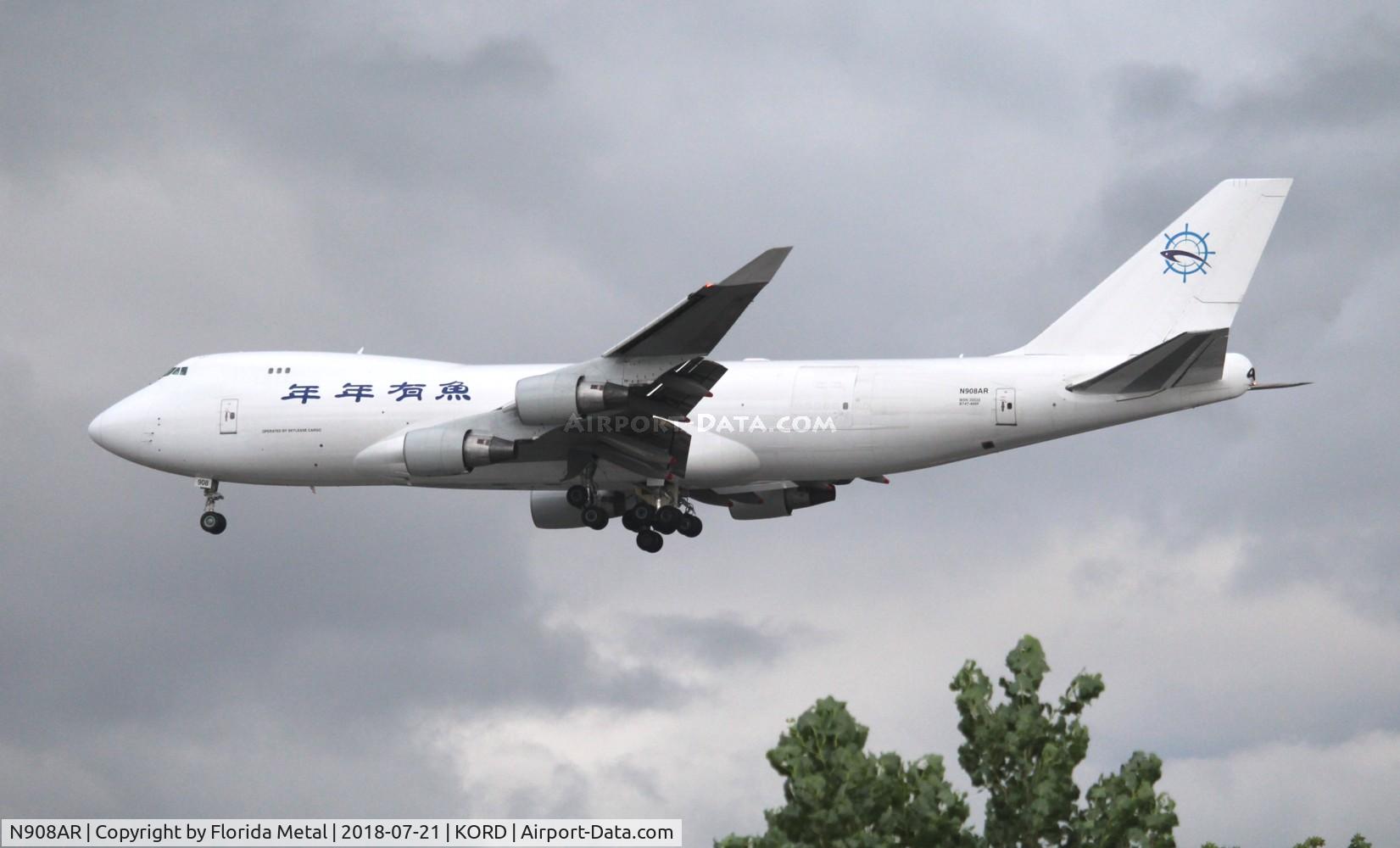
Flight / Schedule
Chicago – Halifax
Aircraft
Boeing 747-400Registration
N908AR
MSN
28026/1105
Year of Manufacture
1997
Operator
Skylease CargoDate
November 7, 2018 at 05:06 AM
Type
CRASHFlight Type
Cargo
Flight Phase
Landing (descent or approach)
Crash Site
Airport (less than 10 km from airport)
Crash Location
Halifax-Stanfield Nova Scotia
Region
North America • Canada
Coordinates
44.8809°, -63.5011°
Crash Cause
Human factor
Narrative Report
On November 7, 2018 at 05:06 AM, Chicago – Halifax experienced a crash involving Boeing 747-400, operated by Skylease Cargo, with the event recorded near Halifax-Stanfield Nova Scotia.
The flight was categorized as cargo and the reported phase was landing (descent or approach) at a airport (less than 10 km from airport) crash site.
4 people were known to be on board, 0 fatalities were recorded, 4 survivors were identified or estimated. This corresponds to an estimated fatality rate of 0.0%.
Crew on board: 3, crew fatalities: 0, passengers on board: 1, passenger fatalities: 0, other fatalities: 0.
The listed crash cause is human factor. The Sky Lease Cargo Boeing 747-412F aircraft (U.S. registration N908AR, serial number 28026) was conducting flight 4854 (KYE4854) from Chicago/O’Hare International Airport, Illinois, U.S., to Halifax/Stanfield International Airport, Nova Scotia, with 3 crew members, 1 passenger, and no cargo on board. The crew conducted the Runway 14 instrument landing system approach. When the aircraft was 1 minute and 21 seconds from the threshold, the crew realized that there was a tailwind; however, they did not recalculate the performance data to confirm that the landing distance available was still acceptable, likely because of the limited amount of time available before landing. The unexpected tailwind resulted in a greater landing distance required, but this distance did not exceed the length of the runway. The aircraft touched down firmly at approximately 0506 Atlantic Standard Time, during the hours of darkness. After the firm touchdown, for undetermined reasons, the engine No. 1 thrust lever was moved forward of the idle position, causing the speed brakes to retract and the autobrake system to disengage, increasing the distance required to bring the aircraft to a stop. In addition, the right crab angle (4.5°) on initial touchdown, combined with the crosswind component and asymmetric reverser selection, caused the aircraft to deviate to the right of the runway centreline. During the landing roll, the pilot monitoring’s attention was focused on the lateral drift and, as a result, the required callouts regarding the position of the deceleration devices were not made. Although manual brake application began 8 seconds after touchdown, maximum braking effort did not occur until 15 seconds later, when the aircraft was 800 feet from the end of the runway. At this position, it was not possible for the aircraft to stop on the runway and, 5 seconds later, the aircraft departed the end of the runway at a speed of 77 knots and came to a stop 270 m (885 feet) past the end. The aircraft struck the approach light stanchions and the localizer antenna array. The No. 2 engine detached from its pylon during the impact sequence and came to rest under the left horizontal stabilizer, causing a fire in the tail section following the impact. The emergency locator transmitter activated. Aircraft rescue and firefighting personnel responded. All 3 crew members received minor injuries and were taken to the hospital. The passenger was not injured. During the overrun, the aircraft crossed a significant drop of 2.8 m (9 feet) approximately 166 m (544 feet) past the end of the runway and was damaged beyond repair.
Aircraft reference details include registration N908AR, MSN 28026/1105, year of manufacture 1997.
Geospatial coordinates for this crash are approximately 44.8809°, -63.5011°.
Fatalities
Total
0
Crew
0
Passengers
0
Other
0
Crash Summary
The Sky Lease Cargo Boeing 747-412F aircraft (U.S. registration N908AR, serial number 28026) was conducting flight 4854 (KYE4854) from Chicago/O’Hare International Airport, Illinois, U.S., to Halifax/Stanfield International Airport, Nova Scotia, with 3 crew members, 1 passenger, and no cargo on board. The crew conducted the Runway 14 instrument landing system approach. When the aircraft was 1 minute and 21 seconds from the threshold, the crew realized that there was a tailwind; however, they did not recalculate the performance data to confirm that the landing distance available was still acceptable, likely because of the limited amount of time available before landing. The unexpected tailwind resulted in a greater landing distance required, but this distance did not exceed the length of the runway. The aircraft touched down firmly at approximately 0506 Atlantic Standard Time, during the hours of darkness. After the firm touchdown, for undetermined reasons, the engine No. 1 thrust lever was moved forward of the idle position, causing the speed brakes to retract and the autobrake system to disengage, increasing the distance required to bring the aircraft to a stop. In addition, the right crab angle (4.5°) on initial touchdown, combined with the crosswind component and asymmetric reverser selection, caused the aircraft to deviate to the right of the runway centreline. During the landing roll, the pilot monitoring’s attention was focused on the lateral drift and, as a result, the required callouts regarding the position of the deceleration devices were not made. Although manual brake application began 8 seconds after touchdown, maximum braking effort did not occur until 15 seconds later, when the aircraft was 800 feet from the end of the runway. At this position, it was not possible for the aircraft to stop on the runway and, 5 seconds later, the aircraft departed the end of the runway at a speed of 77 knots and came to a stop 270 m (885 feet) past the end. The aircraft struck the approach light stanchions and the localizer antenna array. The No. 2 engine detached from its pylon during the impact sequence and came to rest under the left horizontal stabilizer, causing a fire in the tail section following the impact. The emergency locator transmitter activated. Aircraft rescue and firefighting personnel responded. All 3 crew members received minor injuries and were taken to the hospital. The passenger was not injured. During the overrun, the aircraft crossed a significant drop of 2.8 m (9 feet) approximately 166 m (544 feet) past the end of the runway and was damaged beyond repair.
Cause: Human factor
Occupants & Outcome
Crew On Board
3
Passengers On Board
1
Estimated Survivors
4
Fatality Rate
0.0%
Known people on board: 4
Operational Details
Schedule / Flight
Chicago – Halifax
Operator
Skylease CargoFlight Type
Cargo
Flight Phase
Landing (descent or approach)
Crash Site
Airport (less than 10 km from airport)
Region / Country
North America • Canada
Aircraft Details
Similar Plane Crashes
Royal Canadian Air Force - RCAF
Avro 504
The pilot, sole on board, was completing a local training flight at Camp Borden Airport. The airplane crashed on takeoff. The pilot was rescued.
Royal Canadian Air Force - RCAF
De Havilland DH.9
Crashed in unknown circumstances.
Canadian Aircraft Company
Avro 504
On approach to Fort Frances, the aircraft stalled and crashed. Both occupants were injured.
Bishop-Barker Aeroplanes
Curtiss HS-2L
Hit tree tops and crashed in Brooklin, north of Oshawa, Ontario. Crew fate unknown.
Vancouver Island Aerial Service
Curtiss JN-4
En route from Alert Bay to Prince Rupert, the pilot Lt Harry W. Brown encountered an unexpected situation and was forced to ditch the aircraft off Nalau Island. He survived by paddling a log into the shipping lane and was picked up by a passing Alaskan steamer. The aircraft was lost.
Royal Canadian Air Force - RCAF
De Havilland DH.9
Crashed in unknown circumstances. Crew fate unknown.