
Burnet – Sedalia – Oshkosh
Flight / Schedule
Burnet – Sedalia – Oshkosh
Aircraft
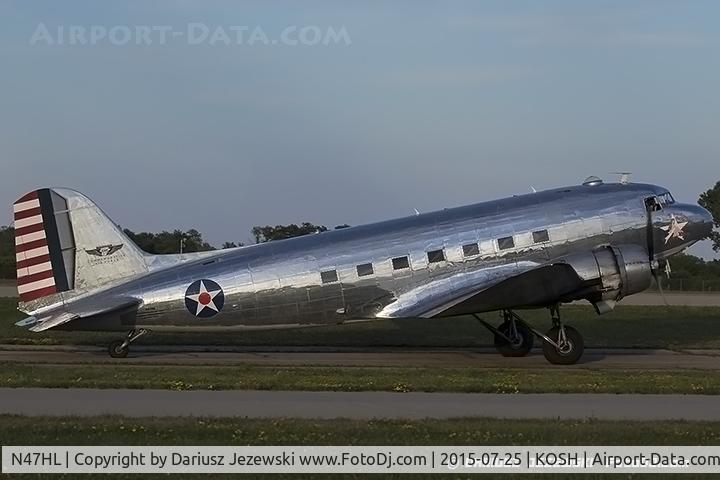
Douglas C-47 Skytrain (DC-3)Registration
N47HL
MSN
15758/27203
Year of Manufacture
1945
Operator
Commemorative Air ForceDate
July 21, 2018 at 09:15 AM
Type
CRASHFlight Type
Private
Flight Phase
Takeoff (climb)
Crash Site
Airport (less than 10 km from airport)
Crash Location
Burnet Texas
Region
North America • United States of America
Coordinates
30.7764°, -98.1700°
Crash Cause
Human factor
Narrative Report
On July 21, 2018 at 09:15 AM, Burnet – Sedalia – Oshkosh experienced a crash involving Douglas C-47 Skytrain (DC-3), operated by Commemorative Air Force, with the event recorded near Burnet Texas.
The flight was categorized as private and the reported phase was takeoff (climb) at a airport (less than 10 km from airport) crash site.
13 people were known to be on board, 0 fatalities were recorded, 13 survivors were identified or estimated. This corresponds to an estimated fatality rate of 0.0%.
Crew on board: 3, crew fatalities: 0, passengers on board: 10, passenger fatalities: 0, other fatalities: 0.
The listed crash cause is human factor. According to the copilot, before takeoff, he and the pilot had briefed that the copilot would conduct the takeoff for the planned cross-country flight and be the pilot flying and that the pilot would be the pilot monitoring. The accident flight was the copilot's first takeoff in the accident airplane with it at or near its maximum gross weight. The pilot reported that he taxied the airplane onto the runway and locked the tailwheel in place and that the copilot then took over the controls. About 13 seconds after the start of the takeoff roll, the airplane veered slightly right, and the copilot counteracted with left rudder input. The airplane then swerved left, and shortly after the pilot took control of the airplane. The airplane briefly became airborne; the pilot stated that he knew the airplane was slow as he tried to ease it back over to the runway and set it back down. Subsequently, he felt the shudder “of a stall,” and the airplane rolled left and impacted the ground, the right main landing gear collapsed, and the left wing struck the ground. After the airplane came to a stop, a postimpact fire ensued. All the airplane occupants egressed through the aft left door. Postaccident examination of the airplane revealed no evidence of any mechanical malfunctions or failures with the flight controls or tailwheel. Both outboard portions of the of the aluminum shear pin within the tailwheel strut assembly were sheared off, consistent with side load forces on the tailwheel during the impact sequence. The copilot obtained his pilot-in-command type rating and his checkout for the accident airplane about 2 months and 2 weeks before the accident, respectively. The copilot had conducted two flights in the accident airplane with a unit instructor before the accident. The instructor reported that, during these flights, he noted that the copilot had directional control issues; made "lazy inputs, similar to those for small airplanes"; tended to go to the right first; and seemed to overcorrect to the left by leaving control inputs in for too long. He added that, after the checkout was completed, the copilot could take off and land without assistance; however, he had some concern about the his reaction time to a divergence of heading on the ground. Given the evidence, it is likely the copilot failed to maintain directional control during the initial takeoff roll. It is also likely that, if the pilot, who had more experience in the airplane, had monitored the copilot's takeoff more closely and taken remedial action sooner, he may have been able to correct the loss of directional control before the airplane became briefly airborne and subsequently experienced an aerodynamic stall.
Aircraft reference details include registration N47HL, MSN 15758/27203, year of manufacture 1945.
Geospatial coordinates for this crash are approximately 30.7764°, -98.1700°.
Fatalities
Total
0
Crew
0
Passengers
0
Other
0
Crash Summary
According to the copilot, before takeoff, he and the pilot had briefed that the copilot would conduct the takeoff for the planned cross-country flight and be the pilot flying and that the pilot would be the pilot monitoring. The accident flight was the copilot's first takeoff in the accident airplane with it at or near its maximum gross weight. The pilot reported that he taxied the airplane onto the runway and locked the tailwheel in place and that the copilot then took over the controls. About 13 seconds after the start of the takeoff roll, the airplane veered slightly right, and the copilot counteracted with left rudder input. The airplane then swerved left, and shortly after the pilot took control of the airplane. The airplane briefly became airborne; the pilot stated that he knew the airplane was slow as he tried to ease it back over to the runway and set it back down. Subsequently, he felt the shudder “of a stall,” and the airplane rolled left and impacted the ground, the right main landing gear collapsed, and the left wing struck the ground. After the airplane came to a stop, a postimpact fire ensued. All the airplane occupants egressed through the aft left door. Postaccident examination of the airplane revealed no evidence of any mechanical malfunctions or failures with the flight controls or tailwheel. Both outboard portions of the of the aluminum shear pin within the tailwheel strut assembly were sheared off, consistent with side load forces on the tailwheel during the impact sequence. The copilot obtained his pilot-in-command type rating and his checkout for the accident airplane about 2 months and 2 weeks before the accident, respectively. The copilot had conducted two flights in the accident airplane with a unit instructor before the accident. The instructor reported that, during these flights, he noted that the copilot had directional control issues; made "lazy inputs, similar to those for small airplanes"; tended to go to the right first; and seemed to overcorrect to the left by leaving control inputs in for too long. He added that, after the checkout was completed, the copilot could take off and land without assistance; however, he had some concern about the his reaction time to a divergence of heading on the ground. Given the evidence, it is likely the copilot failed to maintain directional control during the initial takeoff roll. It is also likely that, if the pilot, who had more experience in the airplane, had monitored the copilot's takeoff more closely and taken remedial action sooner, he may have been able to correct the loss of directional control before the airplane became briefly airborne and subsequently experienced an aerodynamic stall.
Cause: Human factor
Occupants & Outcome
Crew On Board
3
Passengers On Board
10
Estimated Survivors
13
Fatality Rate
0.0%
Known people on board: 13
Operational Details
Schedule / Flight
Burnet – Sedalia – Oshkosh
Operator
Commemorative Air ForceFlight Type
Private
Flight Phase
Takeoff (climb)
Crash Site
Airport (less than 10 km from airport)
Region / Country
North America • United States of America
Aircraft Details
Similar Plane Crashes
United States Signal Corps - USSC
De Havilland DH.4
The single engine airplane departed Dayton-McCook Field for a local test flight. Shortly after takeoff, the aircraft stalled and crashed, killing both occupants. Crew: Maj Oscar Brindley, Lt Col Henry Damm.
United States Signal Corps - USSC
De Havilland DH.4
Lt. Frank Stuart Patterson, son and nephew of the co-founders of National Cash Register, is killed in the crash of his DH.4M, AS-32098, at Wilbur Wright Field during a flight test of a new mechanism for synchronizing machine gun and propeller, when a tie rod breaks during a dive from 15,000 feet (4,600 m), causing the wings to separate from the aircraft. Wishing to recognize the contributions of the Patterson family (owners of NCR) the area of Wright Field east of Huffman Dam (including Wilbur Wright Field, Fairfield Air Depot, and the Huffman Prairie) is renamed Patterson Field on 6 July 1931, in honor of Lt. Patterson.
United States Signal Corps - USSC
De Havilland DH.4
The aircraft crashed in unknown circumstances.
United States Signal Corps - USSC
De Havilland DH.4
The crew was completing a training mission. At an altitude of about 4,000 feet, the aircraft entered a spin and crashed in an open field near Everman-Barron Field Airport. A crew was killed and the second occupants was injured. The aircraft was destroyed.
U.S. Air Mail Service
De Havilland DH.4
Crashed following an engine failure. Pilot fate unknown.
United States Signal Corps - USSC
De Havilland DH.4
The accident occurred in unknown circumstances.