
Anchorage - Tyonek
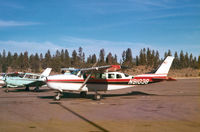
Flight / Schedule
Anchorage - Tyonek
Aircraft
Cessna 207 Skywagon/StationairRegistration
N91038
MSN
207-0027
Year of Manufacture
1969
Operator
Spernak AirwaysDate
June 13, 2018 at 12:05 PM
Type
CRASHFlight Type
Cargo
Flight Phase
Flight
Crash Site
Lake, Sea, Ocean, River
Crash Location
Susitna River Alaska
Region
North America • United States of America
Coordinates
62.3207°, -150.1410°
Crash Cause
Human factor
Narrative Report
On June 13, 2018 at 12:05 PM, Anchorage - Tyonek experienced a crash involving Cessna 207 Skywagon/Stationair, operated by Spernak Airways, with the event recorded near Susitna River Alaska.
The flight was categorized as cargo and the reported phase was flight at a lake, sea, ocean, river crash site.
1 people were known to be on board, 1 fatalities were recorded, 0 survivors were identified or estimated. This corresponds to an estimated fatality rate of 100.0%.
Crew on board: 1, crew fatalities: 1, passengers on board: 0, passenger fatalities: 0, other fatalities: 0.
The listed crash cause is human factor. Two wheel-equipped, high-wing airplanes, a Cessna 207 and a Cessna 175, collided midair while in cruise flight in day visual meteorological conditions. Both airplanes were operating under visual flight rules, and neither airplane was in communication with an air traffic control facility. The Cessna 175 pilot stated that he was making position reports during cruise flight about 1,000ft above mean sea level when he established contact with the pilot of another airplane, which was passing in the opposite direction. As he watched that airplane pass well below him, he noticed the shadow of a second airplane converging with the shadow of his airplane from the opposite direction. He looked forward and saw the spinner of the converging airplane in his windscreen and immediately pulled aft on the control yoke; the airplanes subsequently collided. The Cessna 207 descended uncontrolled into the river. Although damaged, the Cessna 175 continued to fly, and the pilot proceeded to an airport and landed safely. An examination of both airplanes revealed impact signatures consistent with the two airplanes colliding nearly head-on. About 4 years before the accident, following a series of midair collisions in the Matanuska Susitna (MatSu) Valley (the area where the accident occurred), the FAA made significant changes to the common traffic advisory frequencies (CTAF) assigned north and west of Anchorage, Alaska. The FAA established geographic CTAF areas based, in part, on flight patterns, traffic flow, private and public airports, and off-airport landing sites. The CTAF for the area where the accident occurred was at a frequency changeover point with westbound Cook Inlet traffic communicating on 122.70 and eastbound traffic on 122.90 Mhz. The pilot of the Cessna 175, which was traveling on an eastbound heading at the time of the accident, reported that he had a primary active radio frequency of 122.90 Mhz, and a nonactive secondary frequency 135.25 Mhz in his transceiver at the time of the collision. The transceivers from the other airplane were not recovered, and it could not be determined whether the pilot of the Cessna 207 was monitoring the CTAF or making position reports.
Aircraft reference details include registration N91038, MSN 207-0027, year of manufacture 1969.
Geospatial coordinates for this crash are approximately 62.3207°, -150.1410°.
Fatalities
Total
1
Crew
1
Passengers
0
Other
0
Crash Summary
Two wheel-equipped, high-wing airplanes, a Cessna 207 and a Cessna 175, collided midair while in cruise flight in day visual meteorological conditions. Both airplanes were operating under visual flight rules, and neither airplane was in communication with an air traffic control facility. The Cessna 175 pilot stated that he was making position reports during cruise flight about 1,000ft above mean sea level when he established contact with the pilot of another airplane, which was passing in the opposite direction. As he watched that airplane pass well below him, he noticed the shadow of a second airplane converging with the shadow of his airplane from the opposite direction. He looked forward and saw the spinner of the converging airplane in his windscreen and immediately pulled aft on the control yoke; the airplanes subsequently collided. The Cessna 207 descended uncontrolled into the river. Although damaged, the Cessna 175 continued to fly, and the pilot proceeded to an airport and landed safely. An examination of both airplanes revealed impact signatures consistent with the two airplanes colliding nearly head-on. About 4 years before the accident, following a series of midair collisions in the Matanuska Susitna (MatSu) Valley (the area where the accident occurred), the FAA made significant changes to the common traffic advisory frequencies (CTAF) assigned north and west of Anchorage, Alaska. The FAA established geographic CTAF areas based, in part, on flight patterns, traffic flow, private and public airports, and off-airport landing sites. The CTAF for the area where the accident occurred was at a frequency changeover point with westbound Cook Inlet traffic communicating on 122.70 and eastbound traffic on 122.90 Mhz. The pilot of the Cessna 175, which was traveling on an eastbound heading at the time of the accident, reported that he had a primary active radio frequency of 122.90 Mhz, and a nonactive secondary frequency 135.25 Mhz in his transceiver at the time of the collision. The transceivers from the other airplane were not recovered, and it could not be determined whether the pilot of the Cessna 207 was monitoring the CTAF or making position reports.
Cause: Human factor
Occupants & Outcome
Crew On Board
1
Passengers On Board
0
Estimated Survivors
0
Fatality Rate
100.0%
Known people on board: 1
Operational Details
Schedule / Flight
Anchorage - Tyonek
Operator
Spernak AirwaysFlight Type
Cargo
Flight Phase
Flight
Crash Site
Lake, Sea, Ocean, River
Region / Country
North America • United States of America
Aircraft Details
Similar Plane Crashes
United States Signal Corps - USSC
De Havilland DH.4
The single engine airplane departed Dayton-McCook Field for a local test flight. Shortly after takeoff, the aircraft stalled and crashed, killing both occupants. Crew: Maj Oscar Brindley, Lt Col Henry Damm.
United States Signal Corps - USSC
De Havilland DH.4
Lt. Frank Stuart Patterson, son and nephew of the co-founders of National Cash Register, is killed in the crash of his DH.4M, AS-32098, at Wilbur Wright Field during a flight test of a new mechanism for synchronizing machine gun and propeller, when a tie rod breaks during a dive from 15,000 feet (4,600 m), causing the wings to separate from the aircraft. Wishing to recognize the contributions of the Patterson family (owners of NCR) the area of Wright Field east of Huffman Dam (including Wilbur Wright Field, Fairfield Air Depot, and the Huffman Prairie) is renamed Patterson Field on 6 July 1931, in honor of Lt. Patterson.
United States Signal Corps - USSC
De Havilland DH.4
The aircraft crashed in unknown circumstances.
United States Signal Corps - USSC
De Havilland DH.4
The crew was completing a training mission. At an altitude of about 4,000 feet, the aircraft entered a spin and crashed in an open field near Everman-Barron Field Airport. A crew was killed and the second occupants was injured. The aircraft was destroyed.
U.S. Air Mail Service
De Havilland DH.4
Crashed following an engine failure. Pilot fate unknown.
United States Signal Corps - USSC
De Havilland DH.4
The accident occurred in unknown circumstances.