
Crescent City – Oakland
Flight / Schedule
Crescent City – Oakland
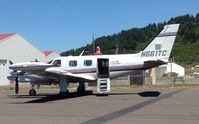
Aircraft
Piper PA-31 CheyenneRegistration
N661TC
MSN
31-8120022
Year of Manufacture
1981
Operator
Cal-Ore Life FlightDate
July 29, 2016 at 01:05 AM
Type
CRASHFlight Type
Ambulance
Flight Phase
Flight
Crash Site
Plain, Valley
Crash Location
McKinleyville California
Region
North America • United States of America
Coordinates
40.9465°, -124.1006°
Crash Cause
Technical failure
Narrative Report
On July 29, 2016 at 01:05 AM, Crescent City – Oakland experienced a crash involving Piper PA-31 Cheyenne, operated by Cal-Ore Life Flight, with the event recorded near McKinleyville California.
The flight was categorized as ambulance and the reported phase was flight at a plain, valley crash site.
4 people were known to be on board, 4 fatalities were recorded, 0 survivors were identified or estimated. This corresponds to an estimated fatality rate of 100.0%.
Crew on board: 1, crew fatalities: 1, passengers on board: 3, passenger fatalities: 3, other fatalities: 0.
The listed crash cause is technical failure. About 13 minutes after takeoff for a medical transport flight, while climbing through about 14,900 ft mean sea level (msl), the pilot reported to air traffic control (ATC) that he was smelling smoke in the cockpit and would be returning to the originating airport. The flight was cleared to return with a descent at pilot's discretion to 9,000 ft msl. The pilot replied, "okay," and said that it looked like he was going to lose some power shortly. The pilot then stated that he had smoke in the cockpit, declared an emergency, and requested that ATC contact the fire department. About 1 minute 15 seconds after the initial report of smelling smoke, the pilot made the last radio transmission of the flight stating that he had three people on board. The wreckage was located about 9 hours later in an area of brush and heavily forested terrain. Portions of the burned and fragmented wreckage were scattered along a debris path that measured about 2,400 ft in length, which is consistent with an inflight breakup. The center fuselage and cockpit areas were largely intact and displayed no evidence of fire; however, there was an area of thermal damage to the forward fuselage consistent with an inflight fire. The thermal damage was primarily limited to the floor area between the two forward seats near the main bus tie circuit breaker panel and extended to the forward edge of the wing spar. All exposed surfaces were heavily sooted. Some localized melting and thermal-related tearing of the aluminum structure was present. The primer paint on the floor panels under the right aft corner of the pilot seat and the left aft corner of the co-pilot seat was discolored dark brown. An aluminum stringer in this location exhibited broomstrawing indicating that the stringer material was heated to near its melting point prior to impact. A single wire located in the area exhibited notching consistent with mechanical rubbing. The main bus tie circuit breakers were partially missing. The remaining breakers were heavily sooted on their aft ends, and one breaker was thermally discolored. Areas of charring were on the backside of the panel. Examination of the wiring in this area showed evidence of electrical arcing damage. Four hydraulic lines servicing the landing gear system were located in this area, and all the lines exhibited signs of thermal exposure with melting and missing sections of material. Six exemplar airplanes of the same make and model as the accident airplane were examined, and instances of unsafe conditions in which electrical lines and hydraulic lines in the area of the main bus tie circuit breaker panel were in direct contact were found on all six airplanes. Some of the wires in the exemplar airplanes showed chafing between hydraulic lines and the electrical wires, which, if left uncorrected, could have led to electrical arcing and subsequent fire. Based on the unsafe conditions found during examination of the exemplar airplanes and the thermal damage to the area near the main bus tie circuit breaker panel on the accident airplane, including broomstrawing of the aluminum structure, electrical arcing damage to the wiring, and melting of the hydraulic lines, it is likely that an electrical wire near the tie bus circuit breakers chafed on a hydraulic line and/or airplane structure, which resulted in arcing and a subsequent in-flight fire that was fed by the hydraulic fluid.
Aircraft reference details include registration N661TC, MSN 31-8120022, year of manufacture 1981.
Geospatial coordinates for this crash are approximately 40.9465°, -124.1006°.
Fatalities
Total
4
Crew
1
Passengers
3
Other
0
Crash Summary
About 13 minutes after takeoff for a medical transport flight, while climbing through about 14,900 ft mean sea level (msl), the pilot reported to air traffic control (ATC) that he was smelling smoke in the cockpit and would be returning to the originating airport. The flight was cleared to return with a descent at pilot's discretion to 9,000 ft msl. The pilot replied, "okay," and said that it looked like he was going to lose some power shortly. The pilot then stated that he had smoke in the cockpit, declared an emergency, and requested that ATC contact the fire department. About 1 minute 15 seconds after the initial report of smelling smoke, the pilot made the last radio transmission of the flight stating that he had three people on board. The wreckage was located about 9 hours later in an area of brush and heavily forested terrain. Portions of the burned and fragmented wreckage were scattered along a debris path that measured about 2,400 ft in length, which is consistent with an inflight breakup. The center fuselage and cockpit areas were largely intact and displayed no evidence of fire; however, there was an area of thermal damage to the forward fuselage consistent with an inflight fire. The thermal damage was primarily limited to the floor area between the two forward seats near the main bus tie circuit breaker panel and extended to the forward edge of the wing spar. All exposed surfaces were heavily sooted. Some localized melting and thermal-related tearing of the aluminum structure was present. The primer paint on the floor panels under the right aft corner of the pilot seat and the left aft corner of the co-pilot seat was discolored dark brown. An aluminum stringer in this location exhibited broomstrawing indicating that the stringer material was heated to near its melting point prior to impact. A single wire located in the area exhibited notching consistent with mechanical rubbing. The main bus tie circuit breakers were partially missing. The remaining breakers were heavily sooted on their aft ends, and one breaker was thermally discolored. Areas of charring were on the backside of the panel. Examination of the wiring in this area showed evidence of electrical arcing damage. Four hydraulic lines servicing the landing gear system were located in this area, and all the lines exhibited signs of thermal exposure with melting and missing sections of material. Six exemplar airplanes of the same make and model as the accident airplane were examined, and instances of unsafe conditions in which electrical lines and hydraulic lines in the area of the main bus tie circuit breaker panel were in direct contact were found on all six airplanes. Some of the wires in the exemplar airplanes showed chafing between hydraulic lines and the electrical wires, which, if left uncorrected, could have led to electrical arcing and subsequent fire. Based on the unsafe conditions found during examination of the exemplar airplanes and the thermal damage to the area near the main bus tie circuit breaker panel on the accident airplane, including broomstrawing of the aluminum structure, electrical arcing damage to the wiring, and melting of the hydraulic lines, it is likely that an electrical wire near the tie bus circuit breakers chafed on a hydraulic line and/or airplane structure, which resulted in arcing and a subsequent in-flight fire that was fed by the hydraulic fluid.
Cause: Technical failure
Occupants & Outcome
Crew On Board
1
Passengers On Board
3
Estimated Survivors
0
Fatality Rate
100.0%
Known people on board: 4
Operational Details
Schedule / Flight
Crescent City – Oakland
Operator
Cal-Ore Life FlightFlight Type
Ambulance
Flight Phase
Flight
Crash Site
Plain, Valley
Region / Country
North America • United States of America
Aircraft Details
Similar Plane Crashes
United States Signal Corps - USSC
De Havilland DH.4
The single engine airplane departed Dayton-McCook Field for a local test flight. Shortly after takeoff, the aircraft stalled and crashed, killing both occupants. Crew: Maj Oscar Brindley, Lt Col Henry Damm.
United States Signal Corps - USSC
De Havilland DH.4
Lt. Frank Stuart Patterson, son and nephew of the co-founders of National Cash Register, is killed in the crash of his DH.4M, AS-32098, at Wilbur Wright Field during a flight test of a new mechanism for synchronizing machine gun and propeller, when a tie rod breaks during a dive from 15,000 feet (4,600 m), causing the wings to separate from the aircraft. Wishing to recognize the contributions of the Patterson family (owners of NCR) the area of Wright Field east of Huffman Dam (including Wilbur Wright Field, Fairfield Air Depot, and the Huffman Prairie) is renamed Patterson Field on 6 July 1931, in honor of Lt. Patterson.
United States Signal Corps - USSC
De Havilland DH.4
The aircraft crashed in unknown circumstances.
United States Signal Corps - USSC
De Havilland DH.4
The crew was completing a training mission. At an altitude of about 4,000 feet, the aircraft entered a spin and crashed in an open field near Everman-Barron Field Airport. A crew was killed and the second occupants was injured. The aircraft was destroyed.
U.S. Air Mail Service
De Havilland DH.4
Crashed following an engine failure. Pilot fate unknown.
United States Signal Corps - USSC
De Havilland DH.4
The accident occurred in unknown circumstances.